Chikungunya Infection May Lead to Long-Term Joint Pain


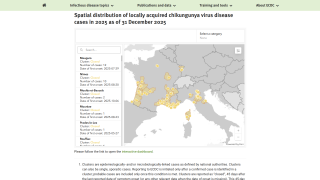
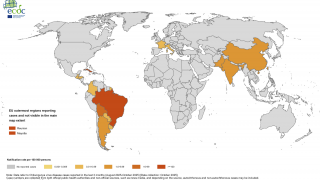
The Chikungunya virus, transmitted by mosquitoes, has emerged as a significant global health concern. Recent outbreaks have spread beyond their usual regions in Africa and Asia to areas such as the Region of the Americas, China, France, and India.
Although the acute febrile illness typically resolves within a few days, many patients experience prolonged joint pain and arthritis.
This can severely impact their quality of life and place a burden on healthcare resources.
A study published in the *Journal of Infectious Diseases* on June 16, 2025, provides the first evidence that the chikungunya virus (CHIKV) directly infects chondrocytes, the cells responsible for producing cartilage.
This research offers crucial insights into how CHIKV may contribute to chronic musculoskeletal diseases by affecting the function of cartilage cells.
These researchers, led by teams at the Institut Pasteur and Université Paris Cité, demonstrated viral replication in chondrocyte-containing tissue in the metatarsal joints and confirmed it with ex vivo analyses, showing viral replication in leg bones and articular cartilages, along with histological evidence of focal erosive lesions and periarticular inflammation.
Moreover, human chondrocytes prove susceptible to CHIKV infection, exhibiting viral production and bioluminescence activity.'
As previous studies have suggested that Ross River virus–infected chondrocytes may serve as a significant source of inflammatory cytokines, potentially contributing to the onset and persistence of arthritis, we also assessed cytokine production.
They observed substantial changes in the secretion levels of several cytokines at six hours post-infection.
Interestingly, seven overexpressed cytokines are found at high levels in patients with joint pathology, with possible involvement in CHIKV pathogenesis.
These findings may guide the development of future antiviral strategies, vaccines, and clinical approaches for managing post-viral arthritis.
Additionally, gaining a better understanding of how the virus persists in immune-privileged tissues, such as cartilage, could have implications for other Togaviridae family alphavirus infections and the long-term effects of emerging pathogens.
With recent confirmations, Chikungunya vaccines are now commercially available and recommended for international travelers visiting areas in Europe with outbreaks, such as in France's departments in the Indian Ocean.
In 2025, the Americas accounted for the highest number of CHIKV cases, led by Brazil, Argentina, Bolivia, and Peru.
Bavarian Nordic's VIMKUNYA® vaccine is an approved single-dose aluminum hydroxide-adjuvanted, non-live chikungunya virus-like particle vaccine offered in the United States at travel clinics and pharmacies.
Our Trust Standards: Medical Advisory Committee
-
Fact checked by Robert Carlson, MD