Vaccine News

Vaccine news brought to you by Precision Vaccinations.

Jul 8, 2025 • 8:28 am CDT
Canada Health July 7, 2025

During the first half of 2025, Canada's measles outbreak occurred primarily in rural areas of Ontario.

Recently, however, there has been a rising number of measles cases reported in Western Canada.

As of the end of June 2025, specifically during week #26, the province of Alberta reported 104 new measles cases. This brings the total number of people infected with the measles virus this year to 1,169.

To facilitate patient care in Alberta, the Ministry of Primary and Preventive Health Services was established on May 16, 2025.

Additionally, the Alberta Immunization Policy contains a comprehensive listing of publicly funded vaccines and biologicals, along with indications for their use, including the measles-mumps-rubella (MMR) vaccine.

As of July 8, 2025, Canada recommends MMR vaccination for most people.

To alert international travelers, the U.S. CDC updated its Global Measles Outbreak Travel Health Advisory on May 28, 2025. This Level I advisory includes Canada.

The CDC wrote, 'All international travelers should be fully vaccinated against measles with the MMR vaccine, according to CDC's measles vaccination recommendations for international travel.'

Jul 7, 2025 • 4:11 pm CDT
by Philippe Fuchs

Over the past decade, numerious herpes zoster cases were prevented with two doses of a U.S. FDA-approved vaccine that contains an adjuvant. According to new research, there may be an additional, measurable benefit from vaccination.

Brief Communication published by NPJ Vaccines on June 25, 2025, reported a lower risk of dementia associated with AS01-adjuvanted vaccination against shingles.

In propensity-score matched cohort studies involving 436,788 individuals, both the AS01-adjuvanted shingles and respiratory syncytial virus vaccines, administered individually or in combination, were associated with a reduced risk of dementia at 18 months.

AS01 may protect against dementia through specific immunological pathways.

In particular, stimulation of toll-like receptor 4 with monophosphoryl lipid A (MPL; one of the components of the AS01 system) has been shown to improve Alzheimer’s disease pathology in mice.

In addition, the two main ingredients of AS01, MPL and QS-21 (a purified plant extract derived from Quillaja saponaria), act synergistically to activate macrophages and dendritic cells, triggering an age-independent cytokine cascade that culminates in the production of interferon gamma (IFN-γ).

IFN-γ might attenuate amyloid plaque deposition (as seen in mice) and is negatively correlated with cognitive decline in cognitively unimpaired older adults.

These neuroprotective mechanisms may reach their full potential at or below the dose of AS01 administered within a single vaccine, so that administering both the AS01 shingles and RSV vaccines does not provide any additional benefits.

This saturation effect could also explain why the level of protection against dementia appears similar between the AS01 shingles vaccine (which is given in two doses) and the AS01 RSV vaccine (administered as a single dose).

No difference was observed between the two AS01-adjuvanted vaccines, suggesting that the AS01 adjuvant itself plays a direct role in reducing the risk of dementia.

A previous study found similar cross-protection benefits.

 In July 2024, a University of Oxford-led study concluded that receiving the recombinant Shingrix® vaccine was associated with a 17% increase in diagnosis-free time, translating into 164 additional days lived without a diagnosis of dementia in those subsequently affected.

As of July 7, 2025, shingles vaccination services are offered at most pharmacies in the United States.

Jul 7, 2025 • 12:00 pm CDT
US CDC July 2025

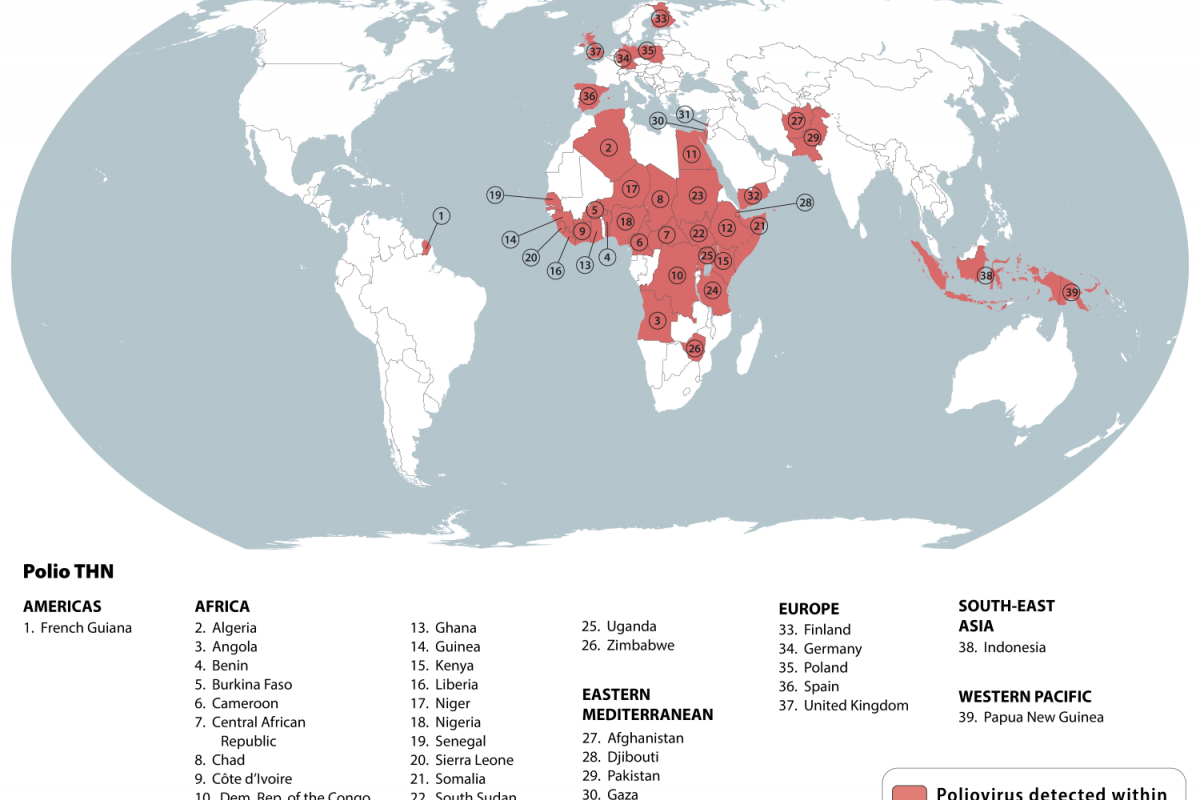
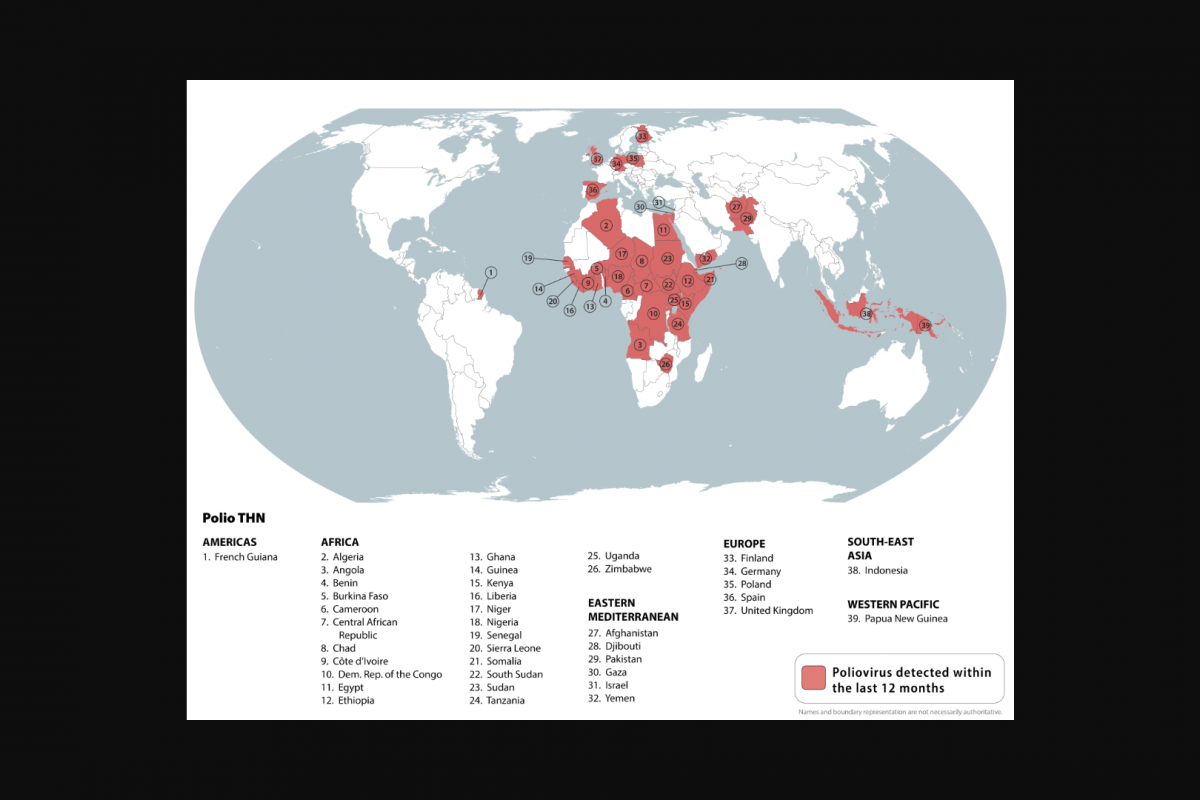
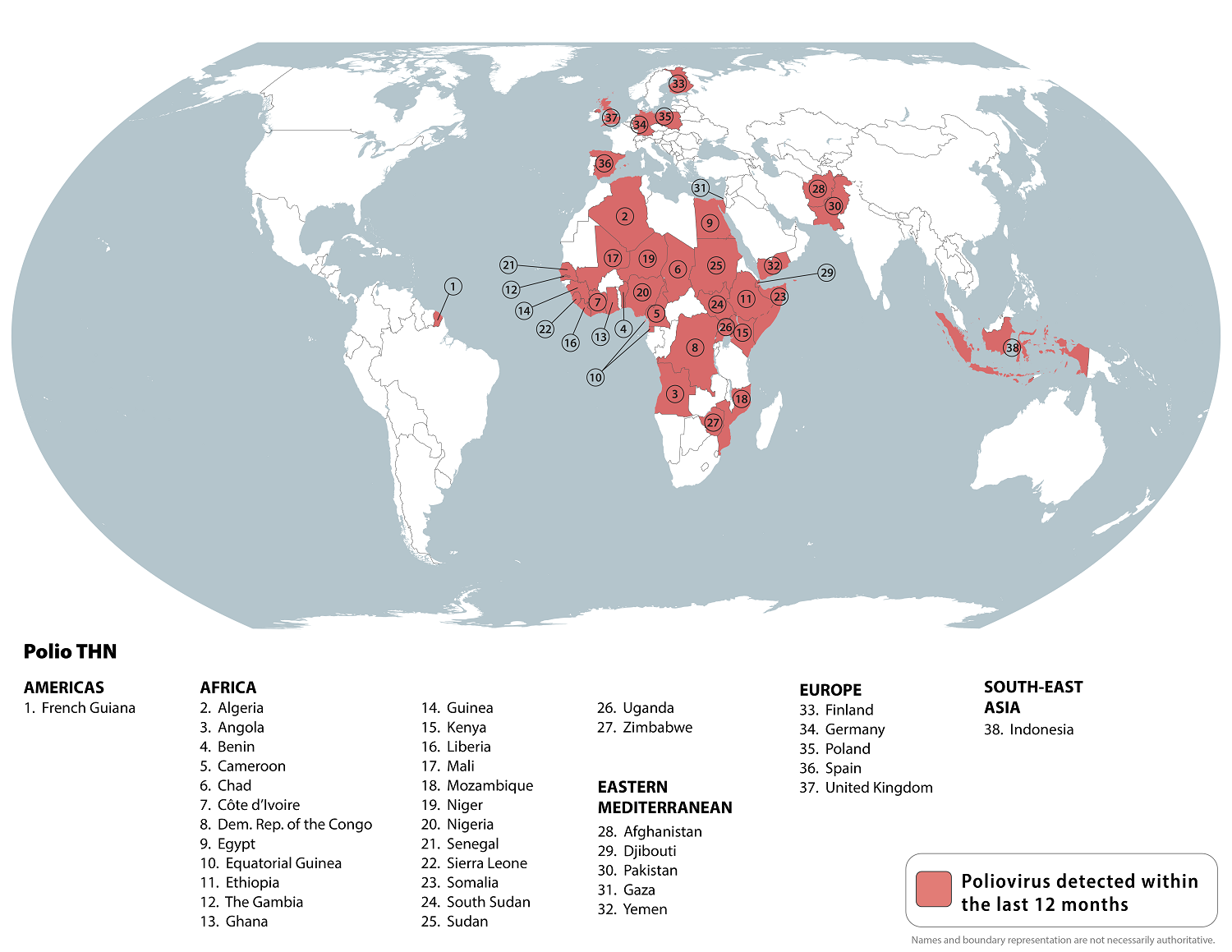
According to the health departments of various countries, a cluster of vaccine-derived poliovirus type 2 (cVDPV2) has been detected in wastewater samples collected in Europe.

As of July 7, 2025, the European Centre for Disease Prevention and Control (ECDC) says these countries include, but are not limited to, the United Kingdom, Finland, Germany, Spain, and Poland.

Specifically, Germany has reported detections of cVDPV2 in multiple environmental samples throughout 2024 and the first half of 2025.

In 2024, a strain of variant poliovirus originating from Nigeria was repeatedly detected in wastewater samples from Hamburg, Berlin, Munich, Frankfurt, Stuttgart, Dresden, Cologne, Düsseldorf, and Bonn. 

In 2025, detections have been from Dresden during weeks 17, 19, 21, and 23, Mainz during weeks 15 and 19, Munich during weeks 21, 22, and 23, and Stuttgart during week 21.

The cluster exhibits a degree of genomic diversity that more strongly supports the hypothesis of multiple introductions than a single introduction with local transmission within the EU.

However, the large geographical spread in the EU/EEA, the fact that detections occurred over several months, and the identification of specific genetic sub-clusters suggest at least some degree of local transmission.

Fortunately, no cases of poliomyelitis have been reported in Europe. 

The last indigenous case of polio in Germany was in 1990.

Given the presence of non-vaccinated or under-vaccinated population groups in European countries, and the fact that poliomyelitis has not been eradicated globally, the risk of the virus being reintroduced into Europe remains, affirms the ECDC.

To alert international travelers visiting Europe during the summer of 2020, the U.S. CDC's Level 2 - Practice Enhanced Precautions, Travel Health Advisory identifies 41 countries at risk for poliovirus detections.

According to the CDC, travelers to Germany are at increased risk of exposure to poliovirus.

The CDC recommends that adults who have previously completed the routine polio vaccine series and are traveling to any destination listed may receive a single, lifetime booster dose of polio vaccine. Polio vaccination services are offered at most health clinics and travel pharmacies in the United States.

Jul 7, 2025 • 9:13 am CDT
Taiwan CDC July 2025

In Taiwan (Republic of China), Japanese Encephalitis (JE) has been a notifiable, mosquito-transmitted infectious disease since 1955.

As of July 2025, the Taiwan Centers for Disease Control (TCDC) confirmed six cases of JE in 2025.

Last year, Taiwan reported 25 JE cases.

Most JE cases are associated with activities in paddy fields, pig farms, pigeon farms, poultry farms, and ponds.

A recent study confirmed that JE remains a prevalent infectious disease in Taiwan. Between 2008 and 2020, 309 confirmed domestic JE patients and four imported cases.

This study confirmed that JE remains a prevalent infectious disease in Taiwan, with its epidemic gradually increasing in severity. 

As of July 7, 2025, JE is a vaccine-preventable disease. In the United States, an FDA-approved JE vaccine is commercailly available at travel clinics and pharmacies. It is recommended for international travelers when visiting JE outbreak areas.

Jul 7, 2025 • 8:08 am CDT
US CDC July 3, 2025

The Hawai‘i Department of Health (DOH) recently confirmed its ninth travel-related case of dengue in 2025.

As of the end of June 2025, the DOH reported eight dengue cases on Oʻahu and one case on Maui.

Several countries in the Pacific Region are reporting an increase in mosquito-transmitted dengue virus cases, including Fiji, French Polynesia, Tonga, and the Republic of the Philippines.

According to the World Health Organization, dengue is a grade 3 emergency, with an estimated 4 billion people at risk globally. 

The U.S. Centers for Disease Control and Prevention (CDC) reissued a Global Travel Health Notice on June 18, 2025, regarding dengue outbreaks in the Asia/Pacific region, including India, Singapore, Thailand, the Philippines, Malaysia, and Myanmar. 

CDC reported on July 3, 2025, that 2,248 travel-related Dengue cases and two local cases in Miami, Florida, were reported in 41 jurisdictions this year.

While the CDC currently authorizes the first-generation dengue vaccine for use in Puerto Rico, where dengue has become endemic, numerous countries enable access to a second-generation vaccine in 2025. Additionally, innovative dengue vaccine candidates are making progress in late-stage clinical trials.

Jul 6, 2025 • 10:37 am CDT
Google Maps July 6, 2025

The Republic of Peru frequently declares regional states of emergency, particularly near border areas.

To highlight these high-risk zones, the Canadian government updated its travel advisory for Peru on July 4, 2025, informing travelers to exercise a high degree of caution in Peru due to civial unrest that may occur across the country.

These areas include:

Huallaga and Tocache provinces in the department of San Martín,

the Upper Huallaga and Ene river valleys in the departments of Huánuco and San Martín,

Padre Abad province in the department of Ucayali,

Huacaybamba, Humalíes, Leoncio Prado, and Marañón provinces in the department of Huánuco,

Concepción and Satipo provinces in the department of Junín,

Tayacaja province in the department of Huancavelica,

the districts of Abancay, Andahuaylas, and Chincheros in the department of Apurímac,

Huanta and La Mar provinces, in the department of Ayacucho,

Valley of Apurimac, Ene, and Mantaro rivers (VRAEM).

Previously, the U.S. Department of State reissued its Level 2: Exercise Increased Caution Travel Advisory for this South American country on May 16, 2025.

From a health risk perspective, the U.S. CDC includes Peru in Travel Health Advisories for measles, Oropouche, and yellow fever.

The CDC recommends that visitors to Peru consider several routine and travel vaccines, such as typhoid and chikungunya, before traveling abroad in 2025.

These advisories are essential, as over 3 million international visitors traveled to Peru in 2024, representing a significant increase in activity compared to 2023. Many travelers visited Machu Picchu, located high up in the Andes Mountains.

Jul 5, 2025 • 9:17 am CDT
Google Maps July 5, 2025

The French Health Ministry has been reporting a significant number of locally acquired chikungunya cases in its Department in 2025. ARS Corsica states that the presence of the virus-carrying tiger mosquito is now well established in southern Corsica and throughout Europe.

As of July 2, 2025, a third locally acquired case of chikungunya has been detected in southern Corsica, in Porticcio (municipality of Grosseto-Prugna).

In late June 2025, ARS Corsica reported two cases of chikungunya from the same family, residing in Grossetto-Prugna.

On France's mainland, the Occitanie Regional Health Agency detected a locally transmitted case of Chikungunya in the Hérault Department on June 16, 2025. Another case was reported in La Crau (Var) on June 11, 2025.

Additionally, the Departments of Reunion and Mayotte in the southern India Ocean have been confronting chikungunya outbreaks over the last few months.

From a health protection perspective, chikungunya vaccines are now commercially available in France and the United States. 

The U.S. CDC recommends that international travelers visiting areas with chikungunya outbreaks speak with a travel vaccine expert about immunization options.

Jul 4, 2025 • 1:22 pm CDT
ScienceDirect July 1, 2025

An innovative bladder cancer intravesical therapy today gained its initial approval outside the United States. Bladder cancer is a challenging malignancy, and for many years, researchers have searched for next-generation treatment options.

The UK's Medicines and Healthcare products Regulatory Agency (MHRA) has approved nogapendekin alfa inbakicept (Anktiva®) for adults with BCG-unresponsive non-muscle-invasive bladder cancer, where the disease remains confined to the inner lining of the bladder and may include tumors. 

Nogapendekin alfa inbakicept (Anktiva) mixed with BCG is administered via a liquid that is diluted and then delivered into the bladder through a catheter inserted into the urethra. 

The BCG (Bacillus Calmette-Guérin) vaccine, which has been deployed for approximately 100 years to reduce tuberculosis, has become a standard immunotherapy for early-stage bladder cancer. It is delivered directly into the bladder to stimulate an immune response.

Anktiva's mechanism of action involves the direct, specific stimulation of CD8+ T cells and Natural Killer cells through beta-gamma T-cell receptor binding, thereby generating memory T cells while avoiding stimulation of T-regulatory cells.

As of July 4, 2025, this medicine was approved through the International Recognition Procedure. The approval was granted to Serum Life Science Europe GmbH.

On May 27, 2025, ImmunityBio announced a collaboration to introduce the Cancer BioShield platform, along with Anktiva, to Saudi Arabia and the broader Middle East. 

In the United States, ImmunityBio, Inc.'s BioShield platform, powered by Anktiva, was approved by the U.S. FDA for similar indications in April 2024. It is now commercially available at over 60 cancer centers in the U.S.

On July 1, 2025, ScienceDirect published a systematic review highlighting an array of novel intravesical therapies that demonstrate efficacy in bladder cancer patients. 

Jul 3, 2025 • 3:03 pm CDT
JAMA Network Open 2025

A new study, published this week in JAMA Network Open and conducted by researchers from the University of Kentucky, analyzed data from the Cancer Statistics Incidence Analytic Database.

Released on June 30, 2025, this study's findings underscore the significant burden of cancer linked to human papillomavirus (HPV) among residents of Appalachia, who have a 16% higher rate of HPV-related cancers.

Furthermore, regional-specific disparities were seen for HPV-associated male and female oropharyngeal cancers, female anal cancer, vulvar cancer, cervical cancer, and penile cancer.

Incidence was highest among individuals living in the North Central and Central regions.

The North Central subregion had the highest incidence rates of male oropharyngeal cancer.

In contrast, the Central and North Central subregions had significantly higher rates of vulvar, cervical, and penile cancers than the other subregions.

These researchers wrote, 'This cross-sectional study of HPV-associated cancer incidence found disproportionately high HPV-associated cancer rates among Appalachian residents compared with non-Appalachian residents.'

'These findings highlight the need for targeted efforts to improve HPV vaccine uptake and encourage adherence to evidence-based screening guidelines for HPV-associated cancers in Appalachia.'

Currently, the U.S. CDC recommends HPV vaccination for most adolescents in a two or three-dose regimen. And recommends vaccination for everyone through age 26 if not adequately vaccinated at a younger age.

As of July 3, 2025, Merck's Gardasil 9 vaccine is readily available at health clinics and pharmacies throughout the Appalachian Mountain range and the United States.

Jul 3, 2025 • 2:41 pm CDT
TDSHS 2024

Following a significant outbreak in 2024, the first confirmed case of West Nile virus illness was reported on June 24, 2025, in a resident of Brazos County, Texas.

This Texas Department of State Health Services (DSHS) announcement raises concerns for all Texans as virus-carrying mosquitoes remain active into December.

There were 455 cases of West Nile disease in Texas in 2024 and 56 related fatalities.

Over the last five years, Texas has had 929 West Nile cases and 122 deaths.

“Texans should be aware that mosquitoes transmit disease, and some of these illnesses, like West Nile and dengue, can be severe,” said DSHS  Commissioner Jennifer A. Shuford, MD, MPH. “But taking steps to prevent mosquito bites and eliminating mosquito breeding areas around homes are proactive measures that can reduce the risk of mosquito-borne illness.”

Infected mosquitoes transmit West Nile virus after biting. Although 80% of people exposed to the virus do not develop symptoms, the remaining 20% will experience symptoms such as fever, nausea, headache, fatigue, and muscle and joint pain.

Less than one percent of those exposed will suffer from West Nile neuroinvasive disease, which affects the nervous system and can cause disorientation, neck stiffness, tremors, paralysis, convulsions, and even death.

DSHS urges anyone experiencing West Nile symptoms to contact their health care provider and mention any exposure to mosquitoes.

As of July 3, 2025, no vaccine for West Nile virus exists.

Jul 2, 2025 • 1:40 pm CDT
Florida Dept Health June 2025

Florida health officials recently reported additional cases of mosquito-transmitted and travel-related chikungunya, dengue, and malaria in 2025.

After a slow start, these serious diseases have been concentrated in southeast Florida, in the great Miami area, which welcomes millions of international visitors each year.

Currently, Miami-Dade County remains under a mosquito-borne illness alert.

As of June 28, 2025, Florida Health's Weekly Arbovirus Report confirmed a second, indigenous case of dengue in Miami-Dade County.

The most recent case has been identified as serotype DENV-4, while the early case was DENV-3.

In 2024, a total of 91 cases of locally acquired dengue have been reported across ten Florida counties.

Additionally, there have been four cases of chikungunya and 20 cases of malaria related to international travelers this year.

While there are no travel advisories issued for Florida's southeast coast, Canada and the UK both advise speaking with a travel vaccine expert before visiting at-risk areas in 2025.

Jul 2, 2025 • 6:44 am CDT
Google Maps July 2, 2025

The regional health agency in Grand Est, France, reported its first locally acquired case of chikungunya in Bas-Rhin.

As of July 1, 2025, epidemiological investigations indicated that this locally acquired chikungunya case had frequented the municipalities of Lipsheim and Fegersheim during their infectious period. 

Unlike previous local cases, this area is located in France's northeast.

In June 2025, Occitane (Hérault and Gard), Provence-Alpes-Côte d'Azur (Var and Bouches-du-Rhône), Auvergne-Rhône-Alpes (Drôme), and the island of Corse (Corse-du-Sud) reported local chikungunya cases.

And in the southern Indian Ocean, France's departments have reported significant chikungunya outbreaks in 2025.

According to the World Health Organization and the United States, chikungunya is a vaccine-preventable disease, with two vaccines commercially available as of July 2025. 


Jul 2, 2025 • 5:42 am CDT
Micron Biomedical 2025

Emory University and Micron Biomedical recently announced the first clinical trial for a novel rotavirus vaccine, CC24.

This vaccine candidate is delivered using dissolvable microarray technology and is currently enrolling participants in the Phase 1 study, which launched in mid-June 2025.

Notably, this trial represents the first clinical evaluation of a drug or vaccine administered via patch or microarray, sponsored by the U.S. Centers for Disease Control and Prevention (CDC).

"CDC recognizes the potential of this groundbreaking clinical trial, which will test the safety of both our novel vaccine, CC24, in adults and the vaccine's delivery with 'patch' technology," says Dr. Demetre Daskalakis, Director of CDC's National Center for Immunization and Respiratory Diseases, in a press release.

"The trial marks significant progress in vaccine technology innovation and is a critical step toward saving more children from rotavirus illness and death." 

Rotavirus infection is a leading cause of diarrheal deaths among children, particularly in low and middle-income countries where existing oral vaccines are often less effective. CC24 is a uniquely inactivated rotavirus vaccine developed by the CDC to provide an alternative to the oral administration of rotavirus vaccines.

Micron Biomedical's unique needle-free technology rapidly delivers vaccines and therapeutics via dissolvable microarray compounds that are painlessly pressed into the upper layers of the skin. 

As of July 2, 2025, U.S.-FDA-approved rotavirus vaccines are available.

Jul 1, 2025 • 2:38 pm CDT
US State Dept July 2025

According to the Secretary of State at the Ministry of Foreign Affairs and International Cooperation, Honduran authorities are requiring documentation to show proof of a measles vaccine (MMR) for travelers coming from various countries, including the United States.

As of June 28, 2025, this new requirement applies to all foreign travel to the Republic of Honduras, whether by land, sea, or air. 

The U.S. Embassy in Honduras stated that if someone cannot receive the vaccine, they will need to provide proof of a negative measles test result 72 to 80 hours before the flight.

This means that cruise ship passengers visiting this Central American country may need to carry proof of their vaccination.

In addition to measles vaccination, the U.S. CDC recommends being protected against chikungunya, dengue, malaria, typhoid, and Zika when visiting Honduras.

For local assistance during July 2025, the U.S. Embassy Tegucigalpa is available to U.S tourists.

Additionally, the Department of State stated in 2024, "Reconsider travel to Honduras due to civil unrest." The Smart Traveler Enrollment Program is available to travelers interested in receiving digital travel alerts while abroad.

Jul 1, 2025 • 12:06 pm CDT
Maps July 1, 2025

In June 2025, the WHO's Dengue Situation Update #723 confirmed that the Western Pacific Region continues to face a high burden of mosquito-borne arboviral diseases, particularly Dengue. 

Within the Philippines, Quezon City (QC) declared a Dengue outbreak in February 2025

The QC government today published updated data regarding the ongoing outbreak.

The QC Epidemiology and Surveillance Division (QCESD) dashboard reported on July 1, 2025, that 5,762 dengue cases were reported in 2025, with QC's District 2 confirming the highest number of cases.

The QCESD stated that most fatal dengue cases (23) involved children and young women.

To alert international travelers visiting QC, a metro area with about 3 million residents located north of Manila, the U.S. Centers for Disease Control and Prevention included the Philippines in its Global Dengue Outbreak Advisory issued in June 2025.

Without a preventive vaccine available in the U.S., the CDC recommends that travelers to risk areas should prevent mosquito bites by using an EPA-registered insect repellent, wearing long-sleeved shirts and long pants when outdoors, and sleeping in an air-conditioned room or one with window screens.