New Diagnostic Tools Help End Tuberculosis Outbreaks

On World TB Day 2026, the World Health Organization (WHO) is urging countries to accelerate efforts to end tuberculosis (TB) and expand access to lifesaving services through innovations such as advanced diagnostic tests.
On March 24, 2026, the WHO confirmed that the new guidelines for TB tests that can be used near the point of care mark an important step toward faster detection and treatment of one of the world's deadliest infectious diseases.
These portable and easy-to-use tests bring TB diagnosis closer to where people typically seek care.
Available at less than half the cost of many existing molecular diagnostics, these tests can help countries broaden access to testing. They can operate on battery power and deliver results in under one hour, enabling patients to start treatment sooner.
"These new tools could be truly transformative for tuberculosis by providing fast, accurate diagnosis closer to people, saving lives, curbing transmission, and reducing costs," said Dr. Tedros Adhanom Ghebreyesus, WHO Director-General, in a press release.
"WHO calls on all countries to scale up access to these and other tools—including vaccines—so that every person with TB can be reached, treated promptly, and future generations protected."
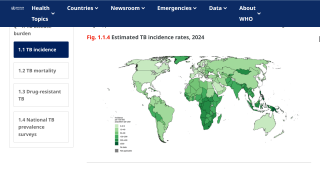
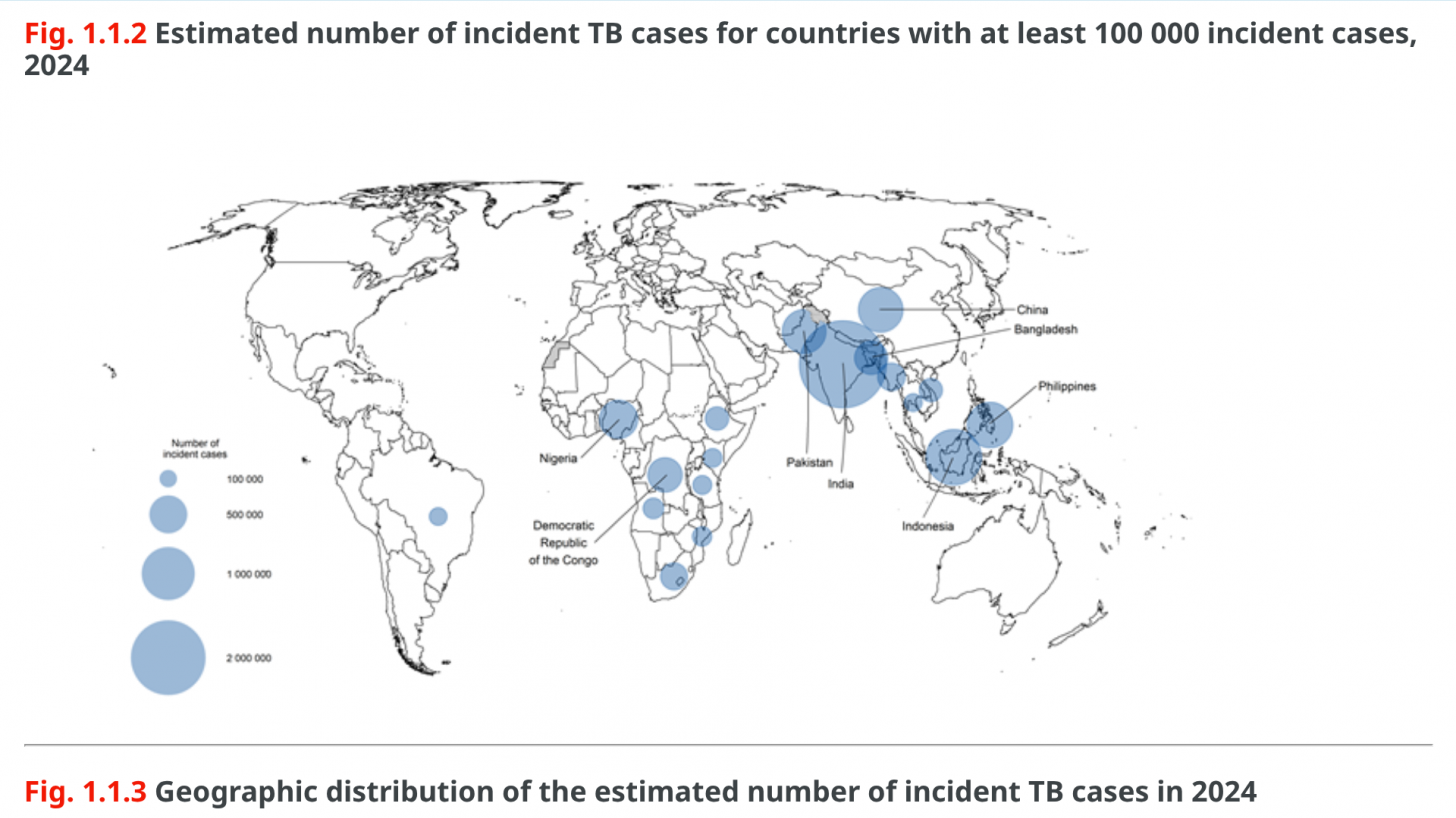
In 2026, eight countries alone accounted for about two-thirds (67%) of all global TB cases, led by India (~25% of global cases) and Indonesia (~10% approximately).
The WHO also highlights that the proven TB vaccine continues to protect millions of children worldwide.
In 2026, the Bacillus Calmette-Guérin (BCG) vaccine remains the only TB vaccine in widespread global use.
More than 10 different BCG substrains are produced and administered worldwide, with four WHO-prequalified strains—Danish 1331, Russian BCG-I (Moscow-368), Tokyo 172-1, and Bulgarian SL-222—forming the basis of most national immunization programs in high-burden countries.
The BCG vaccine continues to be administered to infants and young children in these settings, providing strong protection against severe forms of TB, such as TB meningitis and disseminated TB, saving tens of thousands of young lives each year.
In low-incidence countries, such as the United States, BCG vaccination is rarely offered—even when someone in the household has active TB—because of the low risk of infection with Mycobacterium tuberculosis, according to the U.S. CDC.
New, more effective vaccines for adolescents and adults—who are the groups driving most TB transmission—are now in advanced clinical development. Promising candidates, such as M72/AS01E and MTBVAC, have shown strong results in late-stage clinical trials and are progressing rapidly.
The WHO TB Vaccine Accelerator Council is collaborating with various stakeholders to fast-track development, regulatory pathways, manufacturing scale-up, and equitable access so that these next-generation vaccines can reach those in need as soon as they are approved.
As countries observe World TB Day 2026, the WHO urges governments and partners to prioritize TB as a central pillar of health security and universal health coverage and to invest boldly in the vaccines that will help us eventually end this ancient epidemic for good, says the WHO.
This year's World TB Day theme is "Yes! We can end TB: Led by countries, powered by people."
Our Trust Standards: Medical Advisory Committee