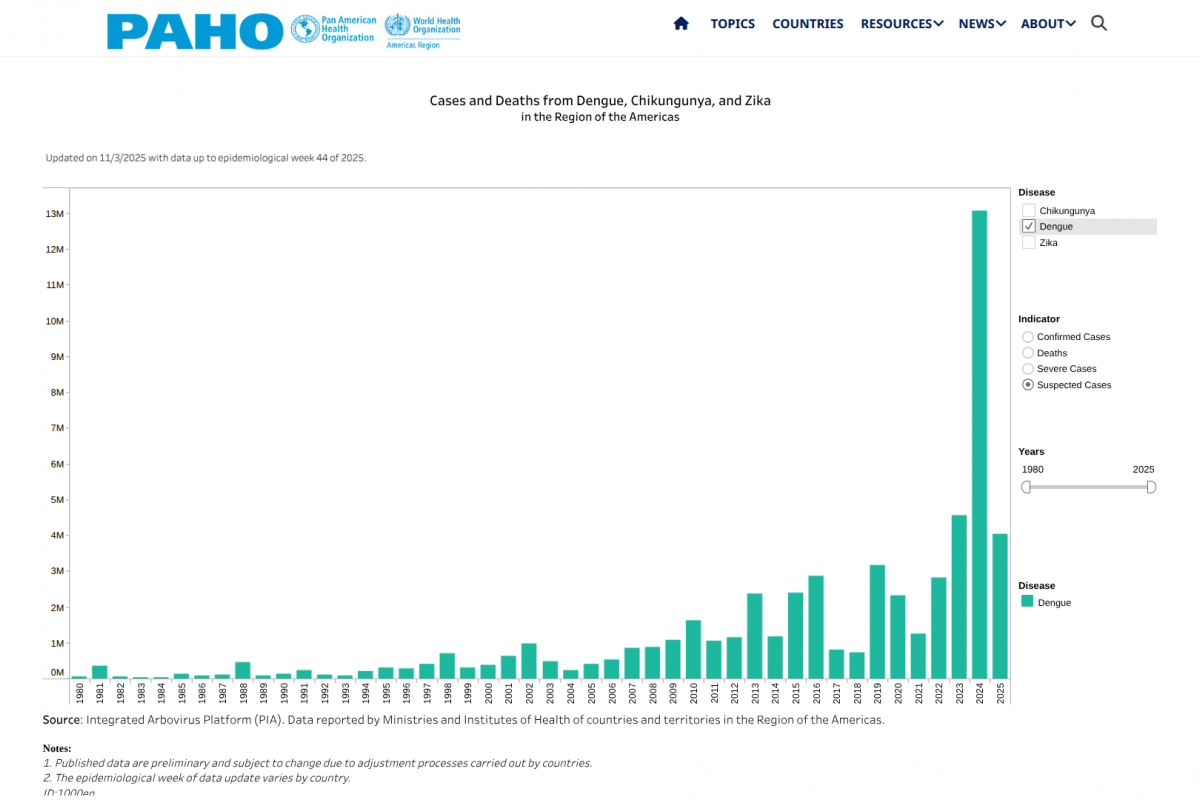
Chikungunya, a viral infection caused by an alphavirus that is spread to people through the bite of an infected female Aedes mosquito, significantly impacted the Americas and the European region in 2025.
According to the World Health Organization (WHO) latest report, a total of 445,271 suspected and confirmed Chikungunya cases and 155 related fatalities worldwide. The distribution of cases across regions has been uneven, with some countries reporting a resurgence in numbers during 2025.
The French Overseas Departments in the Indian Ocean, such as La Réunion, are Europe's unfortunate leader in Chikungunya outbreaks in 2025.
The WHO wrote that the potential for further geographical spread is highlighted by the fact that 27 countries and territories have established competent vector populations (Aedes aegypti and Aedes albopictus mosquitoes) but have not yet documented local Chikungunya transmission.
In the United States, as of November 11, 2025, 88 travel-related Chikungunya cases have been confirmed by the U.S. CDC.
The state of Florida, which is geographically located near endemic areas such as Cuba, has reported 42 travel-related Chikungunya cases confirmed this year in Broward, Collier, Lake, Miami-Dade, Palm Beach, and Seminole Counties.
And recently, the New York State Department of Health confirmed a locally acquired case of Chikungunya in Nassau County.
The CDC does recommend Chikungunya vaccination for specific international travelers in 2025.