What Are Clinical Trials in 2026

The National Institutes of Health (NIH) recently announced a significant policy shift: it will no longer classify Basic Experimental Studies Involving Humans (BESH) as clinical trials.
This decision, detailed in Notice NOT-OD-26-032 released on January 29, 2026, follows years of debate over the broad definition of clinical trials that the agency adopted in 2014. The 2014 policy change aimed to enhance transparency and accountability in NIH-funded human research, but unintentionally included many basic-science projects within the clinical trial classification.
The previous definition categorized studies as clinical trials if they prospectively assigned human participants to interventions to evaluate health-related biomedical or behavioral outcomes, and required that such studies be registered on ClinicalTrials.gov with results reported there.
BESH studies, while involving human participants, focus on uncovering fundamental aspects of biology or behavior—such as the basic mechanisms of psychology, neuroscience, or cognition—without the primary goal of improving health outcomes or changing clinical practice.
Examples include experiments that explore how the brain processes information or how individuals make decisions in controlled settings, rather than testing therapies.
Although BESH research might eventually contribute to advances in health, it is not focused on immediate clinical applications or on altering clinical practice.
Effective for grant applications due on or after May 25, 2026, BESH studies will no longer be subject to clinical trial requirements, meaning that mandatory registration and results reporting on ClinicalTrials.gov will no longer be required.
Additionally, NIH plans to retire BESH-specific funding opportunities after this date, allowing related research to be submitted under "Clinical Trials Not Allowed" announcements.
Existing BESH projects will continue to operate under their current award terms, with interim flexibilities from a prior notice (NOT-OD-25-134) still in effect. As the May 2026 deadline approaches, the NIH will provide further instructions regarding application systems and funding announcements.
For researchers planning human-participant studies, the NIH recommends consulting the revised decision tools available on its website and reaching out to program officers for guidance on how this change will affect specific projects.
Overall, registered studies (all types, not vaccine-specific) at ClinicalTrials.gov are about 42,969 new studies posted (part of the cumulative total reaching 563,835 by the end of 2025). In 2026, over 7,000 additional studies have been registered.
According to Grok's research on February 13, 2026, ClinicalTrials.gov does not provide dollar-amount funding annotations or total investment figures for any trials, including vaccines.
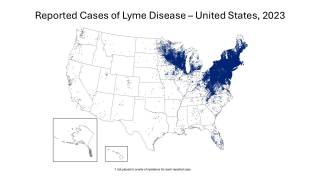
However, current phase 3 vaccine candidates require significant funding before commercialization. For example, the overall development of a Lyme disease vaccine candidate co-developed by Valneva SE and Pfizer Inc. may require more than $300 million of investment.
"It's essential for the U.S. government to strengthen the clinical trial industry by providing clear definitions," said Don Ward Hackett, publisher of Vax-Before-Travel.com.
"Over the past 35 years, we have seen numerous adjustments with the clinical trial industry integrating digital technologies, and we are very optimistic that these changes will enable the vaccine industry to produce world-class products by 2026."
Our Trust Standards: Medical Advisory Committee
-
Fact checked by Robert Carlson, MD