TB Vaccines Impact Depends on Efficacy Against Infectious Asymptomatic Tuberculosis

For more than 100 years, the effectiveness of tuberculosis (TB) vaccines has varied based on the type of vaccine used.
As of 2026, there are over ten TB vaccines in circulation, prompting researchers to explore ways to enhance their effectiveness in decreasing the number of new cases.
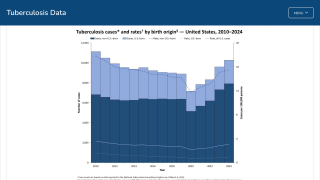
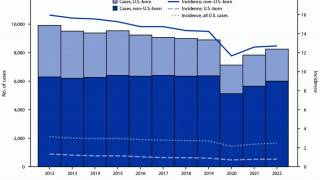
Given the rising number of TB cases in the United States and other countries in 2026, this research is crucial for reducing the incidence of the disease.
According to a mathematical modeling study, the population-level success of new TB vaccines could hinge on their ability to block infectious asymptomatic TB, where people transmit the bacteria without symptoms.
Using models based on high-burden settings, researchers compared three vaccine scenarios: preventing progression to infectious symptomatic TB only; preventing progression to any infectious disease, including asymptomatic disease; and preventing progression to any disease.
Across all short-term (3-year) scenarios, symptomatic TB cases were reduced by a similar amount (≈1.6–2.3%).
Over longer periods (20 years), vaccines that block infectious asymptomatic disease averted far more cases—19.4% and 23.3% vs. just 7.3% in the symptomatic-only scenario—mainly by curbing silent transmission.
Published in PLOS Medicine on February 12, 2026, the study highlights that overlooking efficacy against asymptomatic infection could underestimate the long-term benefits of new TB vaccines in ending the global epidemic.
These researchers also evaluated scenarios in which they hypothetically assumed the vaccines would be effective in the pre-symptomatic stages at the time of vaccination.
If this were the case, they would have seen greater impact from the vaccines because they protected a larger proportion of the population, specifically those at high risk of progressing to later stages of disease.
However, experts believe that it is unlikely that a vaccine would be effective if delivered to someone with the disease at the time of vaccination, as the immune response would overwhelm any vaccine effect.
Although it is not yet known whether the same applies to earlier disease stages (such as nTB) and to undulation between disease stages, these researchers wrote.
Our Trust Standards: Medical Advisory Committee