Vaccine News

Vaccine news brought to you by Precision Vaccinations.

Jul 15, 2025 • 10:35 am CDT
PAHO July 2025

The Pan American Health Organization (PAHO) recently reported very positive news regarding the multi-year outbreak of dengue fever in the Region of the Americas.

On July 10, 2025, the PAHO reported In the epidemiological week #25 of 2025, a total of 3,349,004 suspected cases of dengue were reported this year. This data represents a significant 70% decrease compared to the same period in 2024 and an 11% decrease compared to the average of the last five years.

Additionally, a total of 1,600 fatalities have been recorded, resulting in a case fatality rate of 0.048%.

While the majority of dengue cases have been reported in Brazil, Mexico's dengue outbreak remains a concern in 2025.

Mexico has reported 49,085 cases and 2,352 related fatalities this year.

From a sub-type perspective, Brazil, Costa Rica, El Salvador, Mexico and Panama report the simultaneous circulation of DENV1, DENV-2, DENV-3, and DENV-4.

This PAHO data indicates the need for international travelers to obtain dengue vaccinations may diminish during the summer of 2025. In the United States, only Puerto Rico offers dengue vaccinations.

Jul 14, 2025 • 1:51 pm CDT
frontiersin.org

India is a tropical country undergoing rapid urbanization, making it one of the most affected regions for vector-borne diseases, including Chikungunya Fever.

Epidemics of Chikungunya have been reported since 1963 and continue to occur, with the most recent outbreak recorded in 2025, particularly in the states of Maharashtra and Karnataka.

As of July 14, 2025, India's National Center for Vector-Borne Diseases Control had reported a total of 30,876 Chikungunya cases this year. 

However, according to local news reports, the number of Chikungunya cases in India may be underreported as the rainy season approaches due to issues with diagnostic testing.

Blood tests diagnose Chikungunya. However, since the clinical appearance of both Chikungunya and Dengue is similar, laboratory confirmation is crucial, especially in areas where Dengue is prevalent.

Furthermore, the U.S. CDC says laboratory testing practices for Chikungunya vary significantly among the 100 countries reporting cases.

In Bhopal, the capital city of the Indian state of Madhya Pradesh, a higher positivity rate for Chikungunya was recently detected at 7.02% compared to Dengue's 2.47% in July 2025.

In 2024, Bhopal reported a 16% positivity rate for Chikungunya.

Since millions of international travelers visit India each year, various health agencies have issued vaccination recommendations.

To prevent infections, the CDC recommends that Chikungunya vaccination may be considered for individuals traveling to or moving to India, particularly if they plan to stay for an extended period.

When departing from the United States for India, travel vaccine clinics and pharmacies offer Chikungunya vaccination services for a fee.

Jul 14, 2025 • 10:02 am CDT
US CDC July 14, 2025

Since the summer of 2024, countries in the Region of the Americas have reported low numbers of Oropouche cases. In the past, Oropouche virus has caused periodic outbreaks in and around the Amazon Basin.

According to the U.S. Centers for Disease Control and Prevention (CDC), the countries most impacted include Brazil, Cuba, Panama (specifically, the Darién Province), and Peru.

Furthermore, countries such as Spain have reported Oropouche cases in travelers to the Americas in 2025.

The disease is primarily spread through bites from infected midges and mosquitoes.

The CDC's updated Travel Health Advisory says travelers visiting affected areas should take steps to prevent bug bites and consider using condoms or not having sex during travel and for six weeks after returning from travel.

As of July 14, 2025, the CDC stated the Oropouche virus has been found in semen, but it is unknown if it can be spread through sex.

Currently, there is no preventive vaccine available.

Jul 14, 2025 • 9:40 am CDT
UKHSA July 2025

As the summer vacation season peaks in late July, international travelers should be aware of where the measles virus is spreading.

According to data from the UK Health Security Agency (UKHSA), 529 laboratory-confirmed cases of measles were reported in England in 2025.

The unfortunate leader is London, with 44% (233 of 529) of these cases.

Other measles outbreaks have been reported in the East of England, the North West, Bristol, Hackney, and Leeds.

To alert all travelers, the U.S. CDC updated its Level 1 - Practice Usual Precautions, Global Measles alert at the end of May 2025.

The UK's NHS says Measles is an infection that spreads very easily in areas such as airplanes, trains, and closed spaces like conference centers.

However, obtaining the MMR vaccine is the best way to prevent infection.

In the United States, MMR vaccines are available at clinics and pharmacies. The CDC recommends vaccination weeks ahead to visiting measles-risk areas in 2025.

Jul 14, 2025 • 9:10 am CDT
US CDC July 2025

Coconino County Health and Human Services officials recently confirmed a resident died from pneumonic plague, a severe lung infection caused by the Yersinia pestis bacterium.

As of July 11, 2025, this is the first recorded death from Pneumonic plague in Coconino County since 2007, when an individual had an interaction with a dead animal infected with the disease. 

The new death is not related to a recent report of a prairie dog die-off in the Townsend Winona area, northeast of Flagstaff, Arizona.

“Our hearts go out to the family and friends of the deceased,” said Coconino County Board of Supervisors Chair Patrice Horstman in a press release.

“Out of respect for the family, no additional information about the death will be released.”

According to the U.S. Centers for Disease Control and Prevention, an average of seven human plague cases are reported each year in the United States. The last urban plague epidemic in the United States occurred in Los Angeles from 1924 through 1925.

The CDC states that the risk to the local public from exposure to plague remains low. 

More recent plague epidemics have occurred in Africa, Asia, and South America.

The bacterium that causes plague, Yersinia pestis, can be transmitted to humans from the bite of an infected flea or through contact with an infected animal. According to health officials, the risk of human-to-human transmission is very low. The last reported occurrence of human-to-human transmission in the U.S. was reported in 1924.

Without a vaccine to prevent plauge epidemics, the U.S. Department of Defense (DoD) continues to fund development efforts.

Dynavax Technologies Corporation confirmed in February 2025 that it continues developing a plague vaccine candidate (rF1V) with the CpG 1018® adjuvant in collaboration with, and fully funded by, the DoD.

Dynavax and the DoD executed a new agreement for approximately $30 million through the first half of 2027 to support additional clinical and manufacturing activities, including a Phase 2 clinical trial expected to initiate in the third quarter of 2025.

Jul 12, 2025 • 8:14 am CDT
US CDC July 12, 2025

The World Health Organization (WHO) published the 55th situation report for the multi-country outbreak of mpox virus (MPXV), which provides details on the global epidemiological situation for mpox, including an update in Africa.

All clades of MPXV continue to circulate in several countries.

On July 11, 2025, the WHO stated that only Türkiye has reported the detection of a new MPXV sub-clade since report #54, in a traveler from the Democratic Republic of the Congo (DRC).

In Africa, community transmission of clade Ib MPXV remains limited to 19 countries. Most countries with previous sporadic importations are currently not reporting active transmission of clade Ib MPXV.

As of July 8, 2025, the countries of Burundi, DRC, Ethiopia, Kenya, Malawi, Rwanda, South Sudan, Tanzania, Uganda, and Zambia are experiencing sustained human-to-human transmission of the virus.

Clade IIb MPXV continues to be reported in West Africa, while Central African countries report both clade Ia and clade Ib MPXV, and East African countries report clade Ib MPXV.

The WHO noted that, despite progress in response activities implemented through collaboration among governments, international partners, and communities, significant funding gaps are threatening the deployment of vaccines.

Approximately 724,000 MVA-BN (JYNNEOS) vaccine doses had been administered in 7 countries, out of the 1.9 million vaccine doses allocated to 13 countries, partly due to funding requirements for shipping to the countries.

Additionally, the DRC had received 1.55 million doses of the LC16m8 vaccine from a bilateral agreement.

In the United States, the JYNNEOS vaccine has become readily available at travel clinics and pharmacies and is recommended for specific international travelers.

Jul 12, 2025 • 7:49 am CDT
US CDC July 2025

The World Health Organization (WHO) recently confirmed that the spread of the poliovirus remained a global Public Health Emergency of International Concern.

To address the under-vaccinated population, two announcements indicate a path to reduce the detections of poliovirus and minimize the number of polio outbreaks

On July 10, 2025, PharmaJet® announced that it has signed a Memorandum of Understanding to explore the integration of needle-free delivery of inactivated polio vaccine into Egypt’s routine immunization program. The agreement includes provisions for distribution, technology transfer, manufacturing, and the development of new pharmaceutical products, as well as collaboration to increase needle-free access within Egypt and the region.

Seperately, the Government of Japan, through the Japan International Cooperation Agency, has provided UNICEF with $5 million for a renewed partnership to eradicate polio and strengthen routine immunization across all 34 provinces of Afghanistan. This 12-month initiative aims to reach over 13 million children with lifesaving polio vaccines, supporting both routine vaccination and national polio campaigns.

Previously, to alert international travelers of the expanded health risk in 41 countries, the U.S. Centers for Disease Control and Prevention reissued a Global Polio Alert—Level 2, Travel Health Notice on June 16, 2025, regarding polio outbreaks and poliovirus detections.

As of July 12, 2025, the CDC recommends that travelers complete their routine polio vaccination series. Some people may also need a booster dose before visiting areas with outbreaks, such as Afghanistan and Germany.

In the United States, polio vaccines are available at travel clinics and pharmacies.


Jul 11, 2025 • 3:02 pm CDT
Google Maps July 2025

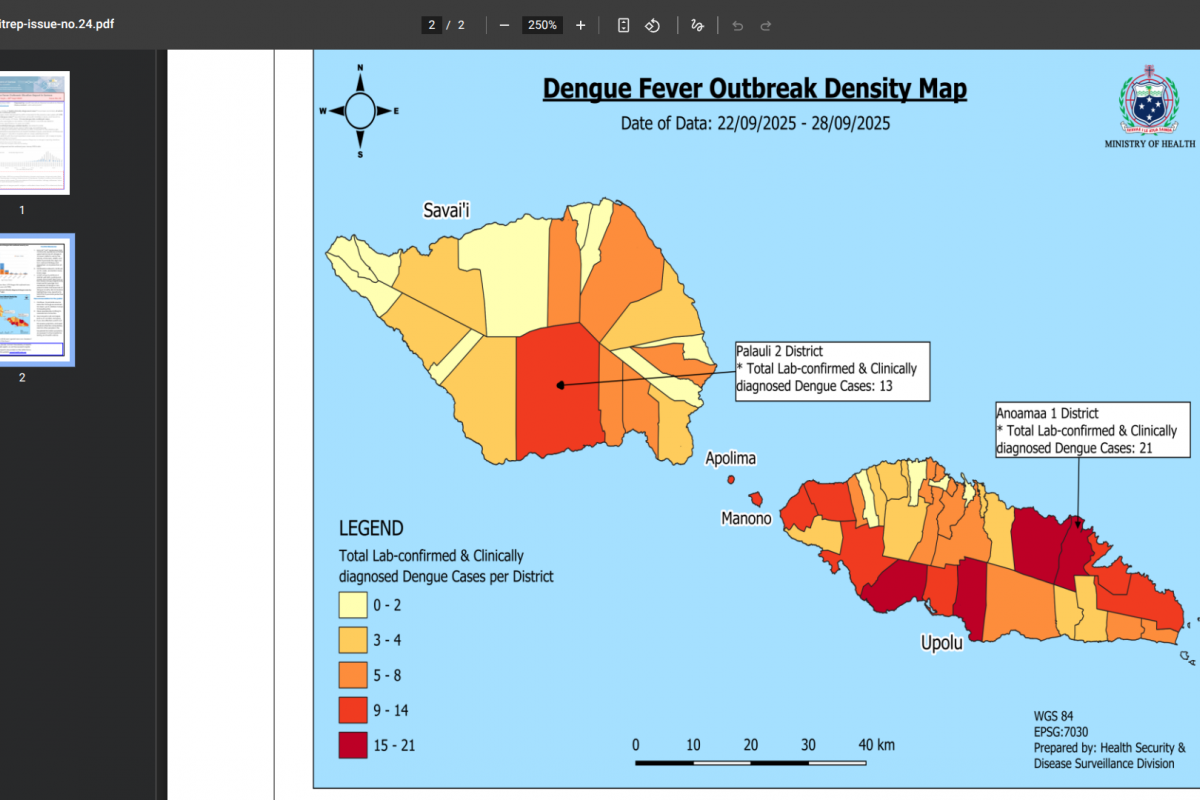
The southernmost territory of the United States, situated southwest of Hawaii in the Pacific Ocean, has declared a health emergency related to a surge of dengue fever cases.

As of July 7, 2025, the American Samoa Department of Health issued a travel alert following the confirmation of four imported cases of dengue fever and two locally-acquired cases. The local population is urged to protect themselves from mosquito bites, which are the source of this serious disease.

The government stated that these dengue cases are related to travelers to and from Samoa, a neighboring island.

According to the Samoa Bureau of Statistics, American Samoa welcomed over 200,000 visitors in 2024.

Over the last two years, the U.S. Centers for Disease Control and Prevention (CDC) has reported an increasing number of dengue cases in territories.

The CDC says the dengue virus is endemic and has caused outbreaks in the U.S. territories of Puerto Rico, the U.S. Virgin Islands, the Federated States of Micronesia, the Republic of the Marshall Islands, and the Republic of Palau.

Except for Puerto Rico, dengue vaccines are not available in the continental U.S. or its territories as of 2025.

Within the U.S., the state of Florida reports the majority of dengue cases.

Jul 11, 2025 • 9:47 am CDT
by Gina Janosch

When most vacationers book their summer vacation in countries in the Southern Hemisphere, they should consider how to protect themselves from influenza. Currently, the World Health Organization (Influenza Update N° 534) is advising everyone in the 'south' to speak with a healthcare provider about immunization options.

As of July 2025, influenza positivity was elevated in countries of Tropical and Temperate South America, Southern and Eastern Africa, and South-East Asia.

The risk of exposure to the influenza virus during travel depends on the time of year and destination. In temperate regions, such as Brazil, influenza epidemics are more common from April to September in the Southern Hemisphere.

In the Northern Hemisphere, specifically in the United States, the previous flu season was notably severe, marking the worst in 15 years.

To help protect international travelers and others, CSL Seqirus recently announced that the company started shipping its differentiated portfolio of flu vaccines for the 2025-2026 season in the United States.

"During this past flu season, doctors' offices, emergency departments and hospitals across the country were filled with patients affected by the flu," said Gregg Sylvester, Chief Health Officer, CSL Seqirus, in a press release on July 10, 1025.

"We experienced the impact flu can have on our communities, our healthcare systems, and in our own homes. To make sure this doesn't happen again, vaccination is the first and most important action to help prevent flu and its potentially serious consequences."

According to the U.S. Centers for Disease Control and Prevention (CDC), it is recommended that all eligible individuals aged six months and older receive an annual influenza vaccine, especially those at an increased risk of severe influenza-related complications, such as older adults, pregnant individuals, and children under five years old.

Flu shots and other travel vaccines are offered at clinics and pharmacies in the U.S.

Jul 10, 2025 • 2:36 pm CDT
by Mohamed Nuzrath

The World Health Organization (WHO) recently published updated clinical guidance for treating four arboviral diseases:  chikungunya, dengue, Zika, and yellow fever.

As of July 4, 2025, this WHO resource is the first that covers all four diseases.

Arbovirus infections have become a growing public health threat, affecting 5.6 billion people.

These diseases are expanding into new regions, where virus-carrying mosquitoes are seldom found, increasing the likelihood of outbreaks beyond tropical and subtropical areas.

The WHO stated that an integrated approach is vital, as these four diseases often present with similar symptoms, especially in the early stages of infection, and multiple arboviruses may circulate simultaneously in certain regions. This makes clinical differentiation particularly challenging, especially when diagnostic testing is not readily available.

These diseases often affect international travelers who lack natural immunity and have not received appropriate immunization with travel vaccines.

Global risk maps are a crucial tool for evaluating the worldwide threat posed by mosquito- and tick-transmitted arboviral diseases. 

Jul 10, 2025 • 10:35 am CDT
US CDC 2025

The multi-year, global outbreak of pertussis (Whooping cough) cases has continued through the first half of 2025.

In Japan, pertussis has been a category V notifiable disease under the Infectious Diseases Control Law since January 2018. As of July 10, 2025, the Japan Institute for Health Security Infectious Disease Information website reveals that 39,672 pertussis cases were reported in 2025. 

This total surpasses the amount recorded in 2019, 16,845, and the 4,096 pertussis cases reported in 2024.

According to the U.S. CDC, pertussis is a highly contagious respiratory infection marked by severe coughing fits. It can lead to serious complications, including pneumonia and encephalopathy, and poses a potentially fatal risk to infants and other vulnerable individuals, such as pregnant women.

Since pertussis remains one of the leading causes of vaccine-preventable deaths worldwide, the CDC recommends that international travelers ensure they are immunized before visiting Japan in 2025.


Jul 9, 2025 • 3:06 pm CDT
Google Maps July 9, 2025

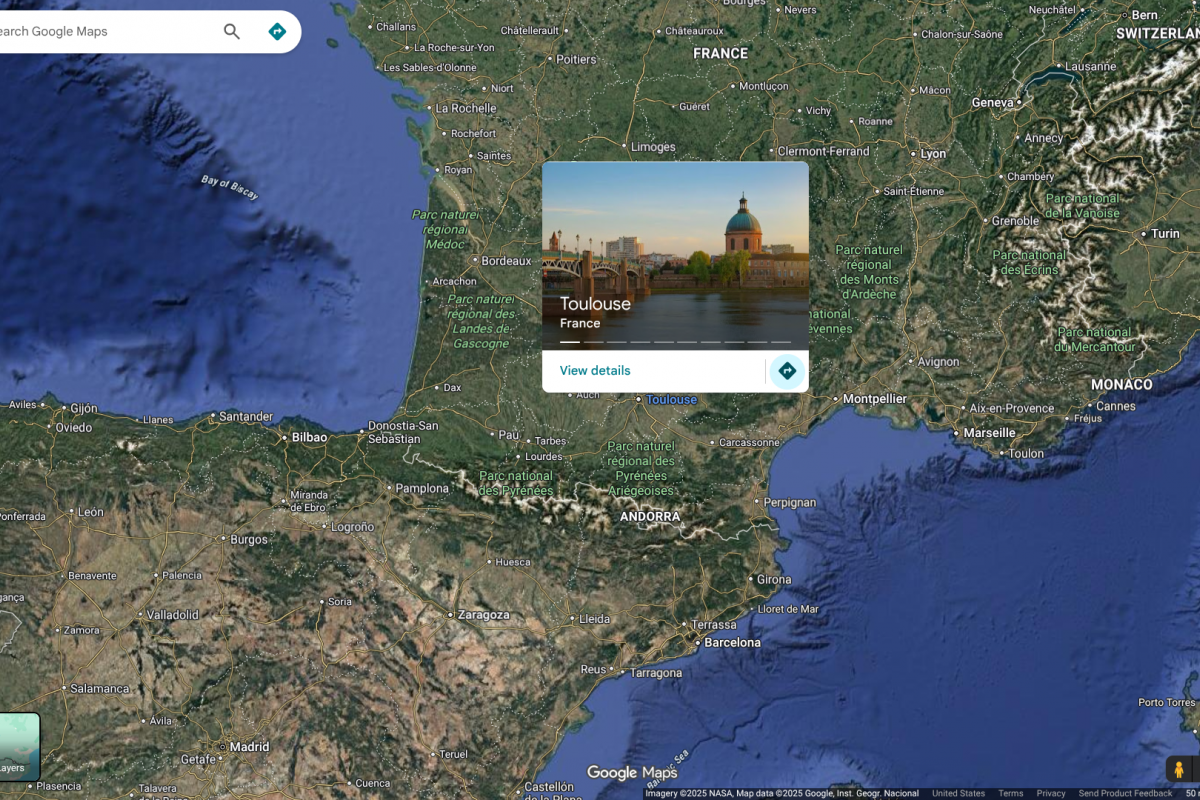
The French Republic has been confronted with significant chikungunya outbreaks in various Departments in 2025.

As of July 9, 2025, Sante Publique France reported a total of 25 locally acquired cases of chikungunya in the mainland since May 2025.

Mosquito-transmitted cases have been reported from Provence-Alpes-Côte d'Azur (PACA) (14), Corsica (3), Occitanie (2), Auvergne-Rhône-Alpes (4), Grand Est (1), and Nouvelle-Aquitaine (1).

Located at the far southeastern point of the mainland, PACA's largest city is Marseille, France's third-largest city, with over 800,000 residents, and a tourist favorite destination.

In addition to local cases, France has reported 761 imported cases of chikungunya in the last few months.

Many of these cases are related to international travel to France's Department of Reunion and Mayotte in the southwest Indian Ocean.

In France, as well as in the United States, chikungunya vaccines are commercially offered. Various governments have approved these vaccines and provide a high degree of protection against this mosquito-transmitted disease.

The U.S. CDC recommends vaccination before visiting areas with chikungunya outbreaks, such as the southern regions of France.

Jul 9, 2025 • 1:56 pm CDT
Maps July 9, 2025

The reappearance of 138 chikungunya cases in the People's Republic of Bangladesh in 2024 after a 7-year absence indicated the potential for larger outbreaks in the future.

In June 2025, the Institute of Epidemiology, Disease Control and Research in Bangladesh reported an outbreak of chikungunya in Dhaka city, with 337 cases reported between January and May 28, 2025.

Dhaka is the capital and largest city of Bangladesh. It is one of the largest and most densely populated cities in the world, with a population exceeding 10 million.

In addition to locals being at risk for this mosquito-transmitted virus, over 650,000 foreign visitors are expected to visit Bangladesh in 2025.

According to the U.S. CDC, travelers visiting areas with ongoing chikungunya outbreaks are at risk of infection. These health risk areas are constantly changing and evolving; therefore, travellers should check the latest information on outbreaks before departing abroad.

As of July 9, 2025, two new chikungunya vaccines have been approved for use in the United Kingdom, the European Union, and the United States. These vaccines are commercially offered at travel clinics and pharmacies in the U.S.


Jul 8, 2025 • 12:30 pm CDT
Google Maps July 2025

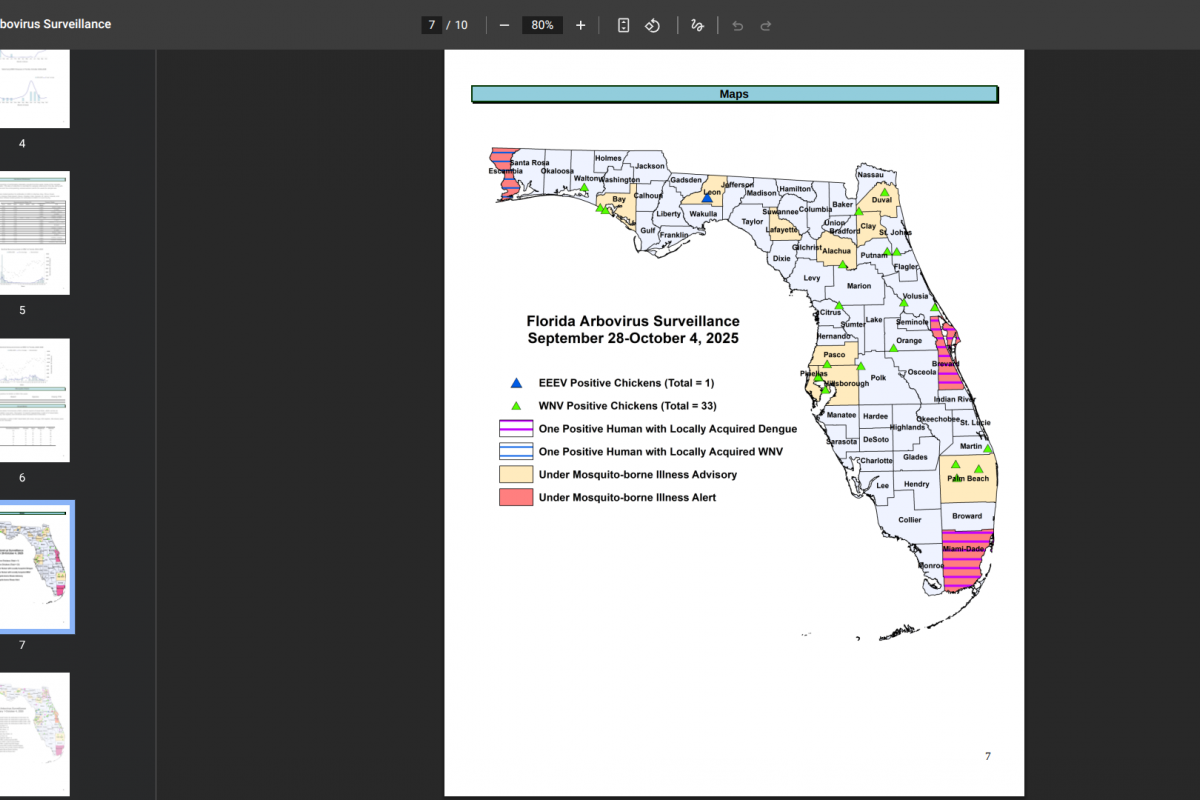
With the mosquito season underway in the United States, Florida health authorities have recently reported the third locally acquired case of dengue fever in Brevard County.

As of July 8, 2025, the Florida Department of Health in Brevard County (DOH-Brevard) issued a Mosquito-Borne Illness Advisory, which is scheduled to be effective until mid-September 2025.

DOH-Brevard and Brevard County Mosquito Control have confirmed that they are coordinating surveillance and prevention efforts through both ground and aerial spraying.

Previously, further south along the Atlantic Coast, Miami-Dade County has reported two local cases of dengue this year.

In 2024, 91 locally acquired dengue cases were reported in ten Florida counties, with Miami-Dade leading the way.

As of July 2025, the U.S. Centers for Disease Control and Prevention, Canada, and the United Kingdom have not issued vaccination requirements for visiting Florida this year.

Currently, only Puerto Rico is offering dengue vaccinations in the United States.

Jul 8, 2025 • 9:19 am CDT
US CDC July 2025

The H5N1 strain of highly pathogenic avian influenza (HPAI) has been present in wild birds worldwide and caused outbreaks in U.S. domestic birds and dairy cattle in 2024-2025.

While there were 70 humans infected with HPAI, and one related fatality, there was no human-to-human transmission of this serious virus.

However, since February 25, 2024, only six human cases have been reported.

As the number of infections has recently decreased, the U.S. Centers for Disease Control and Prevention (CDC) announced that it has streamlined H5N1 bird flu updates with routine influenza data and reporting cadences to reflect the current public health situation.

As of July 7, 2025, the following changes were made to this CDC webpage:

Data on the number of people monitored and tested for bird flu are reported on a monthly basis.

Data on highly pathogenic avian influenza (HPAI) detections in animals will no longer be reported on the CDC website. These HPAI data can be found on the U.S. Department of Agriculture's website.

Furthermore, the CDC will report any additional human cases of H5 bird flu here and in FluView.

While there are 'bird-flu' vaccines approved by the U.S. FDA, none were deployed in the USA during this outbreak.