First Head-to-Toe Cellular Atlas of the Mosquito Has Launched

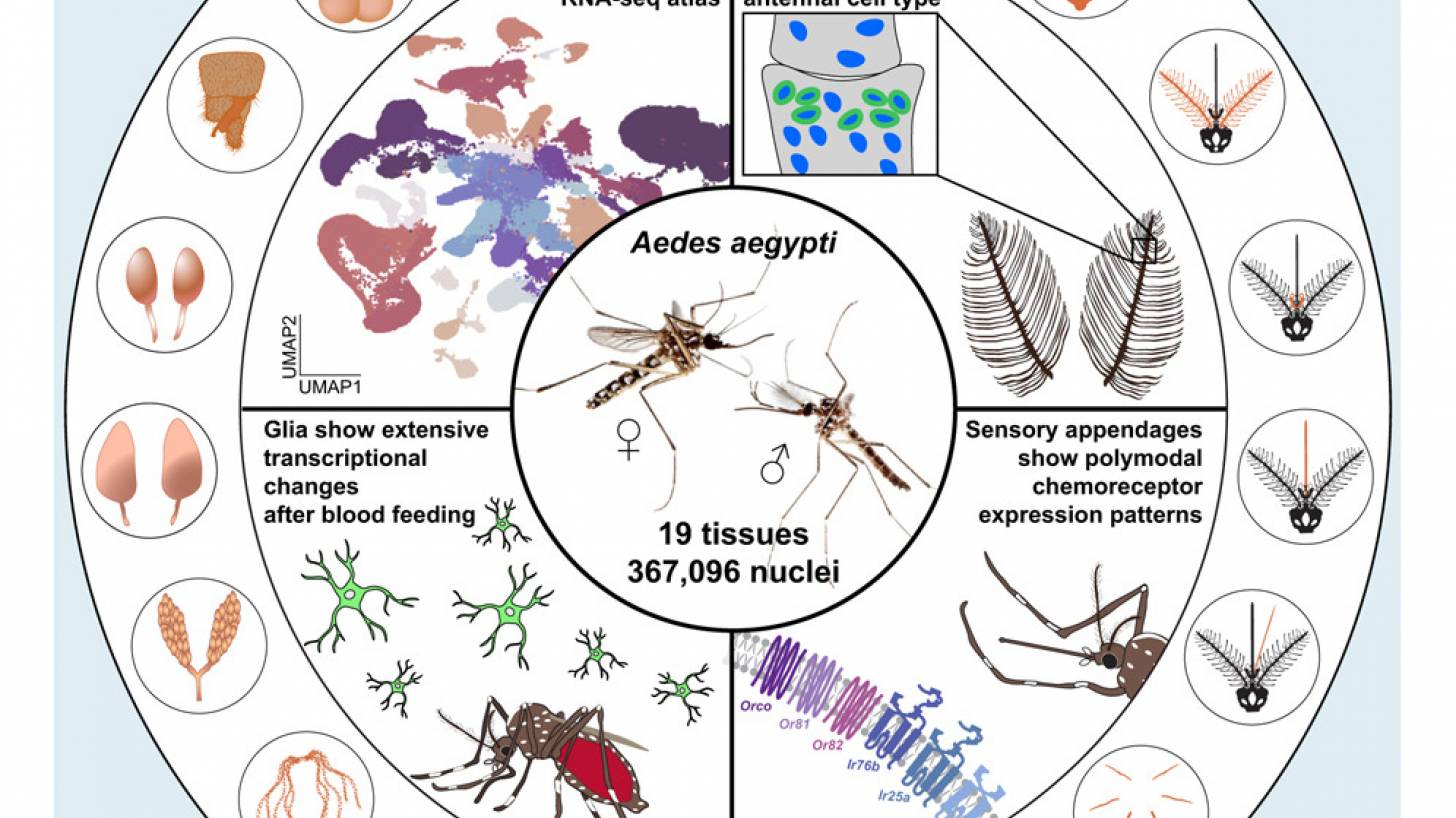
Researchers from Rockefeller University's Laboratory of Neurogenetics and Behavior, in collaboration with mosquito experts around the globe, recently created the first-ever cellular atlas of adult male and female Aedes aegypti mosquitoes.
This innovation is essential as the female Aedes aegypti mosquito's remarkable ability to hunt humans and transmit pathogens relies on her unique biology.
The Mosquito Cell Atlas provides cellular-level resolution of gene expression in every mosquito tissue, from the antennae down to the legs. The dataset is freely available to all researchers (and curious members of the public.
This achievement is significant as these mosquitoes transmit more diseases than any other species of their kind.
The Aedes aegypti Mosquito Cell Atlas resource enables systematic investigation of cell-type-specific expression across all mosquito tissues.
"This is a comprehensive snapshot of what every cell in the mosquito is doing as far as expressing genes," says lab head Leslie Vosshall in a press release on October 30, 2025.
Vosshall, who has studied Aedes aegypti, which transmits the yellow fever virus, for nearly two decades. "It's a real achievement because we profiled so many different types of tissues in both males and females."
"And what's more is that this cross-species mating still prevents the female from mating again, even though she gets no viable progeny out of it. The result is that she's effectively been sterilized. If this cycle is repeated enough times, the Aedes aegypti population will drop or even disappear, which has been observed in South Florida," added Leah Houri-Zeevi.
The atlas has already yielded new insights into the genetic secrets of Aedes aegypti, including novel cell types, subtle differences—and unexpected similarities—between male and female mosquitoes, and the dramatic changes in genetic expression that the female mosquito brain undergoes after a blood feeding.
These researchers concluded, 'Understanding how specific glial populations influence neuronal function and behavior through these pathways could reveal novel aspects of glia-neuron interactions and their role in regulating mosquito behavior.'
Our Trust Standards: Medical Advisory Committee
-
Fact checked by Robert Carlson, MD