When Visiting Brazil and Cuba in 2025, Oropouche Remains a Health Risk


During the summer of 2024, the Pan American Health Organization and the U.S. Centers for Disease Control and Prevention (CDC) issued several alerts regarding Oropouche cases, including deaths, in the Americas.
These agencies continue to highlight Oropouche risks, as no preventive vaccines are available in June 2025.
To help clarify what transpired, the World Health Organization (WHO) Technical Advisory Group on Virus Evolution (TAG-VE) recently published a detailed risk assessment for Oropouche virus, noting that two lineages of the virus circulated in various countries during 2024.
Published on June 10, 2025, the WHO report highlights a low death rate, but significant health impacts.
In 2024, Oropouche outbreaks increased in the Southern Hemisphere, with the spread extending beyond endemic areas in the Amazon (Brazil) and expanding for the first time to Cuba, along with travel-related cases in the U.S. and Europe.
Brazil, the most affected country, reported poor fetal outcomes linked to the outbreaks.
As of mid-2025, 11,500 cases have been reported. Last year, Brazil confirmed 13,856 cases.
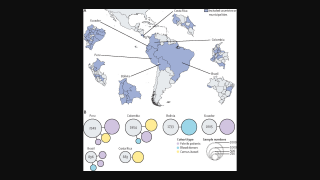
TAG-VE identified one lineage in Brazil and Cuba and another in Peru and Ecuador, with Colombia reporting both.
The Brazilian lineage likely entered Cuba from Acre in early February 2024, going undetected until May, before spreading quickly nationwide.
The co-circulation of lineages in Colombia raises concerns about the evolving nature of orthobunyaviruses and the potential for severe disease outcomes. In Peru, studies indicate intense and continuous transmission, despite the lack of reported reassortment with the Brazilian lineage.
The primary vector, the Culicoides paraensis midge, thrives in hot, humid conditions. Although rising temperatures may expand its range, no significant changes have been observed. In Cuba, C. paraensis was identified only after the outbreak, and the primary vector remains unclear.
Clinically, symptoms resemble dengue and Zika virus infections, with rare neurological complications reported, including Guillain-Barré syndrome. Since 2024, five deaths related to Oropouche virus infections have been recorded in the Americas.
Vertical transmission is being investigated through three mechanisms: transplacental, perinatal, and breast milk.
Although the virus has been found in semen, no documented sexual transmission cases exist, and no blood transfusion cases have been reported.
As of June 11, 2025, the U.S. CDC has two active Travel Health Advisories focused on reports of Oropouche outbreaks.
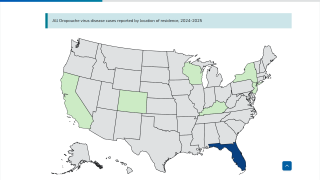
In 2024, Florida reported 103 cases of Oropouche fever in individuals who had traveled to an endemic area such as Cuba. Miami-Dade led the Florida counties reporting cases with 61 cases.
The CDC states that it is collaborating with PAHO and other international partners to investigate the potential risks of Oropouche during pregnancy. The CDC has issued interim recommendations for how to counsel patients on possible sexual transmission.
Furthermore, while it is unknown if Oropouche can be spread by sex, travelers and their partners concerned about possibly spreading Oropouche through sex can consider using condoms or not having sex during travel and for 6 weeks after returning from travel, says the CDC.
Our Trust Standards: Medical Advisory Committee
-
Fact checked by Robert Carlson, MD