Travel Vaccine Breaking News

Travel vaccine breaking news brought to you by Vax Before Travel.

Jun 27, 2025 • 5:54 am CDT
Google Maps 2025

The mosquito-transmitted West Nile virus (WNV) has been actively spreading throughout 14 Louisiana parishes since 2002 and continues to do so in 2025.

On June 25, 2025, the Louisiana Department of Health (LDH) confirmed Louisiana’s first human case of WNV of the 2025 mosquito season. This case was confirmed in an individual from Livingston Parish, located east of Baton Rouge and north of New Orleans, who was hospitalized due to complications from the infection.

In 2024, there were 57 confirmed human cases of WNV in Louisiana, including three deaths. 

In 2024, 1,466 WNV cases were confirmed in 49 states in the USA, led by Texas with 176 cases.

The LDH says WNV can cause mild to severe illnesses. While most people infected with West Nile virus develop no symptoms, about 20% of infected individuals develop West Nile fever, a flu-like illness characterized by symptoms that can include fever, headaches, body aches, nausea, and rashes. About 1 in 150 people who are infected with WNV develop a severe illness that can affect the brain, spinal cord, and nerves, which may even cause paralysis or death.

WNV is an international concern.

For example, according to a research program by the UK Health Security Agency and the Animal and Plant Health Agency, WNV genetic material was detected in mosquitoes in Britain for the first time in 2025.

As of June 27, 2025, vaccine candidates to protect people against WNV have not been approved in the United States.

Jun 26, 2025 • 9:00 am CDT
US CDC 2025

The Ecuadorian Ministry of Public Health reported 10 confirmed fatal cases of yellow fever and eight related fatalities as of June 28, 2025.

These patients were primarily from the provinces of Morona Santiago and Zamora Chinchipe.

Current U.S. CDC Travel Health Advisory recommendations include that yellow fever vaccination is recommended for travelers ≥9 months old going to areas below 7,550 ft elevation, east of the Andes Mountains, in the provinces of Morona-Santiago, Napo, Orellana, Pastaza, Sucumbíos, Tungurahua*, and Zamora-Chinchipe.

These areas are where virus-carrying mosquitoes are found.

Vaccine is generally not recommended for travel limited to areas below 7,550 ft elevation, west of the Andes Mountains, in the provinces of Esmeraldas,* Guayas, Los Ríos, Manabí, Santa Elena, Santo Domingo de los Tsáchilas, and designated areas in the provinces of Azuay, Bolívar, Cañar, Carchi, Chimborazo, Cotopaxi, El Oro, Imbabura, Loja, and Pichincha.

And for the cities of Guayaquil or Quito (the capital), or the Galápagos Islands.

Jun 26, 2025 • 6:18 am CDT
Maps June 26, 2025

The Plurinational State of Bolivia recently declared a National Health Emergency in response to a measles outbreak in ten communities.

The government reported on June 25, 2025, that Health Minister Maria Renee Castro highlighted the severity of measles, describing it as a highly contagious viral infection that can lead to severe complications, including pneumonia, encephalitis, and even death, particularly among malnourished or immunocompromised children.

"The most affected group is children under 10 years old; therefore, we declared Red Alert in Santa Cruz and enabled vaccination centers in 24-hour health facilities in all 56 municipalities until weekends,"

She stressed, "It is essential that parents get their children vaccinated. The country has 500,000 doses, specifically for girls and boys."

As of June 26, 2025, the U.S. CDC has included Bolivia in its recent measles and yellow fever Travel Health Advisories, recommending that travelers speak with a travel vaccine expert before visiting Bolivia.

These travel alerts are essential, as about 1 million people visited Bolivia last year. 


Jun 26, 2025 • 4:50 am CDT
by Tumisu 2025

The first malaria vaccine recommended by the World Health Organization (WHO) is expected to become significantly less expensive in Africa soon.

This news is essential as most of the malaria-endemic countries have the highest rates of infections and deaths, which are found in Africa.

Bharat Biotech International Limited (BBIL) and GSK plc today announced that Bharat Biotech will reduce the price of the RTS,S vaccine (Mosquirix™) by more than half, to less than $5, progressively by 2028.

This price reduction is driven by process improvements, expanded production capacity, cost-effective manufacturing, and minimal profit margins. Bharat Biotech has invested over $200 million in new, higher-output manufacturing facilities, product development, and technology transfers.

Dr. Krishna Ella, Executive Chairman of BBIL, said in a press release, "Through this historic announcement, we aim to change the course of malaria burden for millions of children and families. For us, this is more than a cooperation, it’s a promise..... At Bharat Biotech, we believe technology must deliver on three essentials: safety, affordability, and accessibility."

"With this collaboration, we are turning this belief into real impact, to ensure life-saving vaccines reach the communities that need them most.”

With Gavi’s support, 12 endemic countries in Africa will have introduced RTS,S through routine immunisation programmes by the end of 2025.

As of June 26, 2025, neither malaria vaccine is available in the United States.

Jun 25, 2025 • 1:53 pm CDT
Google Maps June 25, 2025

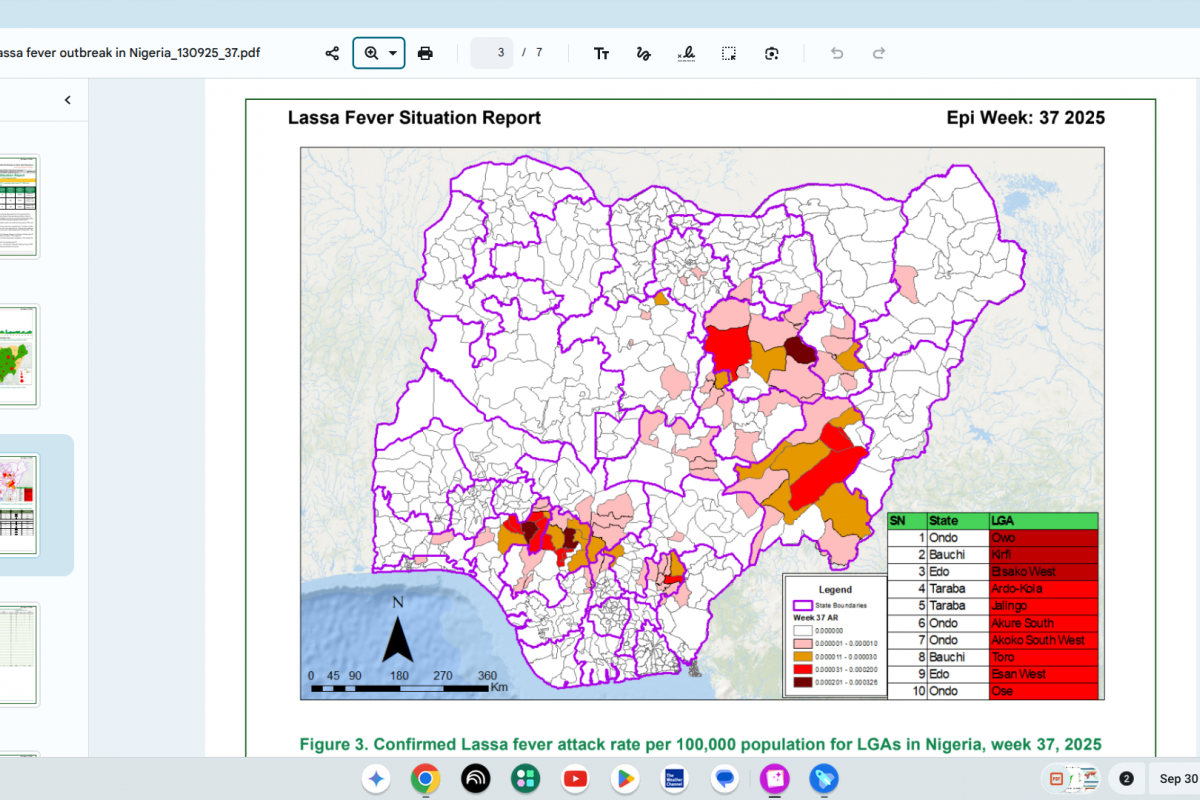
Sante Publique France reported today that a total of eight locally acquired cases of chikungunya have been confirmed in southern France since late May 2025. 

Cases in France's mainland were reported in Occitane (Hérault and Gard), Provence-Alpes-Côte d'Azur (Var and Bouches-du-Rhône), Auvergne-Rhône-Alpes (Drôme), and on the island of Corse (Corse-du-Sud).

Although declining as of June 25, 2025, the number of chikungunya cases that have traveled to Réunion and the Indian Ocean remains high. It contributes to the early appearance of indigenous transmission.

Additionally, 645 imported cases of chikungunya have been reported over the past nine weeks.

The government says, 'This number of episodes has never been observed in France before.'

Public Health France reiterates the importance of protective measures against mosquito bites, the control of larval breeding sites, and the use of protective vaccination, if appropriate.

Jun 25, 2025 • 9:14 am CDT
by Sasin Tipchai

Overall, global coverage for vaccines against diphtheria, tetanus, pertussis, measles, polio, and tuberculosis nearly doubled from 1980 to 2023.

However, this long-term trend masks recent challenges.

To achieve 90% global coverage for life-course vaccines, we must accelerate progress to reach current estimates of zero-dose children.

As of June 24, 2025, most zero-dose children remain concentrated in regions with various resource constraints that limit the availability of vaccination services.

This analysis, published in The Lancet, discloses that, as of 2023, more than 50% of the 15.7 million global zero-dose children reside in eight countries: Nigeria, India, the Democratic Republic of the Congo, Ethiopia, Somalia, Sudan, Indonesia, and Brazil.

These researchers wrote, 'findings underscore the crucial need for targeted, equitable immunisation strategies, strengthening primary health-care systems, and adapting to local contexts are essential to advancing coverage.'

Jun 24, 2025 • 2:57 pm CDT
UK June 24, 2025

The UK Foreign, Commonwealth & Development Office (FCDO) today issued updated travel advice for visiting the Kingdom of Thailand.

On June 24, 2025, the FCDO posted new information about the temporary suspension of border crossings due to civial unrest.

FCDO advises against all but essential travel to parts of the south, near the Thailand-Malaysia border, such as Pattani Province, Yala Province, Narathiwat Province, and southern Songkhla Province, south of the A43 road between Hat Yai and Sakom, and south of the train line which runs between Hat Yai and Padang Besar.

Additionally, the FCDO advises against all but essential travel on the Hat Yai to Padang Besar train line, which runs through these provinces.

This advisory may impact Thailand's international tourist arrivals, which reached about 35 million in 2024.

From a health advisory perspective, the U.S. CDC previously issued disease outbreak warnings and vaccination recommendations regarding chikungunya, dengue, Japanese encephalitis, malaria, measles, rabies, and typhoid.

On June 13, 2025, the CDC advised prospective visitors to Thailand to consult with a travel vaccine expert about immunization options.

Jun 24, 2025 • 4:13 am CDT
Google Maps June 2025

The Pan American Health Organization (PAHO) recently confirmed that the overall risk associated with the yellow fever situation in the Americas Region, particularly in endemic countries such as the Federative Republic of Brazil, is classified as ¨High¨.

As of June 24, 2025, mosquito-borne transmissions of the yellow fever virus (YFV) have been confirmed throughout the states, including São Paulo State. 

The YFV was detected in two distinct geographic locations in São Paulo, between September 2024 and February 2025. Phylogenetic analysis of six new genomes revealed a reintroduction in 2022 from Midwest Brazil

According to Brazil's Ministry of Health, yellow fever is an acute, vaccine-preventable, febrile infectious disease with high mortality rates in its severe forms. There is no evidence of person-to-person transmission, so avoiding mosquito bites is crucial.

Vaccination is the primary tool for preventing yellow fever in Brazil.

Since April 2017, Brazil has adopted a vaccination schedule of only one dose for life, a measure that aligns with the World Health Organization's recommendations.

When visiting Brazil and other areas endemic for yellow fever in 2025, the U.S. CDC recommends being vaccinated at least 10 days before departure. The YF-VAX vaccine is available at certified travel clinics and pharmacies in the United States.

Jun 23, 2025 • 12:35 pm CDT
Pixabay 2025

With great anticipation, the U.S. Centers for Disease Control and Prevention (CDC) today posted an updated draft agenda for the Advisory Committee on Immunization Practices (ACIP) meeting schedule for June 25-26, 2025.

The new agenda included ACIP votes on topics such as Influenza Vaccines, Thimerosal-containing influenza vaccine recommendations, respiratory syncytial virus vaccines for maternal and pediatric use, and the Vaccines for Children program.

As of June 23, 2025, the public is invited to attend this ACIP meeting digitally and, if selected, to ask questions.

The ACIP usually holds three regular meetings each year to review scientific data and vote on recommendations, which are presented to the CDC Director for approval.

Previous ACIP meeting agendas and votes can be found at this CDC link.

Jun 23, 2025 • 11:27 am CDT
France Public Health June 17, 2025

According to recent data published by France Public Health, international travelers are returning to mainland France infected with various mosquito-transmitted diseases.

As of June 18, 2025, France reported that over the past six weeks, the following diseases have been identified:

Chikungunya: 583 imported cases of chikungunya. Additionally, two unrelated indigenous (local) cases of chikungunya have been identified in 2025, one in the Var department and the other in the Hérault department. This report does not include data from the ongoing chikungunya outbreaks in the French Departments in the Indian Ocean.

Dengue: 395 imported cases of dengue fever,

Zika: 2 imported cases of Zika.

The chikungunya, dengue, and Zika viruses are primarily transmitted by Aedes mosquitoes, specifically Aedes albopictus (tiger mosquito), in mainland France. Aedes albopictus has been established in southern France since 2004 and has been gradually spreading since then.

At the start of 2025, 81 out of 96 departments were colonized by the vector mosquito Aedes albopictus.

While dengue and Zika vaccines are not yet available as of June 23, 2025, two chikungunya vaccines are commercially offered in various countries, including the United States.

Jun 23, 2025 • 8:02 am CDT
Pixabay 2025

Bats play a vital role in the world's ecosystem, but in the United States, they are the most commonly reported animals to have rabies.

In March 2025, a bat found in North Carolina tested positive for rabies, marking the second confirmed case in Person County this year.

While not all bats carry the rabies virus, be cautious when you see one, advises the U.S. Centers for Disease Control and Prevention (CDC).

However, it is essential to recognize the possible signs of rabies in bats. Unusual behaviors that could indicate that a bat has rabies include being active during the day, being inside a home or laying on the ground.

This advice is essential when watching bats fly at dusk, such as in Austin, Texas.

The CDC stated on June 11, 2025, that if you observe unusual bat behavior, contact your local animal control or public health department.

Furthermore, when traveling abroad, be aware of infected dogs, which are the primary source of 99% of rabies cases globally.

From a prevention perspective, the CDC says two types of vaccines protect people against rabies: nerve tissue and cell culture vaccines.

As of June 23, 2025, the CDC recommends rabies vaccination for individuals visiting high-risk areas. Bavarian Nordic's RabAvert® vaccine is offered at travel clinics and pharmacies, but it is only recommended for specific travelers.

Jun 22, 2025 • 2:57 pm CDT
Maps June 22, 2025

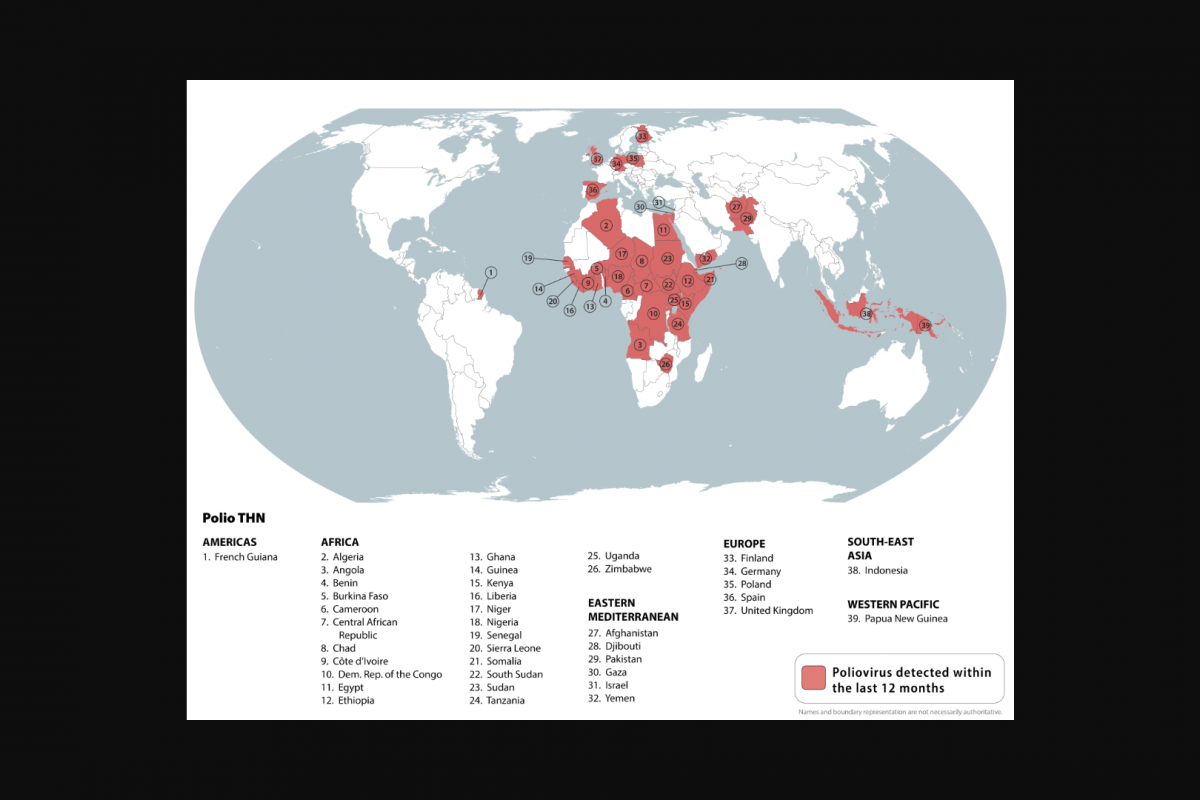
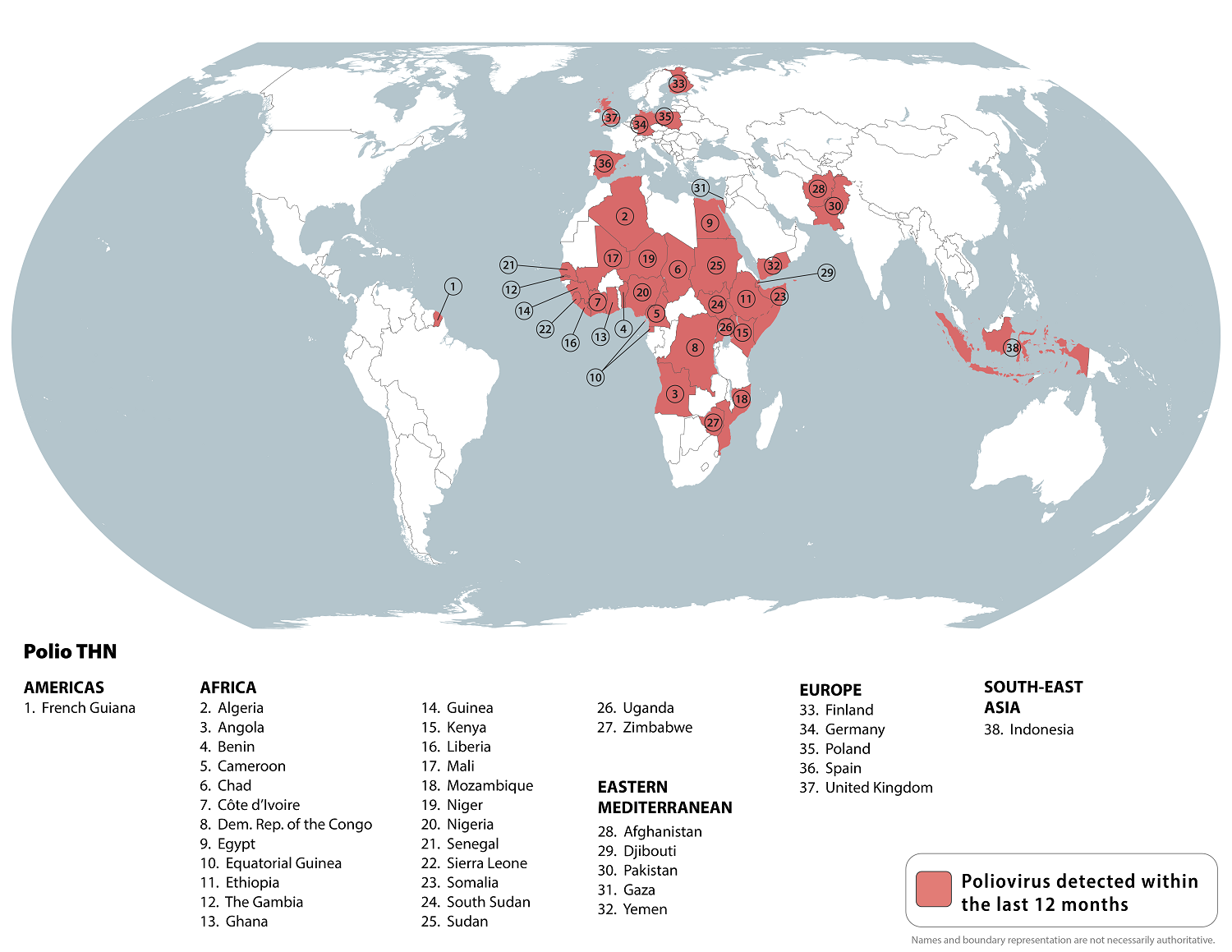
The World Health Organization states that for nearly a decade, the Horn of Africa has been battling persistent outbreaks of the poliovirus variant. Low immunity in children and unmonitored population movement have fueled the spread of poliovirus.

For example, the Federal Democratic Republic of Ethiopia recently reported four additional cases of circulating vaccine-derived polioviruses (cVDPVs) from Oromiya.

According to the Global Polio Eradication Initiative GPEI), on June 18, 2025, Ethiopia reported 33 cases reported in 2025.

This GPEI data compares with 43 cases reported in 2024.

The Global Polio Surveillance Action Plan 2025–2026 outlines enhanced strategies for acute flaccid paralysis and response to poliovirus transmission.

In 2025, Ethiopia strengthened its surveillance and preparedness efforts to prevent the further spread of the disease. In February, over 15 million children were vaccinated. The campaign launched in the country’s Somali region.

To alert international travelers to the risk of poliovirus in Ethiopia, the U.S. Centers for Disease Control and Prevention (CDC) included this African country in the June 14, 2025, Travel Health Advisory.

The CDC recommends that all visitors to high-risk areas be fully immunized against this severe disease. Polio vaccines are generally available at travel clinics and pharmacies throughout the United States.

Jun 22, 2025 • 9:55 am CDT
WHO June 2025

The World Health Organization (WHO) recently published the 27th Emergency Situational Update regarding cholera outbreaks.

The WHO reported that from January 2025 to May 25 2025, a cumulative total of 211,678 cholera cases and 2,754 related fatalities were reported from 26 countries.

Three WHO regions, with the African Region recording the highest numbers, followed by the Eastern Mediterranean Region, and the South-East Asia Region.

In May 2025, the South-East Asia Region reported 257 new cholera cases from Myanmar.

Since cholera is a vaccine-preventable disease, the WHO recommends oral cholera vaccines (OCVs) for travelers visiting countries where outbreaks are occurring.

As of June 22, 2025, the WHO has prequalified Vaxchora®, Dukoral®, Shanchol™, Euvichol®, and Euvichol-S OCVs.

In January 2025, the WHO stated that OCV production had reached 6.2 million doses. However, as of May 2025, the OCV stockpile consisted of 5.7 million doses, which is below the minimum emergency threshold of five million.

The WHO says that, during the current cholera outbreak, only one OCV dose course has been implemented in reactive vaccination campaigns.

As of June 22, 2025, there are ample supplies of OCVs at travel clinics and pharmacies in the United States.

Jun 20, 2025 • 2:02 pm CDT
Google Maps June 20, 2025

In the European Union/European Economic Area (EU/EEA), several countries are currently experiencing outbreaks of hepatitis A virus (HAV), with two clusters involving closely related HAV subgenotype IB strains.

As of June 18, 2025, Hungary (66 cases), Austria (43 cases), Slovakia (23 cases) and Germany (three cases) have a high probability of sustained transmission and circulation of the HAV within specific groups, as assessed by the European Centre for Disease Prevention and Control (ECDC).

Additionally, cases have been reported among members of the Roma communities in Czechia.

In 2024, Czechia sequenced a total of 52 samples, of which 34 were identified as subgenotype IB. Between January and the end of April 2025, 30 additional samples were analysed, with 25 identified as subgenotype IB.

Since hepatitis A is a vaccine-preventable disease, the ECDC recommends tailoring outreach to populations at higher risk of exposure to HAV, based on an understanding of their specific needs, attitudes, and knowledge.

The specific recommendations include the following actions:

Targeted single-dose pre-exposure hepatitis A vaccination programmes for populations who are not vaccinated and who are more likely to be exposed to the virus.

Provide post-exposure prophylaxis to close contacts of cases by administering the hepatitis A vaccine, or in particular circumstances, hepatitis A immunoglobulins.

And finally, consider targeted vaccination of population groups more likely to be exposed to HAV in low and very-low-endemicity settings to provide individual health benefits.

As of June 20, 2025, the U.S. CDC recommends that international travelers visiting areas with HAV outbreaks consult with a vaccine expert one month before departure to assess vaccination options.

For example, vaccination is recommended for unvaccinated travelers one year old or older going to Hungary. And when visiting the Lisbon and Tagus Valley regions in Portugal

Jun 20, 2025 • 1:01 pm CDT
Google Maps June 20, 2025

According to a recent World Health Organization report, the Western Pacific Region is facing significant dengue outbreaks for the second consecutive year. 

Since dengue is a vaccine-preventable disease, countries such as the Republic of Singapore are conducting clinical trials pursuing the use of a third-generation vaccine.

On June 18, 2025, MSD (Merck & Co.) announced the initiation of the MOBILIZE-1 Phase 3 clinical trial (V181-005) evaluating the safety, immunogenicity and efficacy of a single dose of V181, a quadrivalent vaccine candiate, for the prevention of dengue disease caused by any of the four dengue virus serotypes, regardless of prior dengue exposure.

Recruitment for this late-stage trial has begun, and the first participants are now enrolling in Singapore.

The study is planned to include more than 30 trial sites in dengue-endemic areas in the Asia-Pacific region, including Indonesia, Malaysia, the Philippines, Singapore, Thailand, and Vietnam.

Dr. Abdullahi Sheriff, Managing Director, MSD in Singapore, Malaysia & Brunei, commented in a press release, “We are grateful to the scientific community in Singapore for their commitment to scientific excellence and partnership throughout this journey."

"Singapore and the surrounding countries in Southeast Asia are areas with a risk for dengue, making it a serious public health threat."

Throughout 2024 and during the first half of 2025, dengue cases and related fatalities have been reported in most countries in the Region of the Americas, including the United States. 

The global need for additional dengue vaccines is substantial. As of June 20, 2025, the second-generation QDENGA vaccine is in limited supply worldwide and is unavailable in the U.S.