Dengue Outbreaks
-

Fact checked by Robert Carlson, MD
Dengue Outbreaks 2026
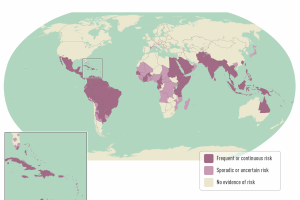
According to the World Health Organization (WHO) and numerous health agencies, Dengue is a viral infection spread to humans by infected mosquitoes of the Aedes genus and a leading cause of febrile illness among international travelers in 2026. The WHO has classified Dengue as a grade 3 emergency, with an estimated 4 billion people at risk globally. More than 13 million dengue cases were reported in 2024, the highest number on record. In December 2025, the European CDC reported that over 5 million dengue cases and over 3,000 dengue-related deaths had been reported from 106 countries/territories in the WHO Regions. The WHO states that Dengue is a vaccine-preventable disease, endemic in approximately 110 countries, including areas within the United States, such as California, Florida, and Puerto Rico.
On January 20, 2025, the WHO published a Global Strategic Preparedness, Readiness, and Response Plan for Dengue. Dengue's four subviruses are usually spread to people through the bites of infected Aedes mosquitoes. On October 3, 2024, the WHO launched the Global Strategic Preparedness, Readiness, and Response Plan to tackle Dengue and other Aedes-borne arboviruses. The WHO plan aligns with the Global Vector Control Response 2017-2030, a global strategy to strengthen vector control worldwide, and the Global Arbovirus Initiative.
An analysis published in July 2024 reported that the most frequent regions of dengue infection acquisition were Southeast Asia (50.4%), South Central Asia (14.9%), the Caribbean (10.9%), and South America (9.2%). The median age was 33 years, and tourism was the most frequent reason for travel (67.3%). An analysis published in December 2024 revealed a clear link between climate change and the expansion of vectors, such as mosquitoes, into new territories, increasing disease incidence. Mosquitoes that spread Dengue viruses usually live below 6,500 feet; therefore, a person's chances of getting Dengue in high altitudes are very low.
Dengue Outbreak US CDC Travel Advisories
The U.S. Centers for Disease Control and Prevention (CDC) reissued a Global Travel Health Notice on December 23, 2025, regarding Dengue outbreaks in the Americas, Africa/Middle East, and Asia/Pacific regions. The CDC has not issued travel advisories for U.S. states that have reported local dengue outbreaks, such as Florida and Puerto Rico.
Dengue Outbreak in the United States
As of 2026, the U.S. CDC advises clinicians to consider Dengue in patients with fever who live in or have recently traveled to areas with a risk of Dengue. The CDC reported in December 2025 that 4,401 Dengue cases occurred in 52 jurisdictions this year. In 2025, 7 jurisdictions reported locally acquired Dengue infections, led by Puerto Rico and Florida. The CDC says transmission of Dengue virus serotypes (DENV-1, 2, 3, 4) remains high in the U.S. territories of Puerto Rico and the U.S. Virgin Islands. DENV-3 is the most common (84%) serotype identified in 2025.
In 2024, 53 jurisdictions, led by Arizona, California, Florida, New Jersey, New York, and Puerto Rico, reported 9,391 dengue cases. In June 2024, the CDC issued an updated Health Alert Network Health Advisory, notifying healthcare providers, public health authorities, and the general public of an increased risk of dengue virus infections in the United States. In 2023, 52 U.S. jurisdictions reported 6,164 dengue cases to the CDC.
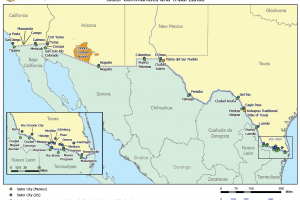
The Texas Department of State Health Services (DSHS) reports that mosquitoes that transmit dengue fever are present in the state of Texas. As of September 2025, DSHS reported 31 travel-related dengue cases. As of December 2024, there were 43 imported dengue cases in 23 Texas counties, led by Travis County (18), and one local case in Cameron County, with one related fatality. Texas reported 79 travel-related dengue cases in 2023 and one locally acquired case in Val Verde County.
In California, the San Bernardino County Public Health Department reported (1) a locally acquired case of Dengue in San Bernardino on November 7, 2024. The Los Angeles County Department of Public Health has reported 12 locally acquired dengue cases in the San Gabriel Valley, specifically in the cities of Baldwin Park (8), El Monte (2), Hollywood Hills (1), and Panorama City (1), in 2024. Dengue cases were reported in San Diego, Escondido, and Vista in 2024. Over 360 dengue cases were confirmed in California in 2023. California reported two locally acquired cases (in Long Beach and Pasadena) and 250 travel-related cases.
Between 2010 and 2023, 250 locally acquired cases were reported in Hawaiʻi.
Dengue Outbreak U.S. Territories
The CDC says the Dengue virus is endemic in the U.S. territories of Puerto Rico, American Samoa, the U.S. Virgin Islands, the Federated States of Micronesia, the Republic of the Marshall Islands, and the Republic of Palau.
Dengue Outbreaks in the Americas
The first suspected dengue-like epidemics were reported in 1635 in Martinique and Guadeloupe. The Pan American Health Organization (PAHO) issued an Epidemiological Alert in February 2025, based on the growing circulation of DENV-3, which had not been circulating previously, thereby increasing the probability of severe cases.
Dengue Outbreaks in Asia and the Pacific Islands
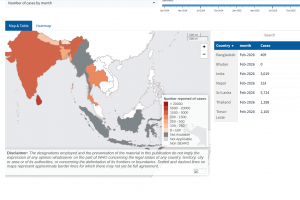
In 2025, the WHO confirmed that the Western Pacific Region continues to face a high burden of mosquito-borne arboviral diseases, particularly Dengue. In 2025, the U.S. CDC reported that countries in the WHO Western Pacific Region reported higher-than-usual dengue cases. T
Dengue Outbreaks in Europe
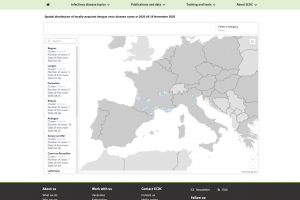
In Europe, dengue viruses, transmitted by Aedes albopictus mosquitoes, are primarily associated with infections acquired in endemic countries. Local transmission remains rare, with only sporadic or small-scale outbreaks documented. As of December 2024, the European Centre for Disease Prevention and Control (ECDC) reported over 8,500 dengue-related deaths. In 2024, the ECDC reported locally acquired dengue cases in France, Germany, Italy, and Spain. In 2024, more than 600 DENV infections in Germany occurred exclusively among travelers returning from dengue-endemic countries. In 2023, 130 locally acquired dengue cases were reported in the European Union and the European Economic Area (EU/EEA). The number of imported dengue cases in Europe increased from 1,572 in 2022 to approximately 4,900 in 2023.
Dengue United Kingdom 2025
The UK Health Security Agency (UKHSA) states that local dengue fever does not occur in the United Kingdom; however, it can be acquired by traveling to dengue-endemic areas. In 2024, 904 dengue cases were reported in returning travellers across England, Wales, and Northern Ireland, up from 631 in 2023. The most significant proportion of English cases (349) was reported in London.
Dengue Virus-Carrying Mosquito
Mosquito bites cause more human suffering than any other organism. The spread of Dengue throughout the world can be directly attributed to the proliferation and adaptation of these mosquitoes. In the U.S., there are 176 species. A recent study published by the Royal Society indicates that dengue-carrying mosquitoes are expanding their range by an average of 6.5 meters of elevation and have moved polewards by 4.7 km annually.
Dengue Virus Infection Testing
The U.S. Centers for Disease Control and Prevention (CDC) published a Health Update (CDCHAN-00523) on March 18, 2025, highlighting the ongoing risk of Dengue virus infections and updates to testing recommendations in the United States. People with suspected Dengue virus infection should be tested with a real-time PCR, NS1 antigen test, or an IgM enzyme-linked immunosorbent assay at commercial labs or public health clinics.
Dengue Disease
Dengue is a disease caused by a virus transmitted through the bites of infected mosquitoes. It can take up to two weeks to develop, but the illness generally lasts less than a week. Without treatment, severe Dengue can become fatal. New research has identified pre-existing anti-DENV IgG antibodies as the cause of the increased duration of Dengue upon second exposure.
Severe Dengue
Approximately 5% of Dengue cases can progress rapidly to Severe Dengue, which may involve hypovolemic shock, gastrointestinal or vaginal bleeding requiring transfusion, and end-organ impairment. Furthermore, women infected with Dengue during pregnancy can pass the virus to their fetuses. Promptly initiating intensive supportive therapy can reduce the risk of death among patients with severe Dengue. The extent and duration of viremia are often correlated with the severity of clinical disease. A study published in October 2024 concluded that secondary dengue infections with different dengue virus serotypes have been associated with an increased risk of Severe Dengue after 2 years.
Dengue Infections Cause Cardiovascular Complications
Published on April 18, 2025, this review discusses the cardiovascular manifestations of Dengue and their management, explores the proposed pathogenesis, and concludes with a discussion of potential future research directions.
Dengue Viruses
There are four Dengue Viruses. A study published in October 2024 concluded that the co-circulation of multiple genotypes is associated with an increase in severe cases, highlighting the importance of continuous surveillance.
Dengue Virus Blood Transfusion-Transmission
Emerging evidence published in November 2024 suggests a potentially concerning route of blood transfusion-transmitted dengue virus (TT-DENV), which poses a critical threat, especially in endemic countries like Brazil. In May 2024, a RESEARCH ARTICLE found that dengue virus transmission was a risk in blood donation in Thailand. In March 2016, Transfusion-Transmitted Dengue and Associated Clinical Symptoms During the 2012 Epidemic in Brazil was published.
Dengue Infection Immune-Mediated Enhancement
In this study, published on October 31, 2024, researchers demonstrate that the expression of a DENV-specific B cell receptor (BCR) renders cells highly susceptible to DENV infection, with the infection-enhancing activity of the membrane-restricted BCR correlating with the antibody-dependent enhancement (ADE) potential of the IgG version of the antibody. In addition, they observed that the frequency of DENV-infectible B cells increases in previously flavivirus-naïve volunteers after a primary DENV infection. These findings suggest that BCR-dependent infection of B cells is a novel mechanism for immune-mediated enhancement of DENV infection. This observation indicates that BCR-dependent infection of DENV-specific B cells may be a complementary mechanism for immune-mediated enhancement of DENV infection, expanding upon existing models of antibody-dependent enhancement.
Dengue Virus in Pregnant Women
The CDC confirms that a pregnant woman already infected with Dengue can pass the virus to her child during pregnancy, and there has been one documented report of Dengue spread through breast milk. A study published in the American Economic Journal: Applied Economics in April 2024 confirmed robust evidence for the adverse effect of dengue infections on birth weight and documented increases in children's hospitalizations and medical expenditures for up to three years after birth.
Dengue and Zika Virus
A study published in the journal Science Translational Medicine on May 29, 2024, found that primary ZIKV infection increased the risk of disease caused by DENV3 and DENV4 but not DENV1. This finding was also observed for tertiary infections in individuals previously infected with DENV and ZIKV, but not in those previously infected with ZI alone.