Search API

UTI vaccine
Oral UTI vaccine offered in various countries
0 min read

During the summer and fall of 2024, the Pan American Health Organization (PAHO) issued several epidemiological alerts about Oropouche cases, including deaths, in the Region of the Americas.

Significant outbreaks have been reported in Brazil and Cuba.

On October 25, 2024, the U.S. CDC reaffirmed it is working with PAHO and other international partners to learn more about the potential risks of Oropouche.

The CDC's Level 1 - Practice Usual Precautions, Travel Health Advisory, says Oropouche is spread primarily by the bite of infected midges and mosquitoes.

Oropouche symptoms include headache, fever, muscle aches, stiff joints, nausea, vomiting, chills, and sensitivity to light. They typically start 3–10 days after being bitten and last 3–6 days, and most people recover without long-term effects.

The CDC says there is no specific treatment or vaccine for Oropouche.

Vaccine Treats: 
Image: 
Image Caption: 
US CDC October 25, 2024
Live Blog Update Author: 
Location Tags: 
Include in VBT newsletter: 
0 min read

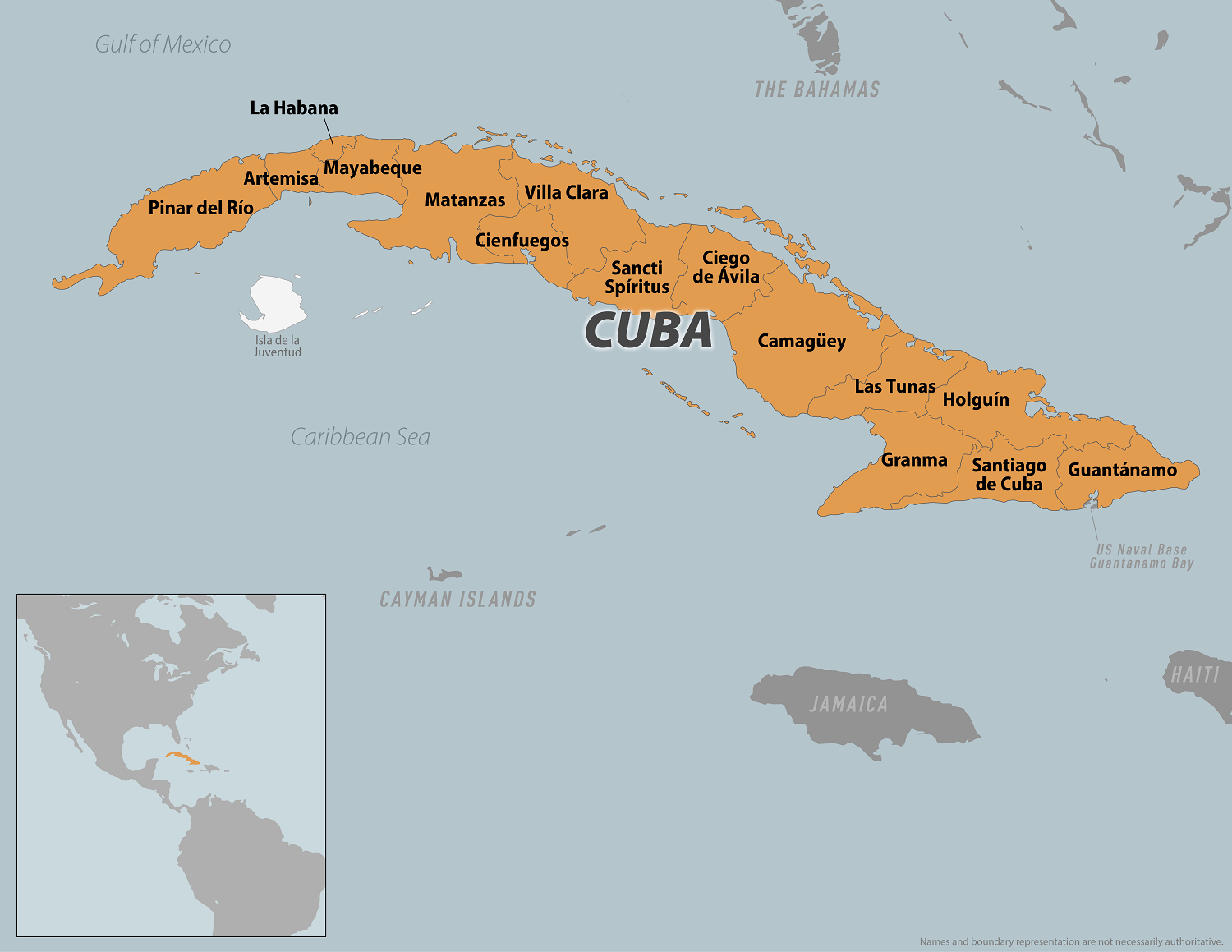
The U.S. CDC announced an essential update to its Level 2 travel advisory regarding the ongoing Oropouche virus outbreak in Cuba.

As of October 25, 2024, the CDC confirmed multiple cases of Oropouche have recently been reported in U.S. travelers returning from Cuba, indicating there is a detectable risk of infection.

The CDC recently confirmed 91 cases from five states, led by cities along Florida's southeast coast.

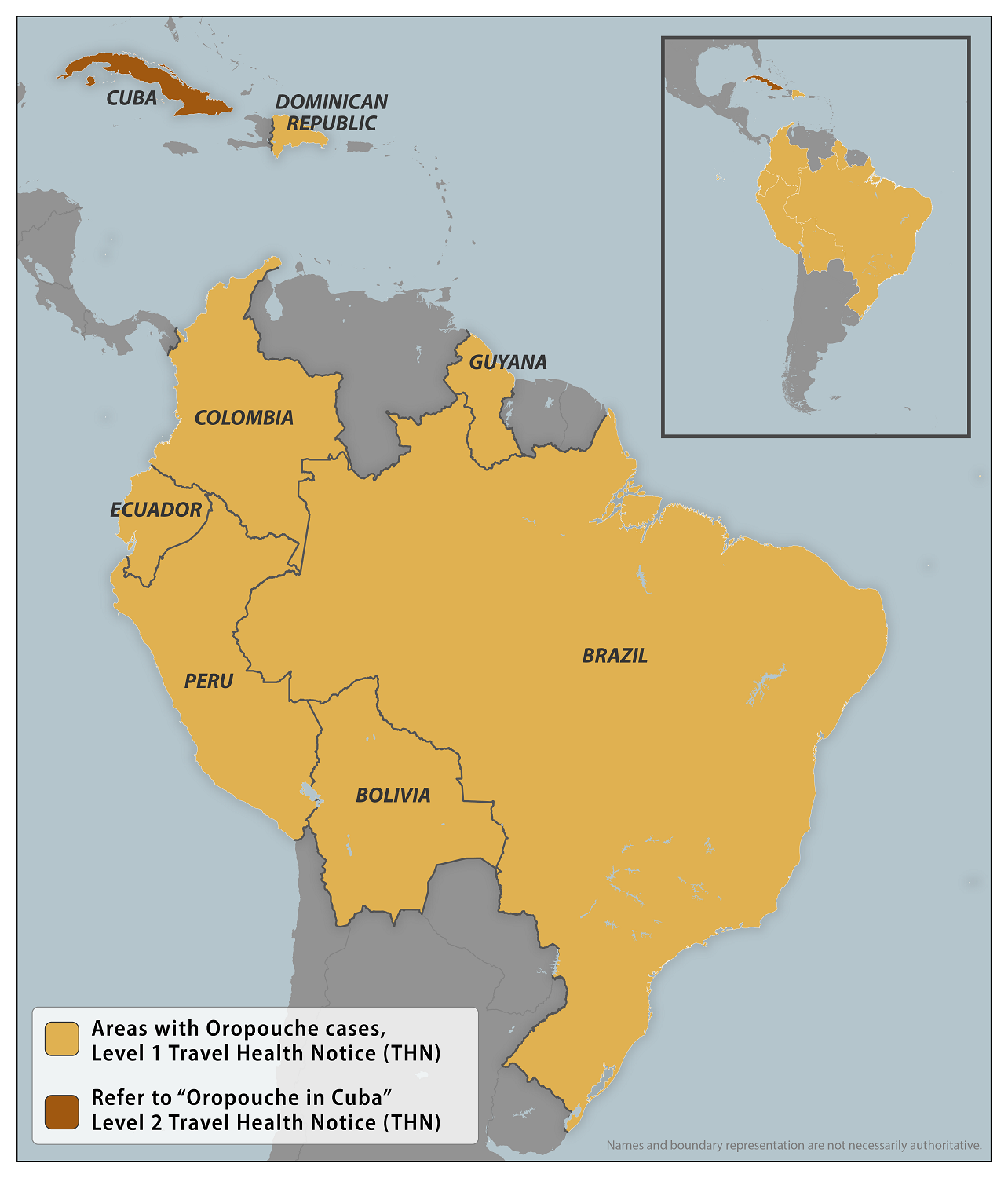
The CDC has also issued a Level 1 Travel Health Notice for Oropouche outbreaks in the Region of the Americas, such as in Bolivia, Brazil, Colombia, Dominican Republic, Ecuador, Guyana, and Peru.

From the beginning of the year to early October, 10,275 confirmed cases of Oropouche were reported in nine countries in the Region.

Historically, Oropouche has been confirmed to spread to people following a bite of infected midges (small flies) and mosquitoes.

Recently, Oropouche virus has been found in semen, but it is unknown if it can be spread through sex, says the CDC.

Additionally, pregnant women should reconsider non-essential travel to Cuba since there are concerns about an increase in possible cases of the Oropouche virus being passed from a pregnant person to their fetus associated with fetal deaths and congenital abnormalities. 

Since no Ocopouche vaccines are available, the CDC says travelers to Cuba should prevent bug bites during travel to protect themselves from infection.

Vaccine Treats: 
Image: 
Image Caption: 
US CDC October 25, 2024
Live Blog Update Author: 
Location Tags: 
Include in VBT newsletter: 

Travel Vaccine Destinations

Travel Vaccine Destinations December 2025

The World Health Organization (WHO) and the U.S. Centers for Disease Control and Prevention (CDC) recommend that all travelers get vaccinated against high-risk diseases before traveling internationally. As of December 2025, the WHO and CDC suggest consulting with a local health practitioner to determine which travel vaccines are recommended for your destination city or country.

The WHO states that some countries require proof of vaccination against yellow fever and polio for travelers entering or exiting the country.

Argentina

Australia

Austin

Brazil

Canada

China

Colombia

Costa Rica

Dominican Republic

England

Florida

France

Germany

India

Indonesia

Italy

Japan

Malaysia

New York

Philippines

Puerto Rico

Singapore

Spain

Thailand

Travel Vaccine Certificates, Passports

Vaccine passports and digital credentials confirm a person has been vaccinated for a particular disease. Various countries require proof of vaccination to obtain a visa for visiting in 2025.

Government Travel Resources

US CDC Travel Health Advisories

U.K. Travel Health Pro

Pan American Health Organization

European Center for Disease Prevention and Control

World Health Organization Disease Outbreak Alerts

1 min read
Last Reviewed: 
Friday, December 19, 2025 - 11:50
Description: 
Disease outbreaks in cities and countries in 2025
Condition: 
0 min read

Recently, the World Health Organization and the Africa Centres for Disease Control and Prevention identified Rift Valley fever as a priority disease.

To address this need, a promising vaccine candidate against the potentially deadly Rift Valley fever is set to begin Phase II trials in Kenya. ChAdOx1 RVF is the most advanced stage of testing a human Rift Valley fever vaccine candidate.

While Rift Valley fever vaccines have been registered for animals, no vaccines are available for human use.

ChAdOx1 RVF has already shown positive results in the first stage of clinical trials conducted in the UK. The trial demonstrated that the vaccine was safe and well-tolerated in volunteers who received a single shot of the vaccine, and that it elicited high levels of neutralising antibodies which block viral infection and mediate protection against the virus.

Studies have also shown that the vaccine protects against Rift Valley fever in multiple livestock species, suggesting that it could be used for both people and livestock.

“Rift Valley fever disproportionately affects the lives and livelihoods of vulnerable pastoral communities, potentially causing both human fatalities and large-scale livestock losses,” said Dr. Richard Hatchett, CEO of the Coalition for Epidemic Preparedness Innovations (CEPI), in a press release.

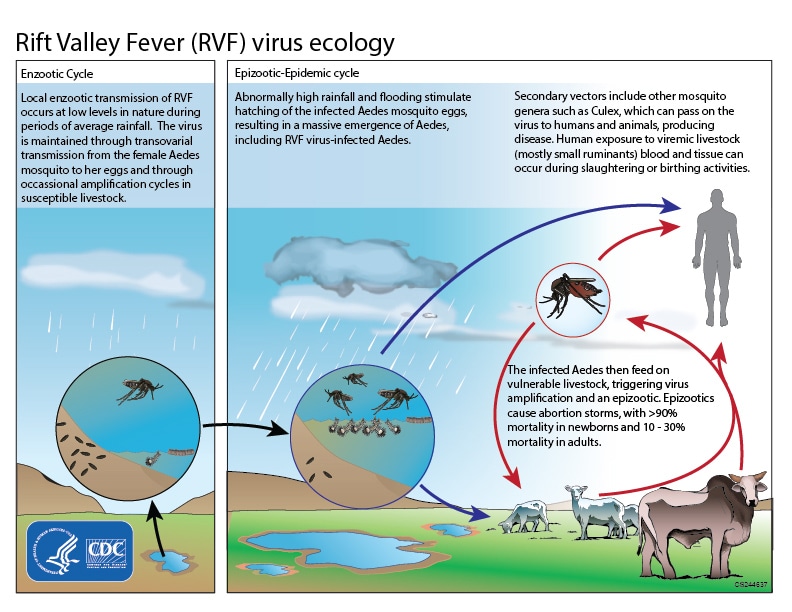
Rift Valley fever, a mosquito-borne disease, usually occurs in people following direct contact with infected animals or bites from infected mosquitoes. The virus spreads from the female mosquitoes to the eggs. As more mosquitoes hatch, the potential for the virus to spread directly to animals and people increases.

While the majority of people infected experience mild disease, a small proportion develops the severe hemorrhagic form, which can cause blindness, convulsions, encephalitis, and bleeding, and mortality rates of up to 50%.

CEPI and the University of Oxford are committed to enabling access to vaccine outputs developed through this partnership, which aligns with CEPI’s Equitable Access Policy. 

Vaccine Treats: 
Image: 
Image Caption: 
US CDC
Live Blog Update Author: 
Location Tags: 
Include in VBT newsletter: 
0 min read

While monoclonal antibody (mAbs) treatments for infants have been available for many years, the recently approved version has become widely accepted.

Sanofi today announced its third-quarter earnings report, which included sales of its newly approved mAbs. This innovative product delivers long-term passive immunization to protect infants from respiratory syncytial virus (RSV)- related lower respiratory tract infections.

Beyfortus™ sales in the third quarter far exceeded Wall Street analyst projections.

After a second external filling line was licensed, additional capacity enabled increased supply in collaboration with AstraZeneca, which is responsible for manufacturing.

The company stated in a press release that sales were €645 million ($696m), driven by early deliveries in the U.S. and rollout in several countries, including Canada, France, Germany, Spain, Portugal, Belgium, and Ireland.

Sanofi confirmed that Beyfortus is available for the 2024-2025 RSV season in about 20 countries. In the United States, Beyfortus has become generally available.

The U.S. FDA-approved Beyfortus in 2023.

In October 2024, The Lancet published a study estimating Beyfortus's effectiveness against RSV-associated hospitalizations for bronchiolitis at 73%.

Image: 
Image Caption: 
from Pixabay
Live Blog Update Author: 
Location Tags: 
Include in VBT newsletter: 
poliovirus
World Polio Day 2024 highlights the importance of polio vaccination
0 min read

The U.S. Centers for Disease Control and Prevention (CDC) Director today endorsed the Advisory Committee on Immunization Practices (ACIP) recommendation that people 65 years and older and those who are moderately or severely immunocompromised receive a second dose of the 2024-2025 COVID-19 vaccine six months after their first dose.

Announced on October 23, 2024, these updated recommendations also allow for flexibility for additional doses (3 or more) for moderately or severely immunocompromised people in consultation with their healthcare provider, known by the CDC as shared clinical decision-making.

 In a press release, CDC Director Dr. Mandy Cohen stated, "This vote allows people to make the best decisions possible to keep themselves and their loved ones safe from COVID-19. CDC will continue to educate the public on how and when to get updated vaccinations so they can risk less severe illness and do more of what they love."

Vaccine Treats: 
Image: 
Image Caption: 
US CDC
Live Blog Update Author: 
Location Tags: 
Include in VBT newsletter: 
0 min read

While the Los Angeles County Department of Public Health (LACDPH) says locally acquired dengue is rare in LA County, this year's infections will differ from 2023.

Last year, only two cases of locally acquired dengue were identified in Long Beach and Pasadena.

As of October 24, 2024, LACDPH has confirmed 9 cases of locally acquired dengue. Before their symptoms, these San Gabriel Valley residents had no history of travel to places where dengue is common.

 These people live in Baldwin Park (6), Panorama City (1), and El Monte (2).

Since residents of LA County travel year-round, cases can occur at any time of year.

Most dengue cases in LA County involve traveling to countries where dengue outbreaks occur, such as the Caribbean (Puerto Rico), Central and South America, Southeast Asia, and the Pacific islands. 

This year, 123 travel-related dengue cases have been confirmed in LA County, compared with 75 cases reported in LA County in 2023.

To alert international travelers of this health risk, the U.S. CDC reissued a Global Travel Health Notice on October 15, 2024, regarding Dengue outbreaks in 27 countries.

Dengue is a vaccine-preventable disease. However, protective vaccines will be unavailable in the U.S. in 2024.

Vaccine Treats: 
Image: 
Image Caption: 
LA County October 2024
Live Blog Update Author: 
Location Tags: 
Include in VBT newsletter: