Hundreds of Million Sterile Flies Released to Prevent New World Screwworm Arrival


Despite no detections of New World Screwworm (NWS) in the United States and the nearest active cases being about 200 miles south of the Texas border, officials recently confirmed a key milestone to protect animals and people.
U.S. Secretary of Agriculture Brooke L. Rollins and Texas Governor Greg Abbott announced on February 9, 2026, the opening of a sterile fly dispersal facility at Moore Air Base in Edinburg, Texas.
This southeastern Texas facility boosts the U.S. Department of Agriculture's (USDA) ability to combat NWS, which can severely affect livestock and infect people.
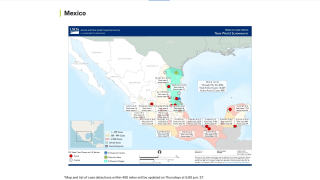
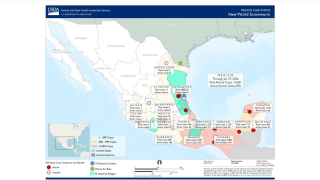
As of early February 2026, The Mexican Ministry of Health has confirmed six new human cases of myiasis caused by the NWS (Cochliomyia hominivorax), bringing the total number of reported human cases to 141 across eight states.
Governor Abbott emphasized Texas's role in protecting its agricultural sector and thanked federal leaders for their support in addressing the NWS threat.
While NWS was eradicated in the U.S. in the 1960s, recent cases in Mexico have increased vigilance, and officials stress the importance of ongoing surveillance and public education.
Previous research indicates that an adult screwworm fly can fly for up to 14 days. They typically only fly short distances, 6-9 miles, when there are sufficient hosts in the area and suitable environmental conditions.
The facility's opening is part of a broader USDA strategy to combat NWS. Currently, sterile flies are produced at the COPEG facility in Panama.
In June 2025, a plan was unveiled to strengthen detection and eradication efforts.
As of January 30, 2026, the USDA began releasing 100 million sterile flies weekly along the border, with operations able to shift quickly to Edinburg if necessary. The core of the defense strategy is the sterile insect technique, which involves releasing sterile males to disrupt reproduction.
The USDA plans to double production at a facility in Metapa, Mexico, starting in summer 2026.
A full-scale production facility at Moore Air Base is aiming for a capacity of 300 million flies per week.
Once operational, USDA expects to produce up to 500 million sterile flies weekly to control the pest.
This USDA initiative is essential as no vaccines are available to protect people from this serious health risk.
Our Trust Standards: Medical Advisory Committee
-
Fact checked by Robert Carlson, MD