Texas Issues Disaster Declaration Ahead of New World Screwworm Arrival

Texas Governor Greg Abbott has issued a disaster declaration due to the potential invasion of the New World Screwworm (NWS).
The statewide disaster declaration was submitted to Texas Secretary of State Jane Nelson on January 29, 2026, in response to the NWS's increasing northward spread.
According to Gov. Abbott, this parasitic fly poses a significant risk to the entire state of Texas.
Although no local cases have been detected in Texas or the U.S., the proximity of the parasite in Mexico has prompted urgent preventive measures. There has been one confirmed case of NWS in a person who returned to the United States in 2025 after traveling to El Salvador.
"Although the NWS fly is not yet present in Texas or the U.S., its northward spread from Mexico toward the U.S. southern border poses a serious threat to Texas' livestock industry and wildlife," said Abbott in a media statement.
Originating in South America, the NWS (Cochliomyia hominivorax) is a flesh-eating parasite whose larvae burrow into the wounds of warm-blooded animals, including cattle, deer, pets, and, in rare cases, humans.
The screwworm was eradicated from the U.S. in the 1960s through sterile insect techniques, but has since resurged in Central America, Costa Rica, and Mexico.
Recent data from Mexico underscores the urgency of the situation.
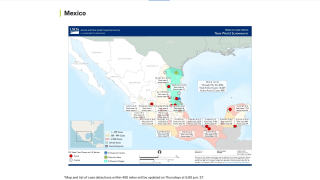
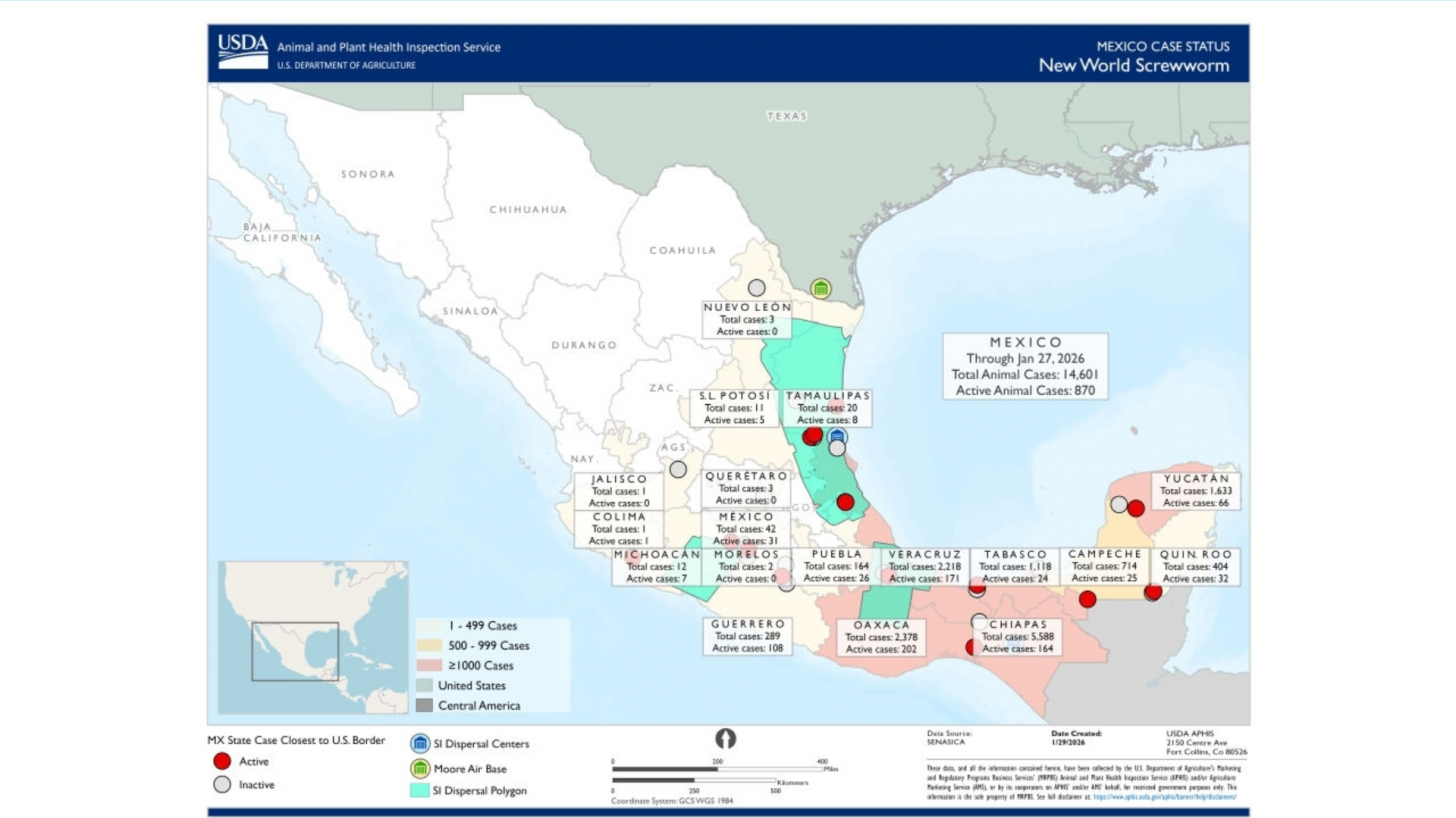
As of late January 2026, the U.S. Department of Agriculture (USDA) reports 177 active animal cases across Mexico, with detections primarily concentrated in southern and central states but increasingly moving north.
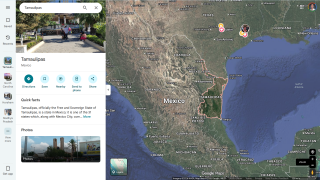
The Mexican border state of Tamaulipas, adjacent to Texas, has seen multiple cases, including active bovine infestations confirmed on January 24 and January 22, 2026. The nearest confirmed infestation to the U.S. border was detected in Nuevo León in September 2025, approximately 70 miles south of the Texas border.
Earlier reports from the U.S. Centers for Disease Control and Prevention (CDC) indicated 14 confirmed animal cases in Tamaulipas, marking the northernmost extent of the outbreak.
Nationwide, Mexico has recorded over 148,000 animal cases during the ongoing outbreak, alongside more than 1,190 human cases and seven deaths in Central America and Mexico.
Previously, U.S. Agriculture Secretary Brooke Rollins launched a five-pronged plan in June 2025 to combat the screwworm, aiming to eradicate it from the Darién Gap in Panama.
In August 2025, Rollins and Abbott announced federal funding for a sterile fly production facility at Moore Air Force Base in Edinburg, Texas, to support an existing dispersion facility scheduled for completion by late January 2026.
Over 120 screwworm traps have been deployed along the U.S.-Mexico border in Texas, New Mexico, Arizona, and California for ongoing monitoring. Collaborative efforts between U.S. and Mexican authorities include releasing 100 million sterile flies weekly in affected areas to curb the spread.
Numerious officials emphasize the need for vigilance among livestock producers and travelers to promptly report any suspicious wounds.
As of January 30, 2026, there are no vaccines to protect people from NWS infections.
Our Trust Standards: Medical Advisory Committee
-
Fact checked by Robert Carlson, MD