West Africa Needs a Rift Valley Fever Vaccine

The U.S. Centers for Disease Control and Prevention (CDC) recently issued a Level 1 Travel Health Notice regarding outbreaks of Rift Valley Fever (RVF) in specific areas in western Africa.
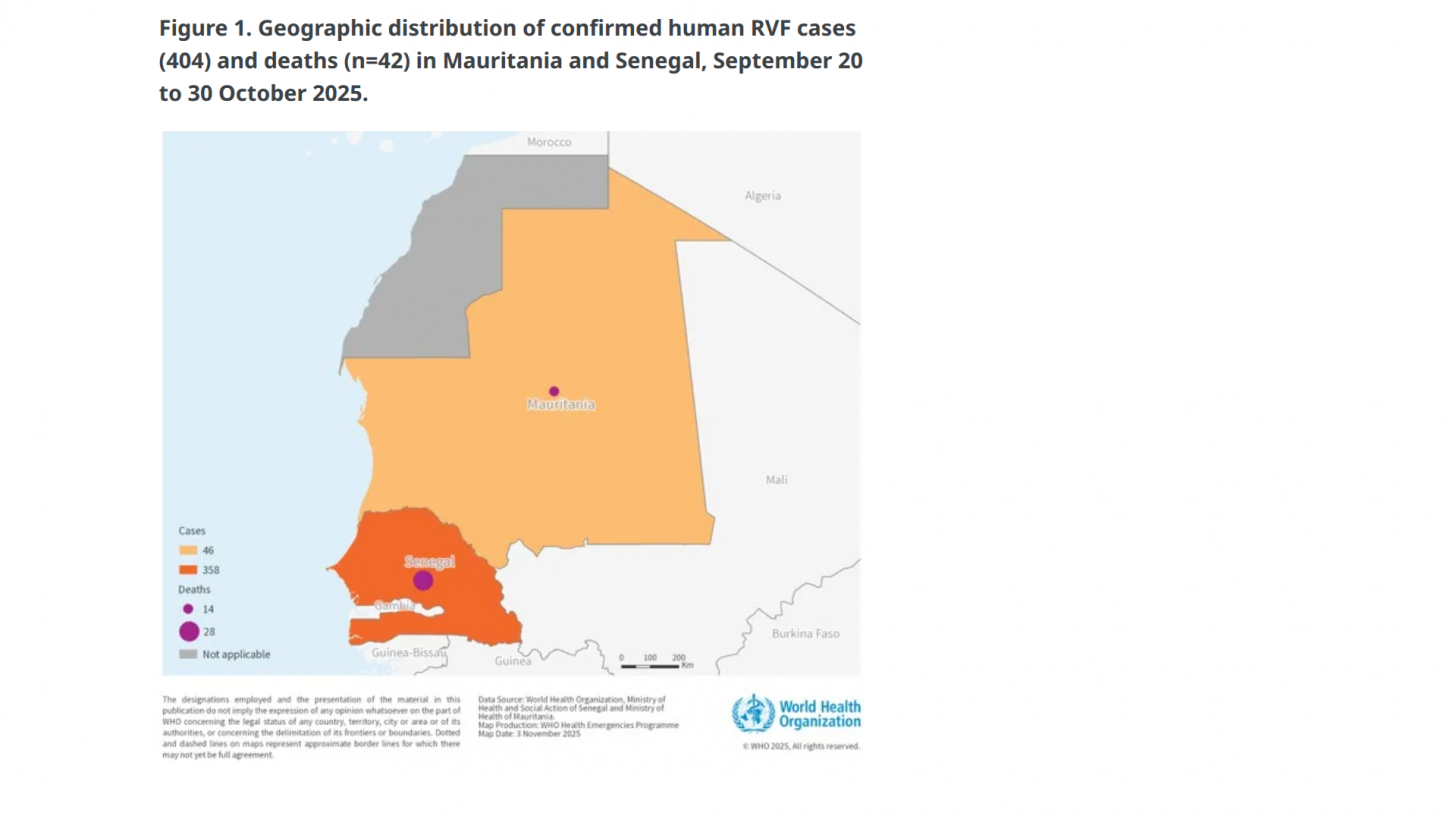
In Mauritania, the affected regions are Brakna, Trarza, Assaba, Nouakchott Ouest, and Guidimagha. In Senegal, the outbreaks have been reported in the regions of Saint Louis, Matam, Louga, and Fatick.
To provide an update, the WHO published a Disease Outbreak News article on November 5, 2025, confirming that between September 20 and October 30, 2025, a total of 404 confirmed human cases of RVF, including 42 deaths, were reported by Mauritania and Senegal.
The WHO, in collaboration with the World Organization for Animal Health, and the Food and Agriculture Organization of the United Nations (FAO), currently assesses the overall risk as high at the national level, moderate at the regional level, and low at the global level.
The WHO says responses to RVF outbreaks require a One Health approach in both countries and at the regional level.
RVF is a zoonotic disease that mainly affects animals but can also infect humans.
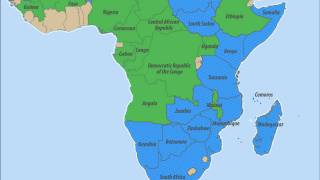
In late 1997, a disease outbreak began in East Africa. In three months, 90,000 people became sick and almost 500 people died.
The majority of human infections result from contact with the blood or organs of infected animals, but human infections have also resulted from the bites of infected mosquitoes.
While RVF often leads to severe illness in animals, its impact in humans varies, ranging from mild flu-like symptoms to severe hemorrhagic fever that can be fatal. RVF is endemic in both countries, with recurrent outbreaks previously reported in livestock and humans.
The risk of further spread remains high, especially with environmental conditions favorable to mosquito proliferation, periods of heavy rain and increased mosquito activity, and movements of livestock within the country and towards Mali and the Gambia for grazing and trade.
Currently, the WHO does not recommend any travel or trade restrictions to or from Mauritania, Senegal, or affected regions based on the available information.
To date, no human-to-human transmission of RVF has been documented, the WHO says.
From a disease-prevention perspective, RVF vaccines have been under development since 2019.
And in January 2025, the Coalition for Epidemic Preparedness Innovations announced that Afrigen Biologics aims to develop the first-ever mRNA-based vaccine against Rift Valley fever, supported by a new $6.2 million grant.
While these vaccine candidates progress through clinical trials, visitors to RVF outbreaks must avoid bites from virus-carrying mosquitoes.
Our Trust Standards: Medical Advisory Committee
-
Fact checked by Robert Carlson, MD