Zika Breaking News

Zika breaking news brought to you by Zika News.

Mar 12, 2024 • 4:41 pm CDT
by Rui Neves

During March 2024, many college students will enjoy the warm and friendly South Florida beaches.

However, various diseases also impact those Florida communities.

For week #10, Florida Health's Mosquito-Borne Disease Surveillance reported new dengue and malaria cases.

In 2024, 59 travel-associated dengue cases were reported, mainly by visitors from Cuba.

And four cases of locally acquired dengue have been reported from two counties this year. In 2023, positive samples from 186 humans were reported from five counties.

Also, in 2024, twelve cases of malaria have been reported in individuals with a travel history to a malaria-endemic area, such as Africa. 

In 2023, seven locally acquired malaria cases were reported in the Sarasota area. 

On the bright side, the agency also communicated that the recent measles outbreak in Broward County has been contained.

No additional measles cases have occurred at Manatee Bay Elementary since Friday, February 16, 2024; thus, the 21-day infection period has ended.

However, due to the contagiousness of measles and the rate of international travel, there is a possibility for more sporadic cases throughout Florida and the United States.

"It's important that public health leaders consider all available data and make decisions that promote health while respecting the rights of individuals," said Florida Surgeon General Dr. Joseph Ladapo in a press release on March 8, 2024. 

The State Surgeon General communicated that unprotected people should speak with their healthcare provider about receiving approved vaccines.

As of March 12, 2024, the state of Florida, the U.S. Centers for Disease Control and Prevention, Canada, and the United Kingdom have not issued any vaccination requirements for visitors to Florida.
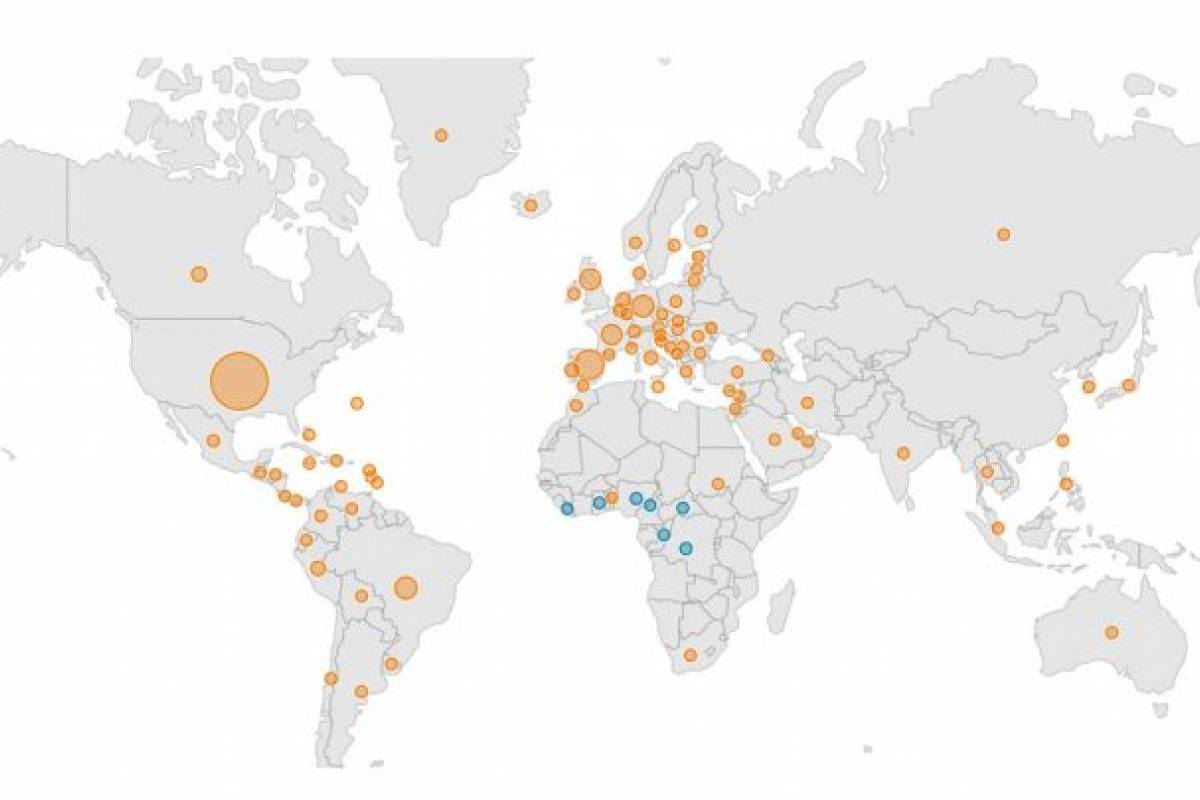
Mar 12, 2024 • 2:47 pm CDT
US CDC mpox case map 2022

An observational, cross-sectional cohort study was published on March 5, 2024, investigating the source of an ongoing mpox outbreak in the Democratic Republic of the Congo (DRC).

The study also evaluated how the mpox virus (MPXV) clade I spread in the city of Kamituga. This non-peer-reviewed study included data from 2022 to January 2024.

These researchers reported a staggering 21,630 suspected MPXV cases and 1,003 deaths. Around 85% of the deaths recorded during this period were children under 15 years of age.

This MPXV clade I outbreak marks an important change as transmission routes now appear to be expanding to include heterosexual activity, wrote these researchers.

The DRC reported the first mpox MPXV clade I cases in humans in 1970.

"The mpox situation in the DRC is deeply alarming, and the lack of tests for both mpox and HIV means it's unclear just how bad the mpox situation is and what the underlying comorbidities are," said Dr. Ayoade Alakija, who is Chair of the Board at FIND, in a press release on March 12, 2024.

The May 2022 MPVX clade II global outbreak caused global concern, primarily among men. The outbreak caused 93,497 cases in 118 locations.

As of March 5, 2024, there have been 32,063 confirmed mpox cases and 58 deaths in the U.S.

Throughout the clade II outbreak, the JYNNEOS® ((MVA-BN®, IMVAMUNE®) vaccine has been deployed in most impacted countries.

On December 7, 2023, the U.S. CDC published a Health Alert Network Health Advisory stating that JYNNEOS is expected to have similar vaccine effectiveness (VE) against MPXV clade I, as seen with clade II.

The CDC's vaccine committee reported in October 2023 that JYNNEOS's VE against mpox clade II ranges from 36%–75% for 1-dose vaccination and 66%–89% for 2-dose vaccination. 

The European CDC reported in December 2023 that real-world JYNNEOS VE data is lacking.

Mar 12, 2024 • 5:01 am CDT
US CDC dengue travel notice Feb, 28, 2924

Dengue virus is a severe ongoing concern for many areas of Central and South America, Mexico, and the Caribbean.

If you plan to visit any high-risk areas during Spring Break 2024, don't let dengue fever ruin your trip.

The high-risk destination list includes Argentina, Brazil, Colombia, Costa Rica, French Guiana, Guadeloupe, Guatemala, Haiti, Jamaica, Martinique, Mexico (Cancun), Nicaragua, Panama, Paraguay, Peru, Saint Barthelemy, Saint Martin, Turks and Caicos Islands.

The U.S. Centers for Disease Control and Prevention (CDC) confirmed on February 28, 2024, travelers should protect themselves by taking precautions against mosquito bites. Take the necessary measures to safeguard yourself and enjoy a worry-free trip.

However, be aware the disease can take up to two weeks to develop, and the illness generally lasts less than a week.

Additionally, the CDC says don't disrupt your vacation with this vaccine-preventable illness.

As of March 12, 2024, various government agencies have approved dengue vaccines, and several vaccine candidates are conducting late-stage studies.

In the U.S., Dengvaxia® is approved by the U.S. FDA. On June 30, 2023, the FDA issued a Supplemental Approval letter.

Other countries offer QDENGA®, a WHO-recommended dengue vaccine.

Mar 11, 2024 • 5:50 pm CDT
Duke-NUS Medical School

Scientists from Duke-NUS Medical School (Duke-NUS) have developed a new approach using the Zika virus to destroy brain cancer cells and inhibit tumor growth while sparing healthy cells.

Using Zika virus vaccine candidates developed at Duke-NUS, the team discovered how these strains target rapidly proliferating cells over mature cells—making them an ideal option to target fast-growing cancerous cells in the adult brain.

Zika virus is one such option in early development. The Duke-NUS team used Zika virus live-attenuated vaccine (ZIKV-LAV) strains, which are "weakened" viruses with limited ability to infect healthy cells but can still increase and spread within a tumor mass.

"We selected Zika virus because it naturally infects rapidly multiplying cells in the brain, allowing us to reach cancer cells that are traditionally difficult to target. Our ZIKV-LAV strains also replicate themselves in brain cancer cells, making this a living therapy that can spread and attack neighboring diseased cells," said Dr. Carla Bianca Luena Victorio, first author of the paper and Senior Research Fellow at the Cancer & Stem Cell Biology Programme at Duke-NUS, in a press release on March 8, 2024.

Their study's findings, published in the Journal of Translational Medicine in February 2024, potentially offer a new treatment alternative for brain cancer patients who currently have a poor prognosis.

Glioblastoma multiforme is the most common malignant brain cancer, with more than 300,000 patients diagnosed annually worldwide. Survival rates for such patients are poor (around 15 months), mainly due to the high incidence of tumor recurrence and limited treatment options.

For such patients, oncolytic virotherapy—or the use of engineered viruses to infect and kill cancer cells—may address the current therapeutic challenges.

Separately, several Zika vaccine candidates are conducting clinical research as of March 2024.

A preventive vaccine targeting Zika is in demand since 36,738 Zika cases were reported in 2023.

In the Americas, the highest proportion of Zika cases was reported in Brazil (35,041), followed by Bolivia, Belize, Columbia, Paraguay, and Venezuela. 

Mar 11, 2024 • 5:17 pm CDT
by Keith Johnston

During the recent U.S. Centers for Disease Control and Prevention (CDC) vaccine committee meeting, changes to the adolescent meningococcal vaccination schedule were discussed to optimize protection against meningitis.

These discussions are very important since the number of meningococcal disease cases in the U.S. has increased sharply since 2021. In 2023, there were 416 confirmed and probable cases of meningitis.

Furthermore, outbreaks are unpredictable, and the outcomes can be devastating, according to the CDC.

For example, from June 2022 to March 2024, there have been 35 confirmed cases of meningococcal disease, including six deaths in Virginia.

On February 29, 2024, Jamie Loehr, M.D., the Advisory Committee on Immunization Practices (ACIP) Meningococcal Work Group Chair, led the Introduction session, followed by presentations on 'Revising the Adolescent Meningococcal Vaccine Schedule: Term of Reference and Considerations' and 'GSK Pentavalent MenABCWY Vaccine: Term of Reference.'

Amy B. Middleman, M.D., M.P.H., M.S.Ed., FAAP, liaison from the Society for Adolescent Health and Medicine to ACIP, said a recent discussion showed many did not favor removing vaccine doses from the existing schedule.

"There was pretty clear concern about potentially eliminating the 11- to 12-year vaccination for multiple reasons," said Dr. Middleman in an article.

The ACIP is scheduled to continue these discussions during their June 2024 meeting.

The ACIP develops recommendations on how to use vaccines to control disease in the U.S.

The Committee's recommendations are forwarded to the CDC's Director and, once adopted, become official policy. They are then published in the CDC's Morbidity and Mortality Weekly Report.

Mar 11, 2024 • 2:32 pm CDT
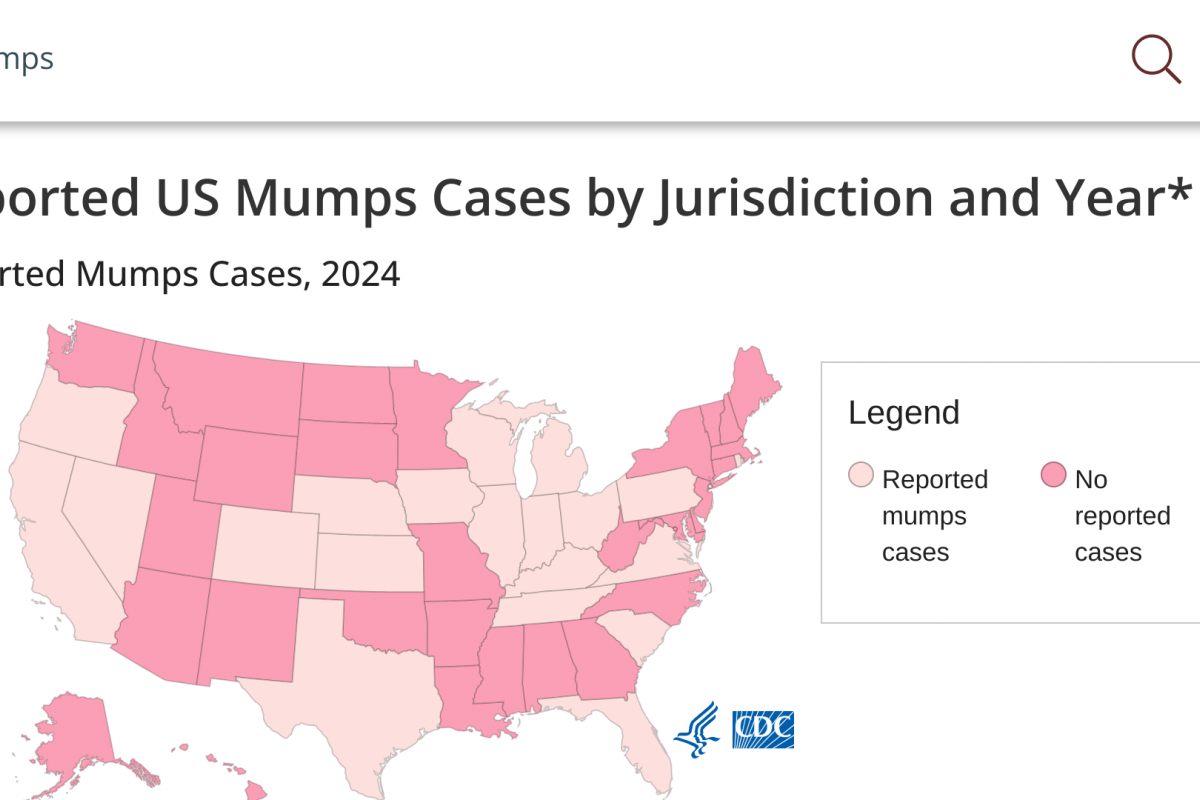
US CDC mumps case map Feb. 2024

The New Jersey Department of Health (NJDOH), which has already confirmed one measles case in 2024, recently announced it is investigating eight suspected mumps cases in Hunterdon County, northwest New Jersey.

Mumps can become very serious and start with fever, headache, muscle aches, tiredness, and loss of appetite. Later, it appears as a swelling of the salivary glands or puffy cheeks and a tender, swollen jaw.

As of  February 29, 2024, a total of 50 mumps cases have been reported by 21 U.S. jurisdictions, some related to international travel.

Last year, 436 mumps cases were reported in the U.S.

NJDOH is urging everyone to be aware of the symptoms of these highly contagious viruses and to stay up to date with the measles, mumps, and rubella (MMR) vaccinations.

The MMR vaccine is a very effective way to avoid these illnesses.

“As a physician and mom, I understand what keeping your kids and your family healthy is like. The best way to keep you and your loved ones safe is to get the MMR shot. If you or your family have not gotten the shot, now is the time,” said Acting Health Commissioner Dr. Kaitlan Baston in a press release on March 5, 2024.

“These viruses are incredibly contagious, so if you suspect you may have measles, mumps, or rubella, it is important to call ahead before visiting any health care provider or facility so they can take special precautions.” 

The cost of MMR vaccination is generally covered by insurance, and various vaccines are available at community pharmacies.

Mar 10, 2024 • 4:24 pm CDT
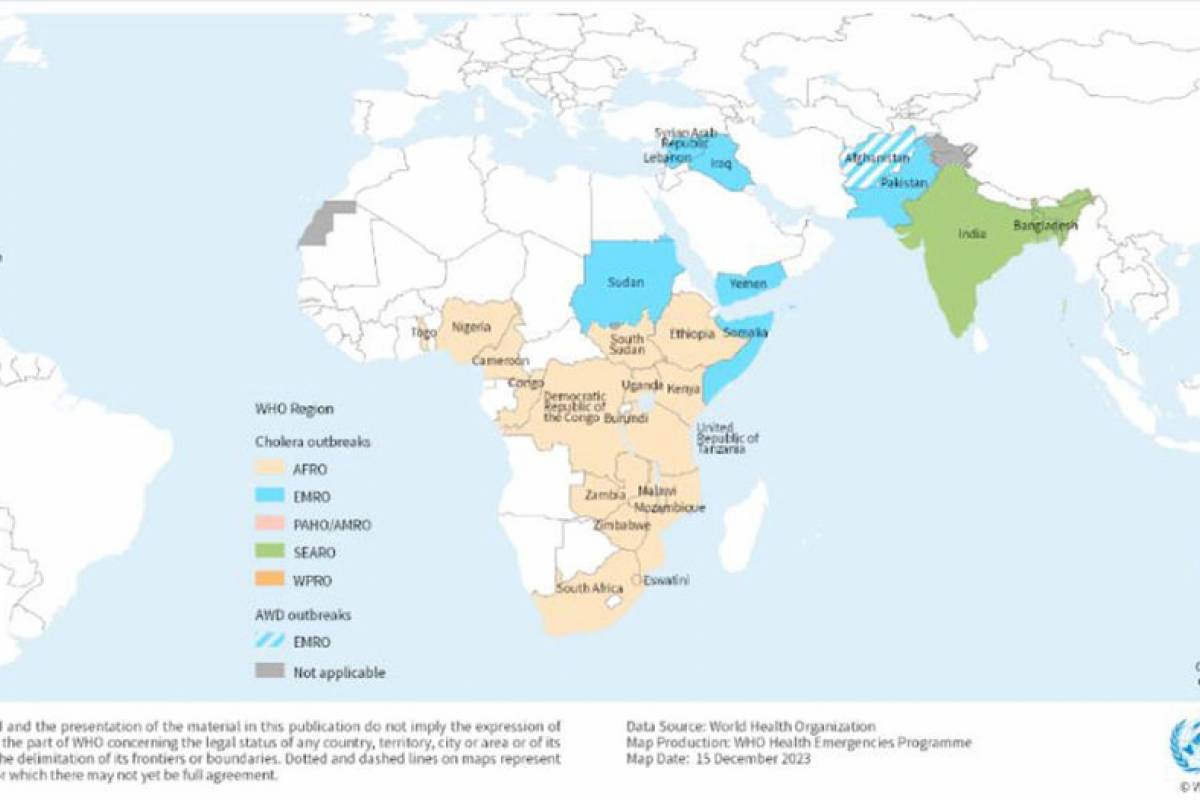
WHO Cholera outbreak country map 2024

Doctors Without Borders/Médecins Sans Frontières (MSF) recently announced it is gravely alarmed over the depletion of the global oral cholera vaccine (OCV) stockpile.

As of March 6, 2024, all cholera vaccine doses currently in production have already been allocated, and their demand keeps increasing.

The predicted shortfall of at least 50 million vaccine doses worldwide.

As countries report cholera outbreaks, MSF says that existing and new manufacturers must urgently step up their efforts to boost the global supply of cholera vaccines.

MSF says immediate action is necessary to address this pressing global health concern.

"The world's oral cholera vaccine stocks have dried up," said Dr. Daniela Garone, MSF's international medical coordinator, on February 26, 2024.

"We're very worried that people are at much greater risk of getting and potentially dying from a disease that's preventable if there's no vaccine available to respond to an outbreak in their community, nor to prevent one from starting in the first place," Dr. Garone added.

The World Health Organization (WHO) has recorded seven cholera pandemics over the past two centuries. The current (7th) cholera epidemic is considered to have started in 1961.

About 17 countries across four WHO regions reported over 40,000 cholera cases and 775 related deaths in January 2024.

The five countries reporting the most cases in 2024 are Zambia, Afghanistan, Zimbabwe, Mozambique, and Pakistan.

The U.S. CDC recommends that adults traveling to areas with active cholera transmission get vaccinated.

The WHO has pre-qualified three vaccines to address this need: Dukoral®, Shanchol™, and Euvichol®.

DUKORAL is authorized in Australia, Canada, Europe, New Zealand, Thailand, and the United Kingdom to protect people against cholera and Enterotoxigenic Escherichia coli.

DUKORAL vaccine sales were reported to be €29.8 million in 2023 compared to €17.3 million in 2022, a 72% increase.

Mar 10, 2024 • 1:54 pm CDT
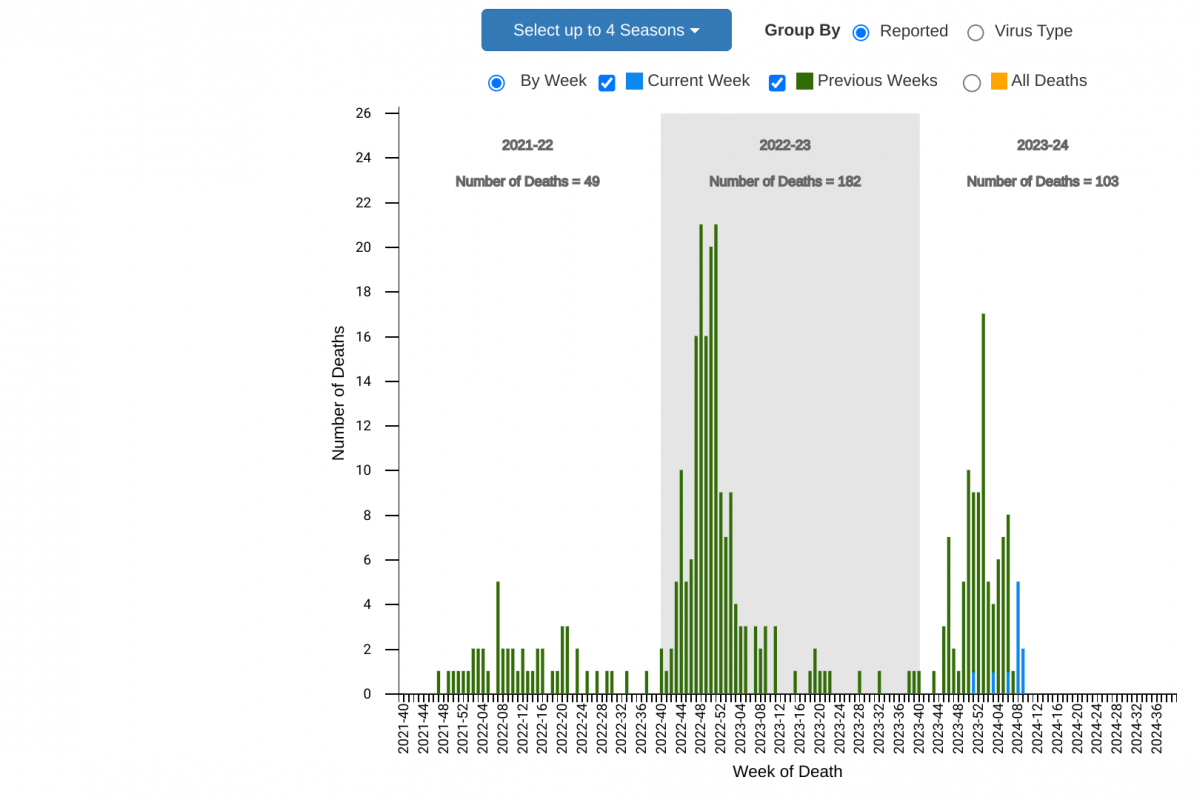
US CDC FluView data Feb. 8, 2024

Many people are looking forward to Spring 2024, but the respiratory season still affects children's health in the United States.

On March 8, 2024, the U.S. CDC published an updated national outlook on respiratory diseases. According to the report, influenza percent positivity has remained stable compared to the previous week, but there have been flu outbreaks in some areas of the country.

In addition, last week, ten children died from influenza.

As of week #9 of 2024, the CDC has identified 103 influenza-associated pediatric deaths using underlying cause-of-death codes J09–J18. During the 2022-2023 flu season, 182 children died from influenza infections.

The vaccination status of these children was not disclosed.

The CDC continues to recommend a seasonal flu shot for anyone older than six months and suggests speaking with a doctor, nurse, or pharmacist about flu shot options (egg, cell, nasal) in March 2024.

Mar 10, 2024 • 1:00 pm CDT
GPEI March 8, 2024

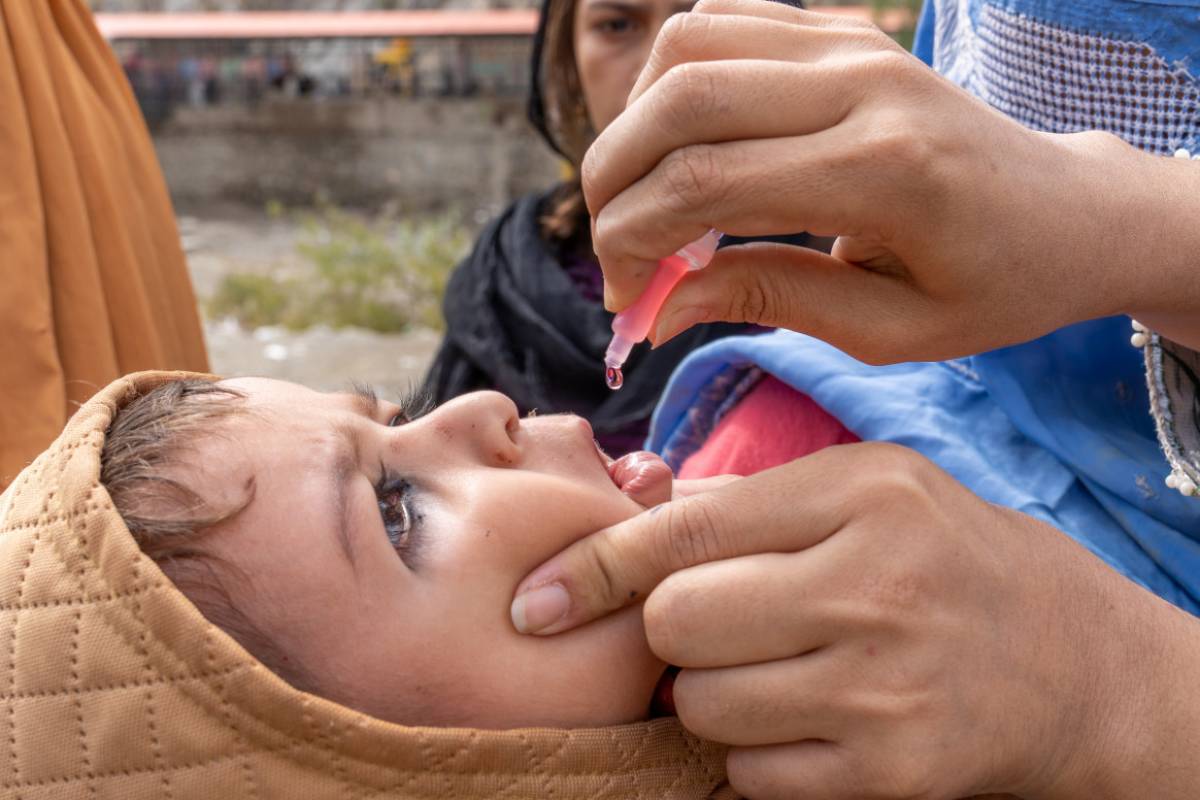
Recently, the Republic of Indonesia generously donated 10 million polio vaccine doses to Afghanistan. This initiative is a significant step towards eradicating the disease and ensuring the health and well-being of the Afghan people.

Afghanistan is affected by ongoing endemic wild poliovirus transmission. In 2023, there were six cases confirmed.

According to the government's news agency, on March 8, 2024, Bio Farma, an Indonesian pharmaceutical company, manufactured these oral polio vaccines.

UNICEF is collaborating with Afghan officials to facilitate the transportation and distribution of the vaccines.

Bio Farma produces the nOPV2 vaccine, which has been administered in more than 35 countries.

The Global Polio Eradication Initiative reported on March 8, 2024, that at the Bost hospital, like every maternity facility in Afghanistan, babies are vaccinated in their first few hours of life.

In any 24 hours, the UNICEF-backed female vaccinators vaccinate dozens of babies in this hospital alone.

Some women are medically trained to administer intravenous vaccinations, and others are known as female mobilizer vaccinators (FMVs). They are not just vaccinators, but FMV are also the first-line advocates for polio eradication.

They are a familiar face to the local community who provides sound advice and information for good health of their children and family members.

Mar 8, 2024 • 2:31 pm CST
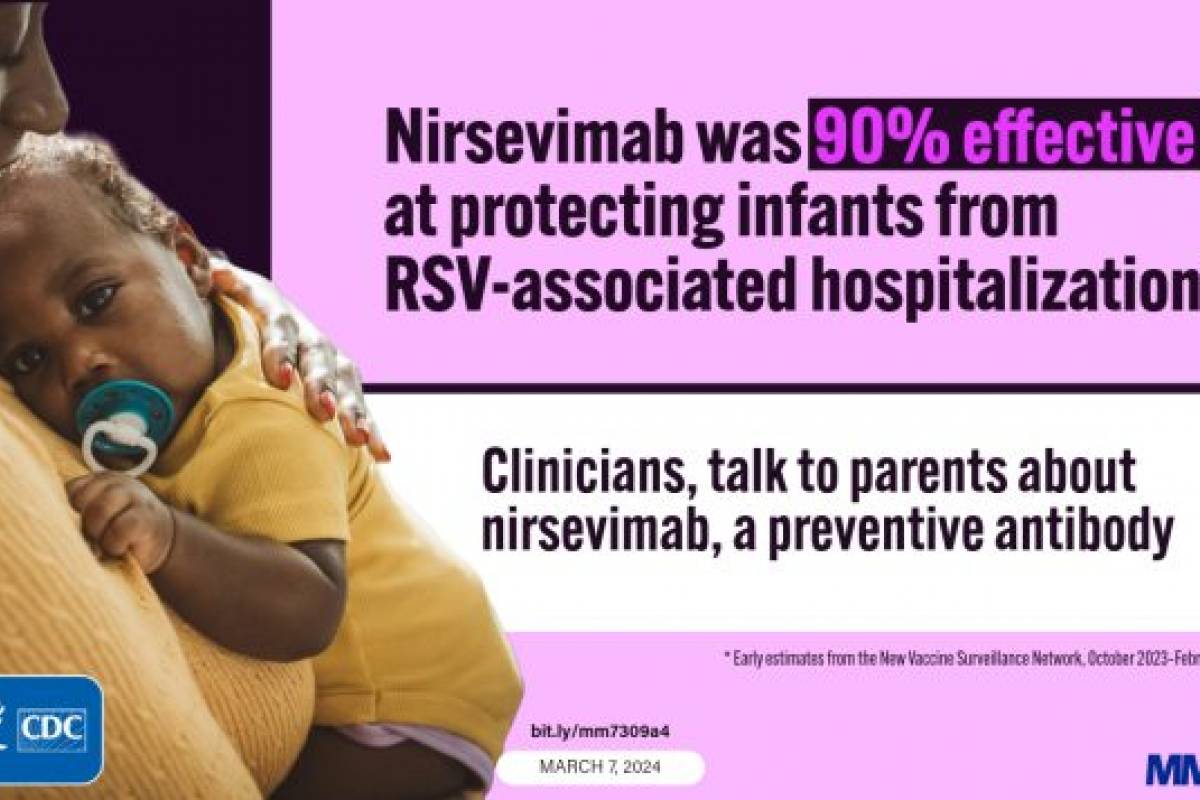
US CDC March 7, 2024

Since the Respiratory Syncytial Virus (RSV) season began in the United States in Florida last year and peaked over the winter months, pregnant women have had two immunization options available to protect their future infants.

In August 2023, the CDC recommended Beyfortus™ (Nirsevimab-alip), a single-dose, long-acting monoclonal antibody offering passive immunization, to protect infants aged <8 months against RSV-associated lower respiratory tract infection in their first RSV season.

The other option is maternal vaccination.

On March 7, 2023, the U.S. CDC's Morbidity and Mortality Weekly Report offered encouraging news.

The CDC confirmed that Beyfortus was 90% (95% CI = 75%–96%) effective against RSV-associated hospitalization in infants in their first RSV season.

However, Beyfortus's effectiveness is expected to decrease after receipt because of antibody decay.

In clinical trials, nirsevimab remained highly efficacious against RSV-associated lower respiratory tract infection in infants through 150 days, consistent with an extended half-life of 63–73 days.

This early estimate supports the current CDC recommendation for the prevention of severe RSV disease in infants.

As of January 2024, among females with an infant <8 months, 40.5% reported that their infant received nirsevimab. An additional 21.7% said that they plan to get nirsevimab for their infant.

Mar 8, 2024 • 1:44 pm CST
City of Chicago 2024

The year 2024 has already witnessed a resurgence of measles outbreaks in cities across the United States.

The Centers for Disease Control and Prevention (CDC) recently confirmed that 45 cases of measles have been reported by 17 jurisdictions, including the states of Arizona, California, Florida, Georgia, Illinois, Indiana, Louisiana, Maryland, Michigan, Minnesota, Missouri, New Jersey, New York City, Ohio, Pennsylvania, Virginia, and Washington.

After a brief pause, the Chicago Department of Public Health (CDPH) confirmed another case of measles in a resident at a new arrivals shelter in Pilsen, Illinois, on March 8, 2024.

The initial measles case was reported yesterday.

Illinois had five measles cases in 2023. Those cases were the first in the state since 2019.

As of today, CDPH is asking all shelter residents at 2241 S. Halsted St. to remain in place until it can be determined whether they are vaccinated against measles and, therefore, immune to the infectious disease.

Those who are vaccinated can do their regular business, while those who have not been vaccinated must remain indoors to watch for symptoms.

However, all unvaccinated residents (number not disclosed) will be screened for symptoms and offered the measles vaccine.

While most Chicagoans were vaccinated in childhood and, therefore, are not at high risk, anyone who is unvaccinated against measles should do so as soon as possible.

Under Illinois law, the MMR vaccine is available at most doctor’s offices and pharmacies, and children as young as ten can get vaccinated at community pharmacies.

For more information on measles please visit the CDPH web site.

Mar 7, 2024 • 4:29 pm CST
by Borja Blanco Cinza

The European Centre for Disease Prevention and Control (ECDC) today reported a significant surge in sexually transmitted infections (STIs) across Europe.

The latest Annual Epidemiological Reports on STIs in the European Union/European Economic Area (EU/EEA), published on March 7, 2024, reveal a sharp increase in reported STI cases in 2022 compared to the previous year.

Gonorrhea cases rose by a staggering 48%, syphilis by 34%, and chlamydia by 16%. This is a concerning trend that requires immediate action to prevent further escalation, wrote the ECDC.

ECDC Director Andrea Ammon expressed deep concern over the rising STI rates in a press release: "Addressing the substantial increases in STI cases demands urgent attention and concerted efforts."

"Testing, treatment, and prevention lie at the heart of any long-term strategy."

While no approved vaccines for these STIs exist, the United Kingdom (U.K.) has launched an innovative immunization program targeting gonorrhea.

In 2023, the U.K.'s JCVI considered the evidence presented regarding program cost-effectiveness and likely impact on gonorrhea epidemiology.

The committee agreed that a targeted program should be initiated using the 4CMenB vaccine (Bexsero®) to prevent gonorrhea in those at most significant risk of infection.

It is essential for individuals offered vaccination to understand that real-world studies have estimated that the 4CMenB vaccine is effective against gonorrhea between 32.7% and 42%.

Therefore, although vaccination would be expected to reduce the chance of becoming infected with gonorrhea, it would not eliminate the possibility.

Vaccinated individuals could expect to have some reduction in their own risk of contracting gonorrhea.

However, the JVCI wrote that the main benefit of a vaccination program is expected to be at the community level, with a significant reduction in the overall number of cases.

Mar 7, 2024 • 11:10 am CST
from Pixabay

According to an article published by MIT News, a new study shows metal-organic particles can both deliver vaccines and act as an adjuvant to generate a strong immune response at a lower dose.

Anne Trafton wrote on March 6, 2024, that many vaccines, including vaccines for hepatitis B and whooping cough, consist of fragments of viral or bacterial proteins.

These vaccines often include other molecules called adjuvants, which help to boost the immune system’s response to the protein.

Most of these adjuvants consist of aluminum salts or other molecules that provoke a nonspecific immune response.

A team of MIT researchers has now shown that a type of nanoparticle called a metal-organic framework can also provoke a strong immune response by activating the innate immune system — the body’s first line of defense against any pathogen — through cell proteins called toll-like receptors.

The unedited article is posted at the MIT News link.

Mar 7, 2024 • 10:12 am CST
UK 2024

AstraZeneca today announced plans to invest £650 million in the United Kingdom (UK), helping boost the UK's Life Sciences sector and grow the economy.

On March 6, 2024, AstraZeneca confirmed it intends to invest £450 million to research, develop, and manufacture vaccines in Speke, Liverpool. The facility will be operationally net zero, with power supplied from renewable energy sources.

A further £200 million investment announced to expand AstraZeneca's presence in Cambridge, employing potentially 1,000 people.

In a government press release, AstraZeneca Chief Executive Officer Sir Pascal Soriot said, "AstraZeneca's planned investment would enhance the UK's pandemic preparedness and demonstrate our ongoing confidence in UK life sciences."

"We will continue to support the UK in driving innovation and patient access, building on the strong foundations which have been put in place."

AstraZeneca's investment decision is contingent upon mutual agreement with the UK Government and third parties, and successful completion of regulatory processes. Any final commitment is not solely subject to AstraZeneca's discretion.

Currently, AstraZeneca produces vaccines targeting influenza and RSV.

Mar 7, 2024 • 5:15 am CST
from Pixabay

ImmunityBio today announced the recent publication of preclinical data in the online issue of Science, First Release. The data indicate that combination therapy with N-803, an IL-15 superagonist, and broadly neutralizing antibodies may potentially enable the immune system to manage human immunodeficiency virus (HIV) without the need for antiretroviral treatment.

The preclinical non-human primate study funded by the National Institutes of Health and the U.S. National Institute of Allergy and Infectious Diseases demonstrated that using N-803, in combination with broadly neutralizing antibodies (bNAbs), led to sustained viral control after discontinuation of antiretroviral therapy (ART) in ART-suppressed rhesus macaques infected with simian-human immunodeficiency virus AD8 (SHIV-AD8).

Treatment with N-803 and bNAbs led to immune activation and transient viremia but only limited reductions in the SHIV reservoir.

Upon ART discontinuation, all animals experienced viral rebound, followed by long-term virus control for up to 10 months in approximately 70% of those treated with N-803 and bNAbs.

“The viral reservoir in people with HIV is established within the first few days of infection and cannot be eliminated by the body’s immune system or currently available treatments, representing a significant obstacle in curing an established HIV infection,” said James B. Whitney, M.D., study author and researcher at the Center for Virology and Vaccine Research at Beth Israel Deaconess Medical Center and Harvard Medical School, in a press release on March 6, 2024.

“When combined with broadly neutralizing antibodies, N-803 has the potential to provide viral control without significant reduction in the viral reservoir, which further suggests that the complete eradication of this reservoir may not be required to induce sustained remission after discontinuing antiretroviral therapy.”

Following on from and directly attributable to these preclinical results, two clinical trials were designed to investigate the ability of N-803 and bNAbs to reduce viral loads in HIV-infected individuals on antiretroviral therapy.

As of March 2024, these clinical studies are actively enrolling participants.