Search API
As summer vacation season 2025 reaches a peak, the state of Florida recently reported that numerous individuals have been diagnosed with travel-related diseases in several counties.
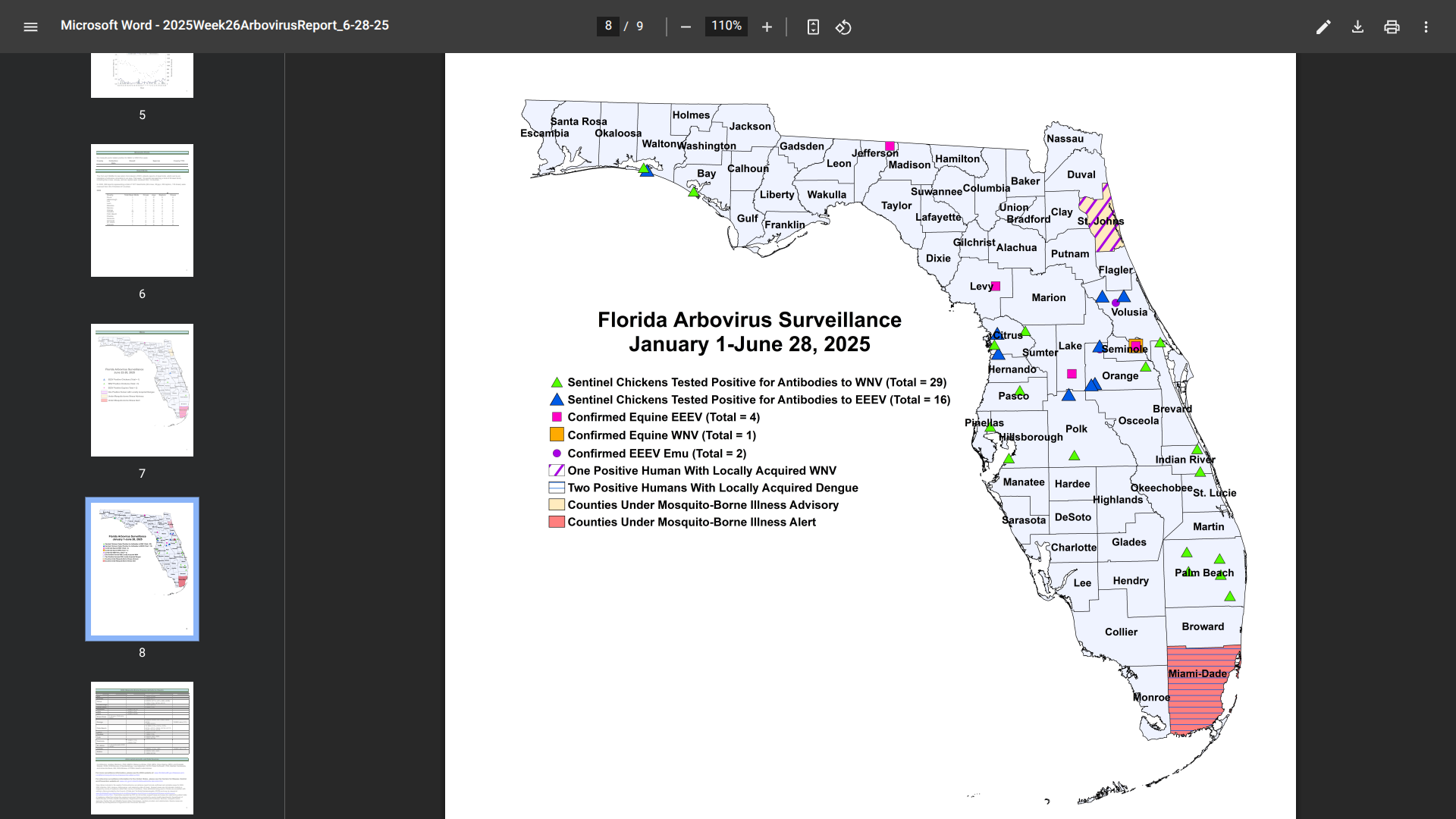
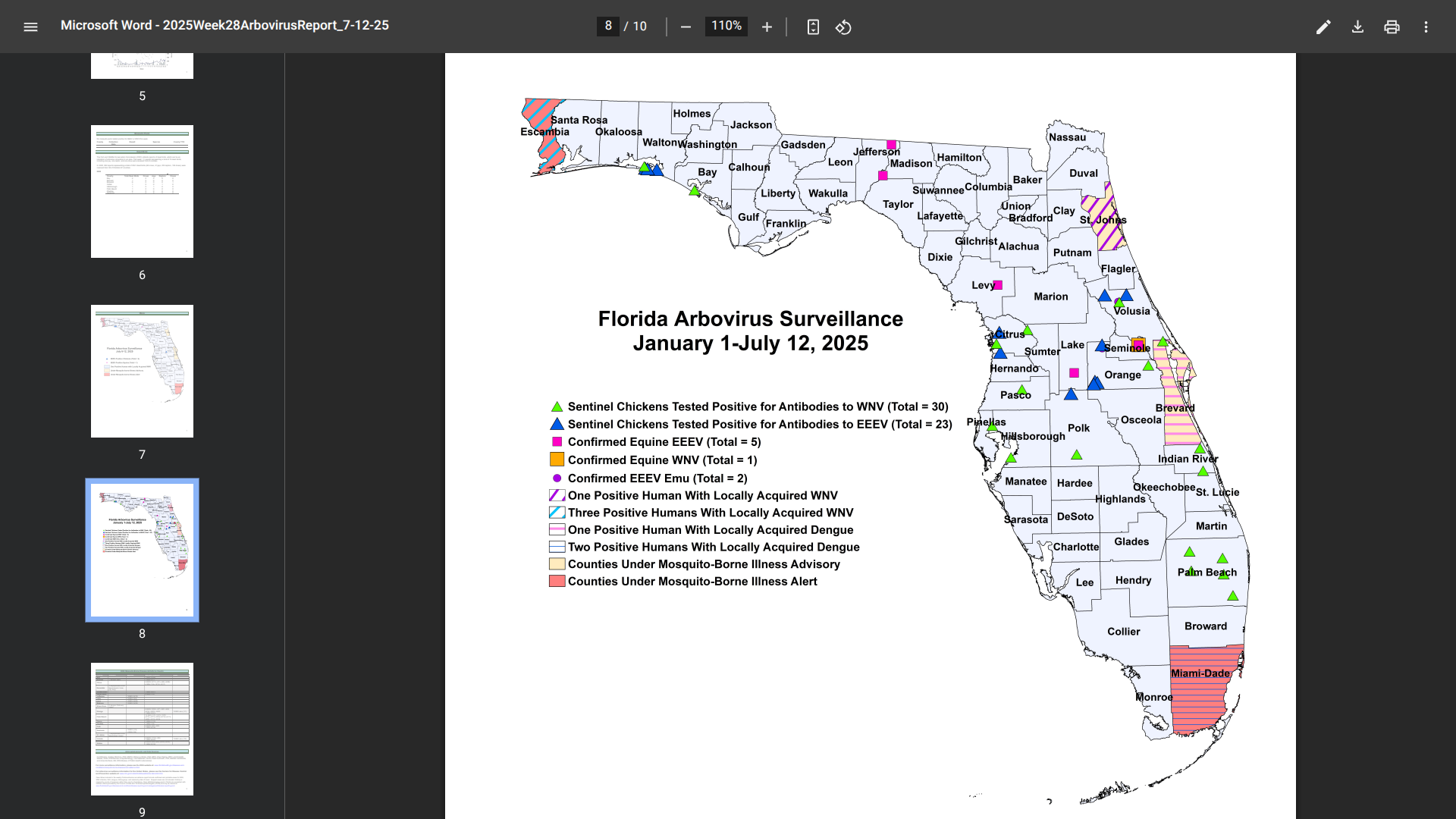
As of July 12, 2025, Florida Department of Health confirmed Escambia and Miami-Dade counties remain under mosquito-borne illness alerts.
And St. Johns and Brevard counties have issued Mosquito-Borne Illness Advisories in 2025.
The diagnosed diseases in Florida include four travel-related cases of chikungunya. The countries of origin were Bolivia, Brazil, Indonesia, and Sri Lanka.
A total of 105 cases of dengue fever were reported among individuals who had traveled internationally, with 49 cases of DENV-4 originating from Cuba. Additionally, three locally acquired dengue cases (DEN-3, DENV-4) were reported in Miami-Dade (2) and Brevard (1) counties in 2025.
And 21 travel-related malaria cases have been confirmed in Florida, primarily in people visiting from Africa.
While not travel-related, four people in Florida have died from infections caused by the bacterium Vibrio vulnificus, commonly known as the "flesh-eating" bacterium, in 2025. Last year, 11 cases were confirmed.
From an alert perspective, no country has issued a Travel Health Advisory focused on the state of Florida as of July 21, 2025. However, routine and travel-related vaccines are recommended for many people.
With about one million people developing herpes zoster (shingles) in the US each year, simplifying the vaccination process is essential for at-risk seniors.
Approximately 99% of older adults have the virus that causes shingles inside their bodies.
With 55 million Americans aged 65 or older, many of whom live in California, Florida, and Texas, accessing the US Food and Drug Administration (FDA)-approved Shingrix® vaccine is a priority.
GSK plc, the manufacturer of Shingrix, announced that the FDA has recently approved a prefilled syringe presentation, which eliminates the need to reconstitute the vaccine separately before administration, thereby simplifying the vaccine administration process for healthcare professionals.
Brigid Groves, Vice President of Professional Affairs at the American Pharmacists Association, stated in a press release on July 17, 2025, "The prefilled syringe presentation of GSK's shingles vaccine is good news, providing a convenient method of administration."
"The FDA approval is a positive step toward driving prevention of this painful disease, and as a practicing pharmacist, I welcome the availability of this new presentation."
The Centers for Disease Control and Prevention (CDC) recommends two doses of GSK's shingles vaccine to prevent shingles and related complications in adults aged 50 years or older. Additionally, two doses are recommended for adults aged 19 years or older who are or will be immunocompromised or immunosuppressed.
The CDC states that as people age, the strength of their immune system's response to infection wanes, increasing the risk of developing shingles.
Additionally, Shingrix vaccination may play a role in delaying the onset of dementia.
Over the past few years, various studies have reported causal evidence that herpes zoster vaccination may prevent a proportion of dementia cases.

This year, four people in Florida have died from an infection caused by a bacterium commonly known as the "flesh-eating" bacterium. To date, 11 infections in various countries have been reported this year from this waterborne and foodborne pathogen.
As of July 11, 2025, the Florida Department of Health reported that fatalities had occurred in Hillsborough, Bay, Broward, and St. Johns counties.
In 2024, Citrus, Hernando, Hillsborough, Lee, Pasco, Pinellas, and Sarasota Counties experienced an unusual increase due to the impacts of Hurricane Helene. Florida reported 82 cases and 19 fatalities last year.
During 2024, Pinellas County (Tampa Bay) led all Florida counties with 15 cases and three deaths.
The disease is caused by Vibrio vulnificus, a bacterium that thrives in warm water and is termed "halophilic" because it requires salt to survive, as stated by the U.S. Centers for Disease Control and Prevention (CDC).
Importantly, individuals who are immunocompromised or have a weakened immune system should wear proper foot protection to prevent cuts and injuries caused by rocks and shells on the beach, according to the CDC.
Additionally, thousands of cases are related to the consumption of contaminated food.
The CDC estimates that approximately 80,000 cases occur each year, leading to about 100 deaths annually.
The CDC recommends avoiding contact with open wounds from brackish water, salt water, and raw seafood, and thoroughly cooking oysters and other seafood before eating, to prevent infection and illness.
As of July 15, 2025, there are no approved vaccines to prevent Vibrio vulnificus-related illness.
The southernmost territory of the United States, situated southwest of Hawaii in the Pacific Ocean, has declared a health emergency related to a surge of dengue fever cases.
As of July 7, 2025, the American Samoa Department of Health issued a travel alert following the confirmation of four imported cases of dengue fever and two locally-acquired cases. The local population is urged to protect themselves from mosquito bites, which are the source of this serious disease.
The government stated that these dengue cases are related to travelers to and from Samoa, a neighboring island.
According to the Samoa Bureau of Statistics, American Samoa welcomed over 200,000 visitors in 2024.
Over the last two years, the U.S. Centers for Disease Control and Prevention (CDC) has reported an increasing number of dengue cases in territories.
The CDC says the dengue virus is endemic and has caused outbreaks in the U.S. territories of Puerto Rico, the U.S. Virgin Islands, the Federated States of Micronesia, the Republic of the Marshall Islands, and the Republic of Palau.
Except for Puerto Rico, dengue vaccines are not available in the continental U.S. or its territories as of 2025.
Within the U.S., the state of Florida reports the majority of dengue cases.

With the mosquito season underway in the United States, Florida health authorities have recently reported the third locally acquired case of dengue fever in Brevard County.
As of July 8, 2025, the Florida Department of Health in Brevard County (DOH-Brevard) issued a Mosquito-Borne Illness Advisory, which is scheduled to be effective until mid-September 2025.
DOH-Brevard and Brevard County Mosquito Control have confirmed that they are coordinating surveillance and prevention efforts through both ground and aerial spraying.
Previously, further south along the Atlantic Coast, Miami-Dade County has reported two local cases of dengue this year.
In 2024, 91 locally acquired dengue cases were reported in ten Florida counties, with Miami-Dade leading the way.
As of July 2025, the U.S. Centers for Disease Control and Prevention, Canada, and the United Kingdom have not issued vaccination requirements for visiting Florida this year.
Currently, only Puerto Rico is offering dengue vaccinations in the United States.

The Hawai‘i Department of Health (DOH) recently confirmed its ninth travel-related case of dengue in 2025.
As of the end of June 2025, the DOH reported eight dengue cases on Oʻahu and one case on Maui.
Several countries in the Pacific Region are reporting an increase in mosquito-transmitted dengue virus cases, including Fiji, French Polynesia, Tonga, and the Republic of the Philippines.
According to the World Health Organization, dengue is a grade 3 emergency, with an estimated 4 billion people at risk globally.
The U.S. Centers for Disease Control and Prevention (CDC) reissued a Global Travel Health Notice on June 18, 2025, regarding dengue outbreaks in the Asia/Pacific region, including India, Singapore, Thailand, the Philippines, Malaysia, and Myanmar.
CDC reported on July 3, 2025, that 2,248 travel-related Dengue cases and two local cases in Miami, Florida, were reported in 41 jurisdictions this year.
While the CDC currently authorizes the first-generation dengue vaccine for use in Puerto Rico, where dengue has become endemic, numerous countries enable access to a second-generation vaccine in 2025. Additionally, innovative dengue vaccine candidates are making progress in late-stage clinical trials.

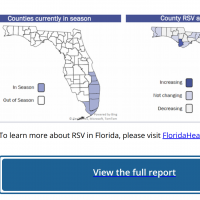
Florida health officials recently reported additional cases of mosquito-transmitted and travel-related chikungunya, dengue, and malaria in 2025.
After a slow start, these serious diseases have been concentrated in southeast Florida, in the great Miami area, which welcomes millions of international visitors each year.
Currently, Miami-Dade County remains under a mosquito-borne illness alert.
As of June 28, 2025, Florida Health's Weekly Arbovirus Report confirmed a second, indigenous case of dengue in Miami-Dade County.
The most recent case has been identified as serotype DENV-4, while the early case was DENV-3.
In 2024, a total of 91 cases of locally acquired dengue have been reported across ten Florida counties.
Additionally, there have been four cases of chikungunya and 20 cases of malaria related to international travelers this year.
While there are no travel advisories issued for Florida's southeast coast, Canada and the UK both advise speaking with a travel vaccine expert before visiting at-risk areas in 2025.