Search API
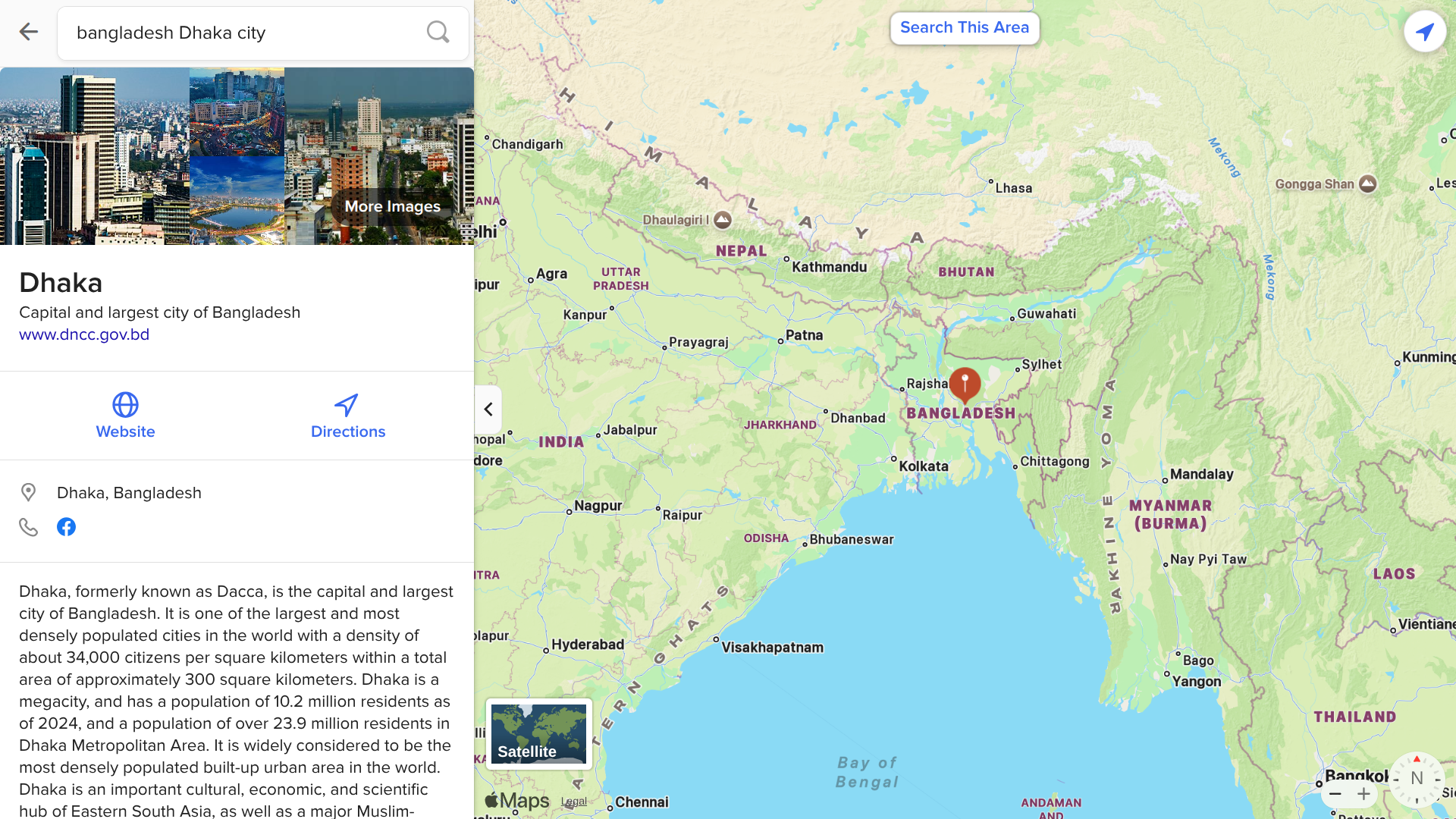
The reappearance of 138 chikungunya cases in the People's Republic of Bangladesh in 2024 after a 7-year absence indicated the potential for larger outbreaks in the future.
In June 2025, the Institute of Epidemiology, Disease Control and Research in Bangladesh reported an outbreak of chikungunya in Dhaka city, with 337 cases reported between January and May 28, 2025.
Dhaka is the capital and largest city of Bangladesh. It is one of the largest and most densely populated cities in the world, with a population exceeding 10 million.
In addition to locals being at risk for this mosquito-transmitted virus, over 650,000 foreign visitors are expected to visit Bangladesh in 2025.
According to the U.S. CDC, travelers visiting areas with ongoing chikungunya outbreaks are at risk of infection. These health risk areas are constantly changing and evolving; therefore, travellers should check the latest information on outbreaks before departing abroad.
As of July 9, 2025, two new chikungunya vaccines have been approved for use in the United Kingdom, the European Union, and the United States. These vaccines are commercially offered at travel clinics and pharmacies in the U.S.

With the mosquito season underway in the United States, Florida health authorities have recently reported the third locally acquired case of dengue fever in Brevard County.
As of July 8, 2025, the Florida Department of Health in Brevard County (DOH-Brevard) issued a Mosquito-Borne Illness Advisory, which is scheduled to be effective until mid-September 2025.
DOH-Brevard and Brevard County Mosquito Control have confirmed that they are coordinating surveillance and prevention efforts through both ground and aerial spraying.
Previously, further south along the Atlantic Coast, Miami-Dade County has reported two local cases of dengue this year.
In 2024, 91 locally acquired dengue cases were reported in ten Florida counties, with Miami-Dade leading the way.
As of July 2025, the U.S. Centers for Disease Control and Prevention, Canada, and the United Kingdom have not issued vaccination requirements for visiting Florida this year.
Currently, only Puerto Rico is offering dengue vaccinations in the United States.

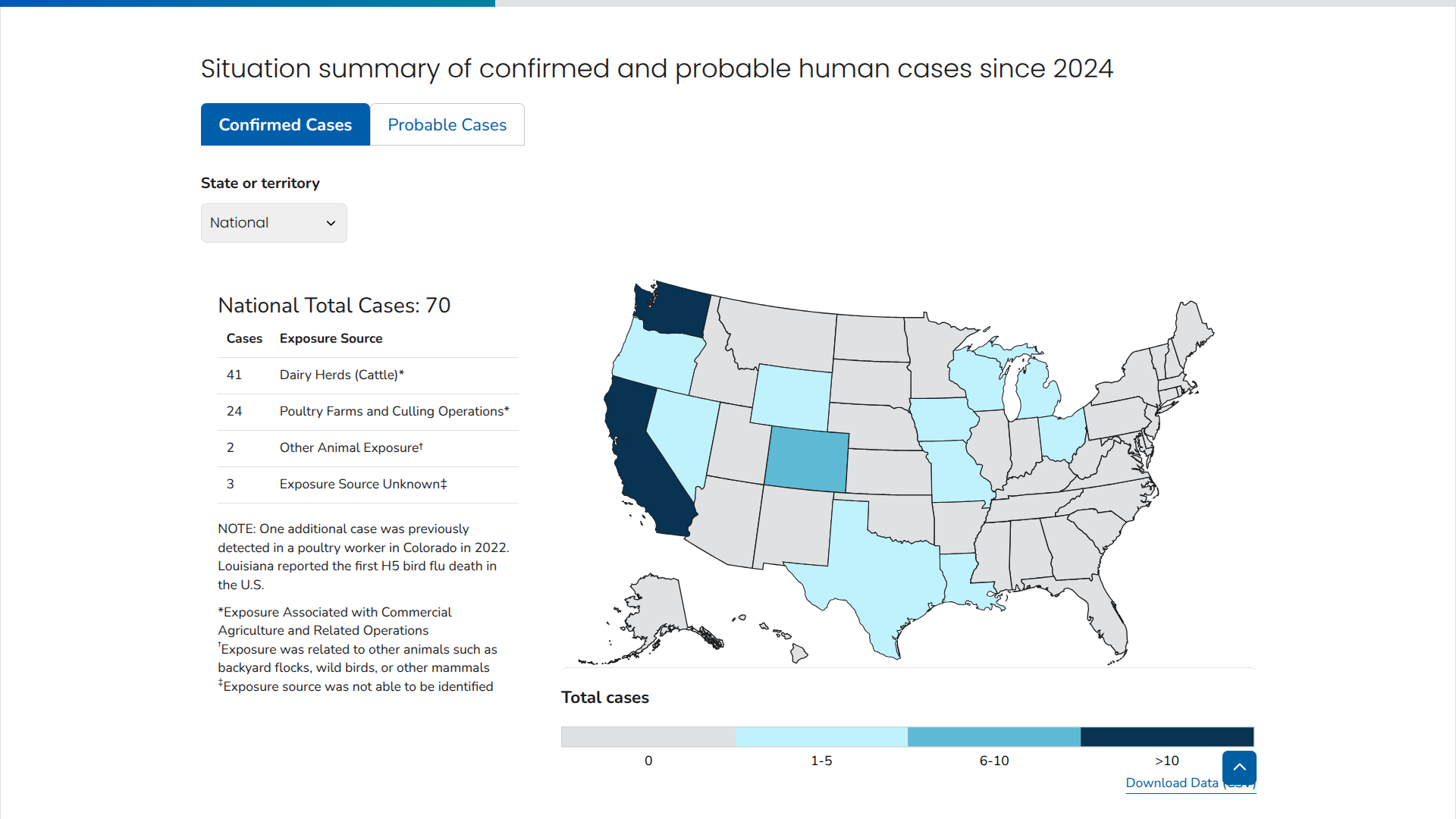
The H5N1 strain of highly pathogenic avian influenza (HPAI) has been present in wild birds worldwide and caused outbreaks in U.S. domestic birds and dairy cattle in 2024-2025.
While there were 70 humans infected with HPAI, and one related fatality, there was no human-to-human transmission of this serious virus.
However, since February 25, 2024, only six human cases have been reported.
As the number of infections has recently decreased, the U.S. Centers for Disease Control and Prevention (CDC) announced that it has streamlined H5N1 bird flu updates with routine influenza data and reporting cadences to reflect the current public health situation.
As of July 7, 2025, the following changes were made to this CDC webpage:
Data on the number of people monitored and tested for bird flu are reported on a monthly basis.
Data on highly pathogenic avian influenza (HPAI) detections in animals will no longer be reported on the CDC website. These HPAI data can be found on the U.S. Department of Agriculture's website.
Furthermore, the CDC will report any additional human cases of H5 bird flu here and in FluView.
While there are 'bird-flu' vaccines approved by the U.S. FDA, none were deployed in the USA during this outbreak.
During the first half of 2025, Canada's measles outbreak occurred primarily in rural areas of Ontario.
Recently, however, there has been a rising number of measles cases reported in Western Canada.
As of the end of June 2025, specifically during week #26, the province of Alberta reported 104 new measles cases. This brings the total number of people infected with the measles virus this year to 1,169.
To facilitate patient care in Alberta, the Ministry of Primary and Preventive Health Services was established on May 16, 2025.
Additionally, the Alberta Immunization Policy contains a comprehensive listing of publicly funded vaccines and biologicals, along with indications for their use, including the measles-mumps-rubella (MMR) vaccine.
As of July 8, 2025, Canada recommends MMR vaccination for most people.
To alert international travelers, the U.S. CDC updated its Global Measles Outbreak Travel Health Advisory on May 28, 2025. This Level I advisory includes Canada.
The CDC wrote, 'All international travelers should be fully vaccinated against measles with the MMR vaccine, according to CDC's measles vaccination recommendations for international travel.'

Over the past decade, numerious herpes zoster cases were prevented with two doses of a U.S. FDA-approved vaccine that contains an adjuvant. According to new research, there may be an additional, measurable benefit from vaccination.
A Brief Communication published by NPJ Vaccines on June 25, 2025, reported a lower risk of dementia associated with AS01-adjuvanted vaccination against shingles.
In propensity-score matched cohort studies involving 436,788 individuals, both the AS01-adjuvanted shingles and respiratory syncytial virus vaccines, administered individually or in combination, were associated with a reduced risk of dementia at 18 months.
AS01 may protect against dementia through specific immunological pathways.
In particular, stimulation of toll-like receptor 4 with monophosphoryl lipid A (MPL; one of the components of the AS01 system) has been shown to improve Alzheimer’s disease pathology in mice.
In addition, the two main ingredients of AS01, MPL and QS-21 (a purified plant extract derived from Quillaja saponaria), act synergistically to activate macrophages and dendritic cells, triggering an age-independent cytokine cascade that culminates in the production of interferon gamma (IFN-γ).
IFN-γ might attenuate amyloid plaque deposition (as seen in mice) and is negatively correlated with cognitive decline in cognitively unimpaired older adults.
These neuroprotective mechanisms may reach their full potential at or below the dose of AS01 administered within a single vaccine, so that administering both the AS01 shingles and RSV vaccines does not provide any additional benefits.
This saturation effect could also explain why the level of protection against dementia appears similar between the AS01 shingles vaccine (which is given in two doses) and the AS01 RSV vaccine (administered as a single dose).
No difference was observed between the two AS01-adjuvanted vaccines, suggesting that the AS01 adjuvant itself plays a direct role in reducing the risk of dementia.
A previous study found similar cross-protection benefits.
In July 2024, a University of Oxford-led study concluded that receiving the recombinant Shingrix® vaccine was associated with a 17% increase in diagnosis-free time, translating into 164 additional days lived without a diagnosis of dementia in those subsequently affected.
As of July 7, 2025, shingles vaccination services are offered at most pharmacies in the United States.


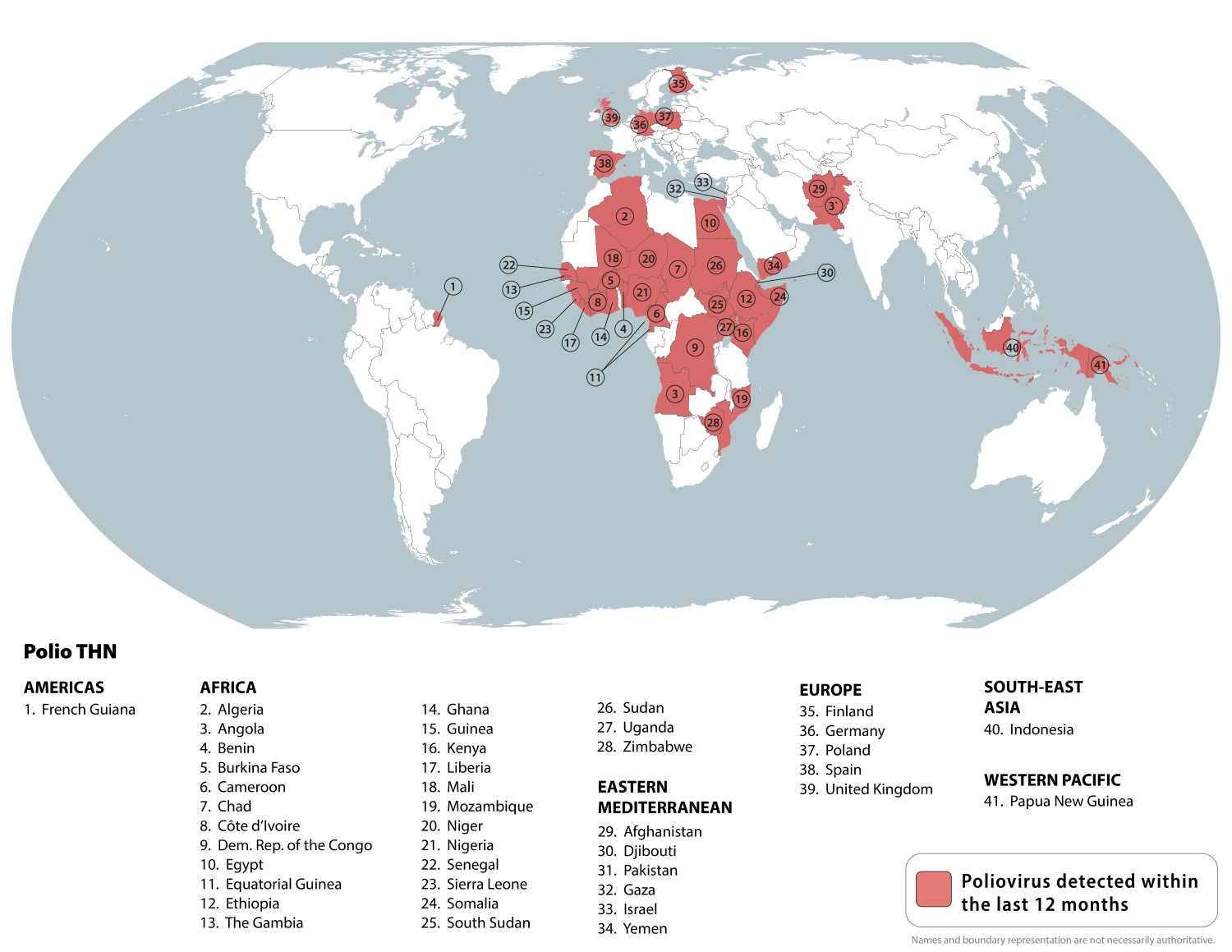
According to the health departments of various countries, a cluster of vaccine-derived poliovirus type 2 (cVDPV2) has been detected in wastewater samples collected in Europe.
As of July 7, 2025, the European Centre for Disease Prevention and Control (ECDC) says these countries include, but are not limited to, the United Kingdom, Finland, Germany, Spain, and Poland.
Specifically, Germany has reported detections of cVDPV2 in multiple environmental samples throughout 2024 and the first half of 2025.
In 2024, a strain of variant poliovirus originating from Nigeria was repeatedly detected in wastewater samples from Hamburg, Berlin, Munich, Frankfurt, Stuttgart, Dresden, Cologne, Düsseldorf, and Bonn.
In 2025, detections have been from Dresden during weeks 17, 19, 21, and 23, Mainz during weeks 15 and 19, Munich during weeks 21, 22, and 23, and Stuttgart during week 21.
The cluster exhibits a degree of genomic diversity that more strongly supports the hypothesis of multiple introductions than a single introduction with local transmission within the EU.
However, the large geographical spread in the EU/EEA, the fact that detections occurred over several months, and the identification of specific genetic sub-clusters suggest at least some degree of local transmission.
Fortunately, no cases of poliomyelitis have been reported in Europe.
The last indigenous case of polio in Germany was in 1990.
Given the presence of non-vaccinated or under-vaccinated population groups in European countries, and the fact that poliomyelitis has not been eradicated globally, the risk of the virus being reintroduced into Europe remains, affirms the ECDC.
To alert international travelers visiting Europe during the summer of 2020, the U.S. CDC's Level 2 - Practice Enhanced Precautions, Travel Health Advisory identifies 41 countries at risk for poliovirus detections.
According to the CDC, travelers to Germany are at increased risk of exposure to poliovirus.
The CDC recommends that adults who have previously completed the routine polio vaccine series and are traveling to any destination listed may receive a single, lifetime booster dose of polio vaccine. Polio vaccination services are offered at most health clinics and travel pharmacies in the United States.