Cholera Vaccination Recommended When Visiting Certain African Countries

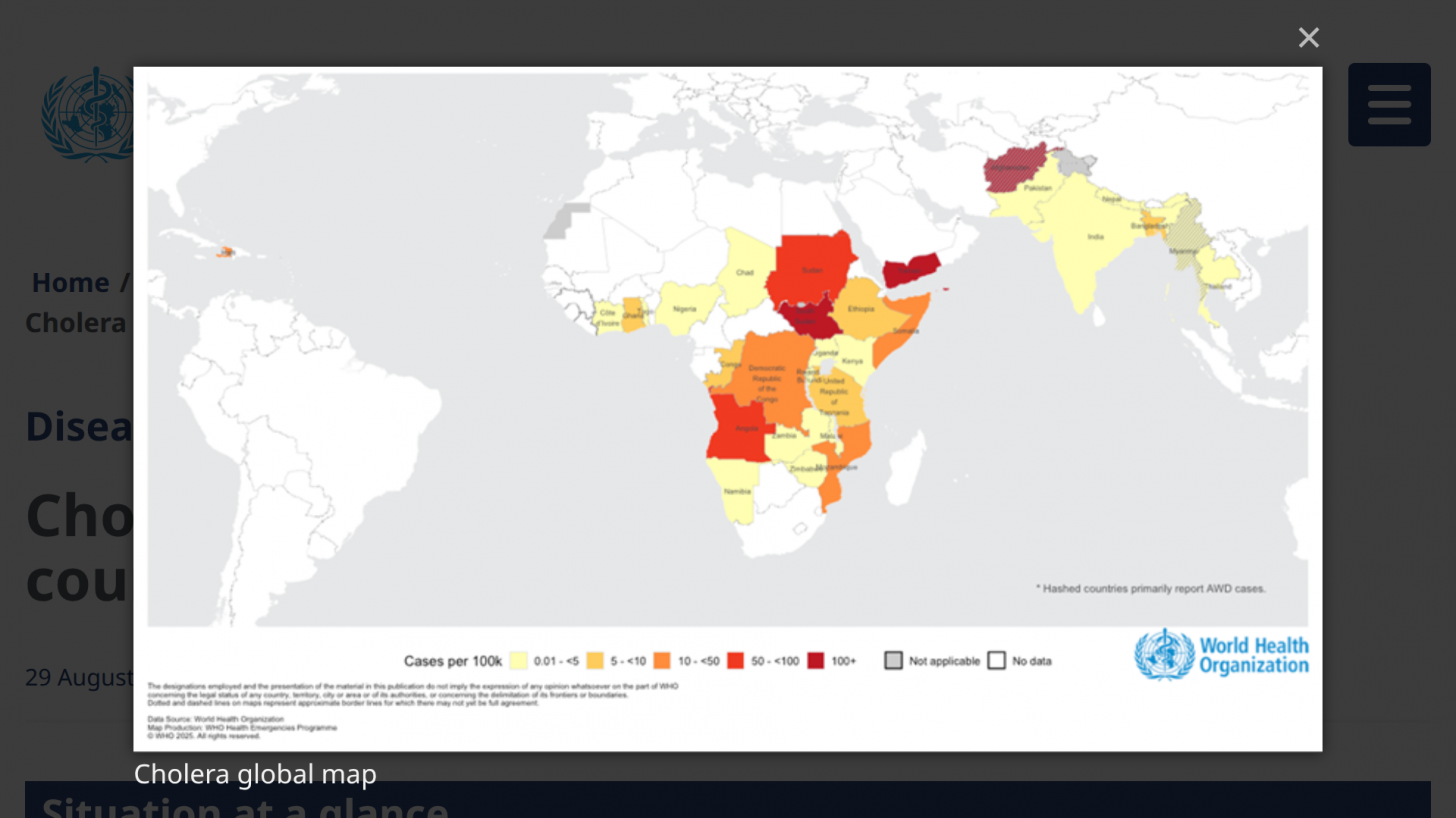
The global cholera situation is worsening and presents a significant public health challenge in several regions monitored by the World Health Organization (WHO).
As of late August 2025, cholera outbreaks are resurging in various countries, including some that had not reported significant case numbers in years.
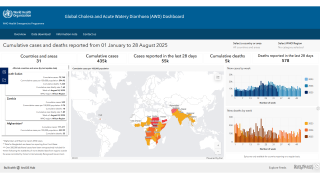
According to a recent WHO report, between January and August 17, 2025, there were a total of 409,222 cases of cholera and acute watery diarrhea, resulting in 4,738 deaths worldwide. Notably, six of the 31 affected countries reported case fatality rates exceeding 1%.
In an effort to reduce cholera outbreaks in Africa, the WHO and Africa Centres for Disease Control and Prevention (ACDC) launched today a continent-wide cholera emergency preparedness and response plan.
This new plan outlines an approach, but warns that the situation is likely to worsen.
Cholera is an acute diarrheal infection caused by consuming food or water contaminated with the bacterium Vibrio cholerae. The disease can cause severe acute watery diarrhoea, resulting in significant morbidity and mortality, states the WHO.
The ACDC's plan is built around seven priorities: strengthened coordination, enhanced surveillance, expanded laboratory capacity, effective case management, WASH interventions, vaccination, and community engagement.
The new plan requires $231.7 million for supplies and response, plus $100 million to scale African Oral Cholera Vaccine (OCV) production.
Currently, access to OCVs is available through the International Coordinating Group (ICG) mechanism.
Since its establishment, the ICG has shipped millions of OCVs to 23 countries for emergency response.
In 2025, the ICG received 38 requests from 12 countries, representing a threefold increase compared to the same period the previous year.
Over 40 million doses have been allocated by the ICG, compared to 35 million doses allocated in all of 2024.
The U.S. CDC writes that while cholera is rare in travelers, certain factors may increase the risk of getting cholera. Avoiding unsafe food and water, as well as washing your hands, helps prevent cholera.
Additionally, OCV vaccination may be considered for children and adults who are traveling to areas of active cholera transmission.
As of August 29, 2025, cholera vaccines are available at travel clinics and pharmacies in the United States.
Our Trust Standards: Medical Advisory Committee
-
Fact checked by Robert Carlson, MD