Vaccine News

Vaccine news brought to you by Precision Vaccinations.

Feb 28, 2024 • 4:00 am CST
WHO 2024

The World Health Organization (WHO) has recently updated its guidelines on infection prevention and control for Ebola disease ten years after the West African Ebola outbreak.

During outbreaks, Ebola infections have relatively high case fatality rates, averaging about 50%.

Therefore, it is crucial to have evidence-based, up-to-date infection prevention and control guidelines to ensure a safe, systematic, and standardized approach during outbreaks, said the WHO in a media release on February 27, 2024.

The complete guidelines are available on the WHO website (WHO/WPE/CRS/HCR/2023.1) and the web-based MAGICapp platform.

Since 2019, various Zaire Ebolavirus vaccines have been approved by the U.S. Food and Drug Administration, European Medicines Agency, and the WHO. These Ebola vaccines are not commercially available in 2024.

Feb 27, 2024 • 4:52 pm CST
US CDC Republic of Peru map 2024

The global outbreak of dengue disease has significantly impacted the Republic of Peru in early 2024. Compared to last year, dengue cases have increased about 90%.

As of February 26, 2024, Peru's Ministry of Health (Minsa) declared a dengue emergency for 20 of the country's 25 regions for the next three months.

Lima, the capital of Peru with about 11 million residents, lies in one of the impacted regions.

However, local media has not reported dengue cases in the tourist hot spot of Machu Picchu.

César Vásquez Sánchez, Minsa's Director, explained that this health emergency declaration will allow more budget to be transferred in the following weeks to confront this disease in the regions better. 

Vásquez Sánchez explained there have been 31,364 accumulated cases of Dengue have been reported throughout Peru and 32 related deaths this year.

"As the World Health Organization had already announced a few months ago, 2024 would be a catastrophic year for Latin America regarding dengue fever. The unusual heat wave and the absence of winter have generated a perfect panorama for the spread of Dengue," he mentioned.

While the U.S. Centers for Disease Control and Prevention (CDC) issued a Travel Health Notice regarding dengue outbreaks in the Americas on February 9, 2024, it did not include Peru.

The CDC says Dengue is a disease caused by a virus spread through mosquito bites. It can become severe within a few hours. Severe Dengue is a medical emergency, usually requiring hospitalization.

Feb 27, 2024 • 11:13 am CST
by Luis Tenorio

Combating Antibiotic-Resistant Bacteria Biopharmaceutical Accelerator (CARB-X) today announced it awarded $2.2 million to LimmaTech Biologics AG to advance the development of its novel vaccine candidate targeted to prevent Neisseria gonorrhea (NG) infections.

The CARB-X award supports the development of LimmaTech's vaccine candidate that incorporates multiple antigens commonly found in NG bacteria. The goal is to develop a cost-effective vaccine that elicits a robust immune response against different NG bacterial strains.

"Gonorrhea is becoming increasingly resistant to treatment, which reinforces the pressing need for a highly effective and safe vaccine that can protect against this serious and pervasive pathogen," said Dr. Franz-Werner Haas, CEO of LimmaTech, in a press release on February 27, 2024.

"We believe our proprietary vaccine technology offers advantages in efficacy, production scalability, and simplicity to include multiple antigens that can effectively address bacterial infectious disease threats."

The WHO Global Health Sector Strategy on Sexually Transmitted Infections has set goals for reducing gonorrhea incidence by vaccination by 90%.

As of February 2024, no gonorrhea vaccine candidate has been approved by the U.S. Food and Drug Administration or European Medicines Agency.

However, the U.K.'s Joint Committee on Vaccination and Immunisation agreed in 2023 that a targeted program should be initiated using the 4CMenB (Bexsero®) vaccine for the prevention of gonorrhea in those who are at most significant risk of infection.

LimmaTech is a Swiss clinical-stage biotech company that has built a robust pipeline of innovative vaccines to provide solutions against increasingly dangerous infections, including Staphylococcus aureus and Shigella.

Feb 27, 2024 • 5:18 am CST
by Gerd Altmann

Takeda and Biological E. Limited today announced a strategic partnership to accelerate access to QDENGA® (Dengue Tetravalent Vaccine [Live, Attenuated]) multi-dose vials (MDVs).

MDVs offer economic and logistical advantages for National Immunization Programs by minimizing packaging and storage expenses and reducing medical and environmental waste.

These doses will ultimately be made available for government procurement in dengue-endemic countries by 2030 to support National Immunization Programs.

"Takeda's long-term goal for our dengue program has been to make QDENGA broadly available to those at risk who may benefit from immunization. Within the last year, we've successfully launched in private markets, are now launching in some public programs, and working with partners to support a broader public health impact," said Gary Dubin, M.D., president of the Global Vaccine Business Unit at Takeda.

According to the press release on February 27, 2024, BE will ramp up to a manufacturing capacity of up to 50 million doses a year, accelerating Takeda's efforts to manufacture 100 million doses annually within the decade.

The partnership will build upon existing manufacturing capacity for the vaccine at Takeda's facility in Singen, Germany, and Takeda's long-term collaboration with IDT Biologika GmbH.

Dengue fever is among the most common mosquito-borne viral diseases worldwide. Dengue is endemic in more than 100 countries and causes an estimated 390 million infections yearly.

The Americas, Southeast Asia, and Western Pacific regions are the most seriously affected, with Asia alone representing ~70% of the global disease burden.

In 2024, the state of Florida reported two cases of locally acquired dengue from two counties. In 2023, positive samples from 186 humans were reported from five counties.

QDENGA is currently available in the private market in countries in Europe, Indonesia, and Thailand and in private and some public programs in Argentina and Brazil.

As of late February 2024, QDENGA is not approved by the U.S. FDA.

Feb 26, 2024 • 1:00 pm CST
by Michelle Raponi

In 2024, an unusual number of measles outbreaks have already been confirmed in the United States. 

The Centers for Disease Control and Prevention (CDC) reported 35 measles cases recently. Recent measles cases have been reported in Indiana and New Orleans.

In 2024, there has been an alarming increase in the number of measles cases in the United States. The Centers for Disease Control and Prevention (CDC) has recently reported 35 confirmed measles cases.

And in Florida, a media statement issued by the Florida Department of Health on February 23, 2024, confirmed six measles cases in Broward County and a travel-related case in Central Florida (Polk County).

This area of Florida is home to about 2 million people and is adjacent to various entertainment parks and convention centers.

The Florida Department of Health in Broward County confirmed on February 20, 2024, that students at Manatee Bay Elementary School in Weston were infected, and about 200 classmates did not attend class last week.

Suspected measles cases are required to be reported immediately to county health departments or the Department's Bureau of Epidemiology to ensure prompt response and public health efforts. If a measles infection is suspected, please call your local county health department or the Department's Bureau of Epidemiology at 850-245-4401.

These cases relate to the global measles outbreak, generally impacting unvaccinated children and international travelers.

Last year, the CDC published a global Watch-Level 1, Practice Usual Precautions, Travel Health Notice identifying measles outbreaks in 47 countries.

In 2023, over 500,000 suspected measles cases were reported in 169 destinations.

Feb 26, 2024 • 12:08 pm CST
by Dean Moriarty

The U.S. Centers for Disease Control and Prevention (CDC) has confirmed Gonorrhea can be cured with the proper treatment for several years.

However, in 2024, the bacteria causing Gonorrhea is recognized by the World Health Organisation as a priority pathogen, for which resistance to existing treatments is rising.

According to industry news, an innovative product may offer better options than the CDC's recommended therapy (ceftriaxone).

GSK plc announced on February 26, 2024, that they had obtained positive headline results from the pivotal EAGLE-1 phase III trial for gepotidacin.

The clinical trial met its primary efficacy endpoint, with gepotidacin (oral, two doses of 3,000mg) demonstrating non-inferiority to intramuscular (IM) ceftriaxone (500mg) plus oral azithromycin (1,000mg), which is a leading combination treatment regimen for Gonorrhea.

Gepotidacin is a potential first-in-class oral antibiotic that has a novel mechanism of action for treating uncomplicated urogenital Gonorrhea in adolescents and adults.

In a press release, Chris Corsico, Senior Vice President, Development at GSK, said, "With rising incidence rates and concern around growing resistance to existing treatments, Gonorrhea threatens public health globally."

"These positive headline results demonstrate the potential for gepotidacin to provide a novel oral treatment option in the face of rising resistance and for patients who cannot take other treatments due to allergies or intolerance."

Detailed results from the EAGLE-1 trial will be presented at an upcoming scientific meeting and shared with global health authorities.

Gonorrhoea is a sexually transmitted infection caused by bacteria called Neisseria gonorrhoeae. It has been estimated that there are 82 million new cases globally each year.

Recently, repurposed vaccines have shown effectiveness against Gonorrhoea, while vaccine candidates conduct late-stage studies.

Feb 26, 2024 • 9:32 am CST
US FDA VRBPAC meeting schedule

The US Food and Drug Administration (FDA) announced in a post on X that on May 16, 2024, the Vaccines and Related Biological Products Advisory Committee (VRBPAC) will hold a public discussion to recommend the selection of strain(s) to be included in the 2024-2025 formula for COVID-19 vaccines.

On February 26, 2024, the FDA confirmed that changes to the vaccine composition may be necessary based on the currently circulating strains of the virus that causes COVID-19.

After receiving any recommendations from the VRBPAC regarding the 2024-2025 formula update, the FDA plans to take appropriate regulatory actions on updated COVID-19 vaccines so that manufacturers can make them available by September 2024.

The FDA expects that the composition of COVID-19 vaccines may need to be updated annually, as is done for seasonal influenza vaccines.

Background material and the link to the online teleconference and/or video conference meeting will be available on the Advisory Committee calendar no later than two business days before the VRBPAC meeting.

Oral presentations from the public will be scheduled between approximately 1 p.m. and 2 p.m. Eastern Time. 

Contact Information: Sussan Paydar or Prabhakara Atreya, Center for Biologics Evaluation and Research, FDA, 202-657-8533 or [email protected].

Feb 26, 2024 • 8:53 am CST
by Candelario Gomez Lopez

It has been reported by local media that the new Pfizer COVID-19 vaccine is now available at some pharmacy chains in Mexico.

According to Mexico News Daily, certain branches of Farmacias del Ahorro, Farmacias Benavides, Farmacias San Pablo, and Farmacias Guadalajara, among others, offer nurse-administered vaccinations.

As of February 20, 2024, Pfizer's updated Comirnaty Omicron XBB 1.5 vaccine costs between $49.78 to $58.65.

The Mexican health regulatory agency authorized the sale of Pfizer's vaccine in December 2023.

Feb 25, 2024 • 12:03 pm CST
by Ben Menting

In 2024, there have been several reports of avian influenza virus infections in birds, mammals, and humans. As a result, government agencies are taking measures to prepare for potential pandemics.

On February 23, 2024, the Human Medicines Committee of the European Medicines Agency (EMA) issued its recommendations for avian influenza vaccines.

The committee adopted positive opinions for two vaccines intended for active immunization against the H5N1 subtype of influenza A virus, also called bird flu.

One of them, Celldemic (zoonotic influenza vaccine (H5N1)(surface antigen, inactivated, adjuvanted, prepared in cell cultures)), is intended for immunization during outbreaks of influenza coming from animals, including when public health authorities anticipate a possible pandemic.

The other, Incellipan (pandemic influenza vaccine (H5N1) (surface antigen, inactivated, adjuvanted, prepared in cell cultures)), is a pandemic preparedness vaccine intended for use only if a flu pandemic has been officially declared.

In the event of a pandemic, once the virus strain causing the pandemic is identified, the manufacturer can include this strain in the authorized pandemic preparedness vaccine and apply for the vaccine to be authorized as a 'final' pandemic vaccine.

Because the vaccine's quality, safety, and efficacy have already been assessed with other potential pandemic strains, the authorization of the final pandemic vaccine can be accelerated, wrote the EMA.

According to the U.S. Centers for Disease Control and Prevention, about 20 million H5N1 and 12 million H7N9 vaccines were available in the National Strategic Stockpile in 2023.

The U.S. FDA authorized the Audenz™ (Influenza A(H5N1) Monovalent Vaccine, Adjuvanted) cell-based vaccine on January 31, 2020.

Feb 24, 2024 • 5:18 pm CST
US CDC Travel Alert 2024

While the global dengue outbreak continues in 2024, many parts of the Americas are at risk. A trendy vacation destination in Central America reports a significant surge in dengue cases this year.

According to the Costa Rica Ministry of Health, there have been 4,787 confirmed cases of dengue during the first six reporting periods of this year.

As of February 23, 2024, Costa Rica's Central North region concentrates the highest accumulated notification of dengue cases this year with 1,228 cases, followed by the Central Pacific with 832 and the Central South with 762 cases.

During 2023, there were over 24,914 dengue cases, an increase from the 7,485 dengue patients in 2022.

To alert international travelers of this mosquito-transmitted health risk, Costa Rica was included in the U.S. CDC's Level 1 - Practice Usual Precautions, dengue notice on February 09, 2024.

The Ministry of Health has called on the population to constantly clean and empty the containers in which water is stored for domestic use. Likewise, residents are urged to collaborate with our officials when they visit your homes for fumigation, presenting proper identification.

The Vector Control Program team recently carried out 16,645 fumigations in the towns of La Carpio, Pavas, and Alajuela.

As of 2024, the Dengvaxia® vaccine was sold in private pharmacies in Costa Rica. The price is around $130. 

However, the second-generation QDENGA® dengue vaccine is not offered in Costa Rica.

Feb 23, 2024 • 10:40 am CST
WHO 2024

The World Health Organization (WHO) has revealed its recommended composition for influenza vaccines for the northern hemisphere flu season of 2024-2025.

Both trivalent and quadrivalent vaccines are recommended as of February 23, 2024.

These WHO recommendations are utilized by national vaccine regulatory agencies and pharmaceutical companies to develop, produce, and license influenza vaccines for the following influenza season.

Previously, the WHO urged manufacturers to eliminate the B/Yamagata component from flu vaccines for 2024-2025.

As of February 10, 2024, over 157 million flu vaccines (egg, cell, and nasal) had been distributed in the United States during the 2023-2024 season.

Feb 23, 2024 • 5:21 am CST
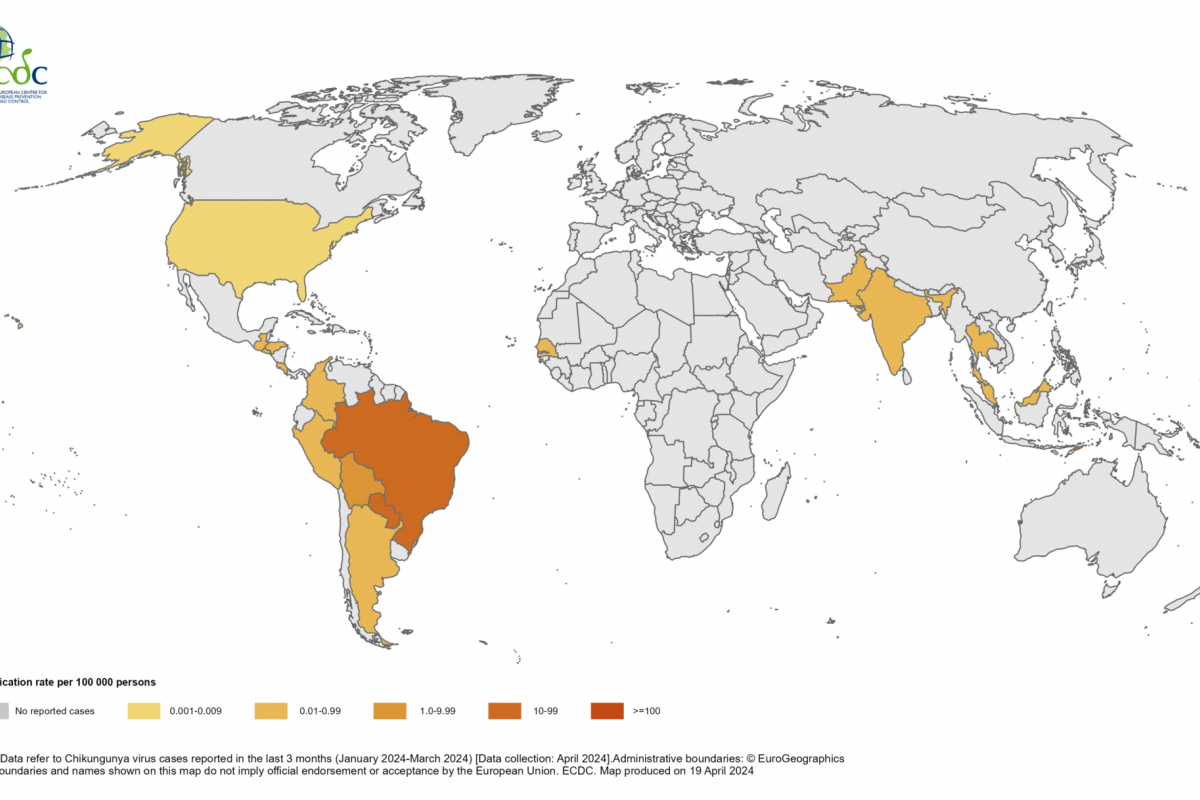
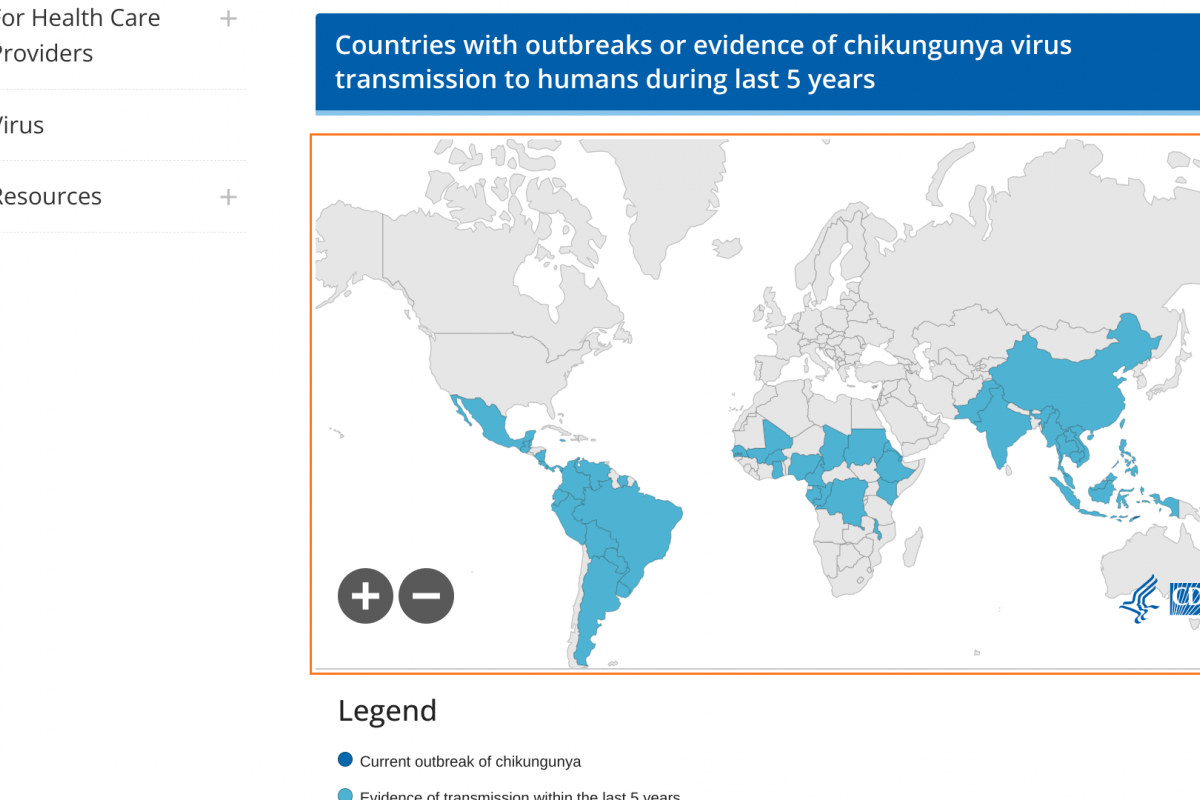
US CDC chikungunya case map 2023

Bavarian Nordic A/S, a leading pharmaceutical company, announced news today regarding its investigational chikungunya vaccine, CHIKV VLP.

The European Medicines Agency's Committee for Medicinal Products for Human Use (CHMP) has granted accelerated assessment for this chikungunya vaccine candidate's Marketing Authorisation Application (MAA).

The CHMP has recognized that the vaccine candidate is of significant interest to public health and therapeutic innovation. 

With this positive development, the company is taking steps toward addressing the unmet medical needs of millions worldwide affected by the Chikungunya virus.

Chikungunya outbreaks continue to be reported in 2024.

Before 2013, chikungunya virus cases and outbreaks had been identified in countries in Africa, Asia, Europe, and the Indian and Pacific Oceans. In late 2013, the first local transmission of chikungunya virus in the Americas was identified in Caribbean countries and territories, according to the U.S. CDC.

Bavarian Nordic also confirmed on February 23, 2024, that it is on track to submit its MAA for CHIKV VLP to the EMA during H1 2024. As a result, the review of the MAA may now take as little as 150 days instead of the usual 210 days.

This means that the vaccine could be available in Europe sooner than expected.

"We are pleased to receive the accelerated assessment in recognition of our chikungunya vaccine candidate and our efforts to bring this novel product to the market. With this, we can accelerate the approval and launch timelines for the vaccine in Europe. As part of our global strategy, we also plan to submit our biologics license application (BLA) for the vaccine candidate to the U.S. Food and Drug Administration later this year," said Paul Chaplin, President and CEO of Bavarian Nordic, in a press release.

In 2023, Bavarian Nordic successfully completed two Phase 3 studies of CHIKV VLP. 

The CHKV-VLA vaccine candidate received the U.S. Food and Drug Administration (FDA) Fast Track designation in May 2018.

Recently, the FDA issued approval for Valneva SE's IXCHIQ® Chikungunya Vaccine. However, the CDC has not given its approval.

Feb 22, 2024 • 5:00 pm CST
Google Maps Feb. 2024

The UK Health Security Agency (UKHSA) today reported an additional 60 laboratory-confirmed measles cases have been confirmed in England during the ongoing outbreak.

This brings the total number of measles cases since October 2023 to 581.

As of February 22, 2024, the West Midlands accounted for most of these (47%, 79 of 169) measles cases, mainly in Birmingham, the largest city in the West Midlands, with over 1.1 million residents.

Furthermore, the majority (379 of 581, 65%) of these cases are in children.

In a press release, Dr. Vanessa Saliba, UKHSA Consultant Epidemiologist, said, "We're urging parents to protect their children from this serious illness with the MMR vaccine before it spreads further."

"...but 100s of thousands of unvaccinated children are at risk of severe illness or life-long complications."

"The disease spreads very quickly among those who are unvaccinated, especially in schools and nurseries. However, measles is entirely preventable with vaccination."

In the United Kingdom, two MMR vaccine brands are available: Priorix and MMRVaxPro.

The data published in this UKHSA epidemiological overview is currently provisional.

Feb 22, 2024 • 12:56 pm CST
US CDC global polio outbreak map 2024

According to the AP, Zimbabwe has initiated a polio vaccination campaign to protect over four million children after identifying three polio cases caused by a rare mutation of the weakened virus found in an older version of the oral vaccine.

On February 20, 2024, the authorities confirmed they would use the type 2 novel oral polio vaccine (nOPV2) polio vaccine designed to minimize virus mutations and reduce polio outbreaks.

Zimbabwe aims to provide this vaccine to approximately 4 million children in February and March 2024.

About 1.4 billion nOPV2 doses have been produced since March 2021. 

Since its launch, approximately 1 billion nOPV2 doses have been administered in more than 35 countries worldwide.

As of February 2024, the nOPV2 has not been authorized by the U.S. Food and Drug Administration. However, the U.S. CDC's vaccine committee is reviewing its use case on February 28, 2024.

Zimbabwe is one of 31 countries the CDC lists in its January 2024 global polio outbreak travel alert.

Feb 22, 2024 • 9:38 am CST
from Pixabay

Moderna Inc. today reported $2.8 billion in Spikevax® vaccine sales in the fourth quarter of 2023. The majority of Spikevax sales ($2 billion) were in international sales.

For all of 2023, Spikevax generated $6.7 billion in vaccine sales.

Moderna confirmed in a press release on February 24, 2024, that it achieved 48% cumulative market share in the U.S. retail segment during the fall 2023 COVID season, up from 37% in 2022.

The Company reaffirmed its 2024 product sales outlook as it entered the second year of the U.S. commercial endemic COVID market.

Moderna is also prioritizing key international markets for greater commercial focus and is participating in the EU Health Emergency and Response Authority's tendering procedure for up to 36 million doses of mRNA COVID-19 vaccines per year for up to four years.

As of February 2024, Spikevax is one of 13 COVID-19 vaccines Listed by the World Health Organization.

"2023 was a year of transition for Moderna as we adapted to the endemic market. At the same time, our development team made significant pipeline advancements across infectious diseases, oncology, and rare diseases, while our commercial team increased our COVID-19 market share in the U.S.," said Stéphane Bancel, Chief Executive Officer of Moderna, in a press release.