Search API
The Pacific Community has recently reported that mosquito-borne diseases, such as dengue fever, are rising sharply throughout the various island nations in the Western Pacific Region.
As of July 16, 2025, the SPC reported American Samoa, Australia, Cook Islands, French Polynesia, New Zealand, Samoa, Tonga, and Tuvalu had confirmed dengue cases in 2025.
Of note, the American Samoa Department of Health declared the dengue outbreak in the country a public health emergency as of early July. A red alert for DENV-1 and DENV-2 serotypes has been added.
To alert international travelers of this serious health risk, the U.S. Centers for Disease Control and Prevention (CDC) reissued its Level 1 - Practice Usual Precautions, Travel Health Advisory on July 17, 2025.
For 16 countries, the CDC recommends that travelers visiting dengue outbreaks should prevent mosquito bites by using an EPA-registered insect repellent, wearing long-sleeved shirts and long pants when outdoors, and sleeping in an air-conditioned room or a room with window screens.
While many of these countries offer access to dengue vaccines, the United States does not, except for children in Puerto Rico, where dengue has become endemic.

Over the past two years, the Oropouche virus has been reported in regions of South America, Central America, and the Caribbean, raising substantial concerns among international travelers and healthcare providers attempting to diagnose the disease.
Oropouche viral disease presents clinically with symptoms that overlap with those of other mosquito-transmitted diseases such as Chikungunya, Dengue, Malaria, and Zika.
To address this need, Quest Diagnostics, based in New Jersey, announced the launch of a new diagnostic laboratory test for the Oropouche virus.
Beginning later this summer, Quest's advanced laboratory in San Juan Capistrano, California, will perform the test using polymerase chain reaction (PCR) technology, with serology testing to follow later this quarter.
Reverse transcription PCR testing can identify the RNA of the virus during the early stages of infection to aid diagnosis.
Serology testing, which identifies antibodies produced by the immune system in response to the virus, can aid in diagnosing the virus in later stages of infection.
"As one of the leading providers of laboratory testing, Quest plays an essential role in ensuring the U.S. is prepared to respond to potentially dangerous emerging diseases, such as Oropouche virus," said Yuri Fesko, MD, Senior Vice President and Chief Medical Officer at Quest Diagnostics, in a press release on July 15, 2025.
"By developing this test, we are prepared to act quickly to offer scalable testing to complement public health labs should this virus become a public health threat."
Oropouche and other virus testing are commercially offered by Ulta Labs Tests.
From a prevention perspective, the U.S. CDC recommends avoiding outbreaks, such as those in Brazil, Cuba, and Panama, and taking steps to limit mosquito bites.
Brazil has reported cases of Oropouche virus being passed from a pregnant woman to their fetus. These cases are currently under investigation.
The CDC says pregnant travelers should talk to their healthcare provider about travel plans, why they're traveling, steps to prevent insect bites,
As of July 17, 2025, no vaccine is available to prevent this disease, nor are there any medicines to treat Oropouche infections.

The Pan American Health Organization (PAHO) recently reported very positive news regarding the multi-year outbreak of dengue fever in the Region of the Americas.
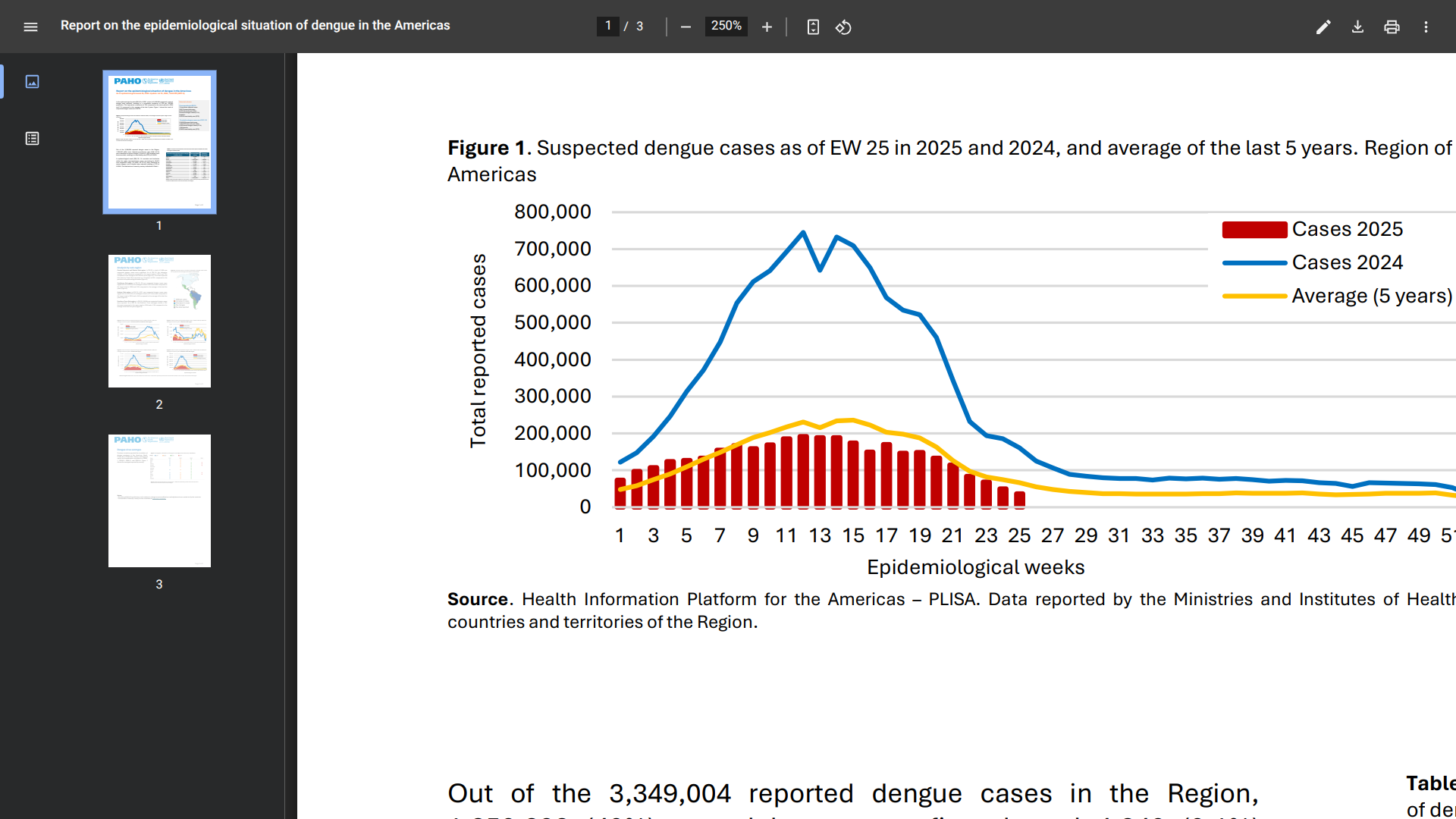
On July 10, 2025, the PAHO reported In the epidemiological week #25 of 2025, a total of 3,349,004 suspected cases of dengue were reported this year. This data represents a significant 70% decrease compared to the same period in 2024 and an 11% decrease compared to the average of the last five years.
Additionally, a total of 1,600 fatalities have been recorded, resulting in a case fatality rate of 0.048%.
While the majority of dengue cases have been reported in Brazil, Mexico's dengue outbreak remains a concern in 2025.
Mexico has reported 49,085 cases and 2,352 related fatalities this year.
From a sub-type perspective, Brazil, Costa Rica, El Salvador, Mexico and Panama report the simultaneous circulation of DENV1, DENV-2, DENV-3, and DENV-4.
This PAHO data indicates the need for international travelers to obtain dengue vaccinations may diminish during the summer of 2025. In the United States, only Puerto Rico offers dengue vaccinations.
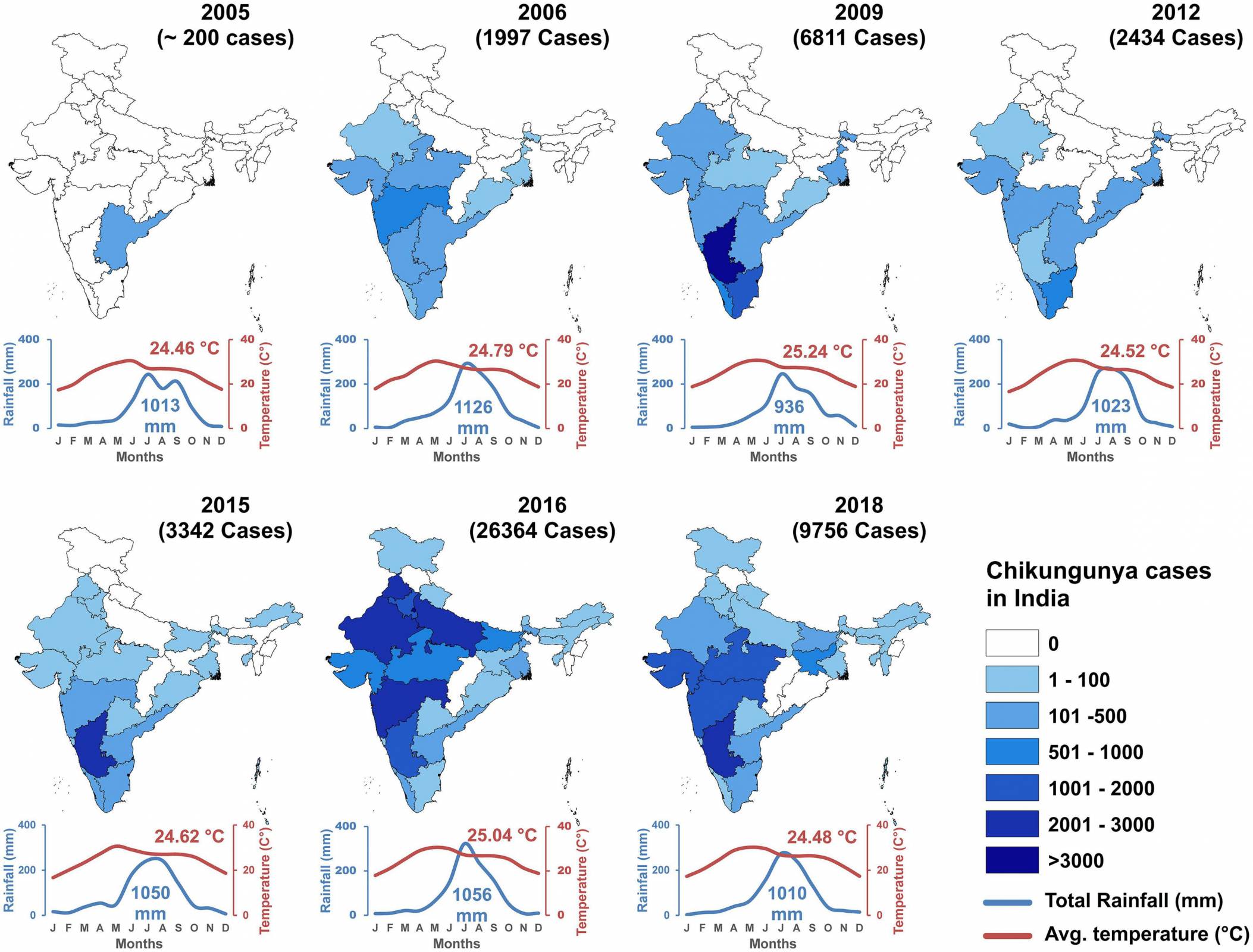
India is a tropical country undergoing rapid urbanization, making it one of the most affected regions for vector-borne diseases, including Chikungunya Fever.
Epidemics of Chikungunya have been reported since 1963 and continue to occur, with the most recent outbreak recorded in 2025, particularly in the states of Maharashtra and Karnataka.
As of July 14, 2025, India's National Center for Vector-Borne Diseases Control had reported a total of 30,876 Chikungunya cases this year.
However, according to local news reports, the number of Chikungunya cases in India may be underreported as the rainy season approaches due to issues with diagnostic testing.
Blood tests diagnose Chikungunya. However, since the clinical appearance of both Chikungunya and Dengue is similar, laboratory confirmation is crucial, especially in areas where Dengue is prevalent.
Furthermore, the U.S. CDC says laboratory testing practices for Chikungunya vary significantly among the 100 countries reporting cases.
In Bhopal, the capital city of the Indian state of Madhya Pradesh, a higher positivity rate for Chikungunya was recently detected at 7.02% compared to Dengue's 2.47% in July 2025.
In 2024, Bhopal reported a 16% positivity rate for Chikungunya.
Since millions of international travelers visit India each year, various health agencies have issued vaccination recommendations.
To prevent infections, the CDC recommends that Chikungunya vaccination may be considered for individuals traveling to or moving to India, particularly if they plan to stay for an extended period.
When departing from the United States for India, travel vaccine clinics and pharmacies offer Chikungunya vaccination services for a fee.
The southernmost territory of the United States, situated southwest of Hawaii in the Pacific Ocean, has declared a health emergency related to a surge of dengue fever cases.
As of July 7, 2025, the American Samoa Department of Health issued a travel alert following the confirmation of four imported cases of dengue fever and two locally-acquired cases. The local population is urged to protect themselves from mosquito bites, which are the source of this serious disease.
The government stated that these dengue cases are related to travelers to and from Samoa, a neighboring island.
According to the Samoa Bureau of Statistics, American Samoa welcomed over 200,000 visitors in 2024.
Over the last two years, the U.S. Centers for Disease Control and Prevention (CDC) has reported an increasing number of dengue cases in territories.
The CDC says the dengue virus is endemic and has caused outbreaks in the U.S. territories of Puerto Rico, the U.S. Virgin Islands, the Federated States of Micronesia, the Republic of the Marshall Islands, and the Republic of Palau.
Except for Puerto Rico, dengue vaccines are not available in the continental U.S. or its territories as of 2025.
Within the U.S., the state of Florida reports the majority of dengue cases.

The World Health Organization (WHO) recently published updated clinical guidance for treating four arboviral diseases: chikungunya, dengue, Zika, and yellow fever.
As of July 4, 2025, this WHO resource is the first that covers all four diseases.
Arbovirus infections have become a growing public health threat, affecting 5.6 billion people.
These diseases are expanding into new regions, where virus-carrying mosquitoes are seldom found, increasing the likelihood of outbreaks beyond tropical and subtropical areas.
The WHO stated that an integrated approach is vital, as these four diseases often present with similar symptoms, especially in the early stages of infection, and multiple arboviruses may circulate simultaneously in certain regions. This makes clinical differentiation particularly challenging, especially when diagnostic testing is not readily available.
These diseases often affect international travelers who lack natural immunity and have not received appropriate immunization with travel vaccines.
Global risk maps are a crucial tool for evaluating the worldwide threat posed by mosquito- and tick-transmitted arboviral diseases.
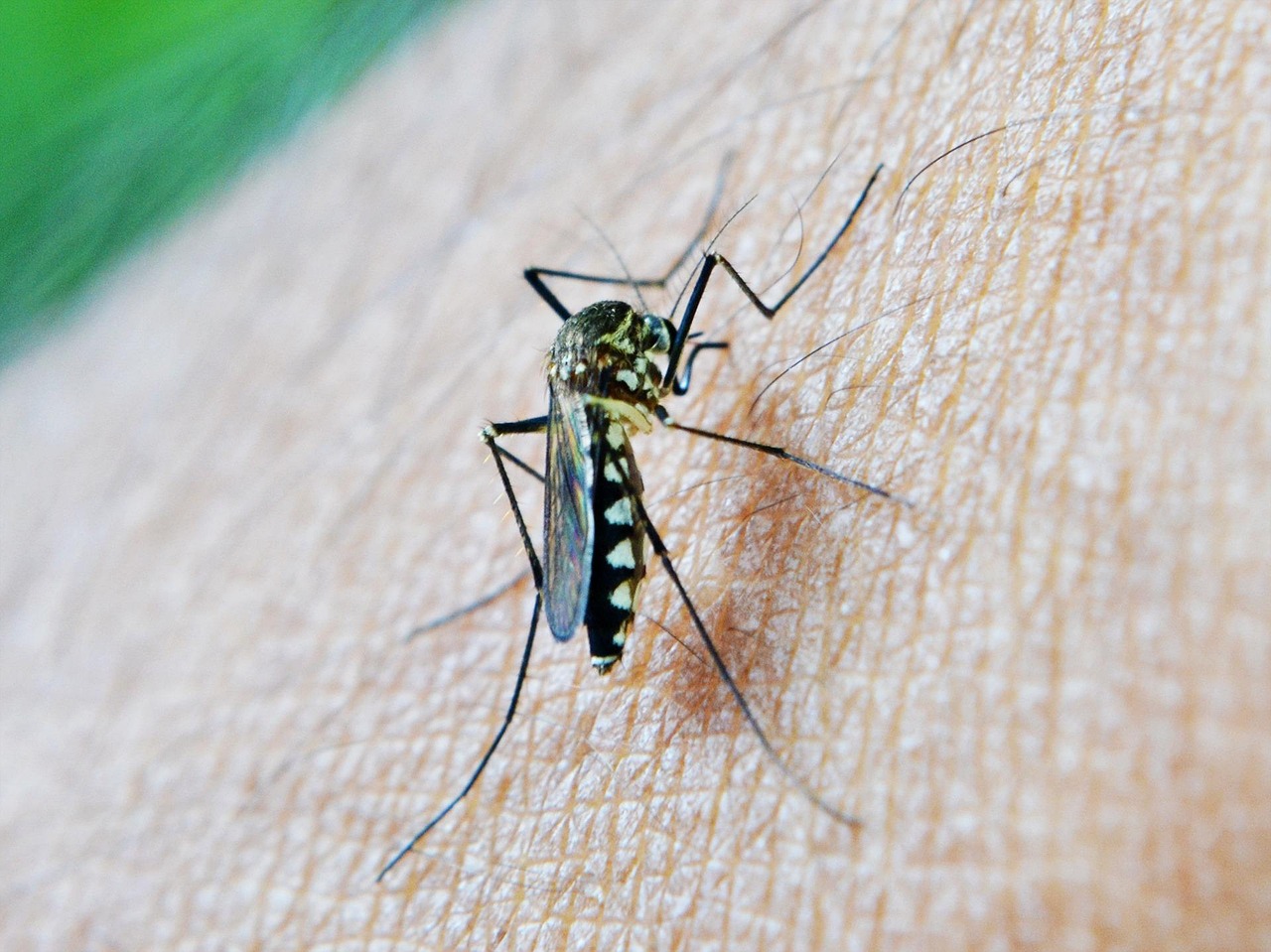
With the mosquito season underway in the United States, Florida health authorities have recently reported the third locally acquired case of dengue fever in Brevard County.
As of July 8, 2025, the Florida Department of Health in Brevard County (DOH-Brevard) issued a Mosquito-Borne Illness Advisory, which is scheduled to be effective until mid-September 2025.
DOH-Brevard and Brevard County Mosquito Control have confirmed that they are coordinating surveillance and prevention efforts through both ground and aerial spraying.
Previously, further south along the Atlantic Coast, Miami-Dade County has reported two local cases of dengue this year.
In 2024, 91 locally acquired dengue cases were reported in ten Florida counties, with Miami-Dade leading the way.
As of July 2025, the U.S. Centers for Disease Control and Prevention, Canada, and the United Kingdom have not issued vaccination requirements for visiting Florida this year.
Currently, only Puerto Rico is offering dengue vaccinations in the United States.


The Hawai‘i Department of Health (DOH) recently confirmed its ninth travel-related case of dengue in 2025.
As of the end of June 2025, the DOH reported eight dengue cases on Oʻahu and one case on Maui.
Several countries in the Pacific Region are reporting an increase in mosquito-transmitted dengue virus cases, including Fiji, French Polynesia, Tonga, and the Republic of the Philippines.
According to the World Health Organization, dengue is a grade 3 emergency, with an estimated 4 billion people at risk globally.
The U.S. Centers for Disease Control and Prevention (CDC) reissued a Global Travel Health Notice on June 18, 2025, regarding dengue outbreaks in the Asia/Pacific region, including India, Singapore, Thailand, the Philippines, Malaysia, and Myanmar.
CDC reported on July 3, 2025, that 2,248 travel-related Dengue cases and two local cases in Miami, Florida, were reported in 41 jurisdictions this year.
While the CDC currently authorizes the first-generation dengue vaccine for use in Puerto Rico, where dengue has become endemic, numerous countries enable access to a second-generation vaccine in 2025. Additionally, innovative dengue vaccine candidates are making progress in late-stage clinical trials.

Following a significant outbreak in 2024, the first confirmed case of West Nile virus illness was reported on June 24, 2025, in a resident of Brazos County, Texas.
This Texas Department of State Health Services (DSHS) announcement raises concerns for all Texans as virus-carrying mosquitoes remain active into December.
There were 455 cases of West Nile disease in Texas in 2024 and 56 related fatalities.
Over the last five years, Texas has had 929 West Nile cases and 122 deaths.
“Texans should be aware that mosquitoes transmit disease, and some of these illnesses, like West Nile and dengue, can be severe,” said DSHS Commissioner Jennifer A. Shuford, MD, MPH. “But taking steps to prevent mosquito bites and eliminating mosquito breeding areas around homes are proactive measures that can reduce the risk of mosquito-borne illness.”
Infected mosquitoes transmit West Nile virus after biting. Although 80% of people exposed to the virus do not develop symptoms, the remaining 20% will experience symptoms such as fever, nausea, headache, fatigue, and muscle and joint pain.
Less than one percent of those exposed will suffer from West Nile neuroinvasive disease, which affects the nervous system and can cause disorientation, neck stiffness, tremors, paralysis, convulsions, and even death.
DSHS urges anyone experiencing West Nile symptoms to contact their health care provider and mention any exposure to mosquitoes.
As of July 3, 2025, no vaccine for West Nile virus exists.
