Search API
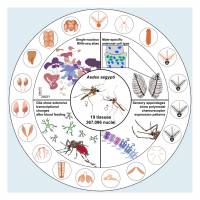
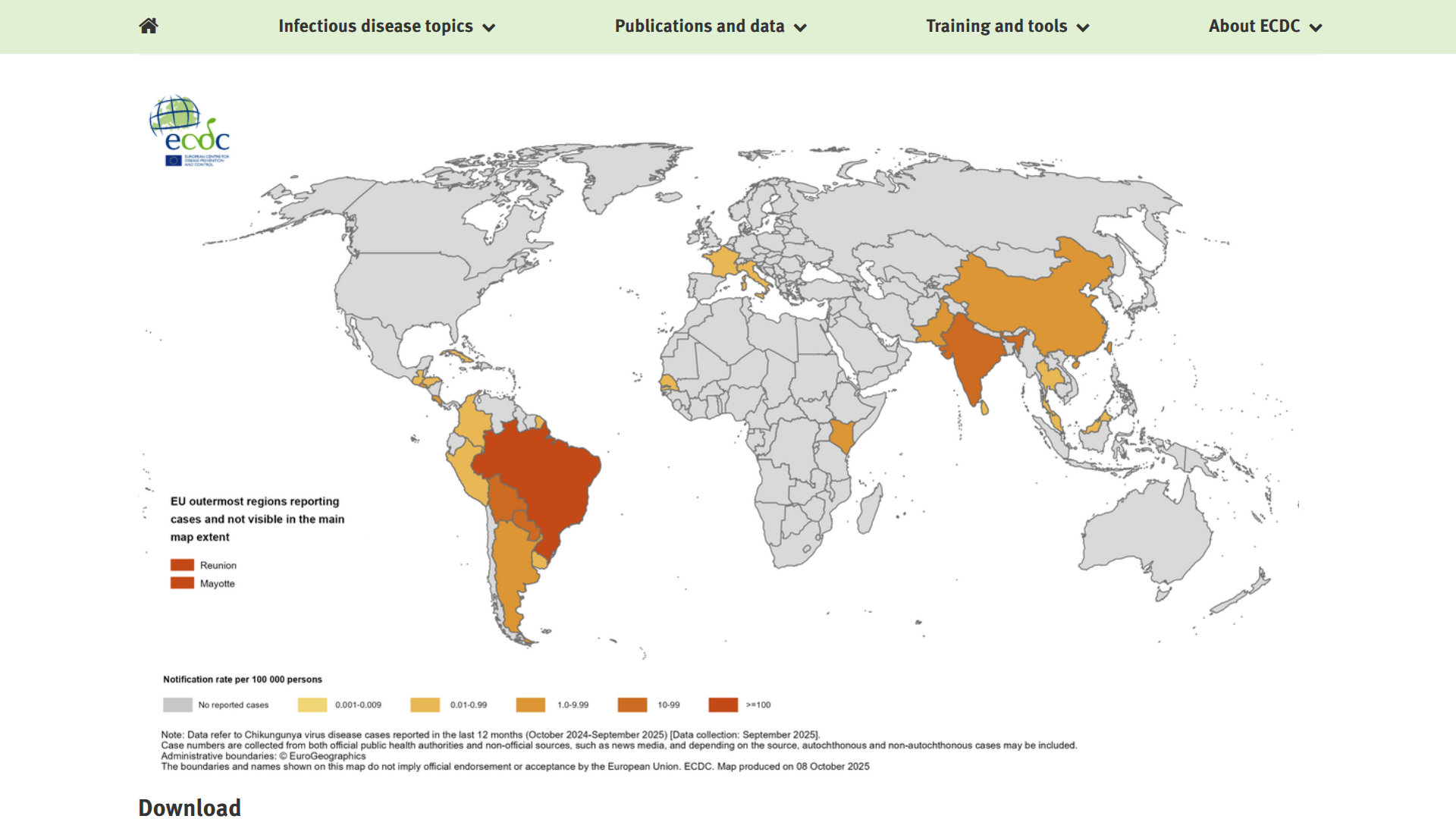
Chikungunya, a viral infection caused by an alphavirus that is spread to people through the bite of an infected female Aedes mosquito, significantly impacted the Americas and the European region in 2025.
According to the World Health Organization (WHO) latest report, a total of 445,271 suspected and confirmed Chikungunya cases and 155 related fatalities worldwide. The distribution of cases across regions has been uneven, with some countries reporting a resurgence in numbers during 2025.
The French Overseas Departments in the Indian Ocean, such as La Réunion, are Europe's unfortunate leader in Chikungunya outbreaks in 2025.
The WHO wrote that the potential for further geographical spread is highlighted by the fact that 27 countries and territories have established competent vector populations (Aedes aegypti and Aedes albopictus mosquitoes) but have not yet documented local Chikungunya transmission.
In the United States, as of November 11, 2025, 88 travel-related Chikungunya cases have been confirmed by the U.S. CDC.
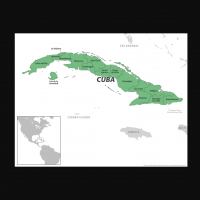
The state of Florida, which is geographically located near endemic areas such as Cuba, has reported 42 travel-related Chikungunya cases confirmed this year in Broward, Collier, Lake, Miami-Dade, Palm Beach, and Seminole Counties.
And recently, the New York State Department of Health confirmed a locally acquired case of Chikungunya in Nassau County.
The CDC does recommend Chikungunya vaccination for specific international travelers in 2025.
When the U.S. Centers for Disease Control and Prevention (CDC) issued a Level 1 - Practice Usual Precautions notice in September 2025, it highlighted that the bites of infected midges and mosquitoes are spreading the Oropouche virus in Cuba.
As of November 7, 2025, a total of 4,119 locally acquired Oropouche cases have been reported in Cuba this year.
In South America, Brazil leads the Americas with about 12,000 cases.
Last year, 103 cases of Oropouche virus were reported among individuals in Florida who had traveled to endemic areas, such as Brazil and Cuba.
Currently, no vaccines are available to prevent Oropouche disease, says the CDC.

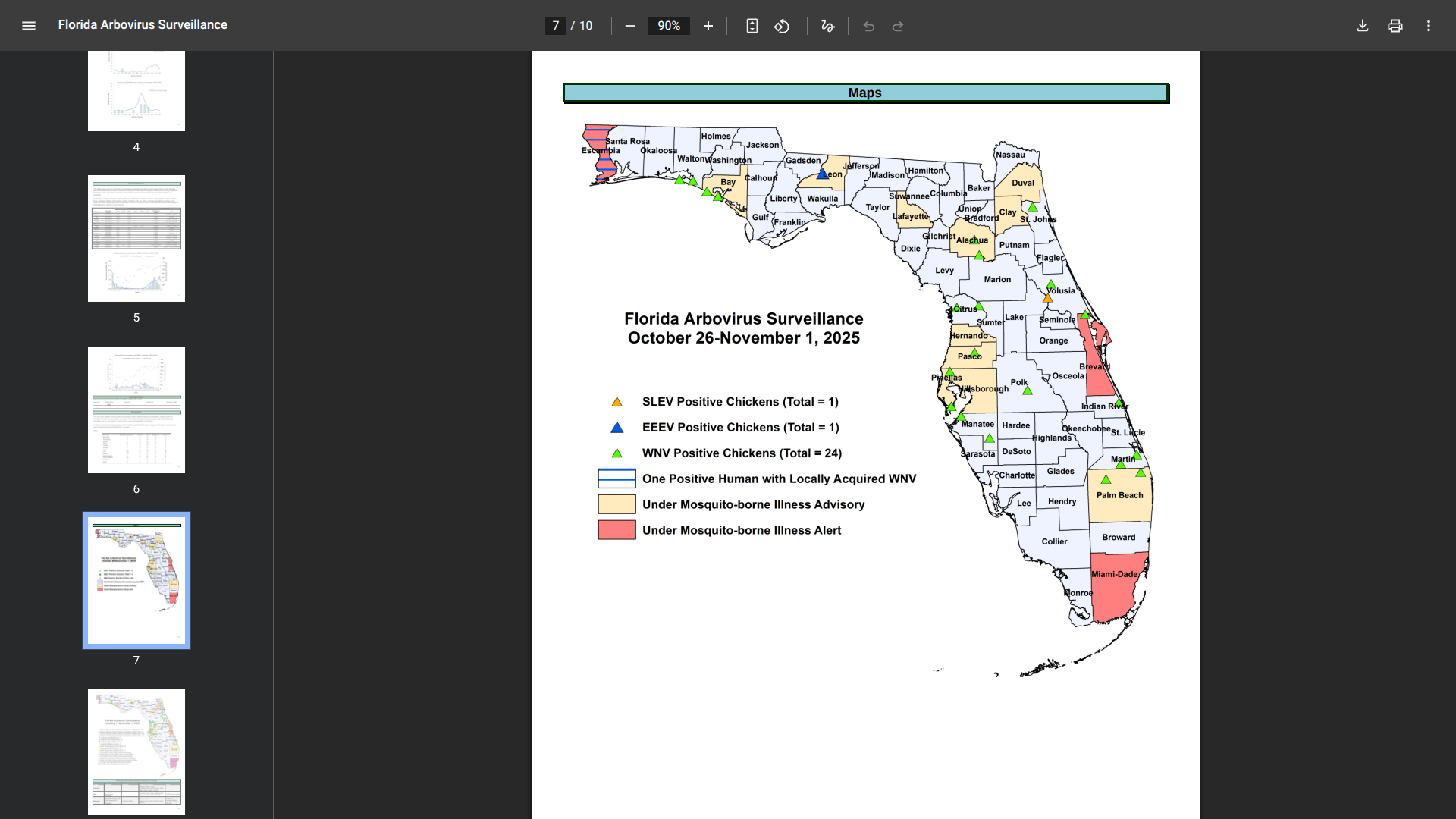
The Florida Department of Health recently published its Vaccine-Preventable Diseases Surveillance Report #44 for 2025, revealing a continuation of locally acquired and travel-related mosquito-transmitted disease cases.
As of November 1, 2025, Chikungunya, Dengue, and Malaria patients were primarily identified along Florida's southeast coast.
This year, 42 travel-related Chikungunya cases have been confirmed in Broward, Collier, Lake, Miami-Dade, Palm Beach, and Seminole counties. The countries of origin included Bolivia, Brazil, Cuba, India, and Indonesia.
Also, the health department reported 321 cases of Dengue fever among individuals who had traveled internationally, with over 180 cases related to travelers from Cuba and 14 from Puerto Rico. Additionally, 53 locally acquired Dengue cases were reported in Hillsborough, Miami-Dade (16), Pasco, and Brevard (35) counties.
Furthermore, 41 travel-related Malaria cases have been confirmed in Florida, 15 related to travel to Nigeria.
To alert visitors to these health risks, Alachua, Bay, Clay, Duval, Hillsborough, Lafayette, Leon, Pasco, and Pinellas counties are under a mosquito-borne illness advisory. Brevard, Escambia, and Miami-Dade Counties remain under a mosquito-borne illness alert.
However, the U.S. CDC has not issued a Travel Health Notice for Florida regarding these disease risks.
Since its first approval in Indonesia in 2022, Japan-based Takeda's QDENGA® dengue vaccine has been authorized in 41 countries and distributed in 11 dengue-endemic countries to help reduce the global threat posed by this mosquito-transmitted disease.
Today, Takeda announced very positive vaccine efficacy data.
On November 3, 2025, the company announced the completion of the 7-year pivotal Phase 3 Tetravalent Immunization against Dengue Efficacy Study (TIDES) trial evaluating QDENGA. These data, including an exploratory analysis of a booster dose, confirm the favorable benefit-to-risk profile of QDENGA and that the two-dose regimen provides sustained protection against dengue.
This data is consistent with its approved indications in multiple countries worldwide, which could simplify vaccination schedules and increase adherence.
"QDENGA is the most comprehensively studied dengue vaccine, with more than 60,000 participants globally in the clinical program, and these long-term data highlight the durability of its safety and efficacy profile, across diverse populations worldwide," commented Derek Wallace, M.D., president of the Global Vaccine Business Unit at Takeda, in a press release.
"We are proud to have worked hand-in-hand with the clinical trial participants, collaborators, and investigators whose contributions have been integral to the success of the TIDES trial and played a role in helping us move closer to a dengue-free world."
Takeda stated it continues to invest in post-marketing research through real-world evidence generation and ongoing pharmacovigilance to deepen understanding of the vaccine's safety and impact.
Obtaining access to this market-leading vaccine is essential for states such as Florida, which has reported 53 locally acquired dengue cases in Brevard, Hillsborough, Miami-Dade, and Pasco counties in 2025.
As of today, QDENGA is unavailable in the United States.

Chikungunya is a viral disease transmitted to humans through infected mosquitoes. The first known outbreak occurred in 1952. In the past year, 100 countries have reported chikungunya outbreaks to the the European Center for Disease Prevention and Control (ECDC).
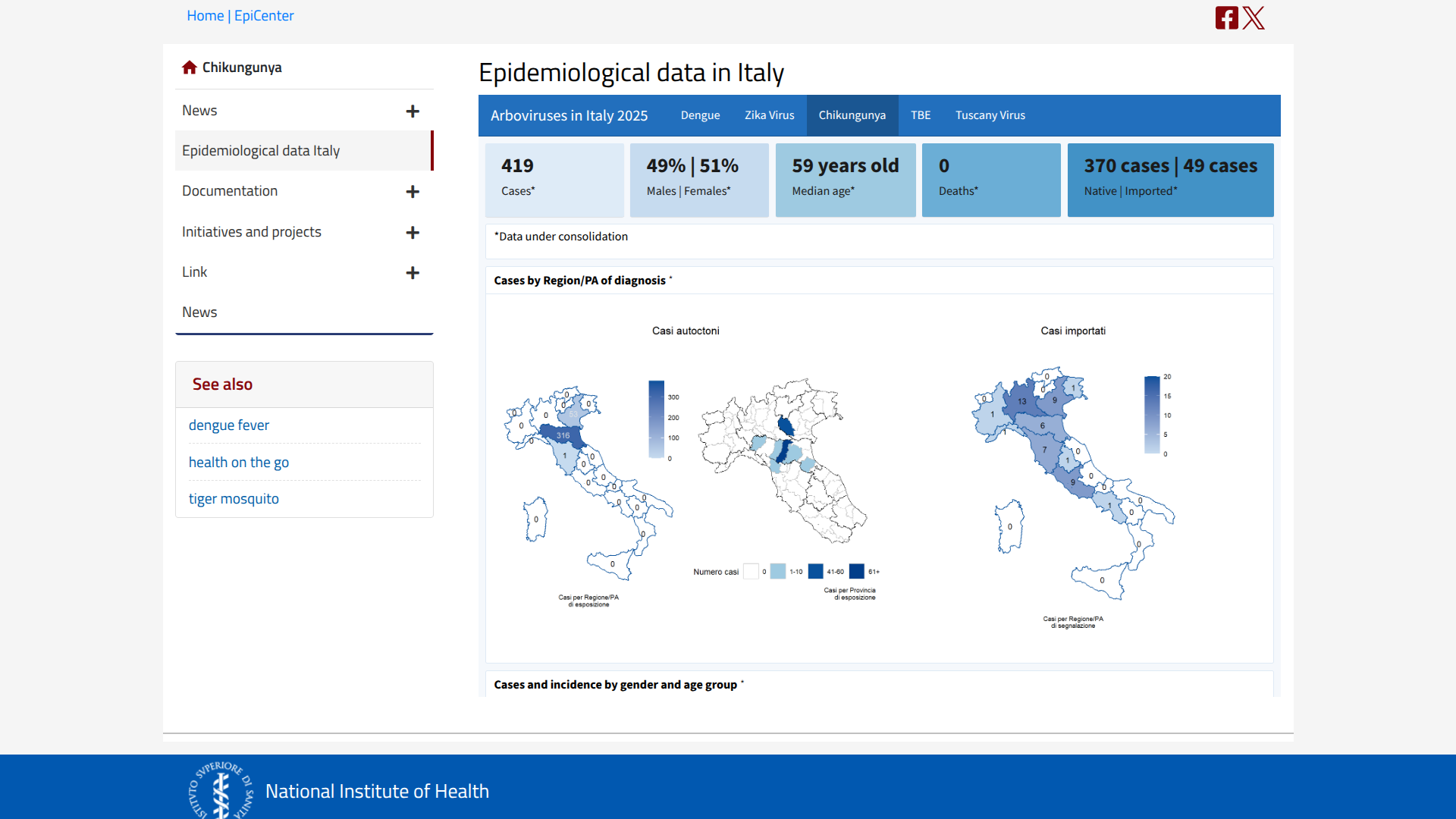
In Italy, the National Institute of Health has reported 419 chikungunya cases in 2025, with approximately 370 confirmed as locally transmitted, primarily in the northern region of the country.
According to ECDC's Week 44 report on October 29, 2025, the largest cluster of cases is located in Carpi, San Prospero, Soliera, Novellara, Cavezzo, Modena, Nonantola, Correggio, Novi di Modena, and Cesenatico.
In the United States, the CDC says locally acquired chikungunya cases have not been reported since 2019.
However, as of late November 2025, the CDC confirmed 19 travel-related cases in states such as Florida, several of which were linked to visitors from Cuba.
The CDC currently recommends that international travelers visiting outbreak areas speak with a travel vaccine provider about immunization options. Approved chikungunya vaccines will be available at clinics and pharmacies in November 2025.