Food-Producing Animals Cause 18% of UTIs in Los Angeles

Urinary tract infections (UTIs) are among the most common bacterial infections, affecting hundreds of millions of people worldwide.
New research published in the journal mBio indicates that about 18% of UTIs diagnosed in Southern California may be caused by strains of Extraintestinal pathogenic Escherichia coli (ExPEC) that originated in food-producing animals, an underrecognized reservoir for ExPEC.
For this study, a team led by scientists from George Washington University and Kaiser Permanente Southern California conducted molecular analyses of more than 5,700 ExPEC isolates collected from UTI patients as well as retail meat samples from stores in the neighborhoods where those patients resided.
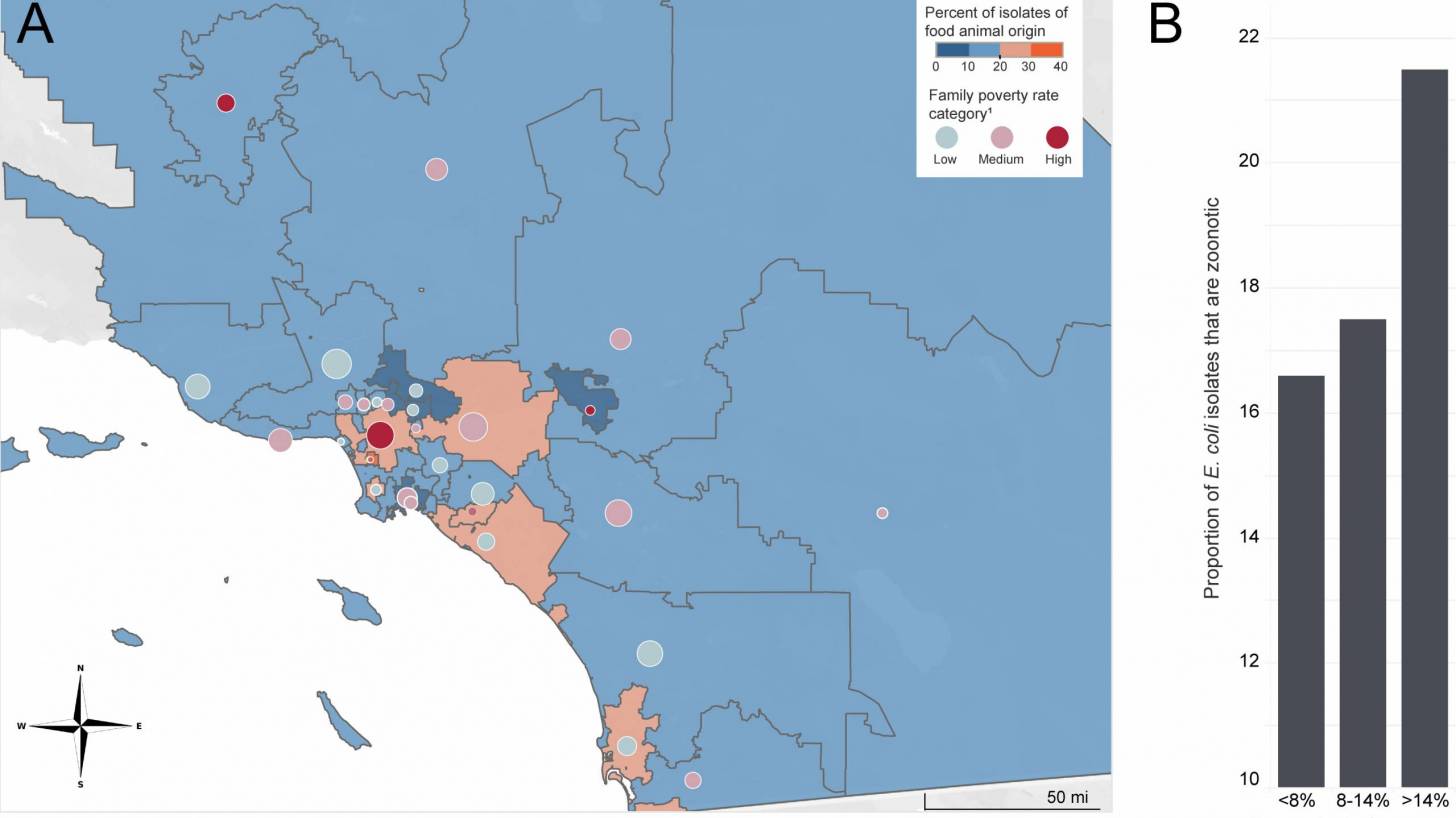
By using comparative genomic analysis and a model they developed to determine the host origin of each isolate, they discovered that 18% of the UTIs were linked to ExPEC strains derived from meat.
A subset of E. coli lineages, primarily from poultry products (chicken and turkey), appeared to have an enhanced capacity to cause zoonotic UTIs.
The study also found that UTIs in patients, more women than men (19.7% vs 8.5%), from high-poverty neighborhoods were 60% more likely to be caused by these zoonotic (animal-to-human) ExPEC strains. Behavioral factors related to food preparation and consumption, particularly in settings with limited water, sanitation, and hygiene, may further exacerbate contamination risks.
The proportion of zoonotic infections estimated in this California population was approximately twofold higher than what we estimated from a similar study in Flagstaff, Arizona.
"These findings emphasize the contribution of zoonotic ExPEC to the UTI burden in California and highlight the need for targeted interventions to reduce risk in vulnerable communities," the study authors stated on October 23, 2025.
In conclusion, recognizing this route of exposure offers new opportunities to reduce the heavy burden of UTIs. Our findings underscore the need for interventions to reduce the prevalence of zoonotic ExPEC in the food supply.
As of October 26, 2025, Uncomplicated and Recurrent UTI patients in the United States require prophylactic antibiotic regimens, as vaccines are unavailable. UTI vaccines are commercailly available in countries such as Germany, Mexico, and the United Kingdom.
Our Trust Standards: Medical Advisory Committee
-
Fact checked by Robert Carlson, MD