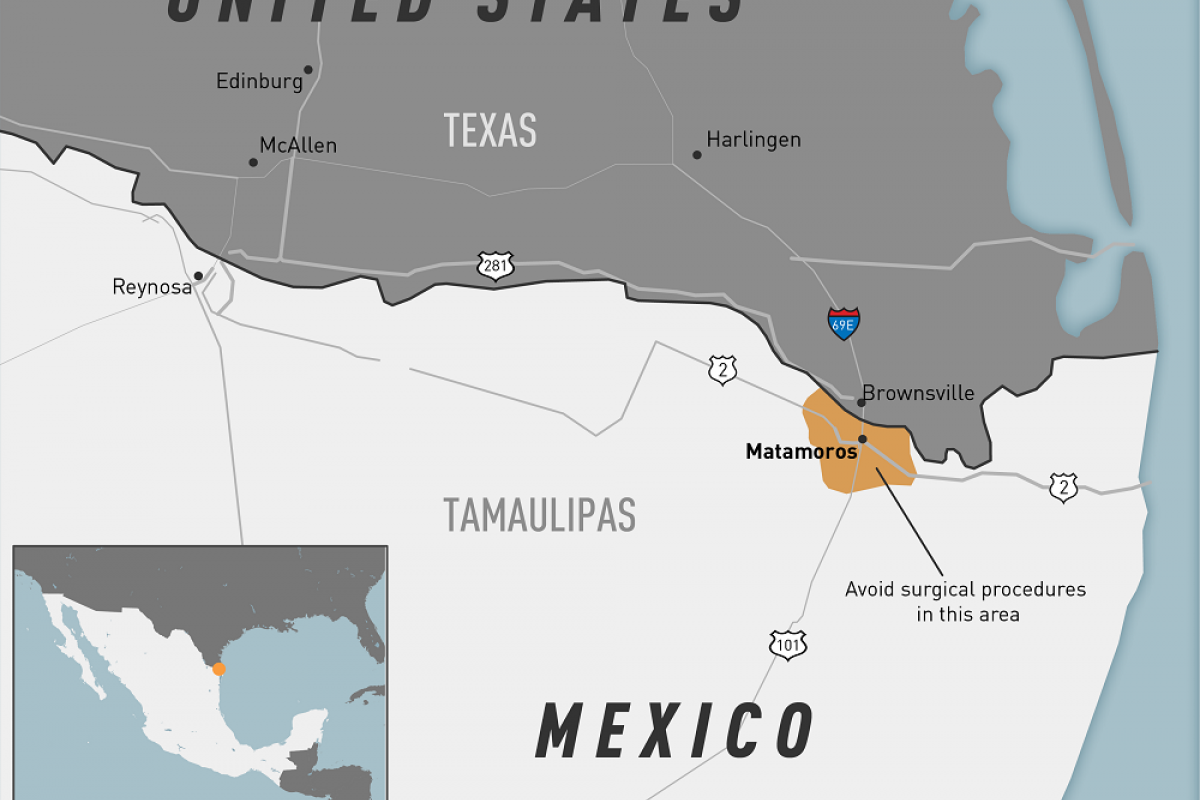
The U.S. Centers for Disease Control and Prevention (CDC) today confirmed some US residents returning from Mexico were diagnosed with suspected fungal meningitis infections that have led to severe illness and death.
In a Level 2, Practice Enhanced Precautions advisory issued on May 26, 2023, the CDC stated travelers with these infections had medical or surgical procedures that involved injection of an anesthetic into the area around the spinal column (i.e., epidural) performed at clinics in Matamoros, including River Side Surgical Center and Clinica K-3.
If you had a procedure involving an epidural injection of an anesthetic in Matamoros, Mexico, any time since January 1, 2023, learn what additional steps you should take, says the CDC.
There are millions of fungal species, but only a few hundred of them can make people sick. Fungal meningitis infections are not contagious and are not transmitted from person to person.
Although anyone can get fungal meningitis, people with weakened immune systems are at increased risk.
Certain health conditions, medications, and surgical procedures may weaken the immune system. Symptoms of fungal meningitis infections include fever, headache, stiff neck, nausea, vomiting, confusion, or sensitivity to light.
Fungal meningitis is treated with IV (injected through a vein) and oral medications. The CDC says that treatment length can vary depending on the fungus type.