Mpox Clade Ib Arrives in Mexico
Mexican health authorities recently confirmed the country's first case of mpox caused by clade Ib of the monkeypox virus (MPXV).
According to a report from the World Health Organization (WHO) on January 9, 2026, the affected individual is an adult male with a recent travel history to Germany. He is currently receiving medical care in Mexico.
As of January 13, 2026, there is no indication of community transmission of MPXV in Mexico, but officials are monitoring the situation closely.
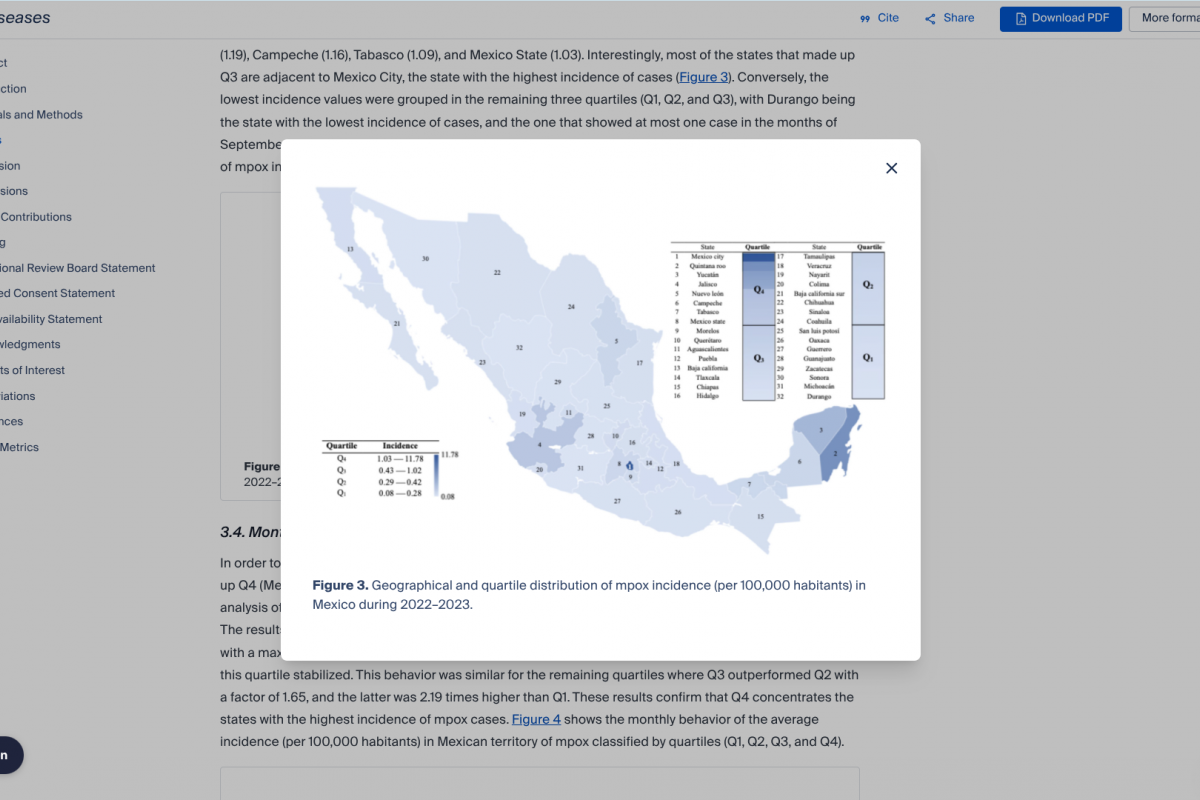
This case represents a significant development in Mexico's mpox surveillance efforts. Previous cases in the country since the global outbreak in 2022 have mainly involved clade II strains, primarily concentrated in urban areas such as Mexico City and Quintana Roo.
Clade Ib, a subclade of clade I, has emerged notably in Africa and is associated with more severe cases compared to clade II variants in specific contexts. Clade Ib is characterized by sustained human-to-human transmission and has been linked to more severe outcomes in vulnerable populations, such as those with weakened immune systems.
Historically, clade I has a higher case-fatality rate (3–11%) than clade II.
However, improved healthcare access in non-endemic countries has so far reduced fatalities among imported cases, according to the WHO.
The WHO has reported over 100 travel-associated clade Ib cases in high-income countries across Africa, Asia, Europe, the Middle East, North America, South America, and Australia, with no deaths recorded in these imported cases to date.
Since November 2024, there have been 10 reported cases of clade I mpox (Ib) in the United States. Most of these cases occurred in individuals who had recently traveled to areas with known clade I outbreaks or were linked to such travelers, such as household contacts.
This specific case highlights the ongoing global circulation of clade Ib and underscores the role of international travel in the spread of the virus.
Health authorities, including the WHO, state that the JYNNEOS® (MVA-BN®) vaccine offers cross-protection across different mpox clades because it is based on the vaccinia virus, which confers broad immunity to orthopoxviruses.
The WHO says vaccine protection is expected to be effective across clades, with no evidence of significant immune escape in clade Ib.
In the United States, JYNNEOS is offered at various clinics as of early 2026.
Our Trust Standards: Medical Advisory Committee