U.S. CDC Issues Interim Recommendations to Protect Infants from RSV

The U.S. Centers for Disease Control and Prevention (CDC) today announced the Health Alert Network Health Advisory (CDCHAN-00499) that offers options for clinicians to protect infants from respiratory syncytial virus (RSV) in the context of a limited supply of Beyfortus™ (nirsevimab), a single-dose, long-acting monoclonal antibody product.
In July 2023, the U.S. Food and Drug Administration (FDA) approved Beyfortus for passive immunization to prevent RSV-associated lower respiratory tract disease among infants and young children.
For the 2023–2024 RSV season, the manufacturer reports a limited supply of Beyfortus, particularly the 100mg dose prefilled syringes used for infants weighing ≥5 kg.
Based on manufacturing capacity and currently available stock, the CDC says there are insufficient 100mg dose prefilled syringes of Beyfortus to protect all eligible infants weighing ≥5 kg during the current RSV season.
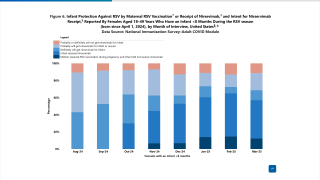
In the context of limited supply during the 2023–2024 RSV season, CDC recommends prioritizing available Beyfortus 100mg doses for infants at the highest risk for severe RSV disease: young infants (age <6 months) and infants with underlying conditions that place them at highest risk for severe RSV disease.
As of October 23, 2023, the CDC's recommendations for using 50mg doses remain unchanged.
Avoid using two 50mg doses for infants weighing ≥5 kilograms (≥11 pounds) to preserve supply of 50mg doses for infants weighing <5 kilograms (<11 pounds).
The CDC further recommends that providers suspend using the single-dose Beyfortus in the multidose Synagis® (palivizumab)-eligible children aged 8–19 months for the 2023–2024 RSV season.
These children should receive the multidose Synagis per the American Academy of Pediatrics recommendations.
Synagis was initially approved by the U.S. FDA in 1998.
However, Beyfortus should continue to be offered to American Indian and Alaska Native children aged 8–19 months who are not palivizumab-eligible and who live in remote regions, where transporting children with severe RSV for escalation of medical care is more challenging or in communities with known high rates of RSV among older infants and toddlers.
RSV is a common cause of respiratory infection in U.S. infants, most of whom are infected with RSV during their first year of life. RSV is the leading cause of hospitalization among U.S. infants.
The highest incidence of RSV-associated hospitalization occurs in infants aged <3 months and then decreases with time.
The Journal of Infectious Diseases published a meta-analysis in October 2023 that found among 8,126 pregnant women, the proportion with respiratory infections that tested positive for RSV ranged from 0.9% to 10.7%, with a meta-estimate of 3.4% (95% CI: 1.9; 54).
As of October 9, 2023, RSV activity was found to be generally low, according to the WHO's Influenza Update N° 455.
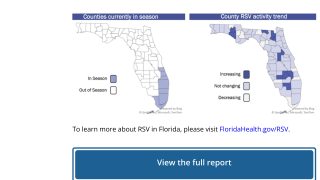
Current reports to the National Respiratory and Enteric Virus Surveillance System indicate RSV transmission has increased to seasonal epidemic levels in the Southern regions, such as in Florida, and is expected to continue to increase in the rest of the country within the next few months.
The CDC's RSV detection graphs display the 5-week moving average in U.S. states as of October 19, 2023.
These interim recommendations by the CDC are subject to change as new evidence becomes available.
Our Trust Standards: Medical Advisory Committee