Zika Vaccine VLA1601 Clinical Trials, Dosage, Indication, Side Effects
Valneva SE's VLA1601 is a second-generation, purified, inactivated whole Zika virus (ZIKV) vaccine candidate, adsorbed on aluminum hydroxide. As of December 2025, VLA1601 is the most advanced Zika vaccine developed and optimized on the original manufacturing platform of Valneva's licensed Japanese Encephalitis vaccine, IXIARO®. As of 2025, no preventive vaccines or effective treatments against ZIKV are approved by the U.S. Food and Drug Administration (FDA) or the European Medicines Agency (EMA). Zika is included in the FDA's Tropical Disease Priority Review Voucher Program. On August 12, 2025, the Company stated that no preventive vaccines or effective treatments are available and, as such, Zika remains a public health threat.
Valneva reported the results of its Phase 1 clinical trial (NCT03425149), showing immunogenicity and safety results for the tested doses and schedules. On March 26, 2024, Valneva announced the initiation of an additional Phase 1 clinical trial (VLA1601-102) to investigate the safety and immunogenicity of VLA1601 with a two-dose priming regimen on Days 1 and 29, with follow-up at 1 month (Day 57), 6 months, and 12 months. Primary Objectives: assessment of safety and tolerability up to 7 days after each vaccination and assessment of immunogenicity at Day 57 (1 month after completion of priming). Top-line data from this phase 1 clinical trial are expected in 2025. The Company has plans to expedite approvals with government agencies.
On November 4, 2025, Valneva announced positive results from its Phase 1 clinical trial (VLA1601-102, NCT06334393). The immune response induced by the double-adjuvanted VLA1601 vaccine candidate was significantly improved compared to the first-generation vaccine candidate, with higher peak seroconversion rates (>93% vs 86%) and a higher peak Geometric Mean Fold Increase in titers (>56-fold vs >7-fold). The Company stated: Despite the medical need, regulatory pathways and market opportunities for potential Zika vaccines remain uncertain. Valneva will therefore only consider further potential development steps for VLA1601 if concrete major private and public funding opportunities materialize.
France-based Valneva is a specialty vaccine company focused on developing vaccines for diseases with significant unmet needs. Valneva's vaccine portfolio includes two commercial vaccines for travelers. Valneva's 2023 Sustainability Report provides an in-depth account of the Group's activities and its future priorities. The Report's format is in accordance with French Decree No. 2017-1265 of August 9, 2017.
Zika Vaccine VLA1601 Indication
VLA1601 is a vaccine candidate indicated for the prevention of Zika infection. Vaccination should also protect against severe complications.
Zika Vaccine VLA1601 Dosage
In a phase 1 clinical trial, two doses of VLA1601 were administered intramuscularly in the deltoid muscle. Each dose is administered intramuscularly in the deltoid muscle on Days 0 and 28. Additionally, an accelerated vaccination schedule, administered on Days 0 and 7, was evaluated.
Zika Virus Impact
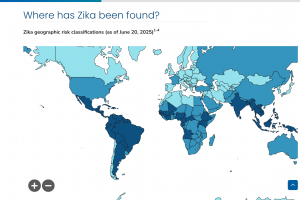
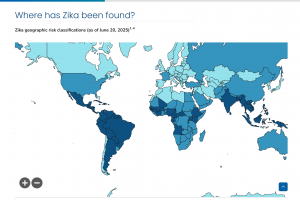
Zika was first identified in monkeys in Uganda in 1947 and later detected in humans in 1952. This mosquito-borne disease remains a public health threat throughout the Americas in 2025. According to the World Health Organization, there is a scientific consensus that ZIKV causes cases of microcephaly and Guillain-Barré syndrome. As of 2025, several countries and territories in the Americas, including Costa Rica and Puerto Rico, have reported evidence of mosquito-transmitted Zika virus infection.
On July 3, 2025, The Lancet published: A decade later, what have we learned from the Zika epidemic in children with intrauterine exposure? The Zika virus in pregnancy carries severe teratogenic potential to the fetus. Among children with congenital Zika syndrome, dysphagia and seizures are common, as are hospitalisations for pneumonia and urinary tract infections; overall, morbidity and mortality are extremely high. Children without congenital Zika syndrome but exposed to the Zika virus antenatally are also at risk of developmental disorders. Additionally, in utero exposure to the Zika virus does not lead to the production of neutralizing antibodies.
Zika Vaccine VLA1601 News
November 4, 2025 - Juan Carlos Jaramillo, M.D., Chief Medical Officer of Valneva, commented in a press release, "We are pleased by the notable safety and immunogenicity results demonstrated for our Zika vaccine candidate and especially our double-adjuvantation results."
February 18, 2025 - Valneca SE confirmed that Phase 1 results are forecasted for 2025.
October 10, 2024 - Valneva SE provided an update on its vaccine candidate.
March 26, 2024 - Juan Carlos Jaramillo, M.D., Chief Medical Officer of Valneva, said in a press release, "Valneva's commitment to our vision – to live in a world in which no one dies or suffers from a vaccine-preventable disease – fuels our pursuit for preparedness solutions against the Zika virus. As global temperatures rise and rainfall increases, the habitat for disease-carrying mosquitoes expands, presenting an ongoing public health challenge."
March 20, 2024 - Valneva SE stated that a vaccine against the Zika virus would complement the Company's portfolio of travel vaccines against mosquito-borne diseases, which already includes IXCHIQ® and IXIARO®.
November 9, 2023 - The Company announced the re-initiation of clinical development for ZIKA VACCINE CANDIDATE—VLA1601, with further program evaluation planned.
March 30, 2023 - Valneva's Chief Medical Officer, Juan Carlos Jaramillo, MD, will host a discussion on the opportunities and challenges of developing Zika vaccines on April 4, 2023.
VLA1601 Clinical Trial
In March 2024, Valneva initiated a Phase 1 clinical trial (NCT06334393) to investigate the safety and immunogenicity of VLA1601. As of November 4, 2025, the randomized controlled Phase 1 trial, VLA1601-102, enrolled approximately 150 participants aged 18 to 49 years in the U.S. Participants received two administrations of the highly purified, inactivated, aluminum-adjuvanted vaccine candidate VLA1601 at low, medium, or high doses, four weeks apart. In addition, the low dose of VLA1601 was evaluated with additional adjuvants, either the CpG 1018® adjuvant from Dynavax Technologies Corporation or the 3M-052-AF adjuvant from the Access to Advanced Health Institute. Data up to Day 57 (four weeks after the second dose) (Part A Analysis) showed that VLA1601 was generally safe and well-tolerated across all five treatment arms, with no safety concerns identified. Additionally, an independent Data Safety Monitoring Board found no safety issues. Two doses of VLA1601 were immunogenic across all five treatment arms investigated (i.e., alumadjuvanted Low, Medium, and High antigen dose; Low with additional adjuvants). The strongest immune response was observed in the double-adjuvant treatment arms (Low+alum+3M-052-AF and Low+alum+CpG1018) with statistically significantly higher neutralizing antibody titers (Geometric Mean Titers - GMTs) at Day 43 and Day 57 than in the single-adjuvant (alum) treatment arm. The immune response induced by the double-adjuvanted VLA1601 second-generation vaccine candidate was successfully improved compared to the first-generation vaccine candidate, with higher peak seroconversion rates (>93% vs 86%) and peak Geometric Mean Fold Increase of titers (>56 fold vs >7 fold)
Valneva concluded the Phase 1 trial for the first-generation vaccine (NCT03425149). It was first posted on February 7, 2018.