Travel Vaccine Breaking News

Travel vaccine breaking news brought to you by Vax Before Travel.

Jun 10, 2024 • 10:00 am CDT
by Sofia Shultz

BioArctic AB's partner, Eisai, announced today that the U.S. Food and Drug Administration (FDA) has accepted Eisai's Supplemental Biologics License Application (sBLA) for less frequent monthly Leqembi™ intravenous (IV) maintenance dosing.

A Prescription Drug User Fee Act action date is January 25, 2025.

Leqembi (lecanemab-irmb) is a humanized immunoglobulin gamma 1 monoclonal antibody, not a preventive vaccine.

In the U.S., Leqembi is indicated for the treatment of Alzheimer's disease (AD) in patients with mild cognitive impairment or mild dementia stage of disease (collectively referred to as early AD).

As of June 10, 2024, Leqembi is approved in Japan, China, and South Korea, and applications have been submitted for review in several countries, including the European Union, Australia, Brazil, Canada, Hong Kong, Great Britain, India, Israel, Russia, Saudi Arabia, Taiwan, Singapore, and Switzerland.

As part of the monthly IV maintenance regimen, patients who have completed the biweekly IV initiation phase, the exact period under discussion with the FDA, would receive a less frequent monthly IV dose that maintains effective drug concentration to sustain the clearance of highly toxic amyloid beta (Aβ) protofibrils that can continue to cause neuronal injury.

The sBLA is based on the modeling of observed data from the Phase 2 study (Study 201) and its open-label extension (OLE), as well as the Clarity AD study (Study 301) and its OLE study.

Additionally, Eisai initiated the rolling submission of a BLA to the FDA for the Leqembi subcutaneous autoinjector for weekly maintenance dosing after the FDA granted it Fast Track designation in May 2024.

Alzheimer's disease is a progressive disease caused by toxic amyloid proteins. Once established, this pathophysiological process continues throughout the patient's life, so sustained treatment is necessary.

The company says treatment should be initiated early to maximize patient outcomes.

Data from Studies 201 and 301 and their OLEs show that continued therapy with LEQEMBI beyond the 18-month core phase prolongs the benefit as highly toxic protofibrils are continuously removed.

If approved, the clinical and biomarker benefits may be maintained through the once-monthly dosing regimen, which is less burdensome and makes it easier for patients and care partners to continue long-term.

BioArctic is a Swedish research-oriented biopharma company focused on neurodegenerative disorders. It has a broad and well-diversified project portfolio and the potential to improve patients' health.

Jun 10, 2024 • 9:35 am CDT
by Senjin Pojskić

Moderna, Inc. today announced that its Phase 3 clinical trial of mRNA-1083, an investigational combination vaccine against influenza and COVID-19, has met its primary endpoints, eliciting a higher immune response than the licensed comparator vaccines used in the trial.

mRNA-1083 met its primary endpoints, eliciting higher immune responses against influenza and SARS-CoV-2 viruses than licensed flu and COVID vaccines in adults 50 and older, including an enhanced influenza vaccine in adults 65 and older.

"Combination vaccines have the potential to reduce the burden of respiratory viruses on health systems and pharmacies, as well as offer people more convenient vaccination options that could improve compliance and provide stronger protection from seasonal illnesses," said Stéphane Bancel, Chief Executive Officer of Moderna, in a press release on June 10, 2024.

"Moderna is the only company with a positive Phase 3 flu and COVID combination vaccine."

Moderna plans to present the Phase 3 clinical data for mRNA-1083 at an upcoming medical conference, submit them for publication, and engage regulators on the next steps.

mRNA-1083 comprises components of mRNA-1010, Moderna's vaccine candidate for seasonal influenza, and mRNA-1283, Moderna's next-generation COVID-19 vaccine candidate. Moderna says each investigational vaccine has independently demonstrated positive Phase 3 clinical trial results.

Jun 8, 2024 • 1:50 pm CDT
GPEI polio case map June 4, 2024

According to the weekly update of the Global Polio Eradication Initiative (GPEI), three countries confirmed additional polio cases.

As of June 5, 2024, Afghanistan and Pakistan each reported one wild poliovirus type (WPV1) case, the fourth WPV1 case for each country in 2024.

And Niger reported its second circulating vaccine-derived poliovirus type 2 (cVDPV2) case this year. 

Additionally, the GPEI posted the results of the Strategic Advisory Group of Experts on immunization meeting results from March 2024 at this link.

The U.S. CDC issued an updated Global Polio Alert on May 23, 2024, regarding polio outbreaks and poliovirus detections in 34 countries. 

The World Health Organization recently confirmed that the spread of the poliovirus remained a Public Health Emergency of International Concern and recommended its extension through July 2024. Various vaccines are available worldwide to prevent additional polio cases.


Jun 8, 2024 • 12:50 pm CDT
by Guillermo Gavilla

GSK plc today announced that the U.S. Food and Drug Administration (FDA) has approved Arexvy™ (Respiratory Syncytial Virus (RSV) Vaccine, Adjuvanted) for the prevention of RSV lower respiratory tract disease (LRTD) in adults 50 through 59 years of age who are at increased risk.

In the United States, Arexvy is approved for use in adults 60 and older and recommended by the U.S. CDC and its vaccine committee (ACIP) using shared clinical decision-making.  

Professor Ann R. Falsey, University of Rochester School of Medicine, said in a press release on June 7, 2024, "I am thrilled that GSK's vaccine is now approved for adults aged 50-59 at increased risk of RSV-LRTD. When it comes to the risks associated with RSV, age is just a number—an important number, but not the only factor to consider."

GS has also filed regulatory submissions to extend the use of Arexvy in Europe, Japan, and other geographies, with regulatory decisions undergoing review.

Clinical trials evaluating the immunogenicity and safety of the vaccine in adults aged 18-49 at increased risk and immunocompromised adults aged 18 and over are expected to be completed in H2 2024.

As of June 2024, the U.S. FDA has approved three RSV vaccines.

Jun 7, 2024 • 2:21 pm CDT
US CDC Flu View data June 7, 2024

In the Northern Hemisphere, influenza activity was generally low at interepidemic levels in most countries, according to the World Health Organization (WHO) in Influenza Update N° 477.

As of the end of May 2024, the WHO says elevated flu activity continued to be reported in countries in Central America and the Caribbean.

In the United States, the Centers for Disease Control and Prevention (CDC) confirmed on June 7, 2024, that seasonal influenza activity remains low nationally and is forecasted to resume in Fall 2024.

As the Southern Hemisphere winter season accelerates, countries in South America continue to report elevated influenza activity. Influenza A(H1N1)pdm09 and A(H3N2) viruses have been detected. 

The WHO forecasts that influenza infections will increase in the coming months.

Both the WHO and CDC recommend international travelers speak with a healthcare provider about flu shot options before departing abroad.

The CDC recently reported that about 158 million flu vaccines were distributed in the U.S. during the 2023-2024 flu season.

Note: The CDC says most known influenza viruses are dissimilar to avian and pandemic influenza viruses; traditional flu shots are not expected to protect people against bird flu or cow flu.

Jun 7, 2024 • 1:39 pm CDT
Pixabay 2024

A Short Communication published by the journal Influenza and Other Respiratory Diseases added to the research-based and real-world evidence the respiratory syncytial virus (RSV) can be prevented in most infants receiving a new monoclonal antibody (mAb). 

RSV is the #1 cause of hospitalization of infants in most countries. In France, hospitalizations with RSV represent 28% of all-cause hospitalizations in children under the age of one during the RSV season. 

This new study found a single dose of the extended half-life Beyfortus™ (nirsevimab) was found to be 75.9% effective against RSV-related hospitalization in France.

This long-duration mAb was also 80.6% (61.6–90.3) and 80.4% (61.7–89.9) effective in two sensitivity analyses.

These real-world estimates confirmed the efficacy observed in RSV clinical studies, wrote these researchers on June 5, 2024.

Sanofi and AstraZeneca recently announced they are producing Beyfortus before the 2024-2025 RSV season in the U.S. 

On November 16, 2023, the CDC announced the release of the U.S. FDA-approved Beyfortus to physicians and hospitals through the Federal VFC Program and commercial channels. 

Jun 7, 2024 • 10:13 am CDT
New Jersey beach - Pixabay 2024

The New Jersey Department of Health (NJDOH) today announced a Somerset County resident developed measles following international travel.

As of June 5, 2024, no additional cases have been identified. Secondary cases would be expected to occur no later than June 26, 2024.

This is the second confirmed case of measles reported in NJ in 2024, the first of which was identified in Camden County in January.

In 2019, New Jersey reported a significant travel-related measles outbreak.

The NJDOH urges all residents planning to travel, regardless of destination, to ensure they are current on all routine and travel vaccinations, especially MMR vaccinations.

MMR vaccination services are generally available at travel vaccine clinics and pharmacies in the U.S.

As of June 2024, 52 countries are currently experiencing measles outbreaks, according to the U.S. CDC.

Jun 7, 2024 • 5:39 am CDT
by Sohag Hawlader

According to data published by the U.S. Centers for Disease Control and Prevention (CDC), a UCLA-led multi-site study that included 45% women and 20% children, no mpox cases were reported,

During June–December 2023, among 196 patients in the study, only three mpox cases were identified (1.5%). All cases were among men who reported having sex with multiple men in the month prior and not being vaccinated against mpox.

The CDC's MMWR revealed on June 6, 2024, that clinicians should remain vigilant for mpox virus infections and educate patients about the importance of risk reduction and JYNNEOS® vaccination.

Bavarian Nordic produces the third generation JYNNEOS® (MVA-BN®, IMVAMUNE®), a two-dose vaccine based on a live, attenuated vaccinia virus, Modified Vaccinia Ankara.

A meta-analysis of 16 studies published on April 26, 2024, revealed that the JYNNEOS vaccine effectiveness (VE) for one pre-exposure prophylactic vaccination ranged from 35% to 86%, and VE ranged from 66% to 90% for two doses. 

In 2024, JYNNEOS became commercially available in the U.S. Currently, the CDC does not recommend routine immunization against mpox for the general public and has not endorsed JYNNEOS booster doses (3rd).

Jun 6, 2024 • 1:53 pm CDT
US State Dept 2024

Liberia is one African nation leading a crucial fight against polio. Unfortunately, Liberia recently reported a resurgence of variant polio type 2 in wastewater.

Liberia reported two variant polio type 2 detections from environmental sampling in 2023 and six so far in 2024. 

Although historic polio vaccine coverage rates have shown promising progress, the battle against polio requires unwavering commitment and action, wrote the Global Polio Eradication Initiative on June 4, 2024.

Despite the challenges, the number of variant poliovirus cases in Liberia has significantly declined, with no children paralyzed by polio since 2021.

To stop the spread of the virus quickly, Liberia has launched nationwide immunization campaigns using the novel oral polio vaccine (nOPV2).

The second round of nOPV2 vaccinations is set to begin on June 7, 2024.

Primarily deployed in Africa during the last two years, the nOPV2 vaccine has been offered over 1 billion times.

Mr. Adolphus Clark, Expanded Programme on Immunization Manager in Liberia, expressed his optimism in a media release about the pending vaccination campaign, stating, “Our collective efforts have brought us closer than ever to a polio-free Liberia.... we are renewing our commitment to ensure that every child is protected from this preventable disease.”

Liberia has also introduced seven vaccines into its routine immunization schedule: Pneumococcal Conjugate Vaccine, Rotavirus, Inactive Polio Virus, Haemophilus influenzae Tue B, Typhoid, and measles-containing vaccine. 

To alert international visitors, the U.S. CDC has included Liberia in its recent polio and measles Travel Health Advisories. The CDC suggests travelers speak with a travel vaccine expert about immunization options one month before visiting Liberia.

Jun 6, 2024 • 8:48 am CDT
Nipah virus case map 2024

Auro Vaccines LLC's Nipah Virus vaccine candidate HeV attachment G glycoprotein (HeV-sG-V) was recently found to induce antibodies within one month of vaccination, and the persistence afforded by two dosages suggests the vaccine candidate has the potential for reactive Nipal outbreak control and preventative use.

On May 30, 2024, results from a Phase 1 study funded by the Coalition for Epidemic Preparedness Innovations and published by The Lancet preprint evaluated a recombinant subunit vaccine consisting of a soluble version of HeV-sG-V for safety, tolerability, and immunogenicity. The highest response rates were among vaccinees receiving two administrations of the 100 mcg vaccine candidate 28 days apart.

As of June 6, 2024, several Nipah Virus vaccine candidates were conducting clinical research, but no approved Nipah vaccines were available.

The World Health Organization says that Nipah was first discovered in Malaysia in the 1990s. This virus causes yearly outbreaks throughout South and Southeast Asia, with associated mortality rates of 40 to 75 %. Nipah infection is a zoonotic illness transmitted to people from animals such as bats.

The virus can also be transmitted through contaminated food or from person to person. 

The WHO published a Technical Brief in early 2024 as an interim document to guide countries in planning for a Nipah virus event.

No cases of Nipah have been diagnosed in the U.S.

Jun 5, 2024 • 4:39 pm CDT
by Hosny Salah

The U.S. Food and Drug Administration (FDA) Vaccines and Related Biological Products Advisory Committee (VRBPAC) unanimously voted today to recommend that COVID-19 vaccines be updated to a monovalent JN.1-lineage composition for 2024-2025 and expressed a preference for the JN.1 strain.

As of June 5, 2024, Novavax Inc. stated in a press release that, pending authorization, it expects to be ready for the commercial delivery of a protein-based JN.1 COVID-19 vaccine in the U.S. in September 2024.

Novavax’s JN.1 COVID-19 vaccine has demonstrated broad cross-neutralizing antibodies for various JN.1 descendant viruses, including KP.2 and KP.3.

'We believe updating to the JN.1 lineage or JN.1, as recommended by the World Health Organization and the European Medicines Agency and as unanimously recommended by VRBPAC today, will provide the protection needed this fall against COVID-19,' wrote the company.

'Our most recent nonclinical data have demonstrated that our JN.1 vaccine candidate induces broad neutralization responses to JN.1 lineage viruses including those with the F456L mutation (e.g., JN.1.16), the R346T mutation (e.g., JN.1.13.1), to “FLiRT” variants that contain both mutations such as KP.2, currently the most common circulating variant in the U.S., and to “FLuQE” variants that are increasing in circulation (e.g., KP.3).'

'Our JN.1 vaccine candidate also produces conserved polyfunctional, Th1-biased CD4+ T cell responses to a range of JN.1 lineage variants, including those containing the F456L, R346T, and FLiRT mutations (e.g., KP.2).'

'These responses indicate that our vaccine technology induces broadly neutralizing responses against multiple variant strains, including circulating forward drift variants.'

Based on data presented by vaccine manufacturers today, the VRBPAC acknowledged the advantages of a JN.1 vaccine in providing broad protection against circulating and future strains and the need to minimize confusion in making public health recommendations.

As of June 2024, Novavax's vaccine is the only protein-based, non-mRNA vaccine available in the U.S. Novavax vaccines have been offered by most pharmacies in the U.S.

Jun 5, 2024 • 4:12 pm CDT
US CDC June 2024

According to Stat News reporting today, Finland is preparing to offer 20,000 vaccines to people at risk of exposure to an avian influenza strain spreading among farmed and wild animals.

On June 5, 2024, Andrew Joseph wrote Finland may become the first country to offer 'bird flu' vaccinations to people.

According to the European Medicines Agency (EMA), the Aflunov vaccine is authorized for use in the European Union (EU) during avian influenza outbreaks without a declared pandemic.

Aflunov contains a flu strain called A/turkey/Turkey/1/2005 (H5N1)-like strain (NIBRG-23) (clade 2.2.1).

Additionally, the EMA says four pandemic-preparedness influenza vaccines authorized in the EU can be rapidly modified to protect people in a pandemic situation.

The EMA's human medicines committee recommended at its February 2024 meeting Celldemic (zoonotic influenza vaccine (H5N1)(surface antigen, inactivated, adjuvanted, prepared in cell cultures)). This vaccine is intended for immunization during outbreaks of influenza coming from animals, including when public health authorities anticipate a possible pandemic. 

The Incellipan (pandemic influenza vaccine (H5N1) is a pandemic preparedness vaccine intended for use only if a flu pandemic has been officially declared.

Previously, the European Commission (EC) signed a framework contract on July 28, 2022, for the joint procurement of GSK's Adjupanrix, a pandemic influenza vaccine. As a result, EC Member States can purchase up to 85 million vaccine doses, if necessary, during an influenza pandemic.

Jun 5, 2024 • 1:02 pm CDT
US CDC June 5, 2024

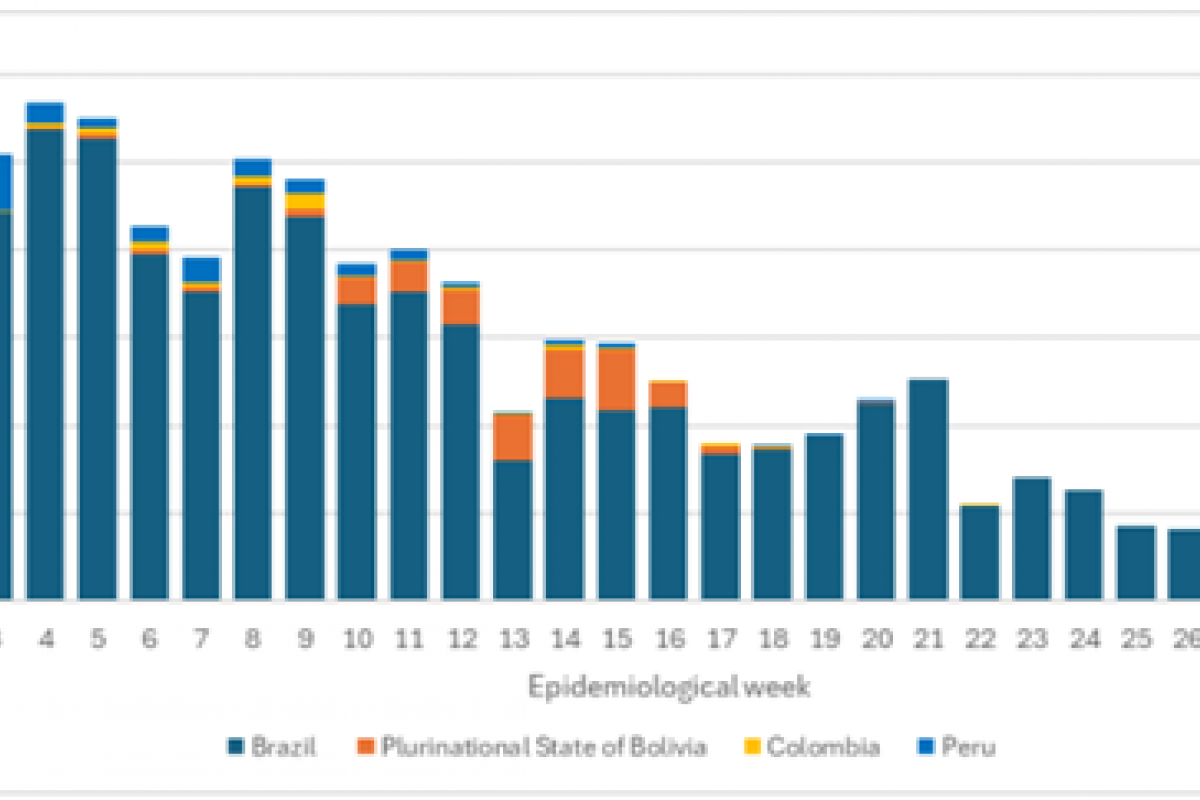
The U.S. Centers for Disease Control and Prevention (CDC) reported today that Oropouche fever outbreaks occur in 21 countries, including parts of Brazil, Bolivia, Colombia, Peru, Cuba, Ecuador, Panama, and Peru.

As of June 5, 2024, the CDC's Travel Health Advirosy says travelers should seek medical care if they develop high fever, headache, muscle aches, stiff joints, nausea, vomiting, chills, or sensitivity to light during or after travel.

Since it was first isolated in Trinidad and Tobago in 1955, more than half a million Oropouche cases and at least 30 major outbreaks have been reported. However, these data are difficult to quantify due to the lack of diagnosis.

In 2024, the Pan American Health Organization reported over 5,000 confirmed cases of Oropouche in four countries in the Region of the Americas.

This illness can occur in people of any age and is often mistaken for dengue, which is also impacting these populations.

The CDC says Oropouche fever is spread by the bite of infected midges (small flies) and mosquitoes.

Unfortunately, Oropouche infection treatment is supportive, as no specific medications or vaccines are available.

Jun 5, 2024 • 10:56 am CDT
Pixabay

The U.S. Centers for Disease Control and Prevention (CDC) published clinical guidelines on counseling patients regarding doxycycline post-exposure prophylaxis (doxy PEP) for bacterial sexually transmitted infection (STI) prevention.

Doxycycline, a broad-spectrum tetracycline antimicrobial, is well absorbed and tolerated, with a half-life of approximately 12 hours.

As of June 4, 2024, the CDC says Doxy PEP has proven to reduce the risk of getting bacterial STIs, specifically syphilis, chlamydia, and gonorrhea.

The CDC recommends healthcare providers discuss doxy PEP with all gay, bisexual, and other men who have sex with men and transgender women with a history of at least one bacterial STI in the last 12 months. If offering doxy PEP, healthcare providers should prescribe self-administration of 200 mg of doxycycline within 72 hours of sex.

Laura Bachmann, MD, MPH, FIDSA, FACP, Acting Director, Division of STD Prevention, stated in a media release, 'Doxy PEP represents the first new STI prevention tool in decades, at a time when innovation in the nation's fight nation's STIs is desperately needed."

As of June 5, 2024, bacterial STI vaccine candidates are conducting clinical research.

Recently, the Bexsero® meningitis B vaccine (4CMenB) has shown some protection against gonorrhea. Studies have found that people who receive two doses of Bexsero maybe 33–40% less likely to be diagnosed with gonorrhea than those who don't.

In the U.K., meningococcal vaccination is now advised for certain people to prevent STIs.

Jun 5, 2024 • 7:52 am CDT
US CDC Dengue Cases May 30, 2024

The Centers for Disease Control and Prevention (CDC) says most dengue fever cases in the United States occur in areas where dengue is common, such as U.S. territories and a few states. Dengue virus is found in many tropical parts of the world, including the Caribbean, Central, and South America.

As of June 5, 2024, the CDC has reported over 100 additional dengue cases over the last month, which has increased this year's total to 1,706.

As of week #19 in 2024, Puerto Rico reported the most dengue cases, 1,107, with San Juan reporting 528 of these cases. In 2023, Puerto Rico reported 1,242 dengue cases.

Florida recently confirmed 198 travel-associated dengue cases in 2024, mainly by visitors from Brazil and Cuba. Seven cases of locally acquired dengue were reported from Miami-Dade and Pasco counties.

Additionally, the CDC reported New York's dengue outbreak has reached 119 cases in 2024.

Since the state of Texas has yet to post its dengue cases count for 2024, the CDC's overall total is expected to significantly increase. In 2023, Texas 67 travel-related dengue cases.

Dengue fever is a mosquito-borne, vaccine-preventable disease caused by the dengue virus. However, the WHO-approved dengue vaccines are not commercially offered in the U.S.