Search API
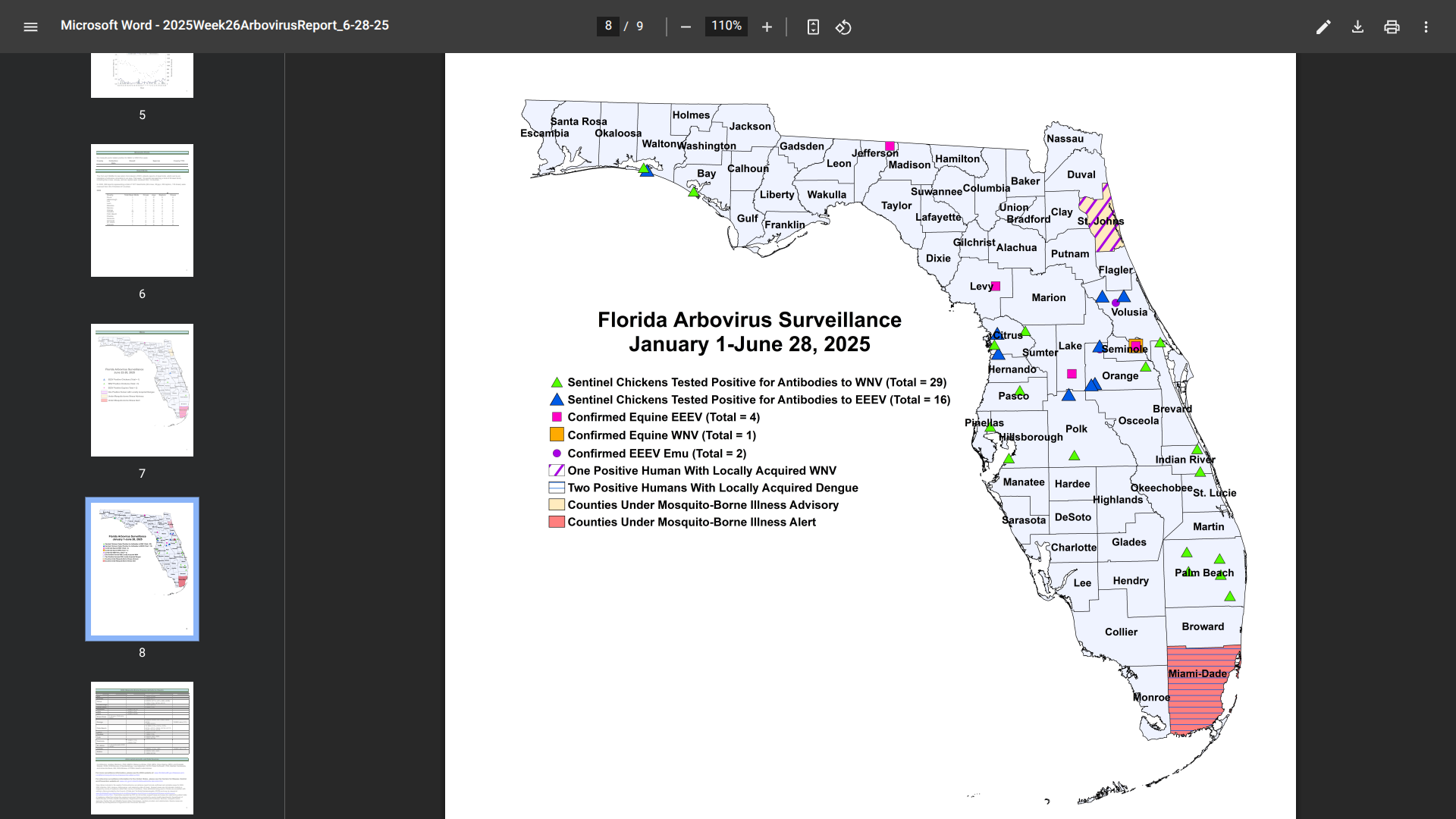
Florida health officials recently reported additional cases of mosquito-transmitted and travel-related chikungunya, dengue, and malaria in 2025.
After a slow start, these serious diseases have been concentrated in southeast Florida, in the great Miami area, which welcomes millions of international visitors each year.
Currently, Miami-Dade County remains under a mosquito-borne illness alert.
As of June 28, 2025, Florida Health's Weekly Arbovirus Report confirmed a second, indigenous case of dengue in Miami-Dade County.
The most recent case has been identified as serotype DENV-4, while the early case was DENV-3.
In 2024, a total of 91 cases of locally acquired dengue have been reported across ten Florida counties.
Additionally, there have been four cases of chikungunya and 20 cases of malaria related to international travelers this year.
While there are no travel advisories issued for Florida's southeast coast, Canada and the UK both advise speaking with a travel vaccine expert before visiting at-risk areas in 2025.

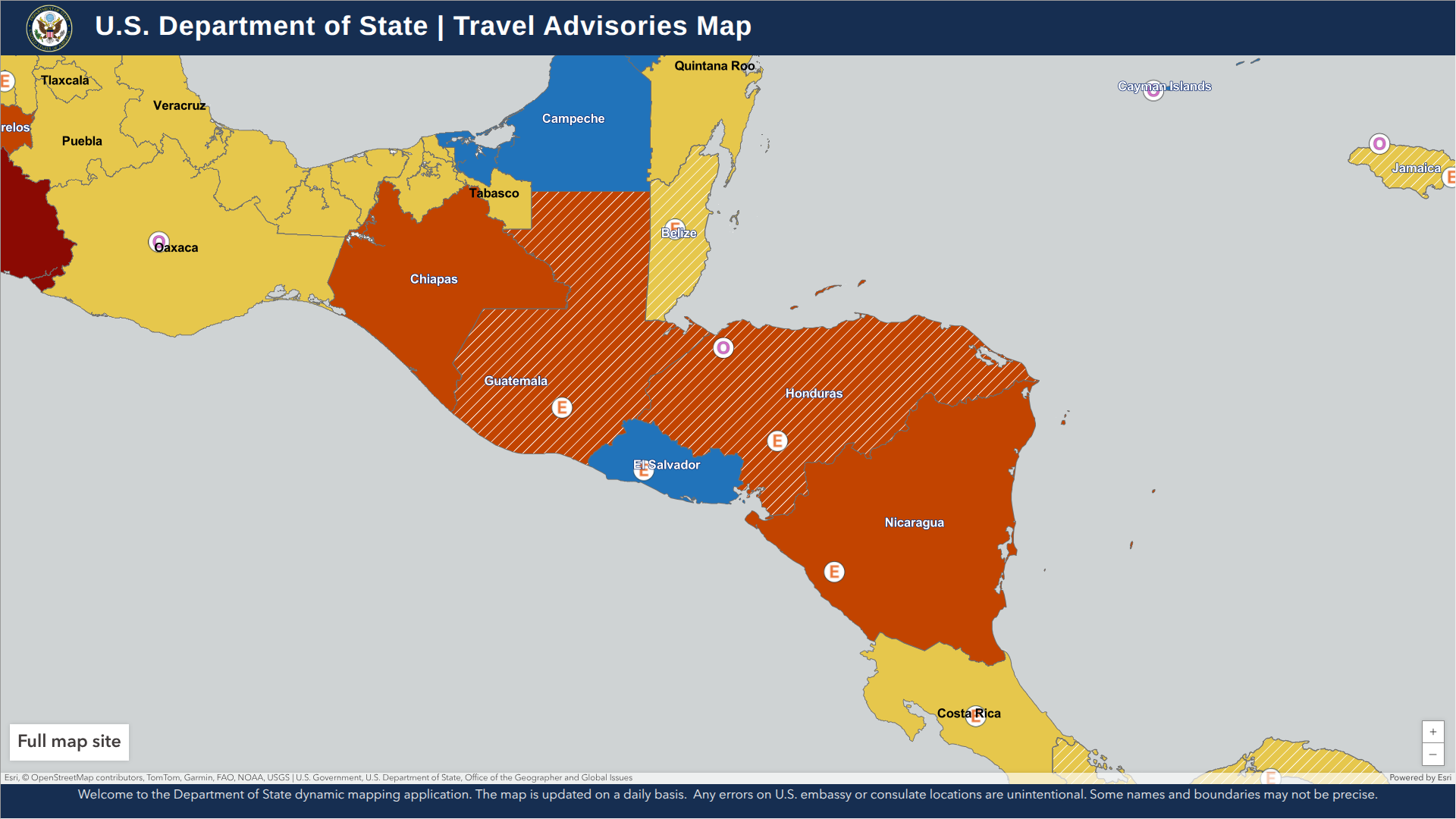
According to the Secretary of State at the Ministry of Foreign Affairs and International Cooperation, Honduran authorities are requiring documentation to show proof of a measles vaccine (MMR) for travelers coming from various countries, including the United States.
As of June 28, 2025, this new requirement applies to all foreign travel to the Republic of Honduras, whether by land, sea, or air.
The U.S. Embassy in Honduras stated that if someone cannot receive the vaccine, they will need to provide proof of a negative measles test result 72 to 80 hours before the flight.
This means that cruise ship passengers visiting this Central American country may need to carry proof of their vaccination.
In addition to measles vaccination, the U.S. CDC recommends being protected against chikungunya, dengue, malaria, typhoid, and Zika when visiting Honduras.
For local assistance during July 2025, the U.S. Embassy Tegucigalpa is available to U.S tourists.
Additionally, the Department of State stated in 2024, "Reconsider travel to Honduras due to civil unrest." The Smart Traveler Enrollment Program is available to travelers interested in receiving digital travel alerts while abroad.

In June 2025, the WHO's Dengue Situation Update #723 confirmed that the Western Pacific Region continues to face a high burden of mosquito-borne arboviral diseases, particularly Dengue.
Within the Philippines, Quezon City (QC) declared a Dengue outbreak in February 2025
The QC government today published updated data regarding the ongoing outbreak.
The QC Epidemiology and Surveillance Division (QCESD) dashboard reported on July 1, 2025, that 5,762 dengue cases were reported in 2025, with QC's District 2 confirming the highest number of cases.
The QCESD stated that most fatal dengue cases (23) involved children and young women.
To alert international travelers visiting QC, a metro area with about 3 million residents located north of Manila, the U.S. Centers for Disease Control and Prevention included the Philippines in its Global Dengue Outbreak Advisory issued in June 2025.
Without a preventive vaccine available in the U.S., the CDC recommends that travelers to risk areas should prevent mosquito bites by using an EPA-registered insect repellent, wearing long-sleeved shirts and long pants when outdoors, and sleeping in an air-conditioned room or one with window screens.

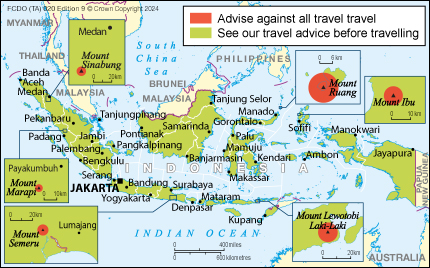
Recently, the UK Foreign, Commonwealth and Development Office (FCDO) advised against all travel to several volcanoes in the Republic of Indonesia.
On June 18, 2025, the FCDO stated that ash plumes from volcanoes can have a significant impact on health, particularly for individuals with pre-existing respiratory conditions, such as asthma.
Additionally, during the dry season from May to November, widespread wildfires cause a smoke haze that drifts across parts of Indonesia, particularly the Riau Islands, central Sumatra, and Kalimantan.
The haze can disrupt local and regional air travel, and air pollution has a significant impact on public health.
If you plan to visit Indonesia in 2025, the UK advises researching your destinations and obtaining suitable travel insurance. Insurance should cover your itinerary, planned activities, and expenses in the event of an emergency.
Seperately, the U.S. Department of State recently issued a level 4 advisory for international visitors to consider before visiting Indonesia.
From a health perspective, the U.S. CDC includes Indonesia in recent measles and polio travel advisories.
As of June 2025, Indonesia's dengue cases had risen to 52,410, with 210 deaths reported this year. And chikungunya cases reached 1,245, primarily in Java.
The CDC suggests speaking with a travel vaccine expert before visiting Indonesia this year.
The UK Foreign, Commonwealth & Development Office (FCDO) today issued updated travel advice for visiting the Kingdom of Thailand.
On June 24, 2025, the FCDO posted new information about the temporary suspension of border crossings due to civial unrest.
FCDO advises against all but essential travel to parts of the south, near the Thailand-Malaysia border, such as Pattani Province, Yala Province, Narathiwat Province, and southern Songkhla Province, south of the A43 road between Hat Yai and Sakom, and south of the train line which runs between Hat Yai and Padang Besar.
Additionally, the FCDO advises against all but essential travel on the Hat Yai to Padang Besar train line, which runs through these provinces.
This advisory may impact Thailand's international tourist arrivals, which reached about 35 million in 2024.
From a health advisory perspective, the U.S. CDC previously issued disease outbreak warnings and vaccination recommendations regarding chikungunya, dengue, Japanese encephalitis, malaria, measles, rabies, and typhoid.
On June 13, 2025, the CDC advised prospective visitors to Thailand to consult with a travel vaccine expert about immunization options.

According to recent data published by France Public Health, international travelers are returning to mainland France infected with various mosquito-transmitted diseases.
As of June 18, 2025, France reported that over the past six weeks, the following diseases have been identified:
Chikungunya: 583 imported cases of chikungunya. Additionally, two unrelated indigenous (local) cases of chikungunya have been identified in 2025, one in the Var department and the other in the Hérault department. This report does not include data from the ongoing chikungunya outbreaks in the French Departments in the Indian Ocean.
Dengue: 395 imported cases of dengue fever,
Zika: 2 imported cases of Zika.
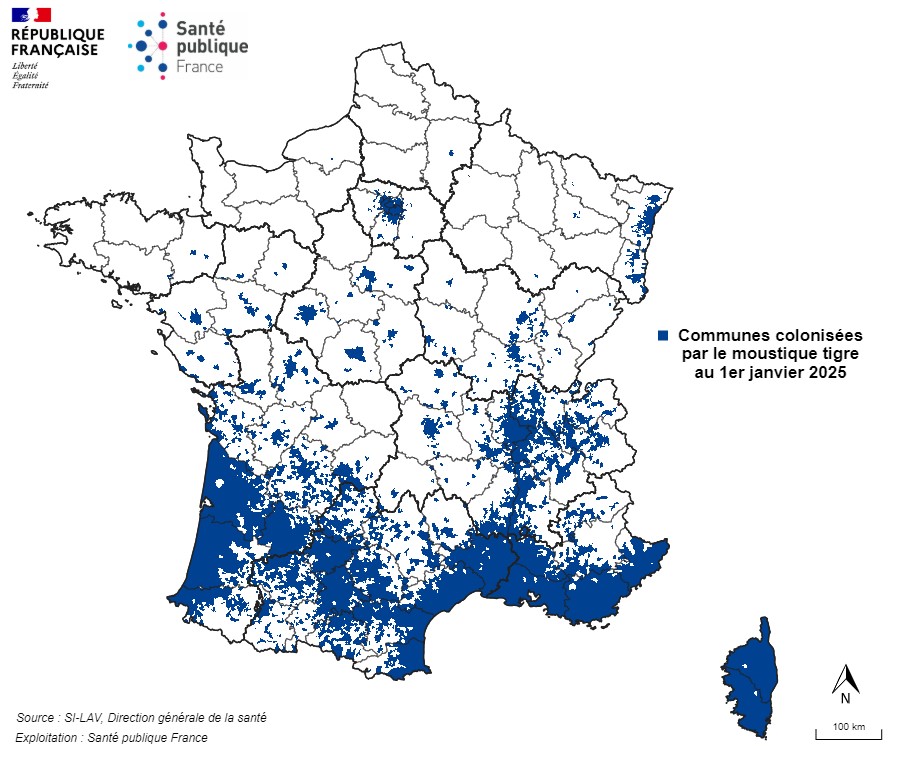
The chikungunya, dengue, and Zika viruses are primarily transmitted by Aedes mosquitoes, specifically Aedes albopictus (tiger mosquito), in mainland France. Aedes albopictus has been established in southern France since 2004 and has been gradually spreading since then.
At the start of 2025, 81 out of 96 departments were colonized by the vector mosquito Aedes albopictus.
While dengue and Zika vaccines are not yet available as of June 23, 2025, two chikungunya vaccines are commercially offered in various countries, including the United States.
According to a recent World Health Organization report, the Western Pacific Region is facing significant dengue outbreaks for the second consecutive year.
Since dengue is a vaccine-preventable disease, countries such as the Republic of Singapore are conducting clinical trials pursuing the use of a third-generation vaccine.
On June 18, 2025, MSD (Merck & Co.) announced the initiation of the MOBILIZE-1 Phase 3 clinical trial (V181-005) evaluating the safety, immunogenicity and efficacy of a single dose of V181, a quadrivalent vaccine candiate, for the prevention of dengue disease caused by any of the four dengue virus serotypes, regardless of prior dengue exposure.
Recruitment for this late-stage trial has begun, and the first participants are now enrolling in Singapore.
The study is planned to include more than 30 trial sites in dengue-endemic areas in the Asia-Pacific region, including Indonesia, Malaysia, the Philippines, Singapore, Thailand, and Vietnam.
Dr. Abdullahi Sheriff, Managing Director, MSD in Singapore, Malaysia & Brunei, commented in a press release, “We are grateful to the scientific community in Singapore for their commitment to scientific excellence and partnership throughout this journey."
"Singapore and the surrounding countries in Southeast Asia are areas with a risk for dengue, making it a serious public health threat."
Throughout 2024 and during the first half of 2025, dengue cases and related fatalities have been reported in most countries in the Region of the Americas, including the United States.
The global need for additional dengue vaccines is substantial. As of June 20, 2025, the second-generation QDENGA vaccine is in limited supply worldwide and is unavailable in the U.S.
