Search API
In 2025, Brazil remains the leading country in the Americas for reported yellow fever cases. However, the Republic of Colombia has confirmed a significant outbreak since 2024
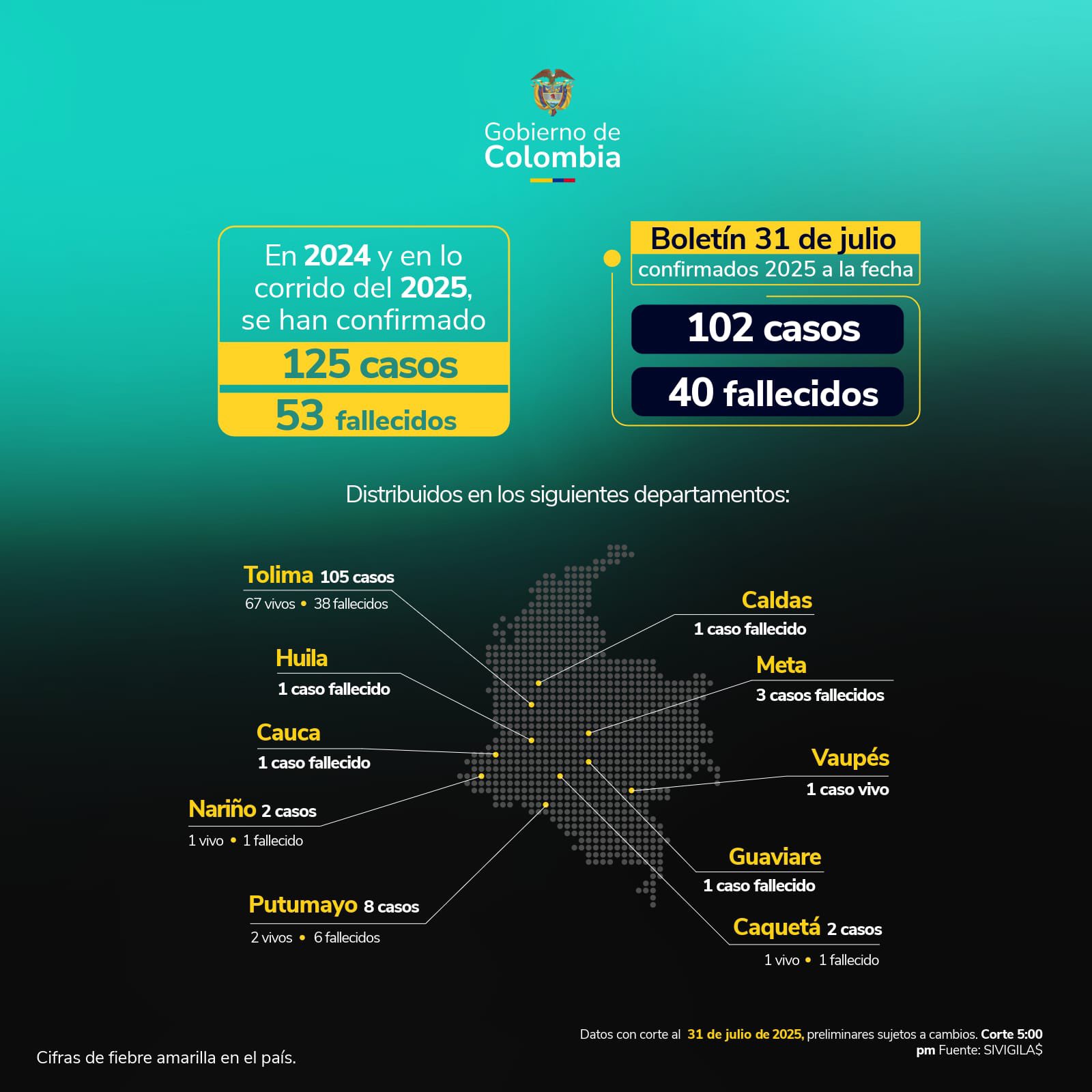
By July 31, 2025, Colombia reported in a post on Facebook a total of 125 confirmed cases of yellow fever (YF), resulting in 53 deaths.
Most of these YF cases were concentrated in the Tolima Department, which accounted for 105 cases and 38 deaths.
In addition, YF cases have been reported in the Departments of Huila, Cauca, Nariño, Putumayo, Caldas, Meta, Vaupés, Guaviare, and Caquetá.
As of August 4, 2025, YF is a vaccine-preventable disease, and proof of vaccination is required to enter various countries, including Colombia.
In the United States, the YF-VAX vaccine is commercailly offered at travel vaccination retailers.
The Centre for Health Protection (CHP) of the Department of Health recently announced it is investigating its initial, imported chikungunya fever (CF) case in Hong Kong in 2025.
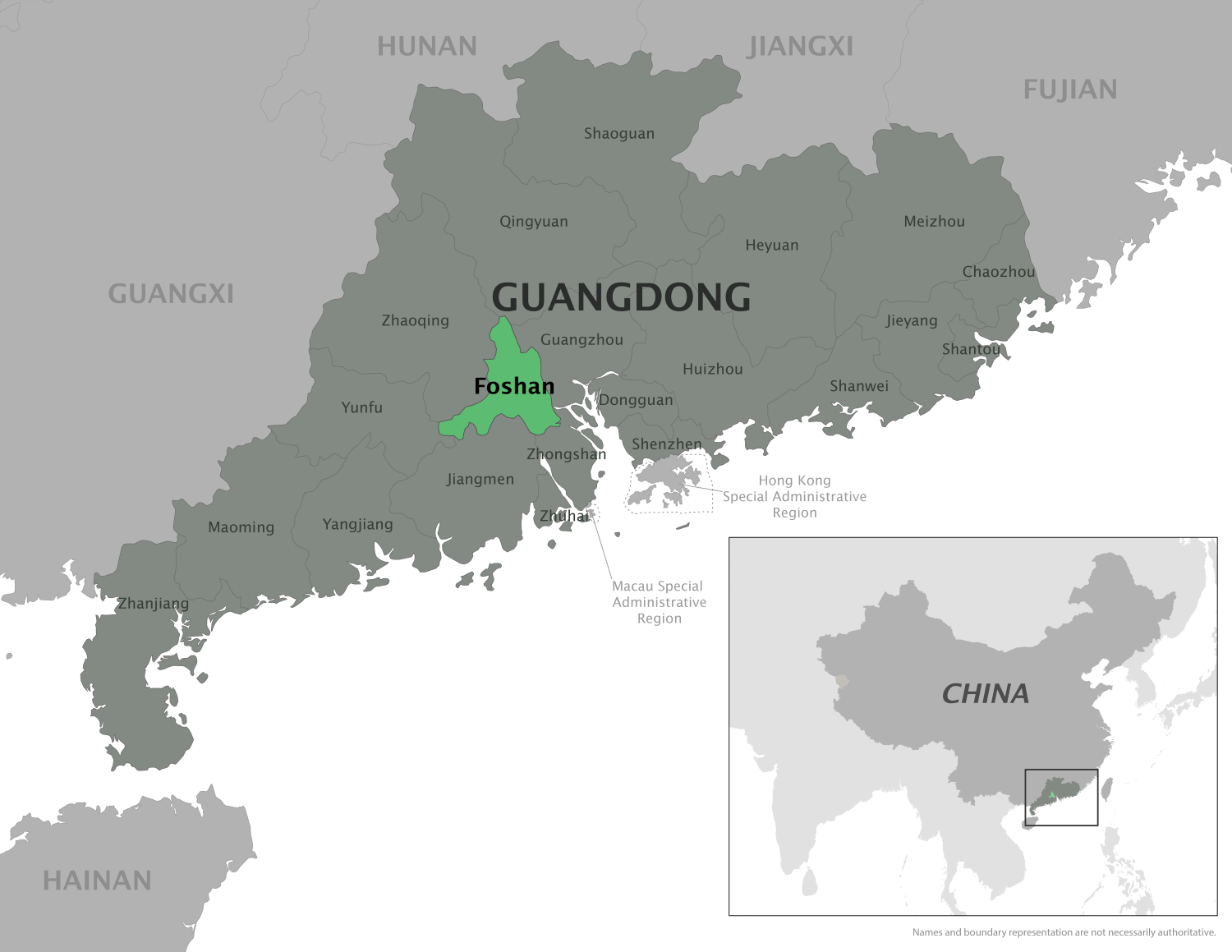
The patient developed fever, rash, and joint pain following a recent travel history to Foshan City, China. He was admitted for treatment, is now in stable condition, and a blood sample tested positive for the CF virus.
As of August 2, 2025, the CHP reminded members of the public to maintain strict environmental hygiene, mosquito control, and personal protective measures both locally and when travelling outside of Hong Kong.
Over the last few years, mosquitoes have spread the virus that causes chikungunya outbreaks in over 100 countries.
To alert international travelers of this global health risk, the U.S. CDC published a Level 2 Travel Health Advisory on August 1, 2025, regarding an outbreak of chikungunya in Guangdong Province, China. Most of the CF cases have been reported in Foshan City.
The CDC and CHP say people can protect themselves by preventing mosquito bites, which includes using insect repellent, wearing long-sleeved shirts and pants, and staying in places with air conditioning or that have screens on the windows and doors.
Additionally, the CDC states that if you are pregnant, you should reconsider travel to the affected areas, particularly if you are close to delivering your baby. Mothers infected around the time of delivery can pass the virus to their baby before or during delivery.
Newborns infected in this way or by a mosquito bite are at risk for severe illness, including poor long-term outcomes, writes the CDC.
Furthermore, vaccination is recommended for travelers who are visiting an area with a chikungunya outbreak. Two chikungunya vaccines are approved for use in the U.S., and are commercailly available at select retailers.
Since the beginning of 2025, five countries in Europe have reported human cases of West Nile Virus (WNV) infection: Bulgaria, France, Greece, Italy, and Romania.
In week #31, the European CDC reported that the highest number of cases, 43, occurred in the Latina province of Italy.
As of July 31, 2025, a total of 89 cases of WNV infection have been confirmed (Bollettino N. 3) in Italy this year, including eight fatalities.
In addition to WNV, other mosquito-borne diseases, Chikungunya and Dengue, have been reported in Italy in 2025.
Before visiting Italy this summer for events such as the Jubilee of Youth, the U.S. CDC recommends speaking with a travel vaccine advisor at least one month before departure about immunization options.

The Jubilee, also known as the Holy Year, has been taking place in Rome, Italy, since December 2024 and will continue until January 6, 2026.
Significant events are planned throughout various months during this period. For example, on June 15, 2025, Pope Leo XIV addressed a large gathering of children, young people, and adults who had come to Rome for the Jubilee of Sport.
According to the UK's Foreign Travel Advice issued on July 30, 2025, Rome is expected to be very busy during the Jubilee of Youth, which will be held from July 28 to August 3, 2025.
If you are planning to travel to Rome during this time, please refer to the Jubilee 2025 - Holy Year information in the Safety and Security section. Check the official Jubilee website or download the Jubilee app for a calendar of events.
The UK advises that before you travel to Italy, check that you have appropriate travel insurance for local treatment or unexpected medical evacuation. This is particularly important if you have a health condition or are pregnant.
Additionally, at least 8 weeks before your trip, consult with a travel advisor about disease protection options for West Nile virus, Dengue, and Chikungunya.
The U.S. CDC states measles is a health risk when visiting Italy in 2025.

The European Centre for Disease Prevention and Control (ECDC) recently highlighted cases of Oropouche virus disease in Europe that are linked to international travel, as noted in their Communicable Disease Threats Report.
As of July 25, 2025, the ECDC has reported that Germany confirmed one imported case of Oropouche virus disease. This case involved a person who had traveled to Dominica between January 24 and February 7, 2025.
France also reported one imported case in an individual who visited Brazil in March 2025.
Additionally, the United Kingdom recorded three imported cases among travelers returning from Brazil during March and April 2025.
Throughout 2024, there were a total of 44 imported cases of Oropouche reported in EU countries, with Spain accounting for the highest number at 23 cases. Most cases had a travel history to Cuba, and one case was linked to Brazil.
The ECDC assesses the risk of infection for EU/EEA citizens traveling to countries in the Americas affected by the Oropouche as moderate.
They state, "The likelihood of human exposure to Oropouche virus in the EU/EEA is considered very low. This is despite the potential for further cases to be imported, as the competent vectors typically found in the Americas are absent from continental Europe.'
'To date, there has been no reported secondary transmission. Therefore, the risk of locally acquired Oropouche virus disease in the EU/EEA is low.'
In the United States, there were 103 cases of Oropouche fever reported in individuals in Florida who had traveled to an endemic area, such as Cuba, in 2024.
As of July 31, 2025, there are no Oropouche vaccines available.

The Independent State of Samoa has temporarily closed schools due to a significant spike in Dengue fever cases in this South Pacific Ocean country.
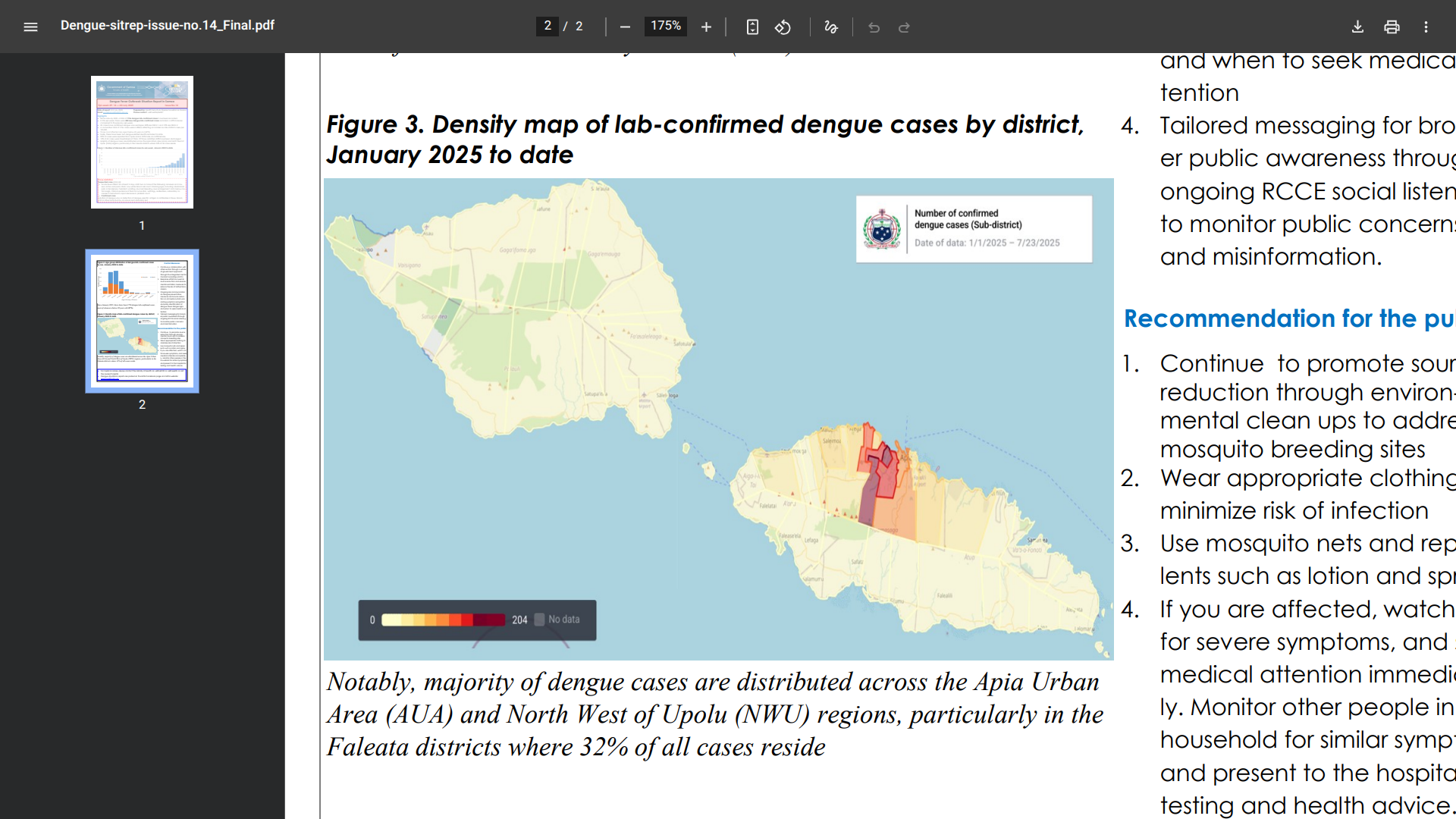
The Government of Samoa, Issue No.14, indicates the most affected areas include Northwest Upolu and the Apia Urban areas, although the mosquito-transmitted virus has spread across the country.
According to a post on Facebook, Caretaker Prime Minister Tuala Tevaga Ponifasio announced that schools will reopen following a thorough fumigation process.
In the statement, he said, "The closure of all schools nationwide will last one week, from July 28 to August 1, 2025, while school fumigation programs are carried out."
From January to July 20, 2025, Samoa recorded 1,756 laboratory-confirmed cases of Dengue, with hospital reports indicating an average of over 100 new cases each week.
The Ministry of Health has confirmed the presence of two of Dengue's four serotypes circulating in the country: DENV-1 and DENV-2.
Samoa, with about 200,000 residents and a featured vacation destination, is located west of American Samoa, which is also confronting a Dengue outbreak in 2025.
To alert all international travelers of this active health risk, the U.S. CDC updated its Dengue Travel Health Advisory in 2025. While Dengue vaccines have been approved, access is currently limited by country.
With the 2025-2026 Influenza and Respiratory Syncytial Virus seasons launching in the United States, a debated innovation recently recieved positive data on how it can passively reduce respiratory diseases.
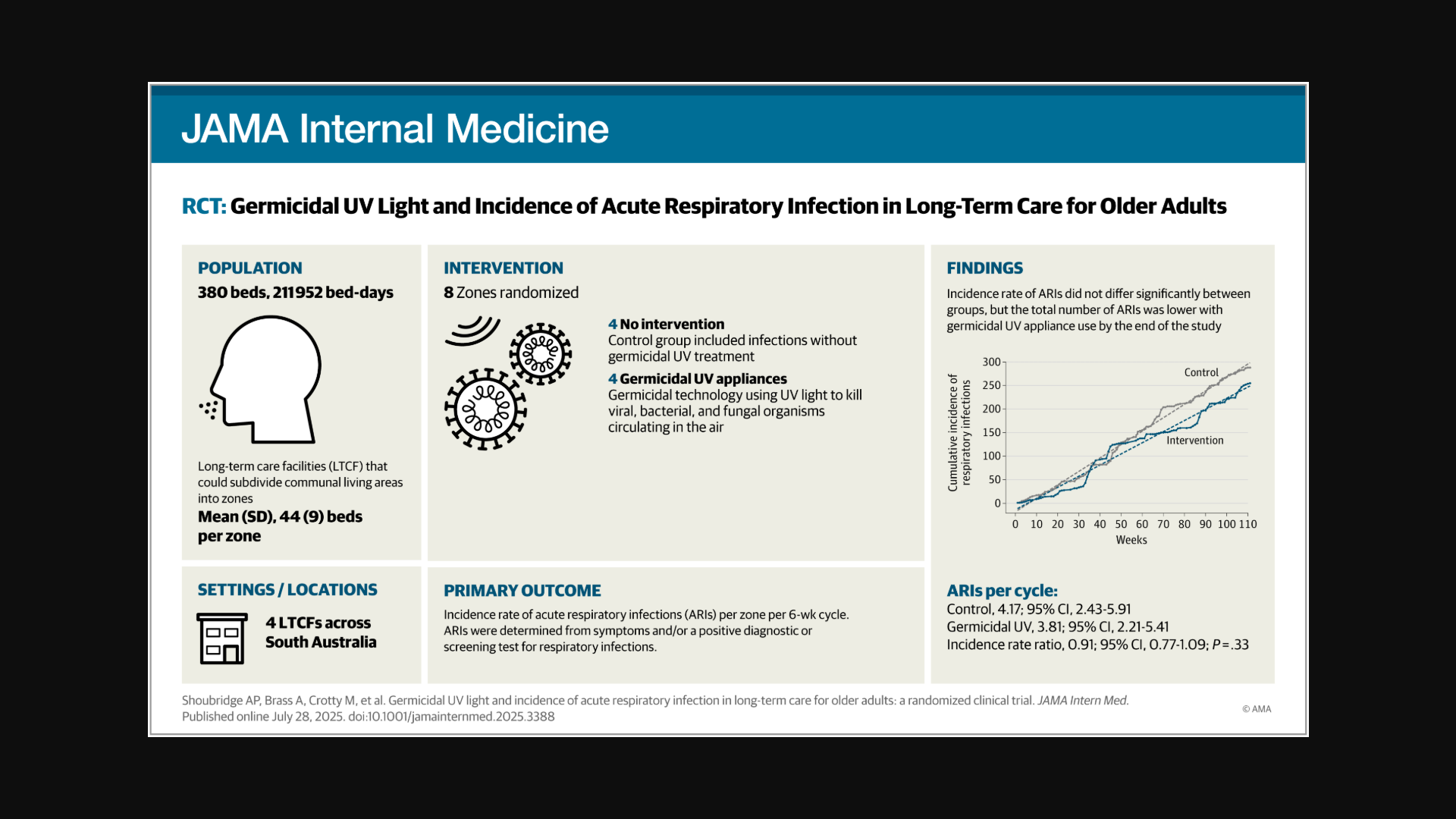
The new study published in JAMA Internal Medicine trialled commercially available germicidal ultraviolet (GUV) appliances in senior care facilities, finding they reduced rates of viral respiratory infections by about 12.2%.
GUV appliances, which purify the air with UV-C light rays and deactivate harmful micro-organisms like viruses and bacteria.
“Some of the key advantages of germicidal ultraviolet air-treatment appliances are that they are easily installed into existing facilities and cost-effective to use,” says lead author Dr Andrew Shoubridge from Flinders University and SAHMRI’s Microbiome and Host Health Programme, in a press release on July 28, 2025.
“When used in conjunction with existing infection control measures, they could be transformative in reducing rates of seasonal respiratory viral infections and protecting residential aged care facilities against emerging pathogens.”
This randomized clinical trial tested commercially available LAF Technologies GUV appliances that are already used in a wide range of clinical and commercial settings, including hospitals.
The appliances can be mounted to ceilings or walls, fitted into ventilated AC systems, are harmless to people, and have already proven to reduce levels of airborne pathogens in laboratory and hospital settings.
Senior author of the study, Professor Geraint Rogers, conceived this world-first trial and the transformative adaptation of this technology to reduce respiratory viral outbreaks in vulnerable older Australians.
“Our study aimed to explore new ways in which to protect aged care residents from harmful outbreaks of viruses, without disrupting their day-to-day activities.
“Based on our findings, it’s difficult to see why you wouldn’t install these appliances in aged care facilities.”