Search API

As the 2025 Daytona 500 NASCAR Cup Series starts-off today at Daytona International Speedway, over 150,000 people will be in attendance, many arriving by air.
The U.S. Transportation Security Administration (TSA) expects heavy travel volume from Daytona Beach International Airport (DAB) after the 500-mile race. The average daily passenger volume at DAB, around 1,000 passengers per day, will grow to an expected 2,200 on February 17, 2025.
"Planning is critical when traveling home after large events like this," said Brian Cahill, TSA Federal Security Director for DAB, in a press release. "Arriving at the airport with extra time and knowing what can and can't be packed in carry-on and checked bags will save you time and help keep things moving at checkpoints."
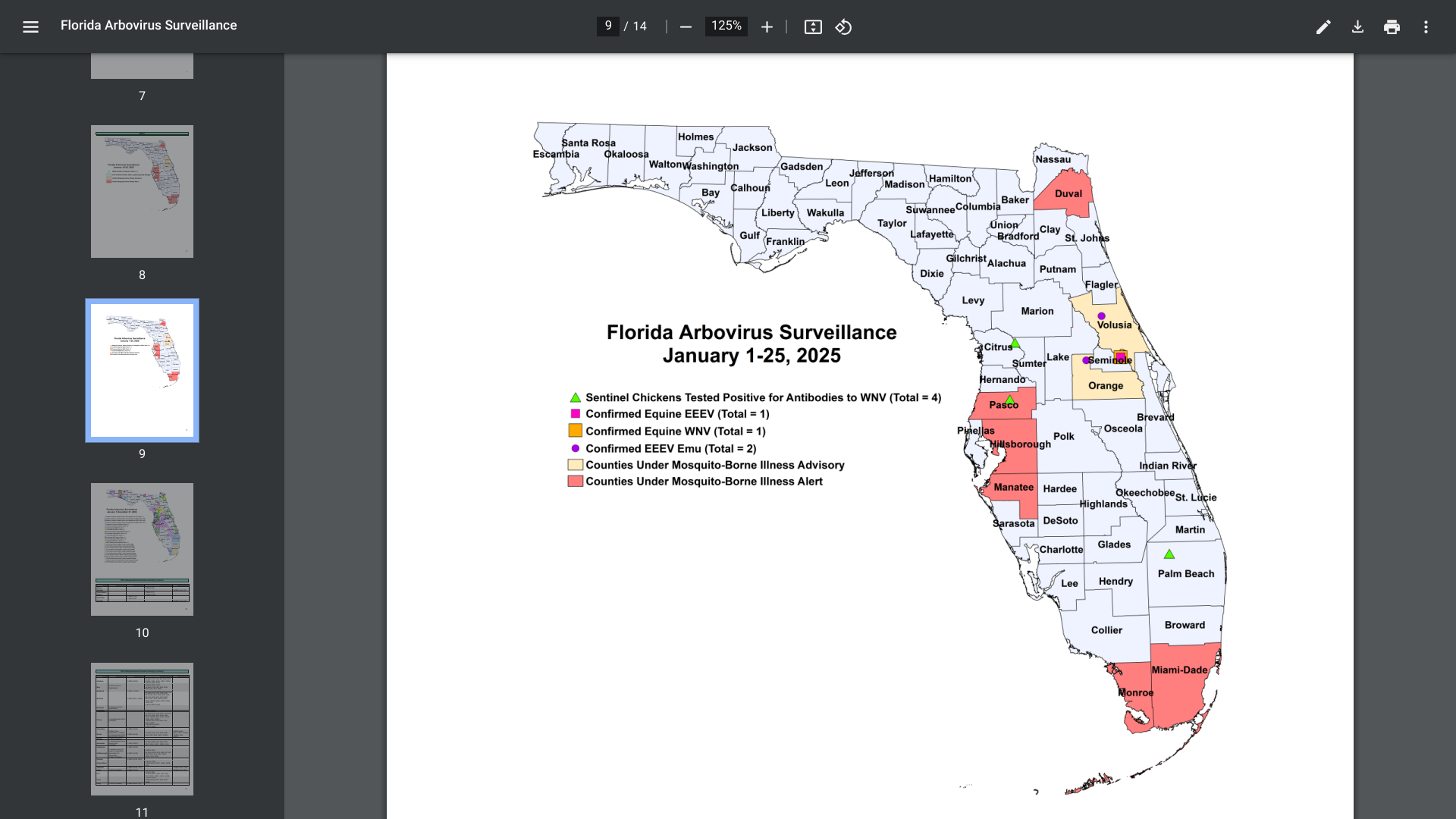
The good news for these travelers is that no health alerts have been issued for this area of central Florida.
The Volusia County Health Department has not issued any disease advisories this year.
However, travel-related and local diseases such as chikungunya, dengue, malaria, and Oropouche may impact race fans arriving from Miami-Dade County, located about 250 miles south along the east coast. Over the past few years, Florida's southeast coast has been a hot spot for mosquito-transmitted diseases.
As of February 2025, the U.S. CDC recommends two disease-prevention options: avoid mosquito bites and speak with a travel vaccine expert about U.S. FDA-approved immunization options. The CDC has issued Travel Health Advisories for numerous countries, but no alerts have been issued for the greater Miami area.

Cuba's Oropouche fever outbreak set new records in 2024 and started in 2025, heading to new highs.
On January 30, 2025, the PAHO reported Dr. José Raúl de Armas, head of the Department of Communicable Diseases at MINSAP, provided an update on the epidemiological situation in the country, which has reached 100% of Cuba's provinces.
To date, there have been 23,639 suspected cases and 626 confirmed cases. Among the latter were 76 patients with Guillain-Barré Syndrome, 25 with encephalitis, and 15 with meningoencephalitis.
Florida, Cuba's western neighbor, confirmed 103 travel-associated Oropouche fever cases in 2024.
According to the U.S. Centers for Disease Control and Prevention (CDC), the Oropouche virus is spread primarily through the bites of infected small flies and mosquitoes. Symptoms typically start 3–10 days after being bitten and last 3–6 days. Most people recover without long-term effects. There is no specific treatment for Oropouche.
To alert international travelers of this health risk, the CDC issued Travel Health Advisories for various countries in the Region of the Americas. Furthermore, the CDC confirmed there are no Oropouche vaccines available in 2025.
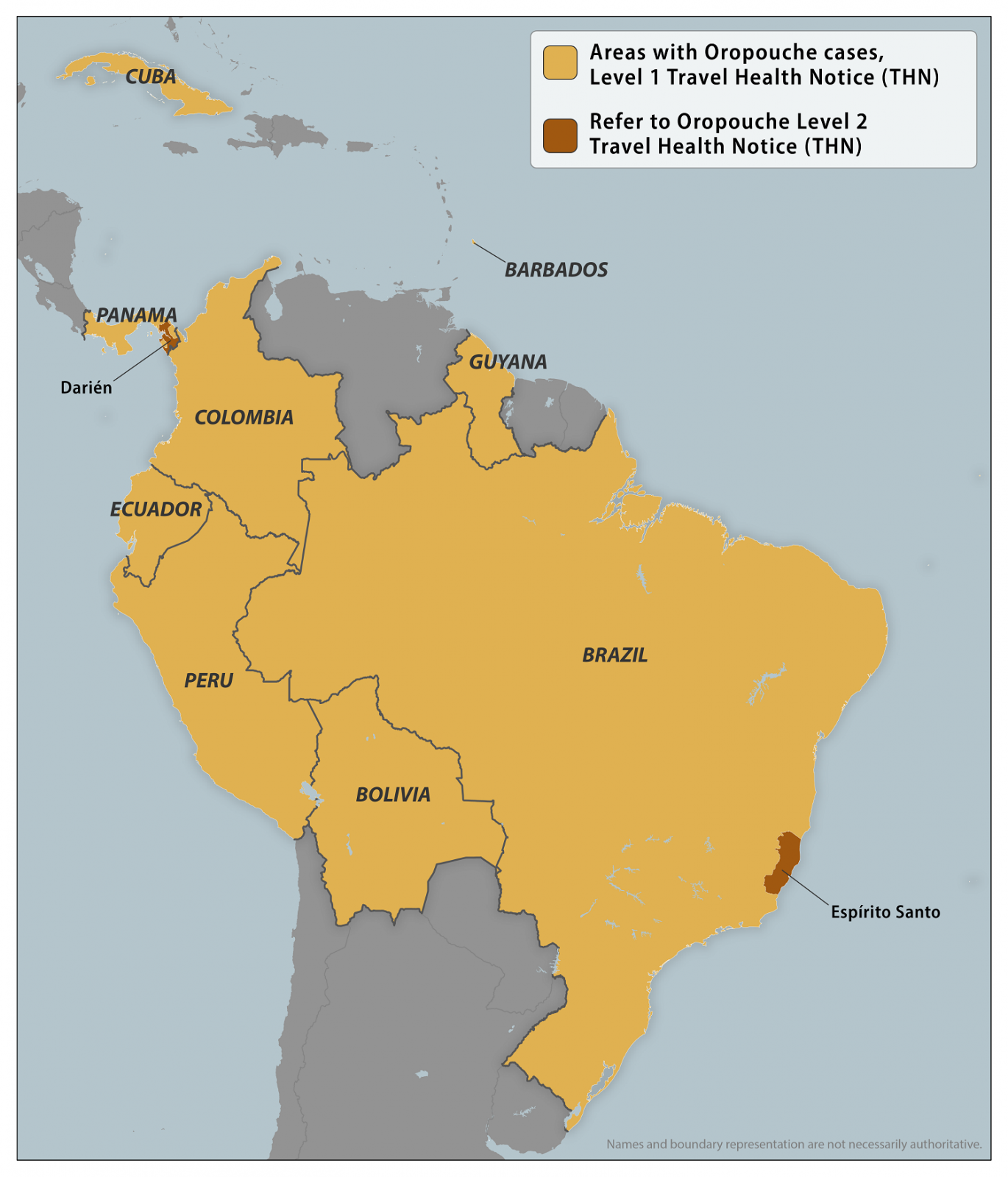
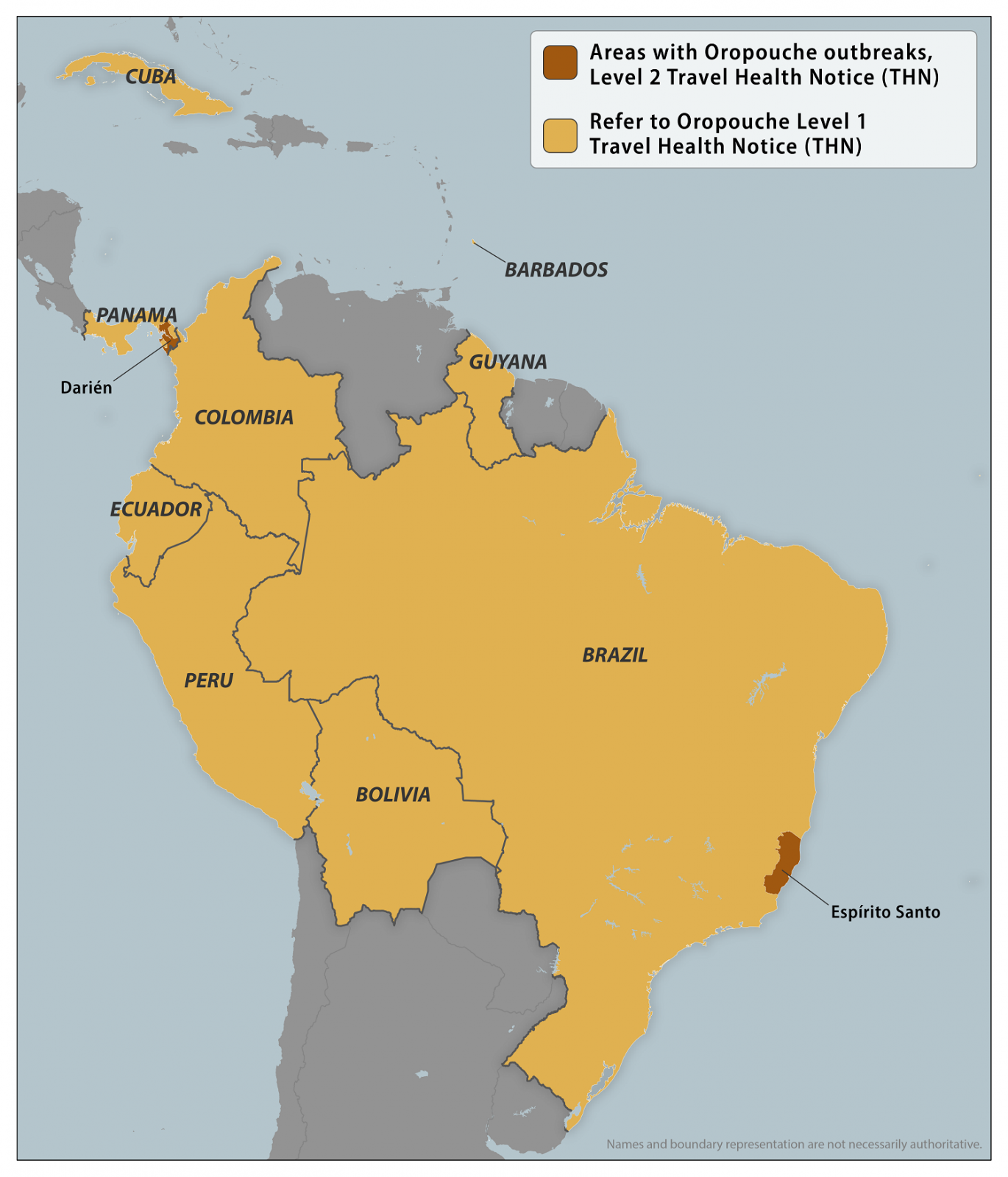
During the summer of 2024, the Pan American Health Organization (PAHO) issued several alerts that revealed a spike in Oropouche disease cases, including fatalities, in the Region of the Americas.
As of January 31, 2025, the U.S. CDC confirmed recent outbreaks of Oropouche in Espírito Santo, Brazil, and Darién Province, Panama. To notify travelers of this health risk, the CDC issued a Level 2 Travel Health Notice.
It says all travelers to these areas should prevent bug bites during travel to protect themselves from infection. They should also prevent bug bites for 3 weeks after travel to avoid possibly spreading the virus to others if they are in areas where mosquitoes and biting midges are active.
Furthermore, healthcare providers should inform women who are pregnant and considering travel to areas with reported Oropouche virus transmission of the possible risks to the fetus. If a pregnant woman decides to travel, counsel her to prevent bug bites.
This new Travel Health Notice follows a Level 1 alert issued in 2024.
The CDC says there is no evidence of Oropouche virus transmission in the United States, but various states (Florida) have reported cases detected in international travelers.
In 2024, 108 neuroinvasive and non-neuroinvasive Oropouche cases were reported in six U.S. jurisdictions. The CDC also says that the extent to which the Oropouche virus could spread in Puerto Rico and the U.S. Virgin Islands is unknown.
From a prevention perspective, since no approved vaccines are available in February 2025, avoiding bug bites is a person's best option.
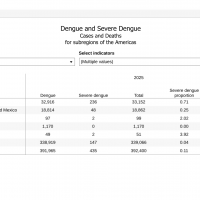
Takeda today announced earnings results for the third quarter of fiscal year 2024 (nine months ending December 31, 2024), showing continued advancement and demand for its dengue virus vaccine, Qdenga®.
The Company reported Qdenga's FY2024 H1 revenue was JPY 19.9B, reflecting 863% growth.
As of January 30, 2025, Qdenga is available in 27 countries, including 19 European countries, with travel recommendations to support using Qdenga to help protect travelers to dengue endemic areas.
For example, over the past year, dengue outbreaks have set new records in countries throughout the Region of the Americas.
In 2024, cities in the United States reported local dengue infections, including Los Angeles, California, and Miami, Florida.
Previously, the World Health Organization added Qdenga to its List of Prequalified Vaccines, which should expand the number of countries offering this second-generation dengue vaccine.
Unfortunately, Qdenga is not available in the United States.
On July 11, 2023, Takeda voluntarily withdrew the Biologics License Application following discussions with the U.S. Food and Drug Administration. As of 2025, there has been no indication approval discussions were pending.
Note: This VBT news article was update don January 5, 2025, to include current country authorizations.

As vacationers plan their winter 2025 holiday trip to Florida's beautiful beaches to enjoy the warm weather, taking steps to prevent mosquito bites remains essential. In Florida, 14 species of Anopheles mosquitoes have been found to transmit diseases to humans.
As of early January 2025, mosquito-borne diseases, such as dengue fever, have been reported again in Florida.
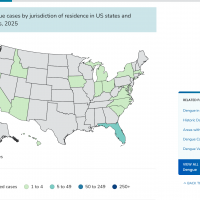
The Florida Department of Health (FDH) updated its Vaccine-Preventable Diseases Surveillance Report on January 25, 2025, confirming twenty-two cases of dengue were reported among persons who had international travel, and one locally acquired dengue case was reported.
Last year, 999 travel-associated dengue cases were reported, mainly among Brazil, Cuba (567), and Puerto Rico visitors.
Furthermore, 91 locally acquired dengue cases were reported from ten counties in 2024, led by Miami-Dade (50).
While dengue preventive vaccines remain unavailable in the United States, FDH and the U.S. CDC encourage all visitors to dengue-endemic areas to avoid mosquito bites. This CDC advice is particularly relevant for pregnant women, as the dengue virus has been detected in unborn infants.
The Florida Health Department recently confirmed a record number of Vibrio vulnificus (V. vibrio) cases and deaths in 2024. While infections are rare, this increase was related to hurricanes in the year's second half.
As of January 3, 2025, Florida reported 83 V. vibrio cases and 18 deaths last year. Pinellas County (Tampa Bay) led all counties with 15 cases and three deaths.
In 2023, there were 46 cases and 11 related deaths.
About 80,000 cases of vibriosis happen each year in the United States.
Vibrio is a naturally occurring bacterium in warm seawater. Brackish water is a mixture of salt and fresh water often found where rivers meet the ocean. People can get vibriosis after swallowing Vibrio or getting it in a wound.
Florida and the U.S. CDC recommend not to enter the salt water if you have fresh cuts or scrapes.
Furthermore, there are no protective V. vibrio vaccines available in 2025.
However, various travel vaccines are available to protect people when visiting Florida.