Florida Reports Additional Zika Case, Now Total 187


The Florida Department of Health announced a locally transmitted case of Zika has been confirmed in Manatee County.
According to Centers for Disease Control and Preventon (CDC) guidance, this isolated case does not constitute a Zika zone.
The total number of Zika cases reported in Florida during 2017 is 187.
Based on the details revealed through a thorough investigation, evidence suggests one partner acquired Zika while in Cuba, was bitten by a mosquito in or around their Florida home, and that mosquito then bit and transmitted Zika to the other partner.
A test conducted this week showed evidence of a past Zika infection linking that infection to the partner who was recently symptomatic and tested positive.
According to established CDC protocol, the Florida Department of Health (FDH) reminds residents and healthcare providers to consider a Zika test if symptoms are consistent with the virus.
During July 2017, the CDC updated its recommendations for pregnant women with Zika symptoms and pregnant women at risk for Zika without symptoms to be tested three times during pregnancy, rather than two times.
This change focuses on one of the most frequently used Zika tests which detects immunoglobulin M (IgM) antibodies and is more likely to yield a false positive test result.
Recent studies reported that Zika IgM antibodies might be detected for months after infection, limiting the ability to tell if the infection occurred before or during pregnancy.
In Florida, all county health departments offer free Zika risk assessment and testing to pregnant women.
It is important to remember Zika can also be transmitted sexually and to take precautions if you or your partner has traveled to an area where Zika is active. Zika can persist in semen over extended periods of time.
It is critical for people who recently traveled overseas to an area with Zika to prevent mosquito bites for at least three weeks after they return home.
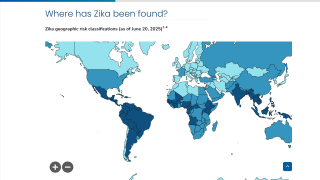
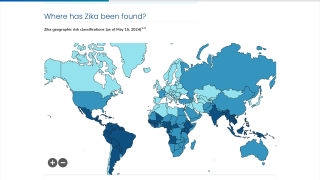
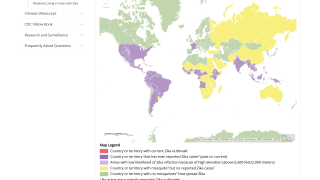
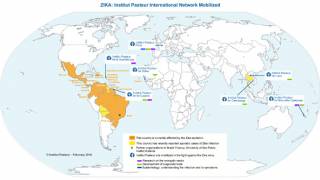
Before you travel, check to see if your destination is on the CDC list of areas with Zika.
Our Trust Standards: Medical Advisory Committee
-
Fact checked by Robert Carlson, MD
-

Fact checked by Danielle Reiter, RN