cAD3-Marburg Vaccine
The cAD3-Marburg vaccine candidate is being developed by the National Institute of Allergy and Infectious Diseases (NIAID), part of the U.S. National Institutes of Health (NIH). This vaccine uses a modified chimpanzee adenovirus, cAD3. cAD3 is not replicable and cannot infect cells. Instead, it displays a glycoprotein on the surface of the Marburg Virus (MARV) to induce immune responses against the virus.
The peer-reviewed journal The Lancet published a study on January 28, 2023, that concluded that the first-in-human clinical trial of the cAd3-Marburg vaccine showed the agent is safe and immunogenic, with a safety profile similar to that of previously tested cAd3-vectored filovirus vaccines. In addition, 95% of participants produced a glycoprotein-specific antibody response four weeks after a single vaccination, and 70% remained at 48 weeks. RV 507 was a Phase I, open-label study that conducted dose escalation of VRC-MARADC087-00-VP, a cAd3 vector vaccine encoding the wild-type glycoprotein from Marburgvirus. It has demonstrated rapid immunity within one week in non-human primates and safety and immunogenicity in humans in Phase 1 trials.
The NIAID plans to conduct further trials of the cAd3-Marburg vaccine in Ghana, Kenya, Uganda, and the United States. An Albert B. Sabin Vaccine Institute-sponsored Phase 2, Randomized, Double-blind, Placebo-Controlled Trial to Evaluate Safety, Tolerability, and Immune Responses of an Investigational Monovalent Chimpanzee Adenoviral-Vectored Marburg Virus Vaccine in Healthy Adults. The candidate is currently in Phase 2 trials in Uganda and Kenya, and no safety concerns have been reported. In September 2024, Sabin launched a clinical trial in the Republic of Rwanda. As of October 31, 2024, Sabin's Marburg vaccine has not demonstrated clinical benefit for vaccine recipients.
In early December 2025, Sabin sent more than 640 doses of cAd3-Marburg to Ethiopia to support the country's response to its first-ever outbreak of Marburg virus disease.
The Maryland-based NIAID conducts and supports research at the NIH, throughout the United States, and worldwide to study the causes of infectious and immune-mediated diseases and develop better means of preventing, diagnosing, and treating them. Other NIAID-related materials are available on the NIAID website.
cAD3-Marburg Indication
Marburg virus is in the same family as Ebola, causing a rapidly progressive febrile illness that leads to shock and death in many infected individuals. Human outbreaks begin when the virus jumps from the animal host to the human. In sub-Saharan Africa, bats are most likely the primary source of human infection. MARV symptoms are similar to those of Ebola, including fever, headache, chills, rash, abdominal pain, vomiting, and diarrhea. As the disease progresses, patients suffer from multiple organ dysfunction, delirium, and significant bleeding from the gastrointestinal tract or other sites that may result in death.
Marburg Vaccine Candidates
Marburg disease protective vaccine candidates are in clinical development, but none have been FDA-approved in the U.S.
cAD3-Marburg News
December 4, 2025 - Sabin Vaccine Institute's Investigational Marburg Vaccine Delivered to Ethiopia for Outbreak Response.
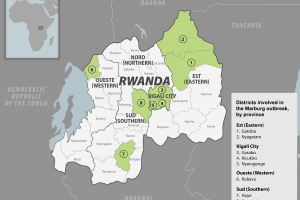
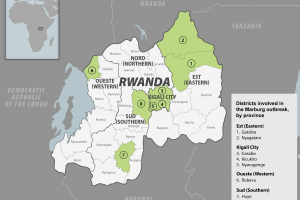
October 31, 2024 - Over 1,700 vaccines have already been delivered to Rwanda, with the first shipment of doses arriving just nine days after the outbreak was declared on September 27. The initial part of the trial focused mainly on health workers, a group that suffered the most casualties in this outbreak.
March 22, 2023 - Since the first WHO Disease Outbreak News published on February 25, 2023, eight additional laboratory-confirmed cases of MVD have been reported in Equatorial Guinea.
February 15, 2023 - A news article was published by the journal Nature: Marburg virus outbreak: researchers race to test vaccines.
January 28, 2023 - Marburg vaccine shows promising results in a first-in-human NIH-funded clinical study. The RV 507 trial of this cAd3-Marburg vaccine showed the agent is safe and immunogenic, with a safety profile similar to previously tested cAd3-vectored filovirus vaccines. In addition, 95% of participants produced a glycoprotein-specific antibody response four weeks after a single vaccination, and 70% remained at 48 weeks.
October 13, 2022 - An introduction to the Marburg virus vaccine consortium, MARVAC.
cAD3-Marburg Clinical Trial 2023
Phase 1 clinical trial enrolled 40 healthy adult volunteers. They received a single dose of either a low dose of the vaccine (1x10^10 particle units) or a higher dose (1x10^11 particle units). For safety, the volunteers were enrolled in a dose-escalation plan. Three participants received the lower dose. After no severe adverse reactions were observed after seven days, the trial enrolled the remaining 17 volunteers. The same procedure was also used for the higher-dose group. Volunteers were monitored for adverse reactions to the investigational vaccine and evaluated at regular intervals for 48 weeks to track their immune responses.
This is a multicenter, double-blinded, placebo-controlled, Phase II study to evaluate the safety, tolerability, and immunogenicity of a single dose of the cAd3-Marburg vaccine in healthy adults up to 70 years of age in Uganda and Kenya. The study will enroll 125 eligible participants, randomized 4:1 to receive the cAd3-Marburg vaccine at a dose of 1.0 × 10^11 PU intramuscularly in the deltoid muscle on Day 1, or placebo (0.9% sodium chloride (NaCl) solution). Participants will be screened for eligibility up to 28 days before enrollment. Enrollment will be staggered, starting with healthy adults 18 to 50 (inclusive). Upon enrollment of a minimum of 25 younger adult participants (sentinel), the safety data will be reviewed by the independent DSMB up to 7 days post-vaccination of these 25 sentinel participants. Progression to enrollment of the older adults (>50 to 70 years of age) will be dependent on the unblinded review of the Data Safety Monitoring Board (DSMB). Safety and immunogenicity will be assessed on Days 1, 8, 15, 29, 85, and 169 and conclude at the end of the study visit on Day 366.