Herpes Treatments
-

Fact checked by Robert Carlson, MD
Herpes Treatments February 2026
The U.S. Centers for Disease Control and Prevention (CDC) states that as of 2026, there is no cure for the herpes simplex virus (HSV). However, the use of antiviral medication shortens the duration of herpes outbreaks. To advance research on understanding and addressing HSV infection, the U.S. NIH has established the Strategic Plan for Herpes Simplex Virus Research (2023-2028). This plan aligns with ongoing national efforts, including the National Strategic Plan for Sexually Transmitted Infections. The CDC's STI Surveillance and Data Science Branch estimated that the cost per neonatal herpes patient is about $100,000.
According to Technavio, there were about 15 vendors in the herpes treatment market.
Acyclovir is U.S. FDA-approved to decrease pain and speed the healing of sores or blisters in people with varicella, herpes zoster, and first-time or repeat genital herpes outbreaks. Acyclovir is also sometimes used to prevent outbreaks of genital herpes in people who are infected with HSV. Acyclovir belongs to a class of antiviral medications known as synthetic nucleoside analogs. However, Acyclovir (valacyclovir 500 mg) will not cure genital herpes and may not stop the spread of genital herpes to other people. The Acyclovir product segment reported a significant retail pharmacy market share (50.44%).
Zydus Cadila commercializes Acyclovir Ointment USP (US RLD Zovirax), 5%. This medication treats the first onset of genital herpes. Those with weakened immune systems can also use it to treat non-life-threatening herpes infections of the lips and skin.
Aurobindo Pharma Ltd. offers Valtrex® Tablets with 5 in base, for adults. However, it does not cure HSV.
Cipla Ltd. offers antiviral medicines for various viral infections, including herpes labialis, herpes simplex, shingles, and genital herpes, under the brand names ACIVIR 200 DT and ACIVIR 400 DT tablets.
Herpes Treatment Candidates 2026
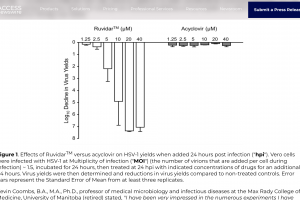
Ruvidar has been shown to effectively deactivate various viruses. The research was conducted at Kevin Coombs's Ph.D. laboratory at the University of Manitoba in conjunction with the National Microbiology Laboratory and Theralase® Technologies Inc. In animal studies, it may be more effective than Acyclovir.
AiCuris's Pritelivir (AIC316) is a potent inhibitor of HSV replication that belongs to a new chemical class and acts via a novel mechanism of action. In contrast to currently used nucleoside analogues, Pritelivir does not require activation by viral enzymes and can thus protect uninfected cells. On October 16, 2025, Pritelivir demonstrated clinically meaningful and highly statistically significant superiority (p=0.0047) in lesion healing at 28 days of treatment, compared with standard-of-care therapies, in refractory HSV-infected immunocompromised patients.
On March 1, 2023, a clinical study suggested Pritelivir was safe and well-tolerated, up to 600 mg following single and up to 200 mg following multiple once-daily doses. At a therapeutic dose of 100 mg once daily, pritelivir demonstrated a favorable safety, tolerability, and pharmacokinetic profile in healthy subjects, supporting further development. However, Pritelivir does not cure herpes.
Assembly Biosciences, Inc. announced the selection of development candidate ABI-5366 (5366) to progress to IND-enabling studies for its long-acting HSV-2 helicase inhibitor program.
Laboratoire Boreaderme Inc. and Ecogene 21 announced in September 2020 that they are conducting a Phase 2 clinical study to evaluate the safety profile of BOR15001L7 compared with 10% docosanol for managing cold sores in patients with recurrent herpes labialis.
A study published in May 2023 found that a molecule can effectively treat the lesions accompanying shingles and suggests the molecule may also work against the viruses that cause oral and genital herpes.
Herpes Encephalitis in Patients With Autoimmune Conditions or Immunomodulatory Medications
An extensive population study published on May 2, 2024, found that herpesvirus encephalitis is strongly associated with preexisting autoimmune disease and exposure to immunosuppressive and immunomodulatory medications. To date, the role of antecedent immune-related dysregulation may have been underestimated.
Mothers' Antibodies Against HSV-1
A study published in the journal mBio® in 2017, led by Dartmouth Researchers at Geisel, sheds new light on the critical role of maternal antibodies in protecting the neonatal nervous system against infections. This study shows that antibody-secreting cells entered the trigeminal ganglion (TG), a key site of HSV infection, and persisted long after establishing latent infection. We also demonstrate the ability of passively administered IgG to enter the TG independently of infection, showing that the naive TG is accessible to antibodies.
Herpes Tests
The WHO announced in July 2023 that a new report on the Diagnostics Landscape for Sexually Transmitted Infections highlights diagnostics available to support the scale-up of STI screening, including herpes. The U.S. Preventive Services Task Force published in February 2023 recommendations on screening for genital herpes infection in asymptomatic adults and adolescents, including pregnant individuals. Mylab Discovery Solutions in India launched the PathoDetect™ HSV Type 1& 2 Detection kit, a multiplex real-time PCR test that detects and differentiates HSV-1 and HSV-2 in a single tube. And: andorp Herpes Simplex Virus Types 1/2, DNA PCR.
Herpes Overview
Genital herpes is caused by herpes simplex virus type 1 (oral) and type 2, a common sexually transmitted disease (STD) associated with substantial health losses. To advance research to understand and address HSV infection, the U.S. National Institutes of Health (NIH) established the Strategic Plan for Herpes Simplex Virus Research 2023-2030 in September 2023. This plan aligns with ongoing national efforts, including the Sexually Transmitted Infections (STIs) National Strategic Plan. A study published in 2023 estimated that 0.05 lifetime quality-adjusted life years are lost per incident infection, equivalent to losing 0.05 years, or about 18 days, of life for a person in perfect health.
A study published in October 2023 found that higher serologic titers of herpes simplex virus 2 were associated with reduced whole-brain cortical thickness, and that a combined score of HSV-2 and C. pneumoniae had an additive effect on reduced cortical thickness. These findings suggest HSV-2 seropositivity may contribute to accelerated brain aging, possibly resulting in an increased vulnerability to cognitive impairment and neurodegenerative disease in aging populations.
Herpes Vaccines
As of 2026, the U.S. FDA has not approved a herpes vaccine candidate.