Lunar New Year Alerts Include Avian Influenza Risk
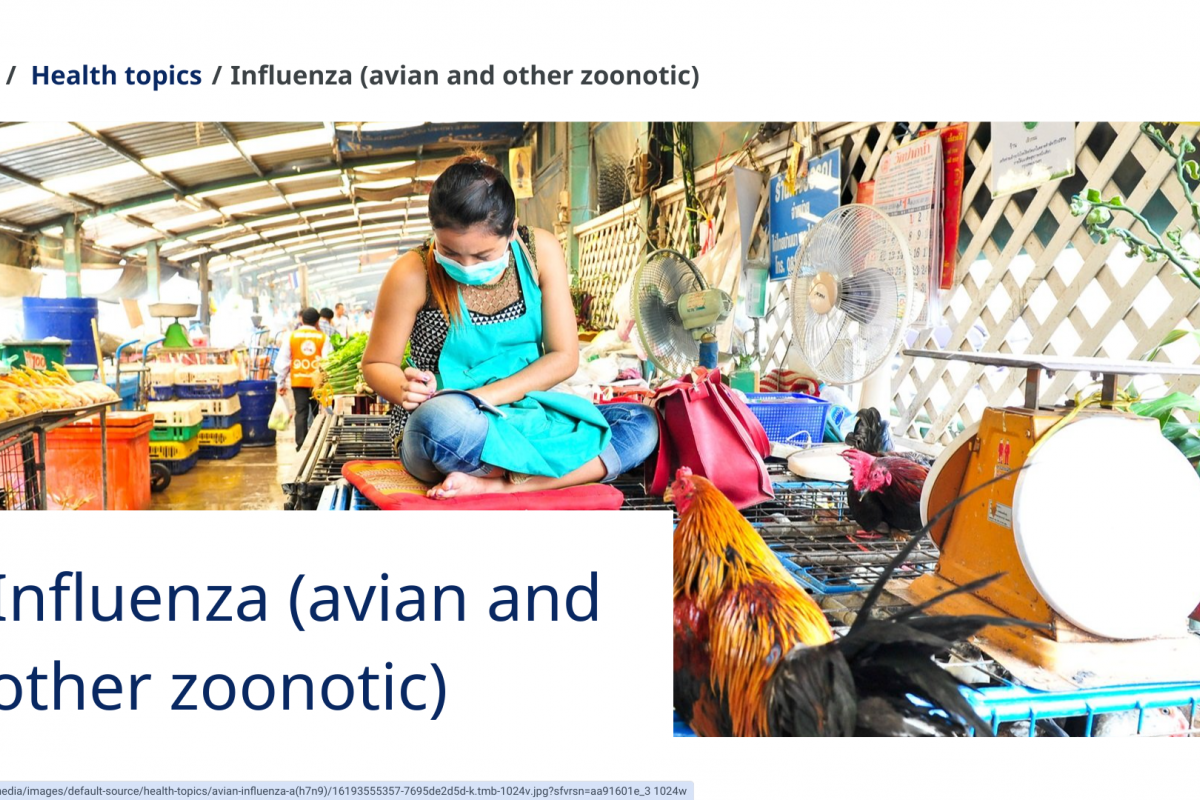
As Lunar New Year festivities take place worldwide, there have been reports of avian influenza outbreaks in Asia and sporadic cases of human infections.
In light of this health risk, the World Health Organization (WHO) issued an updated Disease Outbreak News (DONs) on February 13, 2024, with prevention advice titled "Avian Influenza and Lunar New Year Festivities: Vigilance and Precautions" in February 2024.
During February 2024, WHO avian influenza alerts were issued for:
- Influenza A (H1N1) variant virus - Brazil, 7 February 2024
- Avian Influenza A (H5N1) - Cambodia, 8 February 2024
- Influenza A(H1N1) variant virus - Spain, 9 February 2024
- Avian Influenza A(H10N5) and Influenza A(H3N2) coinfection - China, 13 February
The WHO says vigilance remains crucial, although most human infections have been sporadic following contact with infected poultry and/or their environments, with no evidence of sustained human-to-human transmission.
Birds are the natural hosts for avian influenza viruses.
After an A(H5N1) virus outbreak in 1997 in poultry in Hong Kong SAR, China, since 2003, this avian and other influenza viruses have spread from Asia to Europe and Africa. I
Beginning in 2013, human infections with the influenza A(H7N9) virus were reported in China.
WHO DONs provide information on confirmed acute public health events or potential events of concern. For more details, please refer to the WHO Influenza (avian and other zoonotic) factsheet.
As of 2024, the U.S. government has invested tens of millions in vaccines protecting people from certain avian influenza viruses. Furthermore, the U.S. says annual flu shots are unlikely to protect people during avian influenza (bird flu) outbreaks.
Our Trust Standards: Medical Advisory Committee