1st RSV Monoclonal Antibody for Infants Remains Available
In a Lancet Respiratory Medicine news article published on November 6, 2023, Sean O'Leary, MD, chair of the American Academy of Pediatrics (AAP)'s Committee on Infectious Diseases, stated the nationwide shortage of Beyfortus™ (Nirsevimab-alip), a newly approved respiratory syncytial virus (RSV) monoclonal antibody, could have been predicted.
"I would've predicted pretty high demand. I think probably too much was made of vaccine hesitancy and refusal..." wrote Dr. OLeary.
Sanofi, the producer of Beyfortus, stated on October 26, 2023, 'Despite an aggressive supply plan built to outperform past pediatric immunization launches, demand for this product, especially for the 100 mg doses used primarily for babies born before the RSV season, has been higher than anticipated.'
Sanofi collaborates closely with the U.S. Centers for Disease Control and Prevention (CDC) to ensure equitable distribution of available doses through the Vaccines for Children Program.
The CDC recently issued an advisory with recommendations for clinicians to prioritize 100-milligram doses for infants younger than six months and those with underlying medical conditions that predispose them to severe RSV.
Beyfortus is the second monoclonal antibody developed to prevent RSV in young children.
The AAP has recommended Arexis AB's palivizumab (Synagis) for high-risk infants and young children during an active RSV season.
Synagis was approved for initial use in the U.S. by the FDA in 1998. It is not an RSV vaccine but can help passively protect children with monthly dosing.
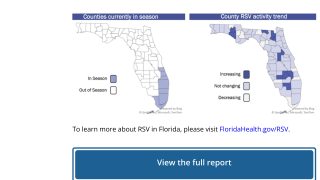
As of November 7, 2023, the RSV season began in Florida and has spread throughout the United States, impacting certain areas.
Our Trust Standards: Medical Advisory Committee