Michigan Worries More About West Nile, Than Zika


Aedes albopictus mosquitoes have been found in Wayne County, Michigan. This is the first confirmation during 2017 from the Michigan Department of Health and Human Services (MDHHS) and Wayne County Department of Health.
While the Aedes albopictus species, more commonly known as the Asian tiger mosquito, is capable of spreading the Zika virus, health officials emphasized there is no evidence of Zika virus-infected mosquitoes in Michigan.
“Finding Asian tiger mosquitoes in Michigan is no reason for great concern. Many of our neighboring states have found them previously, and have not seen Zika transmission from this species,” said Dr. Eden Wells, chief medical executive of MDHHS.
“However, it is always a good idea to take precautions against mosquito bites, since mosquitoes can carry other diseases such as West Nile virus,” said Dr. Wells.
This type of mosquito has been extending its known range and was recently identified in Nebraska, Connecticut, Indiana, Ohio, Minnesota and Wisconsin.
All of the reported Zika cases in Michigan have been travel related.
While the Zika virus is primarily transmitted through the bite of an infected mosquito, Zika can be spread during sex without a condom.
"While we understand the current focus on Zika virus, for many people in the United States today, West Nile virus (WNV) is the much more serious mosquito-borne threat and that threat may persist even for patients who appear to have survived the infection unscathed," said Kristy O. Murray, DVM, PhD, of Baylor College of Medicine, who is the principal author of a recent WNV study.
The first West Nile virus activity for Michigan during 2017 was reported in May.
During 2016, there were 43 serious illnesses and three deaths related to West Nile virus in Michigan. Nationally, there were 2,038 human cases of the virus and 94 deaths reported to the Centers for Disease Control and Prevention (CDC).
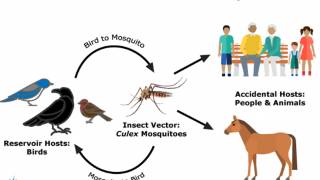
Birds are the natural animal reservoir for the West Nile virus and carry it in their blood. Mosquitoes become infected when they bite an infected bird.
Most birds show no symptoms of infection, but certain bird species, such as crows, blue jays and ravens, are more likely to become sick and die when they become infected with the virus.
"As with many wildlife diseases, vigilant observation and reporting from the public are critical in helping health and wildlife experts better understand and contain the transmission of West Nile Virus," said Dr. Kelly Straka, Michigan wildlife veterinarian.
The mosquitoes that transmit West Nile virus may breed near people’s homes in storm drains, shallow ditches, retention ponds, and unused pools.
“Since there is no vaccine or specific antiviral treatments for WNV infection, residents should adhere to preventive measures to protect themselves and their loved ones,” said Dr. Christopher Perkins.
A new investigational vaccine designed to protect against West Nile Virus infection is entering clinical trials. The experimental vaccine is being tested in a Phase 1 clinical trial at Duke University in Durham, North Carolina, one of CDC’s Vaccine and Treatment Evaluation Units (VTEUs).
According to the CDC, there is a very low risk that a woman who is infected with WNV while pregnant will transmit the virus to her fetus or newborn. Only a few cases of West Nile virus in newborns have been reported.
Click here for information about West Nile virus activity in Michigan and to report sick or dead birds.
Our Trust Standards: Medical Advisory Committee
-
Fact checked by Kelley Lu, PharmD
-

Fact checked by Danielle Reiter, RN
-

Fact checked by Robert Carlson, MD