Vaccine News

Vaccine news brought to you by Precision Vaccinations.

Sep 17, 2024 • 6:09 am CDT
PSU football 2024

The Portland State University (PSU) and the South Dakota football game on September 14, 2024, was canceled due to a pertussis (whopping cough) outbreak.

Portland State announced a case of pertussis got into the Viking team two days before game day. As a result, many team members have been exposed to the highly contagious disease that affects the lungs. As a precaution, all PSU players exposed to the virus have begun a five-day course of antibiotics.

Portland State determined that the game in Oregon would not be played in the interest of student-athletes' health.

PSU team physicians Dr. Melissa Novak and Dr. Jacqueline Brady, employed by Oregon Health & Science University Sports Medicine, collaborate closely with the Multnomah County Health Department and the Oregon Health Authority to ensure the safety of the PSU community and the teams and universities. PSU will compete against them in the future.

The Vikings are scheduled to play at Boise State on September 21, 2024.

In 2024, reported cases of pertussis increased across the United States. Preliminary data published by the U.S. CDC show that more than four times as many cases have been reported as of August 17, 2024, compared to the same time in 2023, and higher than in 2019.

The CDC says vaccination is the best defense to prevent pertussis, a vaccine-preventable disease. Various vaccines are offered at health clinics and pharmacies in the U.S.

Sep 17, 2024 • 4:47 am CDT
from Pixabay

According to an analysis from the U.S. Centers for Disease Control and Prevention (CDC) and published by NEJM Evidence on September 13, 2024, SIGA Technologies, Inc. mpox treatment tecovirimat (TPOXX®) safety and effectiveness against the monkeypox virus clade 2 virus can't be determined from data.

CDC researchers evaluated data from over 7,100 patients prescribed tecovirimat, a virostatic antiviral drug, from May 29, 2022, through July 10, 2023.

They wrote, 'Although relatively few serious adverse events (SAEs) were reported, because of the passive nature of reporting, we cannot definitively conclude that tecovirimat treatment was always safe. Similar to data from case reports and other published observational studies, our data, in the absence of comparison data from untreated patients, cannot be used to infer clinical effectiveness, or lack thereof, of tecovirimat treatment.'

Overall, 223 SAEs and 40 deaths were reported. Most events were among patients who were severely immunocompromised.

Despite the inclusion of many patients with severe disease for whom the CDC was consulted, outcomes were favorable for most of the treated patients in this cohort.

This analysis did not review the current mpox clade 1 outbreak impacting countries in Africa.

Sep 17, 2024 • 4:20 am CDT
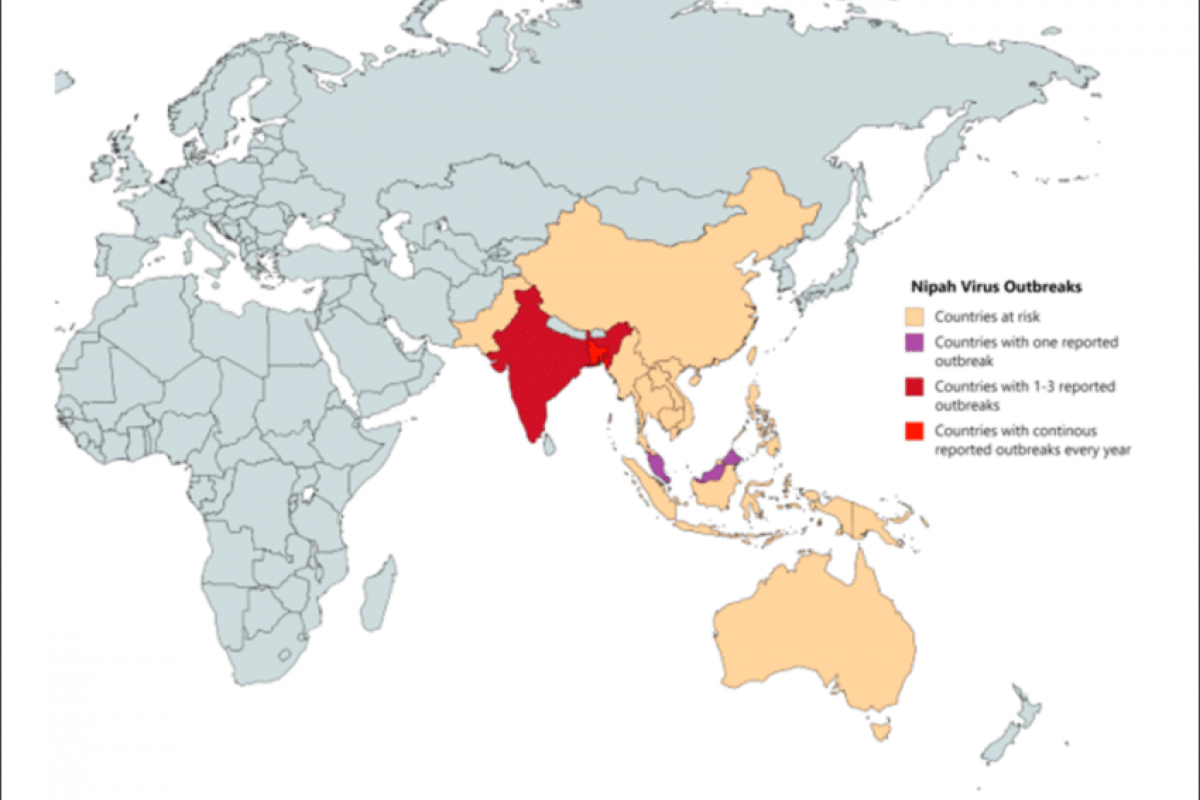
WHO NIV Case map

According to media reporting, a student in southern India has died after being infected with the Nipah virus. As of September 14, 2024, 151 people in contact with the student are now being monitored.

India reported its last fatal Nipah case in July 2024.

According to the World Helath Organization (WHO), the first Nipah virus disease outbreak in India was reported in Siliguri in 2001. State authorities alerted Mysuru, Mangaluru, Chamarajanagar, and Kodagu districts in Karnataka, which borders Kerala state.

Currently, the WHO and other health agencies have not issued travel advisories regarding Nipah outbreaks.

The WHO says Nipah has a relatively high case-fatality ratio and is an emerging zoonotic disease of public health importance in the South East Asia and Western Pacific WHO Regions. It was first identified during an outbreak in Malaysia in 1998.

In June 2023, the Coalition for Epidemic Preparedness Innovations invested up to U.S. $100 million in four Nipah vaccine candidate projects. These candidates include live-attenuated and replication-defective recombinant vaccine platforms based on poxviruses, VSV, adenovirus, measles, rabies, and virus-like particles and subunit vaccines.

As of September 17, 2024, neither the U.S. Food and Drug Administration nor the European Medicines Agency has authorized a vaccine candidate for the Nipah virus, but clinical trials are ongoing.


Sep 16, 2024 • 2:15 pm CDT
from Pixabay

With over 723 deaths from different mpox outbreaks in 14 countries of the African Region, the World Health Organization (WHO) has expanded access to one mpox vaccine.

On September 13, 2024, the WHO announced Bavarian Nordic A/S's MVA-BN (JYNNEOS®) vaccine is the first vaccine against mpox to be added to its prequalification list.

“The WHO prequalification of the MVA-BN vaccine will help accelerate ongoing procurement of the mpox vaccines by governments and international agencies such as Gavi and Unicef to help communities on the frontlines of the ongoing emergency in Africa and beyond,” said Dr. Yukiko Nakatani, WHO Assistant Director-General for Access to Medicines and Health Products, in a press release.

While MVA-BN is currently not licensed for persons under 18, this vaccine may be used “off-label” in infants, children, adolescents, pregnant women, and immunocompromised people. This means vaccine use is recommended in outbreak settings where the benefits of vaccination outweigh the potential risks.

Additionally, the WHO also recommends single-dose use in supply-constrained outbreak situations. 

Dr. Rogerio Gaspar, WHO Director for Regulation and Prequalification. “We are progressing with prequalification and emergency use listing procedures with manufacturers of two other mpox vaccines: LC-16 and ACAM2000."

The escalating mpox clade 1 outbreak in the Democratic Republic of the Congo and other countries was declared an emergency by the WHO Director-General on August 14, 2024. 

As of mid-Agust 2024, the United States has not reported mpox clade 1 cases, but the JYNNEOS vaccine is commercially available at select clinics and pharmacies.

Sep 16, 2024 • 1:20 pm CDT
ReVAMPP clinical/hospital/study and laboratory locations 2024

Albert Einstein College of Medicine recently announced it received a five-year, $14 million per year grant from the National Institute of Allergy and Infectious Diseases (NIAID) to participate in a broad national effort to develop "plug-and-play" vaccines and antibody-based therapies against a wide range of emerging viruses.

The Einstein-led consortium, called PROVIDENT (Prepositioning Optimized Strategies for Vaccines and Immunotherapeutics Against Diverse Emerging Infectious Threats), will link 13 teams in academia, government, and industry that will conduct four projects designed to:

Discover and analyze virus-host interactions and the molecular mechanisms involved in viral disease,

Design proteins to elicit antiviral immune responses and then evaluate and optimize those responses,

Create “road maps” for quickly developing RNA vaccines against microbes with pandemic potential, and

Map the antibody responses observed in people infected with viruses and use this knowledge to design vaccines and therapeutics.

PROVIDENT builds on NIAID’s 2021 Pandemic Preparedness Plan, which focuses on “priority pathogens” and “prototype pathogens.” Priority pathogens include viruses known to cause significant human illness or death, such as dengue and Ebola.

“Recent outbreaks of mpox, Nipah virus, and Eastern equine encephalitis, among other viral infections, underscore the need for an even broader preparedness program,” said Eva Mittler, Ph.D., research assistant professor at Einstein and leader of one of the PROVIDENT components, in a press release on September 13, 2024.

“We don't know what virus will cause the next pandemic.”

The $70 million grant is part of NIAID’s new Research and Development of Vaccines and Monoclonal Antibodies for Pandemic Preparedness (ReVAMPP) Network.

The ReVAMPP network focuses on viruses from the Flaviviridae family, which features viruses that cause dengue and yellow fever; the Paramyxoviridae family, which contains viruses that cause measles, mumps, and Nipah-induced encephalitis; the Picornaviridae family, whose members cause poliomyelitis, foot-and-mouth disease, and myocarditis; the Togaviridae family, which contains viruses that induce Chikungunya virus-induced arthralgia or encephalitis and Venezuelan equine encephalitis; as well as viruses from 5 different families within the Bunyavirales order, including Sin Nombre virus from the Hantaviridae family and the viruses that cause Rift Valley Fever (Phenuiviridae), Crimean Congo Hemorrhagic Fever (Nairoviridae), Oropouche Fever (Peribunyaviridae), and Lassa Fever (Arenaviridae).

Sep 16, 2024 • 12:16 pm CDT
WHO Cholera case map

Bavarian Nordic today announced the commercial availability of Vaxchora® (CVD 103-HgR), the only single-dose oral vaccine approved in Canada to protect against cholera.

For approximately 10% of people infected with cholera, a sudden and severe intestinal infection marked by acute watery diarrhea, a severe presentation of cholera can rapidly cause dehydration and death if left untreated.

Nearly 4 million cases of cholera occur during outbreaks annually. The number of reported cholera-related deaths increased by 71% in 2023 compared to 2022.

“To help (Canadians) prevent illness while traveling internationally, we are expanding our vaccine offerings to include protection against cholera. Healthcare providers can now offer this new vaccine option to travelers who plan to visit countries where cholera is present,” said Karinne Lacombe, Canada Country Director, Bavarian Nordic, in a press release on September 16, 2024.

Cholera is endemic to approximately 50 countries and is common in Asia, Africa, and Central and South America. The Southeast Asia region, which includes Bangladesh and India, has the largest populations at risk for cholera. 

While cholera is most commonly transmitted by consuming contaminated water, it may also be acquired from eating raw or undercooked food, especially fish and shellfish.

Other cholera vaccines, such as Valneva SE's oral, inactivated DUKORAL® vaccine, will be available globally in 2024. According to the World Health Organization, two doses of Dukoral® provide protection against cholera for two years.

Most cholera cases in the United States are linked to international travel, such as to Haiti.

Travel vaccine experts offer cholera vaccination advice at clinics and pharmacies in the U.S.

Sep 16, 2024 • 9:16 am CDT
by Alisa Dyson

As the respiratory syncytial virus (RSV) activity ramps up for the 2024-2025 season, more children will have access to an innovative therapy this year.

Sanofi U.S. announced today that it is shipping BEYFORTUS™ 50mg and 100mg injection doses to private healthcare providers in the United States.

BEYFORTUS (Nirsevimab-alip) is the first and only long-acting monoclonal antibody approved for the prevention of RSV lower respiratory tract disease (LRTD) in newborns and infants born during or entering their first RSV season and for children up to 24 months of age who remain vulnerable to severe RSV disease through their second RSV season.

BEYFORTUS is not an RSV vaccine but offers passive immunization.

Bridgewater, N.J.-based Sanofi stated it anticipates having enough supply so that every eligible baby born outside of the season will have access to immunization at a regular checkup, and those born during the season will have access at birth.

Thomas Grenier, Head of Vaccines, North America, Sanofi, commented in a press release on September 16, 2024, "We're proud to offer BEYFORTUS doses to help protect every eligible baby in the U.S. this RSV season."

"This upcoming season, we look forward to BEYFORTUS offering its demonstrated real-world protection to as many infants as possible."

Sanofi also took additional measures to ensure greater readiness for this season by launching the BEYFORTUS Reservation Program, which provides critical insight into private healthcare provider demand and allows for prioritized fulfillment of requests placed through the program.

Furthermore, the Centers for Disease Control and Prevention's Vaccines for Children program will help ensure that the majority of doses are available before RSV season.

As of May 2024, about 41% of women with young infants reported that their child had received BEYFORTUS.

This announcement is essential as RSV is a highly contagious virus that can lead to serious respiratory illness in infants. Two out of three infants are infected with RSV during their first year of life, and almost all children are infected by their second birthday. 

Sep 15, 2024 • 1:21 pm CDT
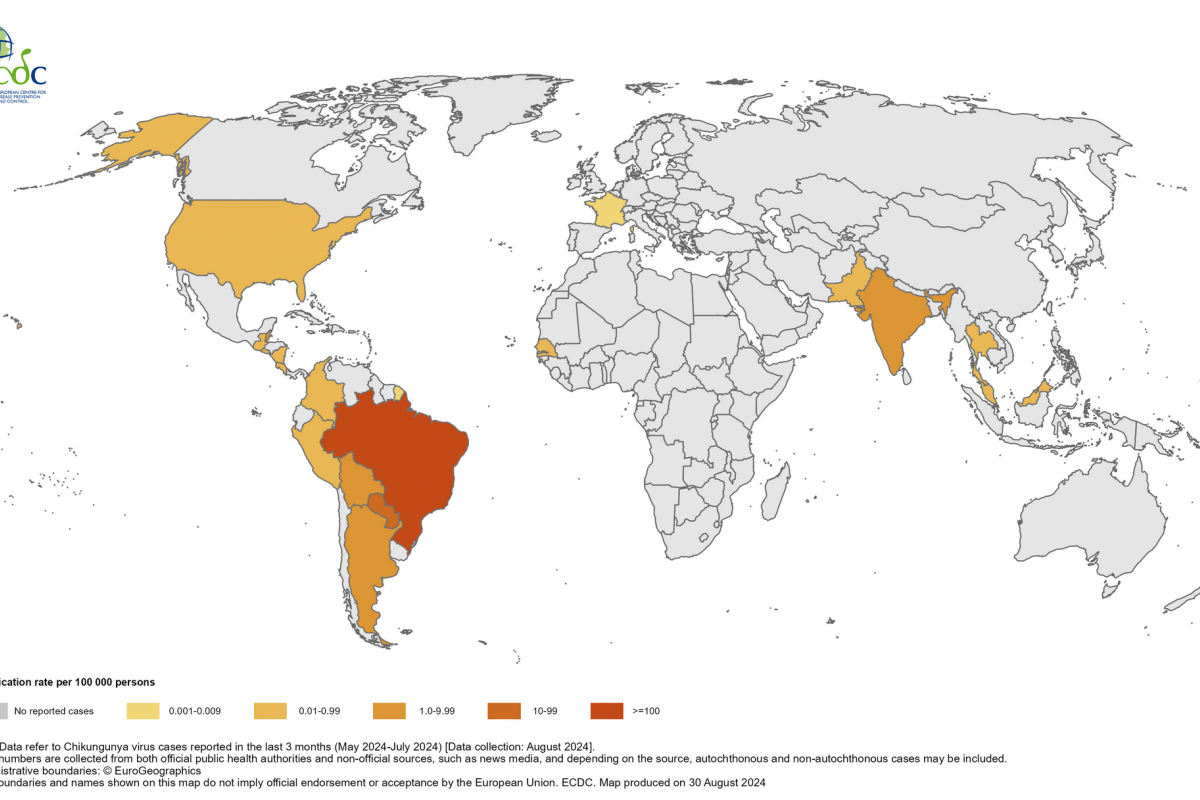
ECDC Chikungunya case map August 2024

The Chikungunya virus (CHIKV) disease was first reported in the Republic of India in 1963 and has since spread to all parts of the subcontinent, becoming endemic. This health risk is seldom discussed, with over 9 million people visiting India, including about 1.5 million people from the United States.

As of early September 2024, India's health department had reported 69,395 cases of CHIKV this year. At this rate, India may exceed last year's unfortunate outbreak record of 200,064 CHIKV cases, which was the most significant number reported in Asia.

For example, the Times of India reported on September 14, 2024, that chikungunya cases had spiked in Maharashtra. By September 7, 2024, there were 2,643 cases, surpassing the 1,702 recorded in 2023, representing a 55% increase in just nine months.

This year, Pakistan (1,302), The Maldives (389), and Thailand (280) have also reported increases in CHIKV cases in the Asia/Pacific region.

As of early August 2024, approximately 450,000 CHIKV cases and over 160 deaths have been reported worldwide. 

To alert international travelers, the U.S. CDC recently stated that the Chikungunya vaccination (Valneva SE's IXCHIQ®) may be considered for certain visitors and long-term residents in 2024.

The CDC also recommended long-term visitors to India consider Japanese encephalitis vaccination (IXIARO® JESPECT®).

These vaccines are generally available at travel clinics and pharmacies in the U.S. and should be administered at least one month before traveling abroad.

Sep 14, 2024 • 1:30 pm CDT
US CDC measles map Aug. 14, 2024

As the global measles outbreak continues in 2024, a 32nd U.S. state confirmed its initial case.

The Tennessee Department of Health (TDH) recently confirmed that a Tennessee resident who recently traveled internationally is recovering from a measles infection.

As of September 14, 2024, TDH has not identified additional measles cases in Tennessee. The last year in which TDH reported positive measles cases in Tennessee was 2019.

On September 5, 2024, the U.S. CDC reported 251 measles cases in 31 jurisdictions this year. So far this year, Chicago (61), Minneapolis (49), and Portland (31) have reported an unusual number of cases.

The measles virus can spread through the air when an infected person speaks, coughs, or sneezes. It can live for up to two hours in the air or on a surface. 

Symptoms include fever, headache, and general unwellness, followed by fever, rash, cough, red eyes, or congestion, says the TDH.

To notify international travelers of the measles outbreaks, the CDC reissued a Level Travel Health Advisory in August 2024, identifying 56 countries reporting measles cases to alert international travelers of the ongoing health risk.

The CDC recommends that international travelers speak with a healthcare provider at least one month before traveling abroad about measles vaccination options. 

Sep 13, 2024 • 1:38 pm CDT
Japan Ministry of Health trend data Sept. 2024

CSL and self-amplifying mRNA (sa-mRNA) pioneer Arcturus Therapeutics today announced that Japan's Ministry of Health, Labor and Welfare (MHLW) granted approval and authorization for their updated sa-mRNA COVID-19 vaccine, KOSTAIVE®.

According to the September 13, 2024, press release, KOSTAIVE is the world's first commercially available sa-mRNA COVID-19 vaccine for adults 18 and older.

Unlike conventional mRNA vaccines, sa-mRNA vaccines instruct the body to make more mRNA and protein to boost the immune response.

"We believe KOSTAIVE® has the potential to change the paradigm for COVID-19 vaccines in Japan," commented Jonathan Edelman, M.D., Senior Vice President, Vaccines Innovation Unit, CSL. 

"Today's approval further demonstrates CSL's promise to pursue, develop, and deliver new innovative treatment options to protect public health."

Meiji Seika Pharma, CSL's exclusive partner in Japan, will begin vaccine distribution next month.

Following a peak in July 2024, MHLW data indicates COVID-19 cases in Japan have rapidly declined as of early September.

To avoid diseases such as Japanese encephalitis (IXIARO®), measles, and rubella, the U.S. CDC recommends speaking with a travel vaccine expert at least one month before visiting Japan.

 CSL, including three businesses: CSL Behring, CSL Seqirus, and CSL Vifor, provides lifesaving products to patients in more than 100 countries and employs 32,000 people. 

Sep 13, 2024 • 10:27 am CDT
US CDC

About two years ago, the World Health Organization (WHO) published a report highlighting the first-ever list of fungal priority pathogens, which included 19 fungi representing the greatest threat to public health.

Since then, the WHO has not recommended a fungal vaccine but continues to encourage the development of innovative therapies.

To address this unmet need, F2G Ltd announced a $100 million financing round that will enable the company to complete late-stage development, seek regulatory approval, and prepare for commercialization in the U.S. of olorofim, a novel oral antifungal therapy to treat invasive aspergillosis (IA) and other invasive fungal infections.

It is anticipated that this treatment will be used to treat patients with a serious invasive, rare fungal disease for which existing treatments are inappropriate or no longer effective.

Olorofim is the first orotomide antifungal, an entirely novel class of antifungal agents. It is the only antifungal medication awarded a Breakthrough Therapy Designation for multiple indications by the U.S. Food and Drug Administration.

Olorofim has a novel mechanism of action, different from that of existing classes of antifungals. It exerts fungicidal activity by inhibiting the pyrimidine synthesis pathway.

Henry Skinner, Ph.D., Chief Executive Officer of AMR Action Fund, commented in a press release on September 12, 2024, “Fungal infections are a growing threat to patients worldwide and have a disproportionate impact on vulnerable populations, yet there has been a paucity of innovation in the field of antifungals."

"For decades, clinicians have relied on a handful of antifungal classes, with few mechanisms of action and significant limitations due to spectrum of activity, drug toxicities, or drug-drug interactions. These therapies are increasingly failing in patients."

The U.S. NIH says some fungal infections are more common in people with weakened immune systems or hospitalized individuals, while others can infect anyone, including otherwise healthy people.

As of 2023, fungal vaccine candidates were segmented into broad categories based upon their composition, ranging from multiple to single antigens: whole organism vaccines (live-attenuated or killed fungal cells), crude extracts (fractions derived from cells and medium of fungal cultures), purified subunit vaccines (proteins, peptides), and nucleic acids (RNA and DNA) encoding the antigen(s) of interest.

No fungal vaccine has been approved as of 2024.

Sep 13, 2024 • 2:58 am CDT
US NIH

The U.S. Centers for Disease Control and Prevention (CDC) today published updated recommendations from the Advisory Committee on Immunization Practices (ACIP) regarding the use of 21-Valent Pneumococcal Conjugate Vaccine Among U.S. Adults.

On September 12, 2024, the CDC's MMWR confirmed the U.S. Food and Drug Administration approved 21-valent pneumococcal conjugate vaccine (PCV) (PCV21; CAPVAXIVE; Merck Sharp & Dohme, LLC) for adults aged ≥18 years.

PCV21 does not contain certain serotypes that are included in other licensed pneumococcal vaccines but adds eight new serotypes. It is recommended for all adults aged ≥65 years and adults aged 19–64 years with certain risk conditions for pneumococcal disease if they have not received a PCV or whose vaccination history is unknown.

Previously, options included either 20-valent PCV (PCV20; Prevnar20; Wyeth Pharmaceuticals, Inc.) alone or a 15-valent PCV (PCV15; VAXNEUVANCE; Merck Sharp & Dohme, LLC) in series with 23-valent pneumococcal polysaccharide vaccine (PPSV23; Pneumovax23; Merck Sharp & Dohme, LLC).

Additional recommendations for the use of PCV20 exist for adults who started their pneumococcal vaccination series with 13-valent PCV (PCV13; Prevnar13; Wyeth Pharmaceuticals, Inc.).

On June 27, 2024, ACIP recommended a single dose of PCV21 for adults aged ≥19 for whom PCV is currently recommended. Indications for PCV have not changed from previous recommendations.

This report summarizes the evidence considered for these recommendations and provides clinical guidance for using PCV21.

In the U.S., various healthcare providers offer pneumococcal vaccines.

Sep 13, 2024 • 2:33 am CDT
from Pixabay

Bavarian Nordic A/S today provided an update on its supply and manufacturing activities supporting the ongoing mpox outbreak. The Company produces MVA-BN® (JYNNEOS®, IMVAMUNE®, and IMVANEX®), a leading smallpox and mpox vaccine.

Since the recent declaration of a Public Health Emergency of International Concern (PHEIC) by the World Health Organization (WHO), Bavarian Nordic has intensified the collaboration with global stakeholders to support efforts to combat the mpox outbreak.

Thanks to donations from the European Commission, the U.S. government and Bavarian Nordic, the first doses of MVA-BN arrived last week in the Democratic Republic of Congo, the epicenter of the mpox clade 1b outbreak. More than 250,000 doses have already been shipped, and other countries have pledged further donations of more than 500,000 doses of MVA-BN.

Bavarian Nordic stated that by focusing the full capacity to address the current public health emergency, the Company could supply up to 13 million MVA-BN doses by the end of 2025, including 2 million in 2024.

Paul Chaplin, President & CEO of Bavarian Nordic, said in a press release on September 12, 2024, “As the supplier of the only non-replicating mpox vaccine that has shown to be highly effective during a mpox outbreak, we have been working closely with all governments and organizations to support the international efforts to combat the latest public health emergency."

"Just as during the clade two mpox outbreak in 2022/23, we will support all requests for vaccine and have already secured agreements and submitted responses to the UNICEF tender that will hopefully secure more access to MVA-BN globally."

The JYNNEOS vaccine is commercially available in the United States at select travel clinics and pharmacies. 

The U.S. government recommends two JYNNEOS doses to provide robust protection against disease. However, routine immunization against mpox is not recommended for the general public, and a booster dose (3rd) is not endorsed.

Sep 13, 2024 • 1:52 am CDT
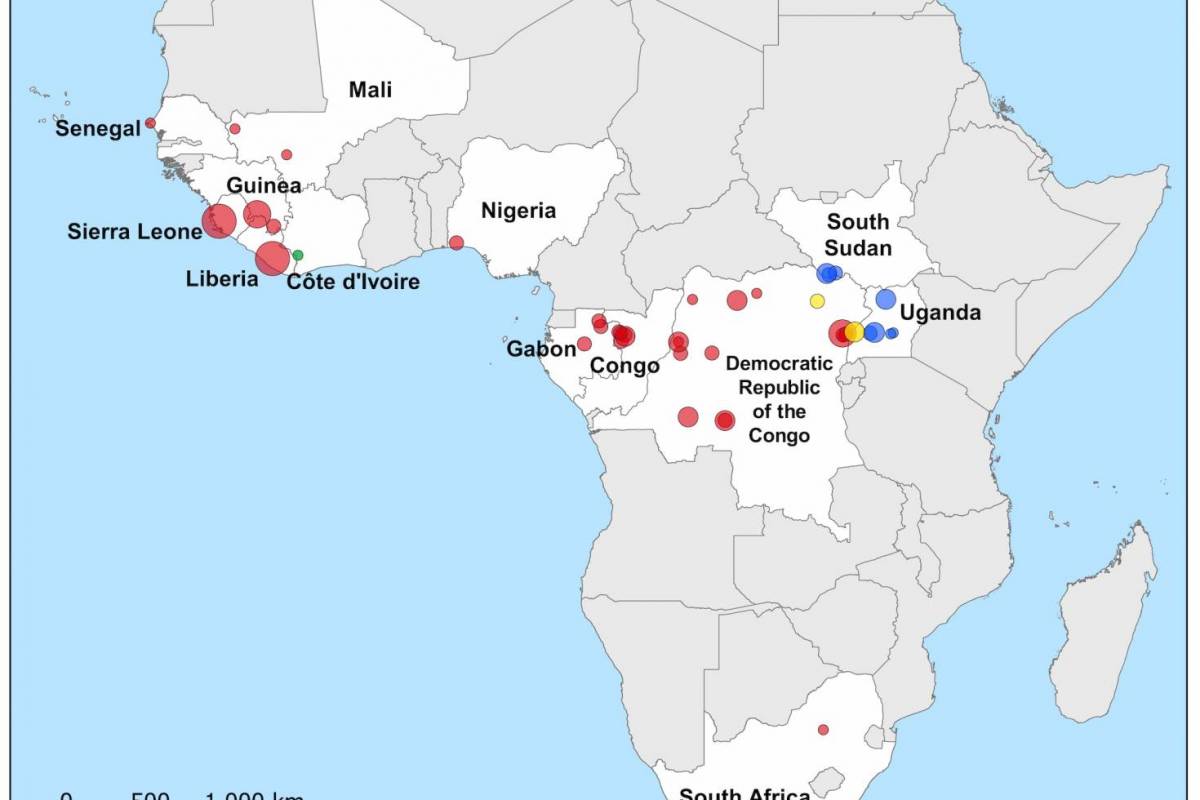
US CDC Ebola outbreak map

While there is an approved Ebola virus disease (EVD) vaccine, the U.S. government continues to invest in human monoclonal antibody (mAb) therapy during Zaire ebolavirus outbreaks in Africa.

The initial Zaire Ebolavirus disease (EVD) case was confirmed in 1976, Since then, more than 30 EVD outbreaks have been reported.

Emergent BioSolutions Inc. announced today that it was awarded a contract modification executing an option period by the Biomedical Advanced Research and Development Authority (BARDA), valued at $41.9 million, for drug substance engineering and scale-up process validation, long-term stability, and commercial readiness in support of its ongoing scale-up program for Ebanga™, a licensed glycoprotein (EBOV GP)-directed mAb treatment for EVD.

“Emergent is proud to continue to advance the Ebanga™ (ansuvimab-zykl) development and scale up to its next phase,” said Paul Williams, senior vice president of products business, Emergent, in a press release on September 12, 2024. 

This mAb binds to a portion of the Ebola virus's surface called the glycoprotein, which prevents the virus from entering a person's cells. Ebanga's efficacy has not been established for other species of the Ebolavirus and Marburgvirus.

Under the terms of the contract, Emergent will complete activities to advance the development of Ebanga™ treatment through post-licensure commitments, including the transfer of technology as part of manufacturing scale-up, submission of a supplemental Biologics License Application to the U.S. Food and Drug Administration (FDA), and completion of stability studies.

The existing 10-year contract consists of a base period of performance with two option periods for advanced development valued at approximately $121 million and option periods for procurement of Ebanga™ treatment over five years valued at up to $583 million. Execution of this option period is in line with Emergent’s planned program performance and critical path for developing the Ebanga™ treatment.  

BARDA is part of the Administration for Strategic Preparedness and Response within the U.S. Department of Health and Human Services.

Sep 12, 2024 • 6:48 am CDT
by Gerd Altmann

Moderna, Inc., today announced program and financial updates at its annual R&D Day event, demonstrating progress and strategic prioritization of its mRNA pipeline.

Stéphane Bancel, CEO of Moderna, commented in a press release, "The size of our late-stage pipeline combined with the challenge of launching products means we must now focus on delivering these ten products to patients, slow down the pace of new R&D investment, and build our commercial business."

Moderna's updates on September 12, 2024, include but are not limited to, several seasonal influenza vaccine candidates in clinical development.

The Company's investigational seasonal flu vaccine, mRNA-1010, has demonstrated consistently acceptable safety and tolerability across three Phase 3 trials.

In the most recent Phase 3 trial (P303), which was designed to test the immunogenicity and safety of an optimized vaccine composition, mRNA-1010 met all immunogenicity primary endpoints, demonstrating higher antibody titers compared to a licensed standard-dose flu vaccine (Fluarix®).

In an older adult extension study of P303, mRNA-1010 met all primary immunogenicity, including superiority for all compared to a licensed enhanced flu vaccine (Fluzone HD®), and showed an acceptable reactogenicity profile.

The Company plans to start a confirmatory vaccine efficacy study for mRNA-1010 in 2024, funded by previously announced project financing through Blackstone Life Sciences.

Moderna also confirmed it is no longer pursuing an accelerated approval pathway for the regulatory submission of its standalone flu vaccine, mRNA-1010, to focus its resources on submitting a potentially more impactful flu/COVID combination vaccine, mRNA-1083, in 2024.

With the 2024-2025 flu season beginning in the United States, most health clinics and pharmacies offer flu shot vaccination services.

About 158 million flu vaccines had been distributed during the 2023-2024 season.