Vaccine News

Vaccine news brought to you by Precision Vaccinations.

Sep 23, 2024 • 9:13 am CDT
from Pixabay

Vicebio Ltd. today announced a $100 million Series B financing led by TCGX and others. Vicebio is developing next-generation vaccines for respiratory viruses utilizing its proprietary Molecular Clamp technology, which was discovered at the University of Queensland (UQ).

The Molecular Clamp technology applies to a wide range of viruses, including Respiratory Syncytial Virus (RSV), Human Metapneumovirus (hMPV), Parainfluenza virus, Influenza, and Coronaviruses, as confirmed by promising preclinical and clinical studies.

Vicebio has recently initiated a Phase I clinical trial with VXB-241, its bivalent vaccine targeting RSV and hMPV. Initial clinical readouts of the Phase 1 study are expected to launch in mid-2025.

This financing will also support the acceleration and expansion further development of Vicebio’s multivalent pipeline, including VXB-251, a trivalent vaccine targeting RSV, hMPV, and Parainfluenza Virus 3, a further valency that addresses a significant remaining medical burden in the elderly.

Cariad Chester, Managing Partner at TCGX, said in a September 23, 2024, press release, “Vicebio has a unique capability to advance vaccine products that simultaneously provide robust immune responses against multiple respiratory pathogens. We look forward to working closely with the team to bring these important vaccines to the market.”

Prof. Paul Young, Daniel Watterson, and Keith Chappell at UQ developed the Molecular Clamp proprietary technology.

Sep 23, 2024 • 4:35 am CDT
by Gerd Altmann

The Committee for Medicinal Products for Human Use (CHMP) of the European Medicines Agency (EMA) has recommended marketing authorization for the companies’ Omicron KP.2-adapted monovalent COVID-19 vaccine (COMIRNATY ® KP.2) for active immunization to prevent COVID-19 caused by SARS-CoV-2 in individuals six months of age and older.

Pfizer Inc. and BioNTech SE announced that the European Commission will review the CHMP’s recommendation and is expected to make a final decision soon.

The CHMP recommendation dated September 19, 2024, is based on the non-clinical and manufacturing data of the Omicron KP.2-adapted vaccine and the clinical and real-world evidence supporting the safety and efficacy of prior formulas of the COVID-19 vaccines by Pfizer and BioNTech.

Pending the EC's authorization of the Omicron KP.2-adapted vaccine, both the Omicron KP.2-adapted vaccine and the Omicron JN.1-adapted vaccine will be available across the EU, though availability will vary based on individual country government requests and national recommendations.

Sep 22, 2024 • 11:27 am CDT
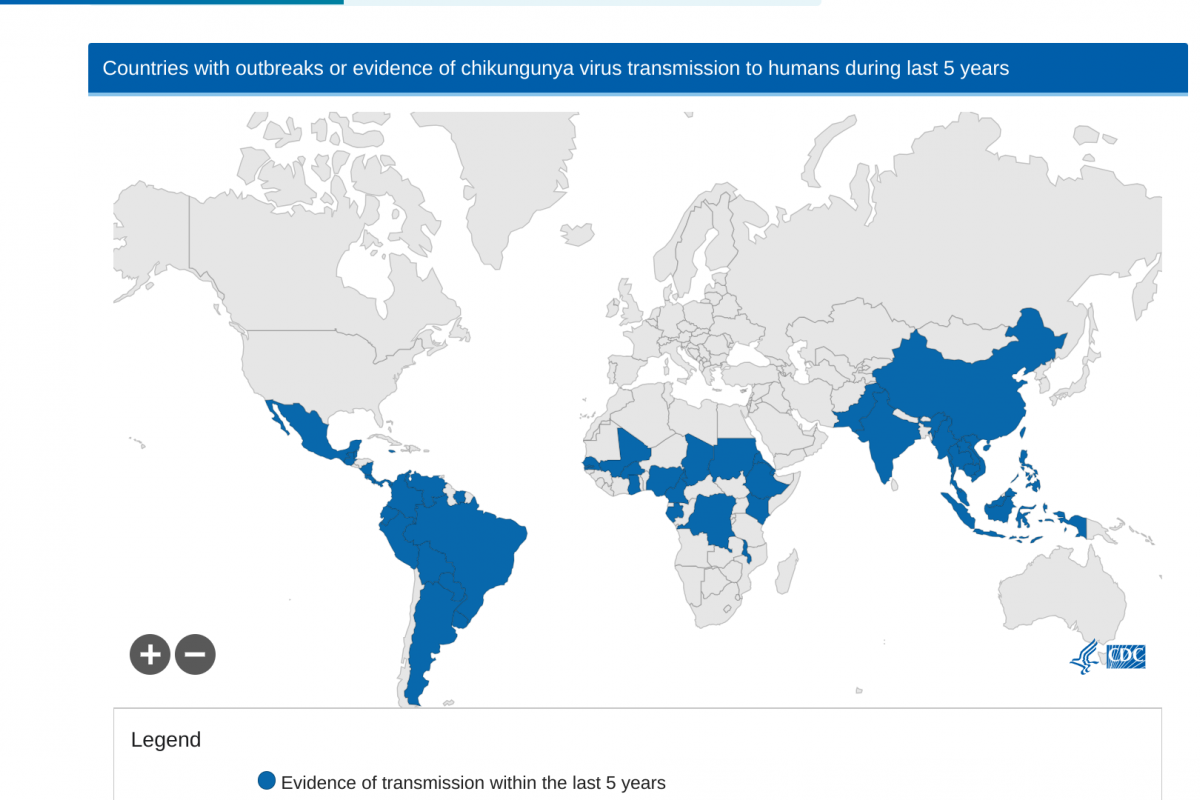
US CDC chikungunya five year case map

The peer-reviewed journal The Lancet Infectious Diseases recently published interim results of a double-blind, randomized, placebo-controlled phase 3 trial in adolescents of the U.S. FDA-approved, single-dose IXCHIQ® (VLA1553) chikungunya vaccine.

In an article published on September 4, 2024, these researchers concluded that VLA1553 was generally safe and induced seroprotective titers in almost all vaccinated adolescents, with favorable safety data in seropositive adolescents at baseline.

VLA1553 induced seroprotective chikungunya virus neutralizing antibody levels in 247 of 250 (98.8%, 95% CI 96·5–99·8) participants 28 days after vaccination.

This data supports using VLA1553 to prevent diseases caused by the chikungunya virus among adolescents and in endemic areas in the Region of the Americas.

As of September 22, 2024, the Pan American Health Organization reported 390,669 CHIKV cases. Specifically, Brazil has confirmed 170 related deaths this year.

If you are traveling to an area at risk for chikungunya, the U.S. CDC suggests discussing vaccination options with your healthcare provider at least one month before departing abroad.

Sep 22, 2024 • 8:22 am CDT
by Sofi Aguilera

The U.S. Department of State published an updated Level 2: Exercise Increased Caution advisory for visitors to the Kingdom of Denmark, Greenland, and the Faroe Islands.

About 63 million international and domestic tourists visited Denmark in 2023, including over 600,000 from the United States.

As of September 17, 2024, the State Department advises travelers to be aware of their surroundings when traveling to tourist locations and crowded public venues. Additionally, travelers should enroll in the Smart Traveler Enrollment Program to receive alerts, which makes locating you in an emergency easier.

Furthermore, Denmark has excellent medical facilities, such as modern and fully equipped hospitals. However, medical facilities in Greenland and the Faroe Islands are limited, and evacuation is required for serious illness or injury. For emergency services in the Kingdom of Denmark, dial 112, and vaccine information is posted at this link.

The U.S. CDC says those travelers who may be at increased risk of an infectious disease due to their work, lifestyle, or underlying health problems should be up to date with recommended vaccines, which may need to be administered one month before visiting Denmark.

Health clinics and pharmacies in the U.S. generally offer travel vaccines.

Sep 21, 2024 • 5:32 am CDT
from Pixabay

The Minnesota Department of Health recently affirmed the greater Twin Cities area is experiencing an ongoing outbreak of measles cases, with the virus spreading mainly among unvaccinated children.

The Minneapolis—St. Paul's measles outbreak began in May 2024, and as of September 19, 2024, 51 cases had been confirmed.

Earlier this year, Chicago, Illinois, reported a more significant measles outbreak that impacted 64 people.

Overall, the U.S. CDC has reported 262 measles cases in 32 jurisdictions in 2024.

From a global health-risk perspective, the CDC has issued travel advisories for over 50 countries this year.

Measles is a vaccine-preventable disease. Vaccination is generally recommended for most people, and various vaccines are available at clinics and pharmacies in the U.S.

Sep 21, 2024 • 4:39 am CDT
GPEI polio case map Sept. 2024

According to the weekly update of the Global Polio Eradication Initiative (GPEI), three countries recently reported new polio cases.

In 2024, Afghanistan reported 19 cases of wild poliovirus type 1 in Kandahar province.

Cameroon reported its first two cases of circulating vaccine-derived poliovirus type 2 (cVDPV2) from Est province this year.

In Nigeria, 53 cases of cVDPV2 were reported from Yobe province, with four new cases added recently.

Overall, two polio-endemic countries are reporting wild polio, Afghanistan and Pakistan, and 41 other countries reporting variant poliovirus.

As of September 21, 2024, the GPEI deploys two types of polio vaccines to stop virus transmission: inactivated polio vaccine (IPV) and oral polio vaccine (OPV). Developing these vaccines to prevent paralytic polio was one of the major medical breakthroughs of the 20th century.

In the United States, the IPV has been offered since 2000. 

When planning a visit to a polio-risk country, the U.S. CDC suggests speaking with a travel vaccine expert at least one month before departure about prevention options.

Sep 20, 2024 • 2:47 pm CDT
US FDA

The U.S. Food and Drug Administration (FDA) today announced it approved the nasal influenza vaccine FluMist® for self- or caregiver-administration by adults. This innovative flu shot is sprayed into the nose and has been used safely and effectively for many years.

It is the first influenza vaccine that does not need to be administered by a healthcare provider. 

FluMist has been FDA-approved for preventing influenza disease caused by influenza virus subtypes A and B in individuals 2 through 49 years of age for two decades. It was initially approved by the FDA in 2003. In 2007, the FDA approved using FluMist to include children 2 through 5.

Iskra Reic, Executive Vice President of Vaccines and Immune Therapies, AstraZeneca, said in a press release, “The approval of FluMist for self-administration is an important step forward in making vaccines more accessible to fight the high annual burden of influenza."

The vaccine may be administered by a health care provider in a health care setting (including a pharmacy) or by the vaccine recipient or a caregiver who is 18 years of age or older. Vaccine recipients and caregivers who administer FluMist will receive the vaccine, the Prescribing Information, Information for Patients and their Caregivers, and Instructions for Use. 

“Today’s approval of the first influenza vaccine for self- or caregiver administration provides a new option for receiving a safe and effective seasonal influenza vaccine potentially with greater convenience, flexibility, and accessibility for individuals and families,” said Peter Marks, M.D., Ph.D., director of the FDA’s Center for Biologics Evaluation and Research, in a press release on September 20, 2024.

FluMist remains available at various clinics and pharmacies for the 2024-2025 flu season.

AstraZeneca markets FluMist® under the Fluenz® Tetra brand internationally.

Sep 20, 2024 • 1:09 pm CDT
US CDC trends chart

The U.S. Centers for Disease Control and Prevention (CDC) recently reported 22 additional imported cases of the Oropouche virus.

As of September 17, 2024, the total number of cases reported by five U.S. states to 74.

The state of Florida confirmed this week that eleven counties have reported 70 Oropouche cases involving travel to Cuba, which has reported over 500 cases.

The Miami-Dade area (28) has led Florida in reporting cases. The good news is the weekly trends have been decreasing.

In the Region of the Americas, 9,852 cases were confirmed in 2024.

Brazil remains the most affected country, with 7,931 cases and two deaths. Other currently affected countries include Bolivia, Peru, and recently, the Dominican Republic.

The virus is primarily transmitted through the bite of infected midges, small insects that usually bite during the day and inhabit humid areas with organic matter and in forested areas.

Regarding mother-to-child transmission, a total of one fetal death and one case of congenital anomaly have been confirmed in Brazil.

The CDC has confirmed there are not approved vaccines targeting Oropouche virus infections. 

Sep 20, 2024 • 6:38 am CDT
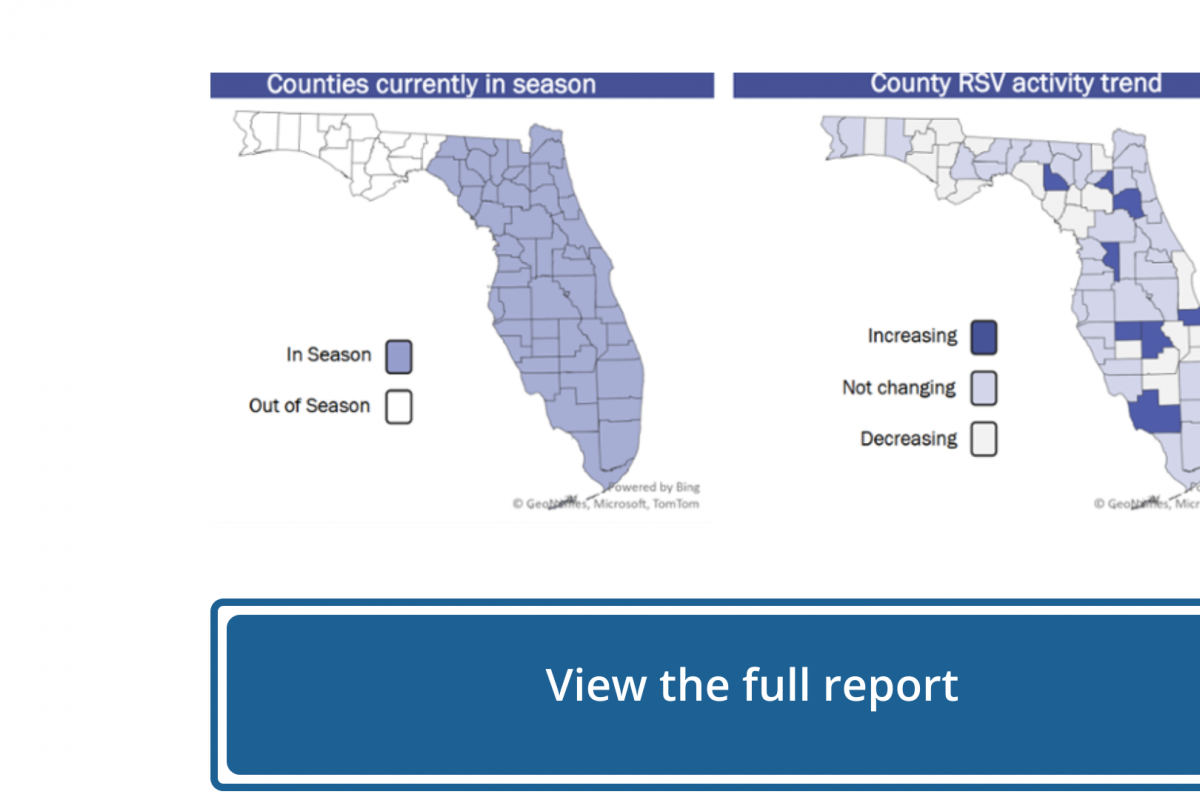
Florida Health Dept - RSV map September 2024

The U.S. Centers for Disease Control and Prevention (CDC) recently reported that Respiratory Virus (RSV) activity remained low but is expected to increase.

In the U.S., the annual RSV season usually begins in Florida and then migrates to the southeast, later to the north and west regions. 

As of September 17, 2024, week #37, the Florida Department of Health reported increasing RSV positivity rates, decreasing hospital admissions, and no RSV outbreaks.

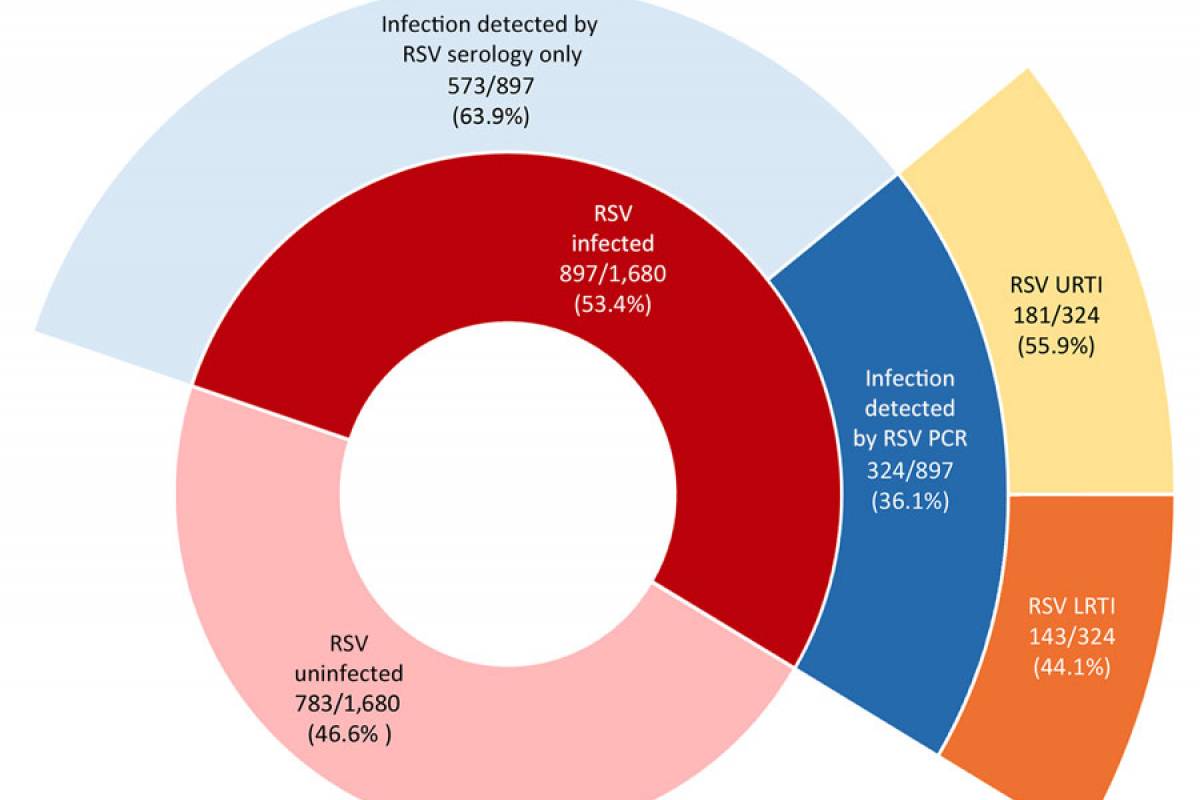
A recent study found that over the past few years, about 53% of children were infected with RSV during infancy, and 2.8% were hospitalized. 

Unlike previous RSV seasons, the U.S. is well prepared to reduce the impact of this respiratory disease.

As of September 20, 2024, three RSV vaccines have been approved, and the CDC recommends a passive immunization (Beyfortus™ (Nirsevimab-alip) for most infants. Based on each state, these U.S. FDA-approved products are offered at health clinics and pharmacies. 

Sep 20, 2024 • 3:07 am CDT
Google maps 2024

The global dengue fever outbreak recently reached one of the most populated cities in the United States.

The Los Angeles County Department of Public Health announced it is investigating its third locally acquired dengue case in the City of Baldwin Park.

This is an unprecedented number of locally transmitted cases for a region of over 12 million people where mosquitoes have not previously transmitted dengue.

"The City of Baldwin Park is aware of the recent cases of locally acquired dengue in our community. While the risk of transmission remains low, we must take this situation seriously and act proactively," said Mayor Emmanuel J. Estrada, who serves as a trustee representing Baldwin Park on the San Gabriel Valley Mosquito and Vector Control District board, in a press release on September 18, 2024.

In 2024, the U.S. CDC confirmed that 50 jurisdictions, led by California, Florida, New Jersey, New York, and Puerto Rico, had reported 5,027 dengue cases as of September 20, 2024.

In the Region of the Americas, 43 countries and territories have reported over 11,712,499 dengue cases and 6,500 related deaths this year.

While dengue is a vaccine-preventable disease, no vaccine is currently available in the United States. However, Takeda's QDENGA® is an approved two-dose vaccine in about 40 countries.

Sep 19, 2024 • 2:45 pm CDT
by Brigitte Werner

GSK plc recently announced topline Phase 3 clinical trial data for a combination regimen of two of its vaccines: the RSV vaccine Arexvy and Shingrix, a market-leading shingles shot.

While GSK did not provide specific clinical trial (NCT05966090) data in its September 18, 2024 announcement, the company did confirm that co-administering Arexvy with Shingrix resulted in a “non-inferior immune response” compared with inoculation with the vaccines at separate visits.

The vaccine combo was also well-tolerated with an “acceptable” safety profile, according to GSK.

This is essential news as both RSV and shingles pose significant health risks to older adults, and these risks only increase with age as the immune system declines.

“With our co-administration studies, GSK is using its science and technology to help remove barriers to adult immunization, by potentially reducing the number of visits to the healthcare offices and pharmacies and ultimately help to get ahead of RSV and shingles,” Led Friedland, GSK’s vice president of scientific affairs and public health, said in the statement.

Results from this trial will be submitted for peer-reviewed scientific publication and used to support regulatory submissions to the U.S. FDA, the European Medicines Agency, and other regulators.

Sep 19, 2024 • 2:19 pm CDT
US CDC Sept 2024

According to a Research Letter, Volume 30, Number 10—October 2024, published in Emerging Infectious Diseases, 53.4% of infants were infected with respiratory syncytial virus (RSV) during infancy, and 2.8% were hospitalized.

The Risk factors for RSV infection during infancy, in order of contribution, were:

  • Infant birth month (June vs. referent October, OR 2.42 [95% CI 1.78–3.29]),
  • Presence of siblings (OR 1.50 [95% CI 1.22–1.84]),
  • Daycare attendance (OR 1.54 [95% CI 1.24–1.93]),
  • Increasing percentage below the poverty level in the residential neighborhood (21% vs. 8%; OR 1.19 [95% CI 1.05–1.36]), and
  • Public insurance (OR 1.28, 95% CI 1.02–1.62).

The researchers determined secondhand smoke exposure, sex, ever being breastfed, maternal asthma, and study year were not significantly associated with the likelihood of infant RSV infection.

In conclusion, 'our data are important estimates of RSV disease's burden and infection risk factors in healthy-term infants. Our findings provide a benchmark to monitor the effects of recently available maternal vaccines in the United States and extended half-life monoclonal antibodies (Beyfortus™) for preventing severe RSV illness in early life.'

As of 2023, the U.S. CDC says that infants and children who are recommended to receive Beyfortus should be immunized as quickly as possible.

Sep 18, 2024 • 9:57 am CDT
Google maps Sept. 2024

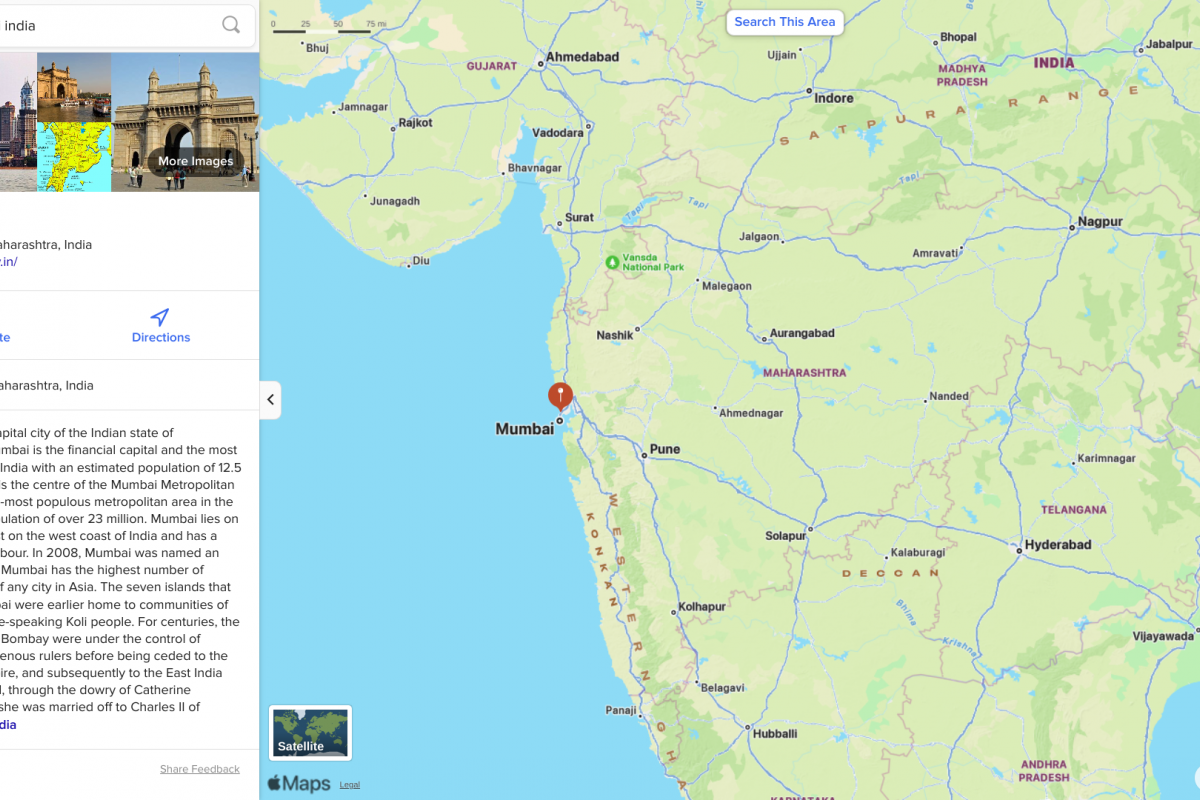
According to the Times of India, 267 chikungunya cases were reported in Mumbai, India, between July and September 14, 2024. This data indicates India may exceed last year's 200,000 reported chikungunya cases.

BMC's health update on September 16, 2024, stated that doctors have confirmed that patients with mosquito-borne diseases, dengue, and chikungunya are being admitted to the Mumbai hospital with complaints of very high fever, vomiting, and severe body aches.

"Patients with chikungunya are literally bedridden due to debilitating joint pain and high temperatures,'' Dr Gautam Bhansali from Bombay Hospital informed the TOI.

The public health concern is that this viral disease may spread within Mumbai's 12 million residents.

Chikungunya disease was initially reported in India in 1963, and as of September 2024, every part of the country has become endemic.

The U.S. CDC stated in 2024 that the Chikungunya vaccination may be considered for certain visitors in India. The CDC recommends prospective travelers to India speak with a travel vaccine expert about Valneva SE's IXCHIQ® single-dose, live-attenuated chikungunya vaccine, at least one month before departure.

About 1.3 million U.S. travelers visited India last year.

IXCHIQ is available at various health clinics and pharmacies in the U.S.

Sep 18, 2024 • 9:17 am CDT
from Pixabay 2024

Bavarian Nordic A/S and Gavi today announced an advance purchase agreement (APA) to secure 500,000 doses of the MVA-BN® mpox vaccine (JYNNEOS® or IMVANEX®).

These vaccines are being supplied to African countries impacted by the current mpox clade 1 outbreak.

Bavarian Nordic is ready to supply the mpox/smallpox vaccines pending signing a supply agreement with UNICEF, Gavi’s alliance partner, which will deliver these doses in 2024.

Paul Chaplin, President & CEO of Bavarian Nordic, commented in a press release on September 18, 2024, “The doses secured through this APA will significantly increase the availability of mpox vaccines for African countries, and we are pleased that Gavi has selected our MVA-BN vaccine, which has proven highly effective during the global mpox (clade 2) outbreak in 2022.”

The vaccines will be funded by Gavi, the Vaccine Alliance's First Response Fund, a new financial mechanism created in June 2024 to make cash available to purchase vaccines in health emergencies rapidly.

As of September 2024, there are four mpox vaccines available globally.

Sep 18, 2024 • 4:53 am CDT
Pixabay 2024

Based on today's announcement by Valneva SE, adolescents may soon have access to the only approved chikungunya vaccine. This is essential news as the chikungunya virus (CHIKV) has now been identified in over 110 countries in Asia, Africa, Europe, and the Americas. 

On September 18, 2024, Valneva submitted label extension applications to the European Medicines Agency (EMA) and Health Canada to potentially expand the use of its approved chikungunya vaccine, IXCHIQ®, to adolescents aged 12 to 17 years in Europe and Canada.

The Canadian label extension application also includes two-year antibody persistence data, a key differentiator for IXCHIQ® that was already included in the initial EMA filing.

Valneva expects to submit data to the U.S. Food and Drug Administration (FDA) in 2024 to support potential label extensions in the U.S.

IXCHIQ is currently approved in the U.S., Europe, and Canada to prevent disease caused by mosquito-spreading CHIKV in individuals 18 and older.

In the U.S., the commercial launch is underway, as IXCHIQ is available at health clinics and pharmacies.

First sales in Canada and Europe are anticipated in the fourth quarter of 2024.

In addition to ramping up sales, Valneva is focused on expanding the vaccine’s label and access.

The Company expects a marketing authorization in Brazil in the second half of 2024 and recently expanded its partnership with The Coalition for Epidemic Preparedness Innovations (CEPI) to support broader access to the vaccine in Low Middle-Income Countries, post-marketing trials, and potential label extensions in children, adolescents, and pregnant women.

CEPI previously confirmed it will provide Valneva up to $41.3 million of additional funding over the next five years, with support from the European Union’s Horizon Europe program.

Juan Carlos Jaramillo, M.D., Chief Medical Officer of Valneva, commented in a press release, “Given the substantial risk that chikungunya presents to individuals residing in or traveling to endemic regions, it’s imperative to ensure the vaccine is available to all age groups."

"This broader accessibility would certainly help provide protection and mitigate the burden of this debilitating illness, which is currently spreading in areas that were previously unaffected."

"The durability of the immune response is also extremely important, especially for endemic countries where access to immunization can be difficult.”

EMA and Health Canada’s label extension applications are based on positive six-month adolescent Phase 3 data the Company reported in May 2024. These data showed that a single-dose vaccination with IXCHIQ® induces a high and sustained immune response in 99.1% of adolescents and that the vaccine was generally well tolerated. 

The Lancet Infectious Diseases also recently published an article showing that the vaccine was well tolerated in adolescents aged 12 to 17 28 days after a single injection, regardless of previous CHIKV infection.

In addition to the adolescent data, Health Canada’s label extension application included IXCHIQ®‘s antibody persistence data, which showed that 97% of participants sustained the vaccine’s immune response for 24 months and was equally durable in younger and older adults.

Valneva expects to publish 36 months of persistence data later in 2024.