Search API
On the occasion of the Jubilee of the Poor, a special holy year which occurs once every 25 years, the European Centre for Disease Prevention and Control (ECDC) has been conducting enhanced monitoring through its epidemic intelligence activities.
With multiple events that take place throughout the year and nning until December 2025, it is estimated that more than 35 million pilgrims will visit Rome during the Jubilee of the Poor.
As of November 21, 2025, the ECDC says the probability of EU/EEA citizens becoming infected with communicable diseases during the Jubilee 2025 is low if general preventive measures are followed, such as influenza vaccination according to national immunisation schedules.


The Washington State Department of Health (WDOH) recently confirmed the death of an older adult from Grays Harbor County related to a specific type of 'bird flu.' The individual had underlying health conditions and was receiving treatment for an infection of the H5N5 avian influenza virus.
This report from WDOH, issued on November 21, 2025, marks the first human case of avian influenza A (H5N5) reported worldwide.
Washington Governor Bob Ferguson stated in a Facebook post, "My condolences to this individual's family and loved ones. Thank you to the dedicated medical professionals who cared for them, and to the public health experts working to monitor the situation and educate the public."
This person had a backyard flock of mixed domestic birds. DOH sampling identified avian influenza virus in the environment of the flock, making exposure to the domestic poultry, their environment, or wild birds the most likely source of exposure for this patient. People who had exposure to the backyard flock and its environment are also being monitored by local health authorities for symptoms.
The WDOG says the risk to the public remains low as no other people involved have tested positive for avian influenza.
Public health officials will continue to monitor anyone who was in close contact with the patient for symptoms to ensure that human-to-human spread has not occurred. There is no evidence of transmission of this virus between people.
From a prevention perspective, at least 20 H5 influenza vaccines are licensed worldwide.
As of November 25, 2025, U.S. FDA-approved avian influenza vaccines are not commercially available in the USA.

The Pan American Health Organization (PAHO) recently announced that the entire Region of the Americas has lost its verification of endemic measles transmission elimination due to ongoing outbreaks in several countries.
For example, in early November, Canada lost its measles elimination status.
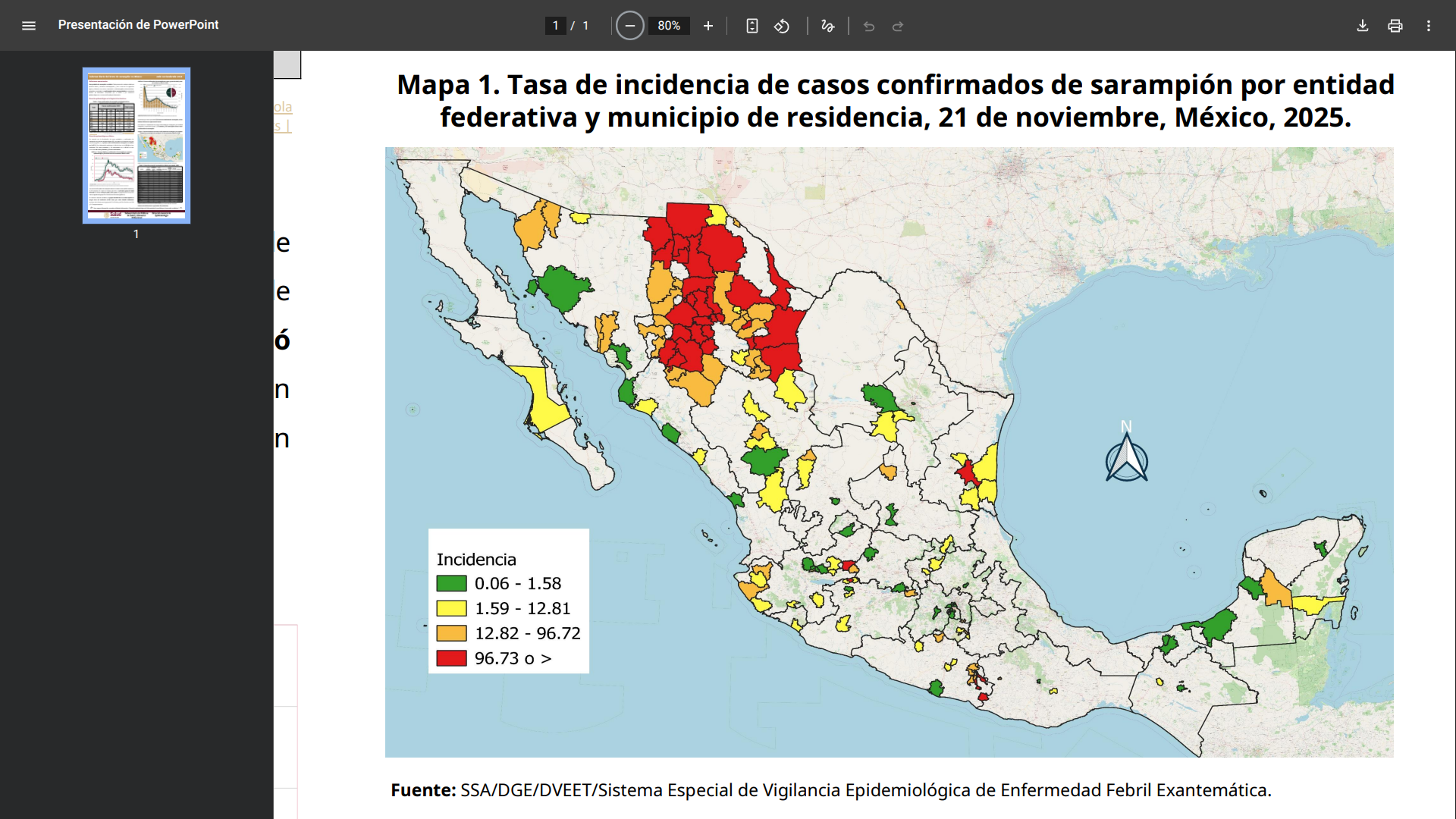
As of November 24, 2023, Mexico's Ministry of Health reported approximately 5,300 cumulative confirmed measles cases this year, primarily in the northern region, just south of New Mexico and Texas.
This data is comparable to Canada's, indicating that Mexico may also lose its measles-free status.
Meanwhile, the United States, located between Canada and Mexico, has reported around 1,753 measles cases this year, with a few ongoing outbreaks, particularly in northern South Carolina.
The standard recommendation shared among these countries and states is that most people should be fully vaccinated with the MMR vaccine to protect themselves from the easily transmissible virus.
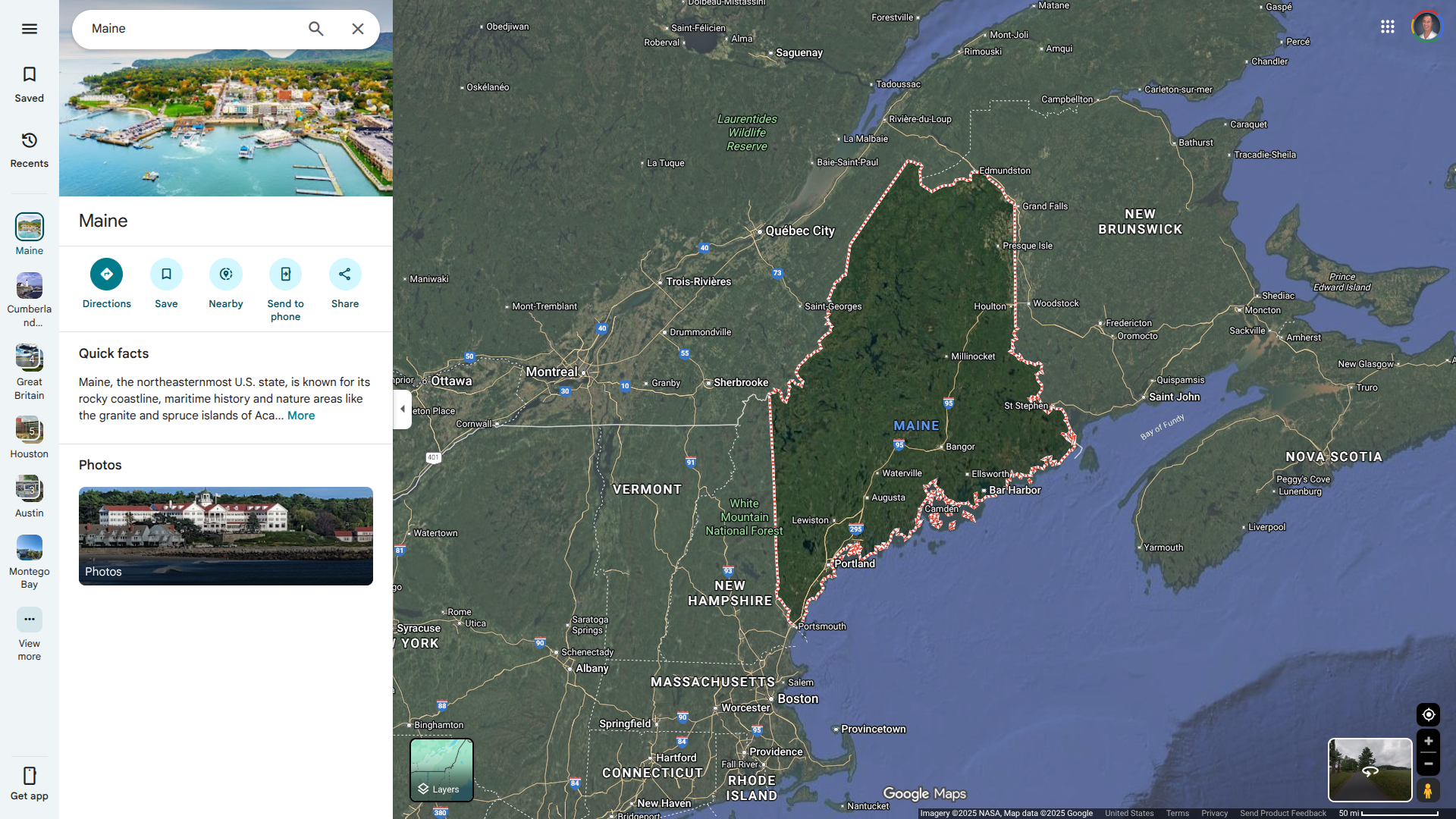
The Maine CDC recently announced it was investigating a cluster of seven cases of shigellosis among residents of Cumberland, Kennebec, and Androscoggin counties. So far in 2025, there have been 22 cases, preliminary data as of November 19, 2025.
The Maine CDC says that in the past five years, the median number of annual shigellosis cases was 11.
Shigellosis is an acute enteric infection transmitted through the fecal-oral route, directly through person-to-person contact, including sexual contact, and indirectly through contaminated food, water, and other routes.
The World Health Organization says it is evaluating the role of vaccines against Shigella on antibiotic use. Although several candidate Shigella vaccines are being evaluated at different stages of preclinical and clinical development, currently, no licensed vaccines against Shigella diarrhoea are widely available.
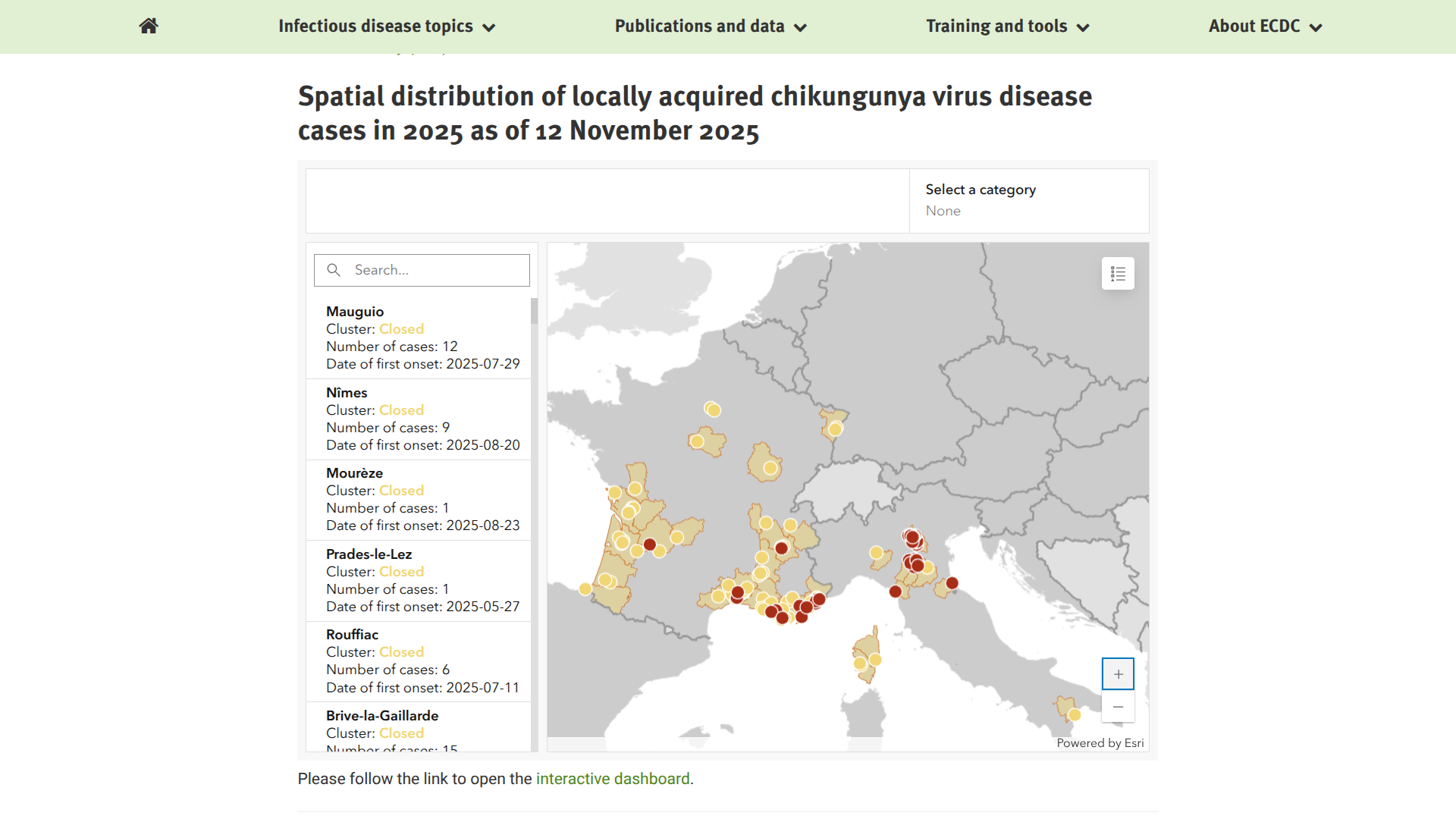
The French health ministry today published an updated Bulletin summarizing the unusually high number of chikungunya virus cases this year.
As of November 20, 2025, there have been 87 locally acquired cases of chikungunya in France: 43 in the Gard and 44 in the Hérault, located along France's Mediterranean coast.
Additionally, France confirmed 1,052 imported cases, with about 72% related to travelers from the department of La Réunion, located in the southwest Indian Ocean.
Seperately, Italy has reported 384 local cases, with the largest cluster located in Carpi, San Prospero, Soliera, Novellara, Cavezzo, Modena, Nonantola, Correggio, Novi di Modena, and Cesenatico.
The reasons behind these outbreaks may be weather-related.
On November 17, 2025, the European CDC reported that, according to data in the scientific literature, the ambient temperature is one of the most important environmental factors influencing the mosquito-borne transmission of the chikungunya virus.
The optimal daily average temperature for chikungunya transmission by Ae. albopictus in temperate zones of the Northern Hemisphere is 24–26 °C.
However, transmission might occur within the temperature range of 12 – 30 °C.
Currently, the U.S. CDC advises travelers to these areas to speak with a healthcare provider about chikungunya vaccination options.
The Chikungunya virus (CHIKV) has been circulating in the Region of the Americas for decades, causing large epidemics throughout the tropics and subtropics.
In the Federative Republic of Brazil, the co-circulation of arboviruses such as Dengue and Zika, and overlapping disease symptoms, CHIKV infection may be underdiagnosed, according to a recent study's findings.
Current data indicate that over 238,000 CHIKV cases and 115 related fatalities have been reported in Brazil this year.
In November 2025, the European CDC Situation Update reported CHIKV cases across all regions (Centro-Oeste, Nordeste, Norte, Sudeste, and Sul) and in most federal units of the country.
The Centro-Oeste and Sudeste regions account for the highest number of cases in recent weeks, where Mato Grosso Do Sul, Minas Gerais, and São Paulo are the most affected federal units in 2025.
The ECDC writes that cases are expected to increase from November onwards, based on observed trends in 2024 and 2023.
As of November 19, 2025, the U.S. CDC reports an elevated chikungunya risk in Brazil.
These health agency analyses are of interest to international travelers planning to attend Carnival 2026 in cities such as Rio de Janeiro.
The CDC says chikungunya vaccination may be considered for people traveling to or moving to this location if they plan to stay for an extended period. In the United States, approved chikungunya vaccination services are offered at travel clinics and pharmacies.