N-803 Combined with Natural Killer Cells Showed Potential to Reduce HIV Viral Load

ImmunityBio has announced that the combination of N-803 and natural killer cells can potentially reduce viral load in people living with human immunodeficiency virus (HIV), per the Phase 1 pilot study data.
Results from this study were published in The Journal of Infectious Diseases in January 2024; researchers at the University of Minnesota Medical School gave six HIV-positive individuals infusions of healthy NK cells from close relatives, along with N-803, to boost NK cell activity. All participants in this Phase 1 study experienced a significant reduction in infection levels following treatment with N-803.
The approach was well tolerated, with no unexpected adverse events.
N-803 is a novel investigational IL-15 superagonist complex with an IL-15 mutant (IL-15N72D) bound to an IL-15 receptor α/IgG1 Fc fusion protein. Its proposed mechanism of action is direct specific stimulation of CD8+ T cells and NK cells through beta gamma T-cell receptor binding with the generation of memory T-cells while avoiding T-reg stimulation.
N-803 is designed to have improved pharmacokinetic properties, longer persistence in lymphoid tissues, and enhanced anti-tumor activity compared to native, non-complexed IL-15 in vivo.
The use of N-803 is investigational. Safety and efficacy have not been established by any Health Authority or Agency, including the U.S. FDA.
Tim Schacker, MD, senior author of this paper, and colleagues are planning a follow-on study with additional participants to investigate these immunotherapies in HIV-infected individuals further.
“Antiretroviral therapies have had a profound impact on society, making it possible for those living with HIV to live longer lives with better outcomes. However, these therapies are not a cure, and still place a significant burden on people living with HIV and the healthcare system,” said Patrick Soon-Shiong, M.D., Chairman and Global Chief Scientific and Medical Officer at ImmunityBio, in a press release on March 5, 2024.
“These data preliminarily validate what we know about the benefit of enhancing NK cell function and the potential utility of N-803 in infectious diseases.”
In addition to this study, three other clinical trials are underway involving N-803 in HIV Cure-related strategies.
Two Phase 1 clinical trials are investigating N-803 in combination with bNAbs in HIV-infected individuals (ACTG A5386, NCT04340596: and NCT05245292 at the Rockefeller University), and a Phase 2 study is also underway to investigate the effect of combining N-803 with ART during acute HIV infection, sponsored by the Thai Red Cross and the U.S. Military HIV Research Program. To learn more about these studies, please visit our website.
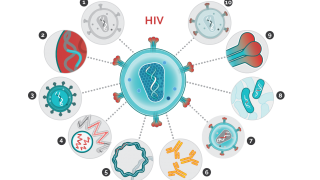
HIV affects tens of millions globally and currently has no known cure. HIV can disable NK cells—a frontline defense against viral infections—making it difficult to clear the infection.
One current strategy for curing HIV is known as the “kick and kill” approach. N-803 is under evaluation using this strategy, given the molecule’s ability to activate viral transcription in CD4+ T cells (“kick”) and boost CD8+ and NK cells, crucial for identifying and eliminating infected cells (“kill”), directing them to viral reservoirs.
ImmunityBio’s IL-15 superagonist N-803 (also called Anktiva® and nogapendekin alfa inbakicept)
The cytokine interleukin-15 (IL-15) plays a crucial role in the immune system by affecting the development, maintenance, and function of the natural killer (NK) and T cells.
N-803 is currently being evaluated in adult patients in two clinical NMIBC trials. QUILT-2.005 is investigating the use of N-803 in combination with BCG for patients with BCG-naïve NMIBC; QUILT-3.032 is studying N-803 in combination with BCG in patients with BCG-unresponsive NMIBC CIS and Papillary Disease.
Our Trust Standards: Medical Advisory Committee