Search API
The Florida Department of Health in Hillsborough County (DOH Hillsborough) recently informed residents of a confirmed human case of locally-acquired dengue fever.
According to data published by the state (Week 33) on August 19, 2025, this is the 14th local dengue case reported in 2025. Previous dengue cases have been confirmed in the east coast near Melbourne (11) and Miami (2).
DOH-Hillsborough and Hillsborough County Mosquito Control stated in a media release that they are coordinating surveillance and prevention efforts by conducting aerial spraying to reduce the spread of this mosquito-transmitted virus to other people.
This area of Florida includes cities such as Tampa and has a local population of over 1.4 million.
Additionally, Florida has reported 154 dengue cases among international travelers, many of whom had recently visited Cuba.
As of August 20, 2025, dengue vaccines are not offered in Florida.


The U.S. CDC reported today that the number of acute respiratory illnesses causing people to seek healthcare is at a very low level nationwide.
However, Respiratory Syncytial Virus (RSV) is a prevalent respiratory virus that is typically found first in Florida each year.
The CDC says young children face a higher risk of severe illness due to RSV.
Recent Florida Department of Health data show that Florida's RSV season lasts longer than in other parts of the country and exhibits unique regional patterns.
As of August 9, 2025, Florida reported there have been a total of 22 RSV outbreaks in the current season, with zero new outbreaks in the current week. Florida's Central Region, which includes Orlando, has reported 13 of these outbreaks this year.
Florida's health department notes that identifying unique seasonal and geographic trends in RSV activity in Florida has significant implications for prescribing patterns and initiating prophylaxis in children.
Additionally, the American Academy of Pediatrics (AAP) currently recommends that pre-approval for prophylactic treatment be made based on state surveillance data.
The CDC and AAP say RSV monoclonal antibody (mAb) therapy prevents serious lower respiratory tract disease (LRTD) caused by RSV in newborns and young children during their first RSV season.
A CDC report released on May 8, 2025, demonstrated that in 2024–25, RSV hospitalization rates were 45-52% lower in infants younger than 3 months old and 28-43% lower in infants younger than 8 months old who received an approved mAB compared to the 2018-2020 seasons before product introduction.
Both of these health agencies recommended that new mothers speak with a healthcare provider about immunization options before exposing an infant to RSV.
In addition to RSV, Florida has reported numerious chikungunya, dengue, and malaria cases in 2025.

The Florida Department of Health (FDH) today reported that additional locally-acquired and travel-related Dengue fever cases have been confirmed in various counties in 2025.
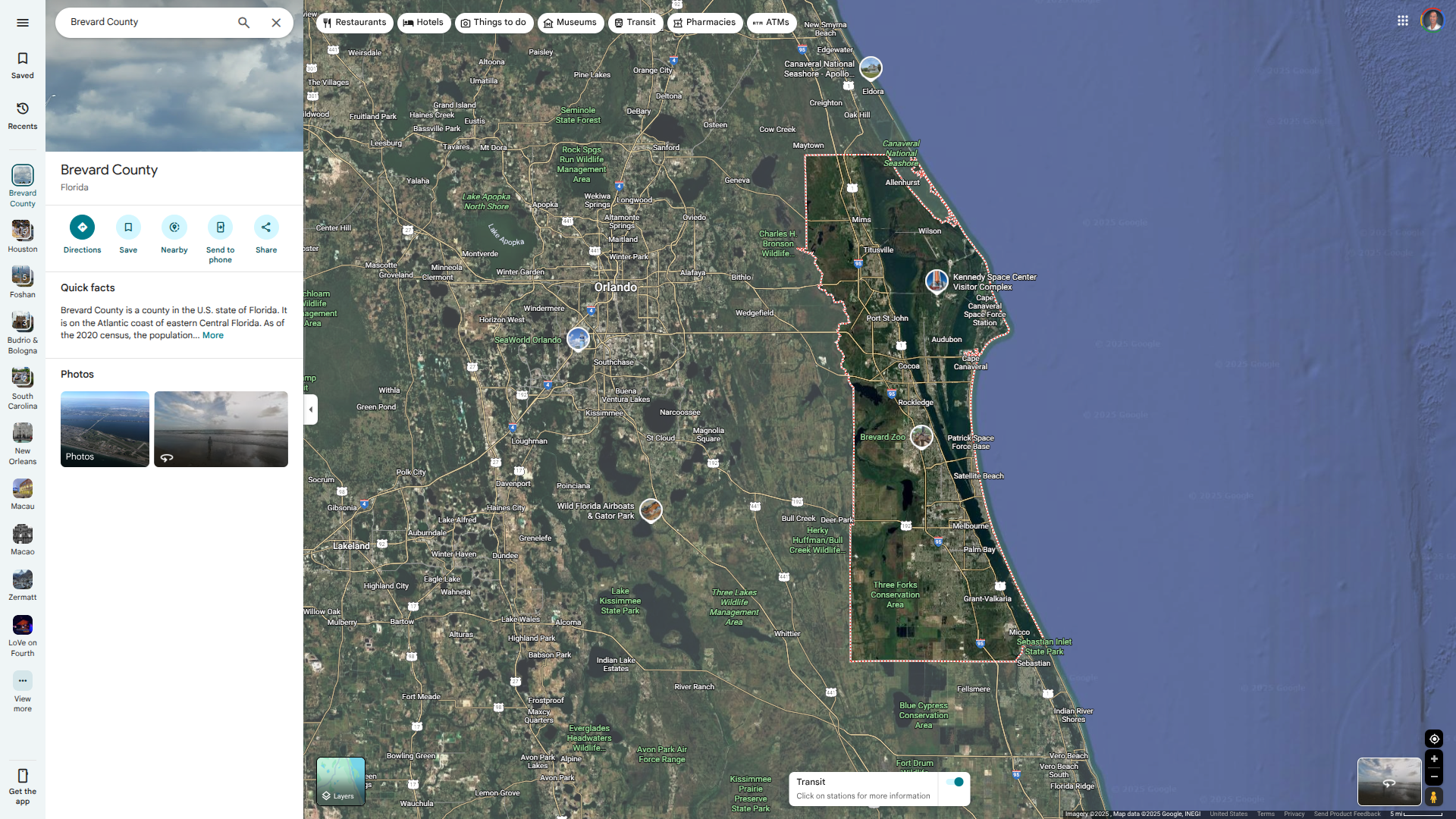
As of August 9, 2025, FDH confirmed ten locally acquired dengue cases (DEN-3, DENV-4) were reported in Miami-Dade (2) and Brevard (8) counties in 2025.
While several cities are located in Brevard County, Melbourne has the largest population at risk for this mosquito-transmitted disease, with over 87,000 residents.
To alert residents, DOH-Brevard has issued a Mosquito-Borne Illness Alert that is scheduled to be in effect through September 12, 2025.
Additionally, there have been 141 travel-related Dengue cases in Florida, most related to travelers from Cuba.
The FDH says Dengue infections can present as a flu-like illness with severe muscle aches and joint pain, fever, and sometimes a rash, and may appear within 15 days after being bitten by an infected mosquito.
Furthermore, Dengue fever is not contagious.
Currently, Dengue vaccines are unavailable in the continental U.S. However, Puerto Rico is testing a first-generation vaccine on children.

The WHO's Western Pacific Region continues to face a high burden of mosquito-borne arboviral diseases in 2025, particularly dengue fever.
The Dengue Situation Update #726 states that dengue has become endemic in various Member States, which are favorite vacation destinations.
For example, Fiji's Ministry of Health and Medical Services has reported 10,969 cases of dengue nationally. Eight deaths have been confirmed as directly attributed to the dengue outbreak, which has been driven predominantly by DENV-2.
According to local media reporting on August 4, 2025, Health Minister Dr Ratu Atonio Lalabalavu stated, "Ongoing awareness has been constantly done throughout, mainly in the Western Division and in the Northern Division."
To alert international travelers, the U.S. CDC lists various countries reporting dengue outbreaks in 2025.
From a prevention perspective, in addition to avoiding mosquito bites, various countries in the Pacific Region offer the second-generation dengue vaccine. This vaccine is unavailable in the United States.

Historically, local cases of dengue fever have been concentrated in Miami-Dade County. However, recent reports indicate that mosquitoes in northeast Florida are now also transmitting the disease, placing about 600,000 people at risk.
On August 2, 2025, the Brevard County health department reported its sixth locally acquired dengue case of the year.
In response, the Florida Department of Health in Brevard County (DOH-Brevard) has issued a Mosquito-Borne Illness Alert that expires in September 2025.
DOH-Brevard and Brevard County Mosquito Control are coordinating surveillance and prevention efforts along this Atlantic Ocean coastal community by enhanced monitoring for mosquitoes and diseases, as well as targeted mosquito treatment and overnight spraying to reduce the risk of disease transmission.
This area of Florida includes these cities: Melbourne, Titusville, and Cocoa Beach. And to the west, Orlando.
Two other local dengue cases were reported by Miami-Dade in 2025.
Furthermore, there have been over 120 travel-related dengue cases confirmed in Florida in 2025.
Dengue fever is not contagious, causes flu-like symptoms, and can be prevented with vaccination. Currently, a first-generation dengue vaccine is being evaluated in children living in Puerto Rico.
Globally, a second-generation dengue vaccine is offered in numerious countries in 2025.
Throughout 2025, the Florida Department of Health has reported travel-related cases of Dengue fever and Oropouche fever in international travelers returning from Cuba.
Recent data from the Pan American Health Organization indicates that Chikungunya fever, which is also transmitted by mosquitoes, may soon be added to Florida's list of health concerns.
As of August 5, 2025, there have been a total of eight locally acquired Chikungunya cases reported in Cuba this year, with an outbreak confirmed in the Matanzas municipality of Perico, according to the Pedro Kourí Institute of Tropical Medicine.
In Florida, four travel-related cases of Chikungunya were confirmed as of July 2025, with the countries of origin being Bolivia, Brazil, Indonesia, and Sri Lanka.
Fortunately, Chikungunya is a vaccine-preventable disease, with two options available in the United States.
Furthermore, Florida has confirmed 59 dengue cases related to travel from Cuba have been reported in 2025.
Additionally, in 2024, there were 103 reported cases of Oropouche fever among individuals who had traveled to endemic regions, including Cuba.
Cuba is currently included in Oropouche Travel Health Advisories issued by the U.S. CDC.
The CDC recommends that when planning a visit to Cuba, you speak with a travel vaccine advisor regarding routine and travel vaccine options at least one month before departure.


Since the beginning of 2025, five countries in Europe have reported human cases of West Nile Virus (WNV) infection: Bulgaria, France, Greece, Italy, and Romania.
In week #31, the European CDC reported that the highest number of cases, 43, occurred in the Latina province of Italy.
As of July 31, 2025, a total of 89 cases of WNV infection have been confirmed (Bollettino N. 3) in Italy this year, including eight fatalities.
In addition to WNV, other mosquito-borne diseases, Chikungunya and Dengue, have been reported in Italy in 2025.
Before visiting Italy this summer for events such as the Jubilee of Youth, the U.S. CDC recommends speaking with a travel vaccine advisor at least one month before departure about immunization options.

The Jubilee, also known as the Holy Year, has been taking place in Rome, Italy, since December 2024 and will continue until January 6, 2026.
Significant events are planned throughout various months during this period. For example, on June 15, 2025, Pope Leo XIV addressed a large gathering of children, young people, and adults who had come to Rome for the Jubilee of Sport.
According to the UK's Foreign Travel Advice issued on July 30, 2025, Rome is expected to be very busy during the Jubilee of Youth, which will be held from July 28 to August 3, 2025.
If you are planning to travel to Rome during this time, please refer to the Jubilee 2025 - Holy Year information in the Safety and Security section. Check the official Jubilee website or download the Jubilee app for a calendar of events.
The UK advises that before you travel to Italy, check that you have appropriate travel insurance for local treatment or unexpected medical evacuation. This is particularly important if you have a health condition or are pregnant.
Additionally, at least 8 weeks before your trip, consult with a travel advisor about disease protection options for West Nile virus, Dengue, and Chikungunya.
The U.S. CDC states measles is a health risk when visiting Italy in 2025.
