Search API

HIV Vaccines

HIV Vaccines Clinical Trials, Dosage, Indication, Side Effects

Human Immunodeficiency Virus (HIV) vaccine development accelerated in 2024, with candidates utilizing innovative technologies such as mRNANovotech's HIV Global, Clinical Trial Landscape report, revealed the biopharma industry has initiated over 1,000 HIV clinical trials worldwide since 2018. Developing HIV vaccines requires various clinical trials: phase 1, phase 2, phase 3, and phase 4; each development step is essential. The U.S. National Institutes of Health (NIH) published an article: Progress toward an HIV vaccine. The development of a preventive vaccine against HIV represents the best solution for controlling and eradicating the HIV pandemic, says the Vaccine Research Institute

As of August 2024, the U.S. Food and Drug Administration (FDA), BrazilJapan's National Institute of Infectious Diseases, the European Medicines Agency (EMA), and the United Kingdom had not approved an HIV prevention vaccine. On February 24, 2023, HIV.gov spoke with Dr. Dieffenbach, who noted that while there won't be an HIV vaccine in the near term, he encouraged anyone interested in learning about current HIV vaccine clinical trials to visit the HVTN website.

HIV Vaccine Candidates 2024

Following the discovery of HIV as a causative agent of AIDS, multiple HIV vaccine clinical trials have been conducted globally over the past 35 years. The use of nanotechnology in the design and improvement of HIV vaccines has recently advanced.

Moderna Inc. is advancing three Phase I clinical trials of HIV vaccines with partners (mRNA-1644/IAVI G002; mRNA-1644/IAVI G003; mRNA-1574/NIAID). mRNA-1574 is participating in the U.S. NIH's HVTN 302 study, there are three vaccine candidates: 1) BG505 MD39.3 mRNA, 2) BG505 MD39.3 gp151 mRNA, and 3) BG505 MD39.3 gp151 CD4KO mRNA.

ViiV Healthcare and GSK are advancing in the development of various HIV treatments (VH3810109, GSK3640254) that empower the suppression of the virus to undetectable levels.

eOD-GT8 60mer (mRNA-1644) - Developed by scientific teams at IAVI and Scripps Research and delivered via Moderna's mRNA platform. Recent findings from the Phase I clinical trial IAVI G001 showed that vaccination with the HIV immunogen eOD-GT8 60mer as a recombinant protein vaccine safely induced the targeted immune responses in 97% of recipients.

Vir Biotechnology, Inc. is developing VIR-1388, an investigational novel T-cell vaccine for the prevention of HIV based on the human cytomegalovirus vector (CMV) platform. A weakened version of CMV delivers the HIV vaccine material to the immune system without causing disease in the study participants.

HOOKIPA Pharma - Arenaviral therapeutic vaccines showed in a nonhuman, preclinical setting that 2-vector therapy induces a greater immune response than single-vector therapy and significantly reduces viral load.

AELIX Therapeutics S.L. - The therapeutic HIV vaccine, HIVACAT T-cell immunogen, is a novel HIV vaccine immunogen that leads to a prolonged period without Antiretroviral Treatment and supports the use of HTI vaccine for combination cure strategies for HIV—positive results from the phase 1 clinical study AELIX-002 published in the journal Nature Medicine.

CD40.HIVRI.Env is a vaccine candidate conducting a phase 1 clinical study and was developed by the Vaccine Research Institute (ANRS and Université Paris-Est Créteil, France) with a technology whose exclusive worldwide license is held by LinKinVax. On February 22, 2023, LinkinVax announced the observed counts of CD4+ T cells targeting specifically the HIV envelope protein produced after the vaccination remained stable until Week 48.

Uvax Bio, LLC announced in December 2023 that the U.S. NIH agreed to sponsor its HIV-1 vaccine candidate in a Phase 1 clinical trial to launch in the first quarter of 2024. The two vaccines being tested are based on Uvax Bio's proprietary 1c-SApNP® technology, displaying 20 uncleaved, prefusion-optimized (UFO) HIV envelope (Env) trimers in wild-type and glycan-trimmed forms (UVAX-1197 and UVAX-1107, respectively). The first participant was dosed in a Phase 1 clinical trial in Australia evaluating UVAX-1107 and UVAX-1197 on January 30, 2024. Uvax Bio's HIV-1 vaccines are combined with CpG 1018® adjuvant and aluminum hydroxide. In addition, research (April 2023) reported a single-component, self-assembling protein nanoparticle (1c-SApNP) could display 8 or 20 native-like Env trimers as vaccine candidates. 

Helocyte, Inc.'s Triplex is a universal (non-HLA-restricted) recombinant Modified Vaccinia Ankara viral vector vaccine engineered to induce a robust and durable virus-specific T cell response to three immuno-dominant proteins linked to CMV complications in the post-transplant setting. On October 16, 2023, the Company announced that it executed an exclusive option agreement with the City of Hope for patent rights to use Triplex, a cytomegalovirus vaccine, in combination with cytomegalovirus-specific, Anti-Human Immunodeficiency Virus Chimeric Antigen Receptor (CMV/HIV-CAR) T Cells for the treatment of adults living with HIV.

ReiThera Srl, the Ragon Institute of Mass General, MIT, Harvard, and IAVI are developing a novel HIV vaccine candidate that will be composed of ReiThera's Gorilla adenoviral vector (GRAd) vector, belonging to species C adenoviruses that are considered among the most potent vaccine carriers for the induction of CD8 T-cell responses to the encoded antigens and having a low seroprevalence in humans, and HIV T-cell epitope. IAVI is the sponsor and will execute a phase I clinical trial.

CytoDyn Inc. submitted a revised HIV clinical trial protocol to the FDA on February 1, 2024. The Company believes this submission removes the current clinical hold. On February 29, 2024, the FDA withdrew the clinical hold.

PrEPVacc HIV Prevention Study

On December 6, 2023, the PrEPVacc study team announced that they were discontinuing vaccinations following an independent data safety committee review that determined there was a minimal chance these HIV vaccines could stop HIV acquisition. However, the study's oral preexposure prophylaxis (PrEP) arms continue. The PrEPVacc clinical study combines the evaluation of experimental HIV vaccines and PrEP. As of March 2023, the study tested two different formulations of daily oral PrEP to see if a new F/TAF formulation (Descovy®) is effective. This clinical trial will provide data for F/TAF among cisgender women (87% of PrEPVacc trial participants). F/TAF is approved for use in the US and UK for selected people.

HVTN HIV Vaccine Candidate Clinical Trials

The HVTN datasets for phase 1a-2 trials can be found at this link.

HVTN 502 is a phase 2b trial evaluating the MRK Ad5 HIV-1 gag/pol/nef vaccine in 3,000 men and women at high risk of HIV in North America, the Caribbean, South America, and Australia. 

HVTN 505 is a phase 2b trial evaluating the DNA/rAd5 HIV-1 vaccine in 2,504 men or transgender women who have sex with men in the U.S.

HVTN 702 (Uhambo) is a phase 2b/3 trial evaluating the ALVAC-HIV + subtype C gp120/MF59 vaccine in 5,404 men and women at high risk of HIV in South Africa. 

HVTN 703/HPTN 081 and HVTN 704/HPTN 085 are two parallel phase 2b trials evaluating passive infusion of the broadly neutralizing antibody VRC01 in 2,699 at-risk cisgender men and transgender persons in the Americas and Europe and 1,924 at-risk women in sub-Saharan Africa.

HIV Monoclonal Antibody

Trogarzo® (ibalizumab) is a monoclonal antibody antiretroviral therapy associated with favorable virologic outcomes used in routine care in heavily treatment-experienced people with HIV in a study posted in May 2023. Trogarzo is a long-acting, CD4-directed, post-attachment HIV-1 inhibitor.

The peer-reviewed journal Nature published a study on June 1, 20,22 that concluded two HIV-specific broadly neutralizing monoclonal antibodies, 3BNC117 and 10-1074, completely suppressed HIV for about 40 weeks in patients who participated in a U.S. government-funded phase 1 clinical trial. The findings suggest that future antibody therapies may offer effective HIV treatment for extended periods without antiretroviral therapy.

Leronlimab, a CCR5 antagonist IgG4 monoclonal antibody, is designed to bind to C-C chemokine receptor type 5 (CCR5), a protein on the surface of specific immune system cells believed to play a role in numerous disease processes, including HIV.

A small phase I clinical trial led by Massachusetts General Hospital has tested an anti-HIV strategy involving an adeno-associated viral vector-based gene delivery system that instructs cells to pump out antibodies that block HIV. The treatment was safe and well-tolerated in the trial of eight adults with HIV. In addition, all participants produced measurable amounts of anti-HIV antibodies in their blood as of April 11, 2022.

ViiV Healthcare N6LS is a broadly neutralizing antibody that works by binding to a specific site (gp120) on the surface of HIV, preventing its entry into immune system cells (CD4+ T-cells). By blocking HHIV'sentry into human CD4+ cells, the virus cannot replicate, and the HIV transmission process may be prevented.

HIV Prevention

In August 2023, the U.S. Preventive Services Task Force recommended that clinicians prescribe preexposure prophylaxis using effective antiretroviral therapy to persons at increased risk of HIV acquisition to decrease the risk of acquiring HIV.

The U.S. FDA-approved Apretude (cabotegravir extended-release injectable suspension) for use in at-risk adults and adolescents weighing at least 35 kilograms for preexposure prevention to reduce the risk of sexually acquired HIV on December 20, 2021.

According to an editorial published in JAMA Internal Medicine, cabotegravir can be taken once every two months.

EDURANT® is a human immunodeficiency virus type 1 (HIV-1) specific, nonnucleoside reverse transcriptase inhibitor (NNRTI) indicated in combination with other antiretroviral agents for the treatment of HIV-1 infection in treatment-naïve patients 12 years of age and older and weighing at least 35 kg with HIV-1 RNA less than or equal to 100,000 copies/mL.

Gilead Sciences, Inc. announced on December 22, 2022, that Sunlenca® (lenacapavir), in combination with other antiretroviral, was Approved by the U.S. FDA for the treatment of HIV-1 infection in heavily treatment-experienced adults with multi-drug resistant HIV-1 infection. Sunlenca offers a twice-yearly treatment option for adults with HIV that their current treatment regimen does not adequately control. In May 2022, the NEJM published an ORIGINAL ARTICLE: Capsid Inhibition with Lenacapavir in Multidrug-Resistant HIV-1 Infection.

Gilead Sciences, Inc. announced on February 22, 2023, data evaluating lenacapavir in combination with broadly neutralizing antibodies (bNAbs) teropavimab and zinlirvimab as a potential long-acting treatment regimen with twice-yearly dosing. Results from the Phase 1b clinical trial demonstrated the investigational combination was generally well tolerated with high efficacy in select virologically suppressed participants living with HIV. The combination of lenacapavir with teropavimab and zinlirvimab will advance to a Phase 2 study in 2023 in virologically suppressed people with HIV.

Gilead Sciences, Inc.'s open-label phase 1 clinical study evaluated the efficacy and safety profile of Biktarvy® (bictegravir 50 mg/emtricitabine 200 mg/tenofovir alafenamide 25 mg tablets, B/F/TAF) in 33 virologically suppressed pregnant women with HIV. On December 12, 2023, the study's conclusion stated pharmacokinetic and safety data, combined with maintenance of robust virologic suppression, suggest that once-daily B/F/TAF without dose adjustment is appropriate during pregnancy.

The UB-421 SC formulation Semzuvolimab is in Phase 2 clinical trial development for HIV treatment, Last Update was Posted on February 23, 2023, with an Estimated Study Completion Date of December 31, 2025. The study protocol is entitled: Single arm Open-Label Phase 2 Trial of anti-CD4 Antibody UB-421 in Combination with Optimized Background Antiretroviral Therapy in Patients with Multi-Drug Resistant HIV-1 InfectThe NIAID/NIH sponsors this trialD/NIH. It was developed to provide a convenient delivery method compared to the IV route so patients can self-administer the medication. 

Sexually Transmitted Disease Vaccines

The sexually transmitted disease vaccine summary was updated in 2024.

0 min read
Vaccine: 
Availability: 
N/A
Clinical Trial: 
https://info.trialsearch.com/search-clinical-studies/?ad_id=12&cid=c8184e623bc4457eb23d81aadab4d2fe&o=12&ps=ws10&realtime=1&s=ss3&split_id=1482&utm_campaign=22&utm_medium&utm_source=everflow&utm_term=c8184e623bc4457eb23d81aadab4d2fe
Drug Class: 
vaccine
Condition: 
Last Reviewed: 
Saturday, August 3, 2024 - 05:45
Status: 

Avian Influenza Vaccines

Avian Influenza Vaccines 2025

The World Health Organization (WHO) reported in 2025 that over 1,000 human cases of influenza A have been reported globally since 2003. These cases include H5, H5N1, H5N6, and H5N8 strains of influenza A virus. In 2025, over 20 influenza A (bird flu) vaccines are available worldwide. The WHO updated recommendations for the development of new candidate vaccines for zoonotic influenza, with a view to pandemic preparedness.

As of November 2025, U.S. FDA-approved avian influenza vaccines are not commercially available. On December 11, 2024, the U.S. administration informed the media that there are no active plans to authorize the distribution of avian influenza (bird flu) vaccines. On June 27, 2024, the U.S. Centers for Disease Control and Prevention (CDC) confirmed that its avian vaccination program was inactive in the United States. According to the CDC, about 20 million doses of H5N1 and 12 million doses of H7N9 vaccines were available in the National Strategic Stockpile as of June 2023. The CDC also confirmed in October 2023 that an H5 candidate vaccine virus (CVV) similar to the hemagglutinin (HA) protein of H5N1 clade 2.3.4.4b A(H5) Candidate Vaccine Virus Development (pg. 37). The CDC says this H5 CVV could be used to produce a highly pathogenic avian influenza (HPAI) A(H5N1) virus vaccine for people.

The U.S. National Influenza Vaccine Modernization Strategy and the American Pandemic Preparedness Plan outlined the United States' priorities for the development and deployment of avian and pandemic influenza vaccines. As of 2025, the U.S. Influenza & Emerging Infectious Diseases (EID) Pandemic Vaccines and Adjuvants Program has advanced vaccination strategies to mitigate future pandemics. It also manages the U.S. National Pre-Pandemic Influenza Vaccine Stockpile (NPIVS) and implements its strategic use in the event of a public health emergency. The NPIVS uses the HHS Influenza Risk Assessment Tool (IRAT), updated in July 2023 and administered by the CDC, to identify and evaluate potential pandemic influenza threats. 

On April 21, 2024, the APHIS National Veterinary Services Laboratories made available 239 genetic sequences from the H5N1 clade 2.3.4.4b influenza virus recently identified in samples associated with the ongoing highly pathogenic avian influenza (HPAI) outbreak in the U.S. H5N1 is divided into several clades, each with its own geographic and clinical significance. 

Avian Influenza Vaccine Effectiveness

A Brief Communication published by the journal Nature Medicine on July 16, 2024, included the stockpiled US-licensed adjuvanted H5N1 vaccines. These vaccines generate cross-neutralizing antibodies against circulating HPAI H5N1 clade 2.3.4.4b in humans and may be helpful as bridging vaccines until updated H5N1 vaccines become available. Furthermore, the U.S. Food and Drug Administration (FDA), the United Kingdom, and European agencies say annual flu shots are unlikely to protect people during avian/pandemic influenza (bird flu) pandemics. 

U.S. FDA-Approved Avian Influenza Vaccines

On September 15, 2009, four influenza vaccine manufacturers received approval from the FDA to use the 2009 monovalent influenza A (H1N1) vaccine to prevent outbreaks caused by the 2009 pandemic influenza A (H1N1) virus. BARDA is partnering with GSK and CSL Seqirus to manufacture investigational lots of H5N8 vaccines and clinically assess the adjuvancy, immunogenicity, and dose-sparing ability of the adjuvants combined with the manufactured vaccines.

The U.S. FDA authorized CSL Seqirus Inc. Audenz™ (Influenza A(H5N1) Monovalent Vaccine, Adjuvanted), a cell-based vaccine, on January 31, 2020. CSL Seqirus has developed prophylactic vaccines to address the H5N1 threat posed by the virus, using egg-based technology at its Liverpool, UK facility (where the virus grows in eggs) and cell-based technology at its Holly Springs, NC facility (where the virus grows in cells).

On November 14, 2013, the FDA licensed the I.D. Biomedical Corporation Influenza A (H5N1) Virus Monovalent Vaccine, Adjuvanted (STN#: 125419), to prevent H5N1 influenza disease. The vaccine was not commercially available in 2024, but the U.S. federal government purchased it for the National Stockpile for as-needed distribution. 

Sanofi Pasteur's Influenza Virus Vaccine, H5N1, was approved by the FDA in 2007.

Through six awards, CSL Seqirus has been working with the U.S. BARDA to support U.S. pandemic preparedness objectives. On October 4, 2024, CSL Seqirus received a new BARDA award to complete the fill-and-finish process for an additional pandemic vaccine. This $34 million investment further supports the U.S. government's response to the outbreak and preparedness efforts. It is the Six Avian Influenza Pandemic Preparedness Award presented to CSL Seqirus by BARDA. On September 25, 2024, CSL Seqirus announced an award of $121.4 million. As part of the NPIVS, it would expand its reserves of MF59® adjuvant to the equivalent of 40 million doses and expand its Vendor-Managed Inventory program for its proprietary MF59® adjuvant.

On May 30, 2024, CSL Seqirus announced that BARDA selected it to complete the fill-and-finish process of the pre-pandemic avian influenza vaccine for the U.S. government as part of the NPIVS program. The company stated that it intends to deliver approximately 4.8 million doses of pre-pandemic vaccine that are H5-matched to the H5 component of the currently circulating H5N1 strain.

CSL Seqirus announced on August 28, 2023, that BARDA selected the company to deliver one bulk lot of H5N8 A/Astrakhan antigen to support the U.S. government's pandemic response readiness under contract number 75A50122D00004 ($46.3 million). Seqirus received an award from BARDA to produce an A/Astrakhan virus vaccine, the seed, and subsequently announced the selection of CSL Seqirus to deliver an H5N8 A/Astrakhan virus vaccine candidate for assessment in a Phase 2 clinical study. Under the $30.1 million agreement, CSL Seqirus has established and maintains the required pandemic-readiness, delivering 150 million doses of cell-based pandemic influenza vaccine within 6 U.S. months of an influenza pandemic declaration in the U.S. In 2022, Sequirus's Holly Springs facility successfully achieved BARDA's criteria to establish domestic manufacturing capability for innovative cell-based seasonal and pandemic influenza vaccines. 

On October 5, 2022, CSL announced results from the preclinical studies of the company's self-amplifying messenger RNA (sa-mRNA) influenza vaccine candidates. The data, published in Molecular Therapy – Methods and Clinical Development, indicate that the sa-mRNA influenza vaccine candidates elicited a potent, cross-reactive immune response against pandemic and seasonal influenza strains A(H5N1) and A(H1N1) (Also Known as Swine flu). Roberta Duncan, CSL's mRNA Program Lead, commented in an article in March 2024, "The innovation of sa-mRNA brings the opportunity to provide greater public health protection against respiratory viruses and in other disease states." 

Avian Influenza Vaccine Candidate

On November 6, 2025, researchers at the University of Maryland School of Medicine's Center for Vaccine Development and Global Health announced encouraging results from an early-phase clinical trial that found an experimental intranasal vaccine triggered a broad immune response against multiple strains of H5N1. They reported a randomized, controlled phase I trial of a recombinant influenza A/H5 (A/Indonesia/05/2005, clade 2.1) hemagglutinin vaccine formulated with a nanoemulsion adjuvant (W805EC).

On July 24, 2025, Novavax, Inc. announced preclinical data demonstrating that its avian pandemic influenza vaccine candidate induced robust immune responses following either a two-dose intranasal or a two-dose intramuscular regimen in nonhuman primates. The results were published in Nature Communications

Canada Avian Influenza Vaccine

GSK—I.D. Biomedical Corporation of Quebec's Arepanrix H5N1 A/American wigeon clade 2.3.4.4b vaccine is approved by the U.S. FDA. It uses established technology for seasonal and pandemic flu vaccines approved in Canada. On February 19, 2025, the Public Health Agency of Canada released the National Advisory Committee on Immunization's Preliminary guidance on human vaccination against avian influenza in a non-pandemic context as of December 2024. 

China Pandemic Influenza Vaccine

SINOVAC's whole-virus inactivated H5N1 pandemic influenza vaccine, Panflu®, is supplied to the Chinese government's stockpiling program.

European Avian Influenza Vaccines

According to the European Medicines Agency (EMA), one vaccine (Aflunov) is authorized for use in the European Union (EU) during avian influenza outbreaks within notarized pandemic mic. Aflunov contains a flu strain called A/turkey/Turkey/1/2005 (H5N1)-like strain (NIBRG-23) (clade 2.2.1). Additionally, the EMA says that four pandemic-preparedness influenza vaccines authorized in the EU can be rapidly modified to protect people during a pandemic. EMA's human medicines committee recommended Celldemic at its February 2024 meeting (zoonotic influenza vaccine [H5N1] [surface antigen, inactivated, adjuvanted, prepared in cell cultures]). This vaccine is intended for immunization during outbreaks of influenza coming from animals, including when public health authorities anticipate a possible pandemic. Incellipan (pandemic influenza vaccine (H5N1) (surface antigen, inactivated, adjuvanted, prepared in cell cultures)) is a pandemic preparedness vaccine intended for use only if a flu pandemic has been officially declared.

On June 11, 2024, CSL Seqirus announced it would provide 665,000 pre-pandemic (zoonotic) vaccines to the EC's fifteen EU and EEA Member States. Seqirus UK Ltd has an EU-wide modified marketing authorization for this avian influenza vaccine for use in adults. On June 5, 2024, Andrew Joseph wrote that Finland may become the first country to offer 'bird flu' vaccinations to people this year. The zoonotic influenza vaccine Seqirus is used in Finland.

The European Commission (EC) signed a framework contract on July 22 for the joint procurement of GSK's Adjuvanted Pandemic Influenza Vaccine (Adjupanrix). As a result, EC Member States can purchase up to 85 million vaccine doses during an influenza pandemic.

Japan Avian Influenza Vaccines

Japan's Health Ministry announced in May 2023 that it is updating its avian influenza vaccine stockpile from H7N9 to H5N1. On May 25, 2023, local media reported that Japan plans to stockpile 10 million vaccine doses for its population. In 2018, Japan initiated another cull program for infected chickens. In 2008, Japan started testing bird flu vaccine versions. In 2003, after 79 years, the H5N1 Highly Pathogenic Avian Influenza (HPAI virus was detected in dead chickens.

United Kingdom Influenza Pandemic Vaccines

The UK Health Security Agency announced on September 2 an advanced purchase agreement with CSL Seqirus to produce over 100 million influenza pandemic vaccines if needed. On December 3, 2024, the UK Government purchased over five million doses of the human H5 influenza vaccine manufactured by CSL Seqirus UK Limited, a UK-based healthcare company.

Avian Influenza Vaccine Adjuvant

According to Vanderbilt University Medical Center research published in The Journal of Infectious Diseases (January 2024), avian (bird) influenza vaccines created a more robust immune response in a phase 1 study paired with the GSK-manufactured AS03 adjuvant.

mRNA Pandemic Influenza Vaccine Candidates

On April 10, 2025, Arcturus Therapeutics Holdings Inc. announced that the U.S. FDA had granted Fast Track Designation for the self-amplifying mRNA (sa-mRNA) vaccine candidate ARCT-2304. This vaccine candidate is designed for active immunization to protect against disease caused by the influenza A H5N1 subtype contained in the vaccine. ARCT-2304 (LUNAR-H5N1) is a STARR® sa-mRNA vaccine candidate formulated with Arcturus' proprietary LUNAR® delivery technology. 

Moderna initiated a Phase 1/2 study in July 2023 to generate safety and immunogenicity data for the investigational pandemic influenza vaccine (mRNA-1018) in healthy adults 18 years and older. The study includes vaccine candidates against H5 and H7 avian influenza viruses. Results from the study are expected in 2025 and will inform Phase 3 development plans. On January 17, 2025, the U.S. government awarded Moderna $590 million to continue vaccine development.

Argentinian manufacturer Sinergium Biotech is leveraging the WHO and the Medicines Patent Pool's mRNA Technology Transfer Programme. Sinergium has developed candidate H5N1 vaccines and aims to demonstrate the concept in preclinical models. Once the preclinical data package is concluded, the technology, materials, and expertise will be shared with other manufacturing partners.

In April 2024, the U.S. FDA granted CurVac N.V. Fast Track designation for a monovalent influenza A (H5N1) pre-pandemic mRNA vaccine candidate encoding an H5 antigen. The candidate is being developed in collaboration with GSK. The start of Phase 1, part of a combined Phase 1/2 study, was announced on April 24, 2024.

Arcturus Therapeutics Holding Inc.'s ARCT-2304 is a sa-mRNA vaccine candidate formulated within a lipid nanoparticle (LNP). The sa-mRNA vaccine candidate is designed to produce numerous copies of mRNA within the host cell after intramuscular injection, thereby achieving enhanced expression of haemagglutinin (HA) and neuraminidase (NA) antigens, and allowing lower doses than conventional mRNA vaccines. The FDA issued a "Study Can Proceed" notification on November 11, 2024.

Vir Biotechnology Pandemic Monoclonal Antibody

On October 4, 2022, the BARDA awarded California-based Vir Biotechnology, Inc. a multi-year contract with a potential value of up to $1 billion to advance the development of a complete portfolio of innovative solutions (vaccines) to address influenza and other infectious disease threats. BARDA will initially invest approximately $55 million to support ongoing and future development of VIR-2482, an investigational prophylactic monoclonal antibody (mAb) designed to protect against seasonal and pandemic influenza. On July 20, 2023, Vir announced that the Phase 2 PENINSULA trial, evaluating VIR-2482 for the prevention of symptomatic influenza A illness, did not meet its primary or secondary efficacy endpoints.

South Korea Avian Influenza Vaccine Candidate

SK Bioscience announced on May 6, 2025, that it has been selected for the Korea Disease Control and Prevention Agency Priority Infectious Disease Pandemic Preparedness Rapid R&D Support Program. This government-led initiative aims to develop vaccines against avian influenza, which has been identified as a high-risk candidate for the next pandemic.

Avian Influenza Vaccines for Birds

Boehringer Ingelheim VAXXITEK® HVT+IBD+H5 is a new trivalent vaccine for poultry that offers protection against Marek's disease, Infectious Bursal Disease, and H5 avian influenza.

The United States Department of Agriculture's Agricultural Research Service (APHIS) researchers confirmed on April 14, 2023, that they are currently testing several vaccine candidates for use with birds. On May 16, 2023, APHIS approved the emergency use of an HPAI vaccine to prevent additional deaths from avian influenza. The authorized vaccine is a killed, inactivated product conditionally licensed by APHIS' Center for Veterinary Biologics in 2016.   

The DIVA strategy uses an activated oil-emulsion vaccine containing the same haemagglutinin (H) subtype as the challenge virus, but a different neuraminidase (N) subtype. The possibility of using the heterologous N subtype to differentiate vaccinated from naturally infected birds was investigated by developing an "ad hoc" serological test to detect specific anti-N1 antibodies.

The World Organisation for Animal Health (WOAH) announced on June 7 that it issued a comprehensive report on Avian Influenza – Policy to Action: The Case of Avian Influenza – Reflections for Change. It was recognized that a successful vaccination strategy must rely on authorized (bird flu) vaccines. "Vaccinating is not the end; it is just the beginning. Vaccination application needs to be managed along the supply chain, including a surveillance program to detect active infection in vaccinated animals," said Dr. David Swayne, Disease Expert and Forum rapporteur.

14 min read
Last Reviewed: 
Tuesday, November 25, 2025 - 07:50
Description: 
Avian influenza and Pandemic vaccines are U.S. FDA approved.
Condition: 

Remsima Monoclonal Antibody

Remsima (Infliximab) Monoclonal Antibody 2022

Celltrion Healthcare's Remsima (Inflectra) (INN: Infliximab) is an anti-inflammatory medicine that contains the active substance infliximab. It is the world's first biosimilar chimeric human-murine IgG1 monoclonal antibody (mAbs) produced in murine hybridoma cells by recombinant DNA technology used to treat several autoimmune diseases. Remsima slows down the disease progression by neutralizing tumor necrosis factor-alpha (TNF-a), a common cause of autoimmune diseases.

The U.S. FDA approves a biosimilar product based on a showing that it is highly similar to an already-approved biological product, known as a reference product. The biosimilar also must show it has no clinically meaningful differences in terms of safety and effectiveness from the reference product. 

In August 2020, Celltrion and Inhalon Biopharma signed a Confidential Disclosure and Material Transfer Agreement to research and developed an inhaled administration formulation of regdanvimab. To elicit potent neutralizing antibody response against the new emerging SARS-CoV-2 variants, Celltrion identified a total of 38 potent neutralizing antibodies in which antibody candidate No. 32 (CT-P63) produced high neutralization titres against new emerging strains. CT-P63 has previously been demonstrated to have neutralizing activity against the most common variants, including the Alpha, Beta, Gamma, and Delta variants.

As of March 12, 2022, Remsima is Approved for various indications in Korea, Europe, Canada, Japan, the U.S., and multiple countries. U.S. FDA: BLA 125544. The EMA authorized Remsina EMEA/H/C/002576 in 2013. ATC code: L04AB02.

 Located in Incheon, South Korea, Celltrion Healthcare, Inc. is committed to delivering innovative and affordable medications to promote patients' access to advanced therapies. Its products are manufactured at state-of-the-art mammalian cell culture facilities, designed and built to comply with the U.S. FDA cGMP and the E.U. GMP guidelines. For more information, please visit https://www.celltrionhealthcare.com/en-us.

Remsima®SC

Remsima®SC is the world's first S.C. formulation of biosimilar infliximab developed by Celltrion. It was approved by the European Medicines Agency, the Korean Ministry of Food and Drug Safety, and Health Canada.

Remsima (Infliximab) Monoclonal Antibody Indication

Remsima is indicated to treat many different autoimmune diseases, including Rheumatoid Arthritis (R.A.), Ankylosing Spondylitis(AS), Ulcerative Colitis(U.C.), Crohn's disease(CD), Psoriatic Arthritis(PsA), Psoriasis(PsO).

Remsima (Infliximab) Monoclonal Antibody Dosage

Infliximab should be administered intravenously over two hours. All patients administered infliximab are to be observed for at least 1-2 hours post-infusion for acute infusion-related reactions. One vial contains 100 mg of infliximab. After reconstitution, each mL contains 10 mg of infliximab.

Rheumatoid arthritis: 3 mg/kg given as an intravenous infusion followed by additional 3 mg/kg infusion doses at 2 and 6 weeks after the first infusion, then every eight weeks thereafter. Remsima must be given concomitantly with methotrexate.

However, specific studies of infliximab in elderly patients have not been conducted.

Remsima (Infliximab) Monoclonal Antibody Contraindications

Contraindications Hypersensitivity to the active substance, to other murine proteins, or to any of the excipients listed in section 6.1. Patients with tuberculosis or other severe infections such as sepsis, abscesses, and opportunistic infections (see section 4.4). Patients with moderate or severe heart failure (NYHA class III/IV)

Regdanvimab (CT-P59) and CT-P63 Inhaled COVID-19 Therapy

Regdanvimab (CT-P59) and CT-P63 have been developed to target newly emerging mutations of SARS-CoV-2, including the Omicron variant (B.1.1.529). CT-P63 is a monoclonal antibody targeting the SARS-CoV-2 spike receptor-binding domain (RBD) as a treatment for COVID-19 infection.

The inhaled formulation of the monoclonal antibody not only targets the SARS-CoV-2 spike receptor-binding domain (RBD) and elicits a neutralizing antibody response, but it also has a 'trapping' mechanism of action and thereby neutralizes and traps in mucus with exceptional potency. The muco-trapping antibody platform directly traps the virus in airway mucus, preventing the local spread of the infection and quickly eliminating the virus from the lungs through the body's natural ability to clear mucus. In addition, the inhaled formulation can be readily self-administered by patients through a nebulizer, extend critical drug supplies to more patients by reducing the dosage needed, and does not place excessive demands on healthcare staff and infusion clinic space that intravenous drugs do.

Regkirona Monoclonal Antibody for COVID-19

Regkirona binds to the receptor-binding domain (RBD) of the spike(s) protein of SARS-CoV-2, consequently blocking cellular entry and SARS-CoV-2 infection. Regkirona is approved under Emergency Use of Authorization or Conditional Marketing Authorization in Korea, Europe, Indonesia, Brazil, Peru, and Australia.

Regkirona, Remsima Monoclonal Antibody News

February 7, 2022 - Celltrion Group announced it submitted an Investigational New Drug application to conduct a global Phase III clinical trial (2,200 people) evaluating the efficacy and safety of an inhaled COVID-19 antibody cocktail therapy for patients with mild-to-moderate symptoms of COVID-19. The inhaled COVID-19 antibody cocktail combines monoclonal antibodies with regdanvimab (CT-P59) and CT-P63 and has been developed to target newly emerging mutations of SARS-CoV-2, including the Omicron variant.

January 3, 2022 - The Celltrion Group announced results for its cocktail therapy candidates, including neutralization data against the Omicron variant. In an experiment conducted in partnership with the U.S. National Institutes of Health, CT-P63 showed strong neutralizing activity against the Omicron variant (B.1.1.529) based on structural analysis by X-ray crystallography and neutralization data from pseudo- virus testing. Celltrion anticipates results of the SARS-CoV-2 Omicron variant assays and animal model studies by the end of the first quarter of 2022.

July 22, 2021 - North Carolina-based Inhalon Biopharma, Inc., a clinical-stage immunotherapy company developing an inhaled "muco-trapping" antibody platform for treating a variety of acute respiratory infections, today announced it is partnering with Celltrion, Inc. to develop IN-006, an inhaled form of regdanvimab, for treating patients with COVID-19.

Remsima Monoclonal Antibody Clinical Trials

Remsima has been involved in over 25 clinical trials. Additionally, several other versions of the mABs are in COVID-19 six clinical trials.

A global Phase III clinical trial evaluating the efficacy and safety of an inhaled COVID-19 antibody cocktail therapy for patients with mild-to-moderate symptoms of COVID-19. The trial is expected to enroll 2,200 patients globally.

0 min read
Availability: 
Other 100 countries
Generic: 
Infliximab
Drug Class: 
Monoclonal Antibodies
Last Reviewed: 
Sunday, March 13, 2022 - 10:10
Brand: 
Remsima
Status: 
Manufacturer Country ID: 
FDA First In Class: 
Yes

Travel Diseases 2025

Travel Diseases December 2025

Vaccine-preventable disease outbreaks, such as polio, yellow fever, Ebola, measles, cholera, and chikungunya, continue to disrupt international travel in 2025, says the U.S. Centers for Disease Control and Prevention (CDC). In the United States, the National Notifiable Diseases Surveillance System collects data on reportable diseases from various jurisdictions. As of December 2025, the CDC published Travel Health Advisories and digital maps indicating disease outbreaks in multiple countries.

The World Health Organization (WHO) and the UK Health Security Agency (UKHSA) emphasize the importance of checking your destination before travel and staying prepared by staying up to date with the latest outbreaks and events. The UKHSA published an analysis of travel-related diseases in the United Kingdom for the first half of 2025. The WHO and the Pan American Health Organization (PAHO) publish weekly Epidemiological Updates for mosquito-transmitted diseases in 2025. The WHO publishes global trends and total numbers in reported cases of selected vaccine-preventable diseases.

Travel Diseases

As of 2025, the U.S. Food and Drug Administration (FDA) has approved vaccines targeting travel-related diseases, such as the following:

Chagas Disease - Researchers from Texas A&M University, the University of Florida, and the Texas Department of State Health Services say the time is now to recognize Chagas disease as endemic in the U.S. As of 2025, no vaccines are available to prevent Chagas disease.

Chikungunya: Chikungunya is a viral disease transmitted to humans by mosquitoes infected with the Chikungunya virus (CHIKV). Outbreaks are primarily found in Africa, Asia, Brazil, and the Indian subcontinent. In 2023, the U.S. FDA approved a CHIKV preventive vaccine, nd in 2025, a second one, VIMKUNYA® 2025.

Cholera: The WHO has recorded seven cholera pandemics over the past two centuries, with the current (7th) cholera epidemic, which began in 1961, expected to continue in 45 countries by 2025. WHO-prequalified oral cholera vaccines (OCV), such as DUKORAL, are available. VaxChora® became available in the U.S. in late 2023.

Dengue: The dengue virus is transmitted to humans through the bite of infected mosquitoes. There are four Dengue serotypes, and any of them can infect you.

Ebola: Ebola virus disease is a rare but often fatal illness in humans. The Ervebo® vaccine was approved by the U.S. FDA in 2020. 

Hepatitis: Hepatitis is an inflammation of the liver. The five main strains of hepatitis viruses include hepatitis A, hepatitis B, hepatitis C, hepatitis D, and hepatitis E. The CDC updated hepatitis vaccination schedules for children, adolescents, and adults. 

Influenza: Various influenza viruses continually spread worldwide. Several FDA-approved flu shots are available in 2025.

Japanese Encephalitis (JE) is a severe virus that spreads to people through the bites of infected mosquitoes. FDA-approved JE vaccines are available in the U.S.

Lassa Fever is an acute viral infection that originates and spreads through contact with a typical African rodent, such as the multimammate rat. As of 2023, the U.S. FDA has not approved a Lassa fever vaccine.

Lyme disease is a Tickborne disease common in Europe and the United States, transmitted to humans through the bite of infected ticks. No vaccine has been approved in 2025.

Malaria: A life-threatening disease caused by parasites transmitted to people through the bites of infected female Anopheles mosquitoes. It is preventable with the Mosquirix and R21/Matrix-M malaria vaccines, which are available in Africa, not the U.S.

Marburg: Marburg virus disease (MVD) is a severe human disease caused by the Marburg virus. Recent outbreaks in Africa have caused MVD. As of 2025, the FDA has not approved a vaccine for MVD.

Measles: Highly contagious, severe viral Disease; vaccines (MMR-II and Priorix) are available throughout the U.S., but the Disease poses a risk to international travelers visiting countries such as India.

Meningococcal: Vaccines can help prevent meningococcal Disease, which is any illness caused by the bacterium Neisseria meningitidis.

MERS: Middle East Respiratory Syndrome vaccines are not approved in 2025, but several vaccine candidates are being tested in clinical trials.

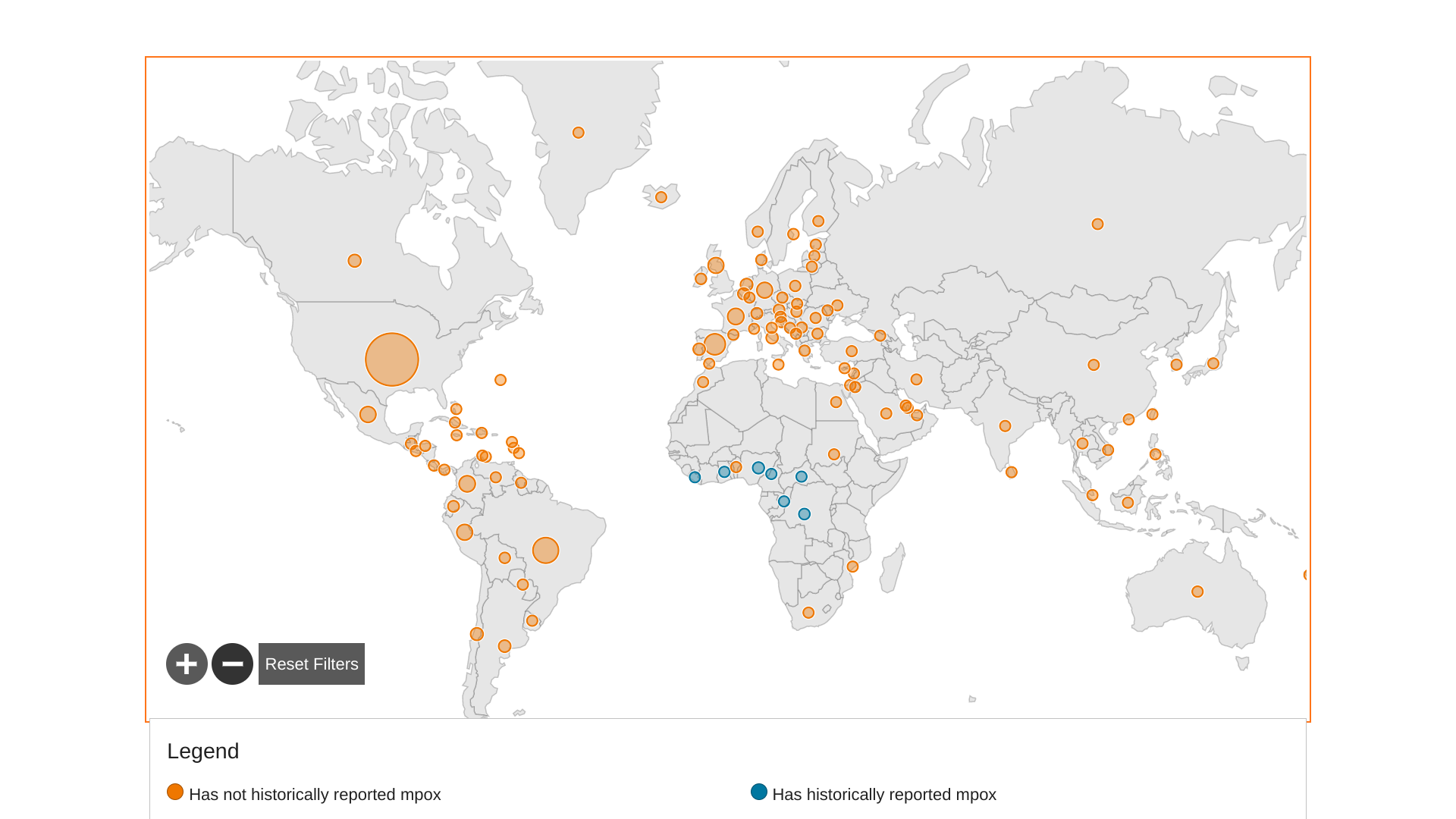
Mpox: Mpox is caused by the mpox virus, and outbreaks began in May 2022 and continue in 2023. Authorized vaccines such as JYNNEOS® are available in various countries in 2023.

Oropouche is a known disease that is emerging in parts of South America, Central America, and the Caribbean. As of July 2025, a commercial test was announced. Reverse transcription PCR testing can identify the RNA of the virus during the early stages of infection, aiding in diagnosis. Serology testing, which identifies antibodies produced by the immune system in response to the virus, can assist in diagnosing the virus in later stages of infection.

Polio is a highly infectious disease caused by the poliovirus. There is no cure for polio, but vaccines can prevent it. Canada, Israel, Germany, the UK, New York, Spain, and various African and European countries have detected the rabies virus in wastewater and in expanded vaccination programs. Rabies is a vaccine-preventable viral disease in over 150 countries and territories. It is present on all continents except Antarctica, with over 95% of human deaths occurring in the Asia and African regions. It is spread to people and animals through bites or scratches, usually via saliva. Dogs are responsible for up to 99% of rabies transmission to humans. 

Rift Valley Fever: An epidemic in Africa that can be fatal to humans. As of 2023, no vaccines are available for human use. However, the ThVF vaccine candidate was found safe, well-tolerated, and immunogenic when administered as a single dose in this University of Oxford phase 1 study population.

Rotavirus: Four rotavirus strains are WHO prequalified.

Tickborne encephalitis: The Tickborne encephalitis virus belongs to the family Flaviviridae. Four FDA-approved vaccines are currently available.

Typhoid: Typhoid fever is a life-threatening infection caused by Salmonella Typhi. It is usually spread through contaminated food or water. One FDA-approved vaccine has been used for many years to prevent typhoid.

Tuberculosis (TB) is a potentially severe infectious disease that primarily affects the lungs. The Bacillus Calmette-Guérin (BCG) vaccine helps prevent TB. 

West Nile Virus: Phoenix, Arizona, has become a West Nile Virus (WNV) hot spot in the U.S. in 2023. However, the U.S. FDA has not authorized a WNV vaccine for prevention.

Yellow Fever: Yellow fever is an acute viral hemorrhagic disease transmitted by infected mosquitoes. A small proportion of patients who contract the virus develop severe symptoms, and approximately half die within 7 to 10 days. Yellow fever vaccines (YF-Vax® and Stamaril®) are available worldwide.

Zika: Zika virus outbreaks in Brazil, India, and Puretro Rico are expected to continue in 2025. However, as of July 2025, no approved Zika vaccines are available.

Travel Vaccine Appointments

Request a pre-departure travel vaccination advisory appointment with a healthcare professional using this weblink.

6 min read
Last Reviewed: 
Saturday, December 13, 2025 - 20:10
Description: 
Vaccination prevents yellow fever, polio, malaria, measles, mpox, dengue, chikungunya diseases.
Condition: 

Measles Vaccines

Measles Vaccines May 2025

Measles vaccination programs began in the United States in 1963 and continue in every state and territory as of May 2025. The U.S. Centers for Disease Control and Prevention (CDC) published the measles vaccination schedules for children and adults and has issued an advisory for international travelers visiting areas with a measles outbreak in 2025. 

In May 2025, the CDC confirmed that if you are not sure if you or your travel companions are fully protected against measles, schedule an appointment to see your clinician at least six weeks before traveling so that you have enough time to get vaccinated with a measles, mumps, and rubella (MMR) vaccine. The CDC's Measles Clinical Presentation, Diagnosis, and Prevention Clinician Outreach and Communication Activity Call in 2023 included these presentations. The Lancet published a study in May 2025 that supports using the MR vaccine to protect young infants during measles outbreaks and in settings with increased risk or high transmission.

The European Medicines Agency (EMA) endorses various measles vaccines, including, but not limited to, M-M-RVaxPro and Priorix. The EU, the United Kingdom, and Health Canada offer MMR vaccines to young children as part of vaccination schedules. Among those diagnosed with measles in Europe between the beginning of 2024 and early 2025, with information available, 25,503 (86%) were unvaccinated. The WHO/UNICEF Joint Estimates of National Immunization Coverage portal displays country-based data from 2023.

Measles Vaccines

The U.S. Food and Drug Administration (FDA) approved the intramuscular route of administration for M-M-R®II and ProQuad® vaccines on March 6, 2023. In addition, the FDA approved the Priorix vaccine to prevent MMR in individuals one year and older. The U.S. CDC stated on November 18, 2022, that the Priorx and M-M-R II® vaccines are considered fully interchangeable, including for all off-label recommended uses.

Merck & Co. M-M-R®II, a Measles, Mumps, and Rubella Virus Vaccine Live (M-M-R II, is approved by the U.S. FDA for use in people 12 months and older. And Proquad® is approved for children ages 1 through 12 who may also get the MMR and Varicella Virus vaccines.

Priorix - Is licensed in the USA and over 100 countries for use in individuals aged 9 or 12 months, according to a 1- or 2-dose schedule, depending on the country. Priorix protects people against MMR. The CDC's MMR Vaccine Work Group presented: Overview of Measles by Ms. Lynn Bahta and Overview of GSK's Priorix MMR Vaccine by Remon Abu-Elyazeed, MD, Ph.D., U.S. Vaccines Medical and Clinical Affairs. 

Tresivac - This vaccine is available in India to prevent MMR. Serum Institute of India Ltd is the manufacturer.

Shanghai Institute of Biological Products released about 42 million MMR doses in China in 2020. 

Bio-MMR vaccine is offered in Brazil.

India MMR vaccine is offered to children.

MeasBio® (Biovac) in South Africa.

Indian Immunologicals Limited announced the approval from the Drug Controller General of India to manufacture the Mabella Live Attenuated Measles-Rubella Vaccine for children. This measles vaccine was developed in collaboration with the Polyvac Institute of Vietnam.

Measles Vaccines in Europe

Over the years, the European Union has authorized several monovalent vaccines for measles, including Amunovax, Priorix, Priorix Tetra, Provarivax, R.O.R. Vax, Rouvax, Trivivac, Varilrix, and Varivax. 

Measles Vaccine Immunity

The U.S. CDC says two doses of the MMR vaccine are 97% effective against measles, and people who receive MMR vaccination according to the vaccination schedule are usually considered protected for life against measles. A study published in 2021 found that within 10–15 years, the proportion of individuals with detectable anti-measles IgG was higher in two groups: those vaccinated with two doses of the anti-MMR vaccine and those with a self-reported history of measles infection. The proportion was higher among vaccinated individuals (20%; GMT = 92.2) than among those with a self-reported history of measles (6%; GMT = 213.3; p < .0001).

Measles Vaccine Price

According to the U.S. CDC, measles vaccine prices range from $87.31 to $250.02 as of 2024. Additional measles vaccine prices and discount information are posted at InstantRx™.

Measles Vaccine Microarray Patch Delivery

Vaxxas published positive results in November 2023 from a human clinical trial involving its technology that enables (measles) vaccines to be applied to the skin using a small microarray patch instead of a traditional needle and syringe.

Measles Outbreaks 2025

Measles outbreak news is updated as of 2025.

0 min read
Availability: 
Globally
Clinical Trial: 
https://clinicaltrials.gov/
Drug Class: 
Vaccine
Condition: 
Last Reviewed: 
Monday, June 9, 2025 - 07:00
Status: 
Kosher: 
Yes
Halal: 
Yes

Travel Vaccine Discounts

Travel Vaccine Discounts December 2025

The U.S. Centers for Disease Control and Prevention (CDC) vaccine Price List was updated in November 2025 to reflect current prices. The Vaccines For Children (VFC) program, established by the U.S. Congress in 1994, provides vaccines at no cost to qualifying children. Eligible children for VFC are entitled to receive approximately 19 recommended vaccines as per the U.S. CDC guidelines.

Consumers can also visit BeSafeRx to learn how to buy medicine online safely. UNICEF also delivers access to essential vaccines for children at discounted prices worldwide.

Travel Vaccine Discounts for Adults

The Adult Safety Net program helps uninsured individuals 19 or older become eligible for low-cost vaccines. You may be charged an administration fee of up to $25 per vaccine. If you cannot pay the price, notify the provider, and you will not be denied vaccination. The Inflation Reduction Act of 2022 eliminates out-of-pocket costs for vaccines under Medicare Part D. This Act aligns with policies under Medicare Part B and the Affordable Care Act, removing pharmacy counter barriers. 

Travel Vaccine Co-Payment Relief Program

The Patient Advocate Foundation's Copay Relief program helps reduce the financial distress patients and their families face when paying for treatment. Additionally, CPR's Health Equity Funds are specifically designed to assist eligible patients residing in one of the 220 counties covered by the funds.

Vaccine Discount Programs

Many pharmaceutical companies, pharmacies, states, and non-profits offer drug assistance programs that provide free or low-cost vaccines for the uninsured or underinsured.

AstraZeneca Reusethiscard.com is a prescription savings portal for pharmacies. Visit AZmedcoupons for instructions for each brand.

ArrayRx - A collaboration of state partners (Nevada, Oregon, Washington) offering the ArrayRx prescription discount card.

Bavarian Nordic vaccines are generally included in insurance programs in the United States, such as JYNNEOS (50632-0001-03).

ConnectiveRx helps pharmaceutical manufacturers, healthcare providers, and patients by facilitating access to needed medications.

Eli Lilly's Lilly Cares Foundation Patient Assistance Program provides prescribed Lilly medications at no cost to qualifying patients in the United States. Additionally, programs are available for individuals without insurance to help eligible people obtain Lilly medicines at lower prices or at no cost.

Janssen Pharmaceuticals provided $39 billion in rebates, discounts, and fees in 2022 to private and government programs, healthcare providers, distributors, and other stakeholders.

Pfizer VaxAssist and PAP Connect are designed to simplify access to certain Pfizer medicines for patients through the Pfizer Patient Assistance Program.

Sanofi Patient Connection offers various vaccine price savings, subject to eligibility and restrictions. Additionally, Sanofi offers live support specialists at (800) 633-1610 to address patients' questions. 

Valneva SE vaccines for Japanese Encephalitis and Chikungunya are generally available at travel clinics and pharmacies.

Adam J. Fein, Ph.D., published the 2025 Economic Report on U.S. Pharmacies and Pharmacy Benefit Managers in March 2025. 

3 min read
Last Reviewed: 
Saturday, December 13, 2025 - 20:10
Description: 
Travel vaccine discounts are offered through various programs in 2025

cAd3-EBO Z EBOLA Zaire Vaccine

cAd3-EBO Z EBOLA Zaire Vaccine

cAd3-EBO Z uses a chimpanzee adenovirus (cAd3) vector, or carrier, to deliver Ebola genetic material. The gene inserts express an Ebola virus protein designed to prompt the human body to make an immune response. cAd3-EBO Z EBOLA Zaire Vaccine is intended to protect against the Ebola Zaire virus species.

cAd3-EBO Z Vaccine Clinical Trials

There have been several EBOLA vaccine clinical trials over the last several years. This specific vaccine has proven to be safe and immunogenic when evaluated in numerous Phase 1 clinical trials, including at the NIH Clinical Center in Bethesda, Maryland. The vaccine candidate was also tested in multiple Phase 2 trials in both adults and children, including the Phase 2 PREVAIL 1 trial in Liberia. The PREVAIL findings indicated the vaccine was well-tolerated and induced an immune response in recipients.

0 min read
Generic: 
cAd3-EBO Z
Drug Class: 
Vaccine
Condition: 
Last Reviewed: 
Tuesday, June 18, 2024 - 07:00
Status: 

UB-621 Long-Acting Herpes Treatment

UB-621 Long-Acting Herpes Treatment 2023

United BioPharma UB-621 is a long-acting monoclonal antibody (mAbs) treatment for genital herpes caused by simplex viruses 1 and 2 (HSV-1 and HSV-2). UB-621 is an anti-gD mAB that demonstrated strong viral suppression of transmission and recurrence of HSV1 and HSV2.

UB-621 is a novel, fully human mAb that interferes with HSV infection by binding specifically to HSV envelope glycoprotein D (gD). It can neutralize both wild-type HSV lab strains and multi-drug-resistant clinical isolates. UB-621 exhibited a high-affinity binding (Kd, 3.6 × 10⁻¹¹ M) to gD protein and high potency against HSV-1 and HIV-2 infections. UB-621 also can inhibit the cell-to-cell spread of HSV-1 and HSV-2.

UB-621 has been developed over ten years of research collaboration between the University of Washington, the U.S. National Institute for Allergy and Infectious Diseases, the University of Duisburg Essen, Germany, and Dartmouth College, USA. The phase 2 clinical study with 44 people was last updated on May 18, 2022, with an Estimated Study Completion Date of January 31, 2025.

UBP's cell line, process development, protein analysis, and formulation methods empower the develop a high titer, robust, scalable cell culture and establish an optimized yield and robust mAbs drug purification process. UBP has developed more than 30 analytical development methods and validation for physiochemical and protein characterization, drug formulation development, comparability studies, and quality control.

Shanghai Public Health Clinical Centre and Cheng Kung University's Department of Microbiology and Immunology have joined United BioPharma's fight against the global herpes endemic. Together with United BioPharma, the two institutions will test the effectiveness of UB-621 in the U.S. and China.

UBP's Headquarters Centers of Excellence in R&D and Manufacturing is located at 45-1 Guangfu N. Rd., Hukou Industrial Park, Hukou Township, Hsinchu County, TAIWAN 30351.

HSV Tests 2023

The U.S. Preventive Services Task Force recommends against routine serologic screening for genital HSV infections in 2023. However, herpes tests can be ordered online in the U.S. at Ultalabtests

UB-621 Indication

United BioPharma's UB-621 – with a half-life of 23-28 days, which may allow a monthly or quarterly dosing scheme to treat HSV infection. 

UB-621 Administration

UB-621 is administered via subcutaneous injection and targets surface glycoprotein gD found to inhibit viral entry into cells. A subcutaneous liquid formulation may allow a monthly or quarterly dosing scheme to treat HSV infection.

UB-621 Dosage

In an open-label, dose-escalation Phase 1 study, UB-621 was demonstrated to be safe and well-tolerated in 15 healthy volunteers receiving a single subcutaneous injection at doses ranging from 0.1 mg/kg to 5 mg/kg. The phase 2 study evaluates 2.5 mg/kg UB-621 group mAb and by SC administration 5 mg/kg UB-621 group. The Estimated Study Completion Date is January 31, 2025.

UB-621 News 2023

October 18, 2021 - UB-621 will be heading into Phase 2 clinical trials in the United States and China. "Data from our initial trials suggest that UB-621 is not only a best-in-class treatment but a potential game-changer for billions of patients suffering from herpes worldwide. In addition, testing on clinical isolates will help confirm whether UB-621 can work well against herpes strains, especially those that have already been shown to be resistant to currently marketed drugs", said Dr. Shugene, Lin, President of United BioPharma.

July 13, 2021 - United BioPharma announced that its subsidiary company in Shanghhadhas received Investigational New Drug approval from China's National Medical Products Administration for a Phase 2 clinical trial with UB-621.

November 10, 2020 - United BioPharma announced they had received Investigational New Drug approval from China National Medical Products Administration to conduct a Phase 2 clinical trial with UB-621.

August 5, 2020 - United BioPharma (UBP) announced that it received approval for an Investigational New Drug from the Taiwan Food and Drug Administration to conduct a  Phase 1 clinical trial with UB-421 SC, an anti-CD4 monoclonal antibody formulated for subcutaneous injection in treatment-naïve, HIV-1 infected patients.

UB-621 Clinical Trials

UB-621 has completed a Phase 1 clinical trial and has launched a Phase 2 clinical trial that was Last Updated on May 18, 2022.

0 min read
Generic: 
UB-621
Drug Class: 
anti-gD monoclonal antibody
Condition: 
Last Reviewed: 
Wednesday, May 10, 2023 - 06:05
Status: 
Manufacturer Country ID: 

Malaria Vaccines

Malaria Vaccines 2025

The World Health Organization (WHO) recommends the use of malaria vaccines to prevent P. falciparum malaria in children living in malaria-endemic areas. As of November 2025, the WHO and the European Medicines Agency (EMA) recommend Mosquirix™ and R21 / Matrix-M™ vaccines for travelers visiting malaria-endemic countries. These malaria vaccines were added to the WHO's list of prequalified vaccines in 2024.

As of 2025, 24 countries have introduced malaria vaccines through routine immunization targeting children. Fourteen of these countries introduced the vaccines in 2024, including Cameroon, Burkina Faso, Sierra Leone, Benin, Liberia, Côte d'Ivoire, South Sudan, Mozambique, Central African Republic, Niger, Chad, Democratic Republic of Congo, Sudan, and Nigeria. Ghana, Kenya and Malawi – introduced the first malaria vaccine in 2021 and have since scaled up routine provision of the vaccine through Gavi support. In 2025, 6 to 8 countries, including Uganda, Ethiopia, Guinea, Mali, and Burundi, plan to offer malaria vaccinations.

The WHO's World Malaria Report 2024 estimates that the annual global demand for malaria vaccines will be 40–60 million doses by 2026 and 80–100 million doses annually by 2030. In November 2024, the WHO published a revised version of the Consolidated Guidelines for Malaria, which included an updated vaccine recommendation. People can be tested for malaria infection at commercial labs in the U.S.

Malaria Vaccines Approved

Mosquirix™ RTS, S/AS01 malaria vaccine. Mosquirix is a recombinant vaccine of the P. falciparum circumsporozoite protein from the pre-erythrocytic stage.

R21/Matrix-M™ Seru, the malaria vaccine developed by the Institute of India, was designed in 2011 and co-produced by scientists at the University of Oxford, Novavax AB, and Novavax Inc

As of 2025, the U.S. Food and Drug Administration had not approved a malaria vaccine.

Malaria Vaccine Candidates 2025

RH5.1/Matrix-M malaria vaccine, developed at the University of Oxford, targets the blood-stage malaria, unlike previously approved malaria vaccines that target the pre-erythrocytic stage. The results of the Phase 2b trial by Natama and colleagues indicated that RH5.1/Matrix-M had a vaccine efficacy of 55% (95% CI, 2-75%; p = 0.00711) when administered at 0, 1, and 5-month intervals. On December 10, 2024, and February 2025, researchers wrote, 'RH5.1/Matrix-M appears safe and highly immunogenic in African children and shows promising efficacy against clinical malaria when given in a delayed third-dose regimen.'

Sanaria Inc.'s non-replicating whole-parasite sporozoite (SPZ) vaccine candidate is made from a live-attenuated form of the malaria parasite Plasmodium falciparum sporozoite. Clinical studies have demonstrated approximately 0% protection in a challenging clinical trial. On August 14, 2024, The Lancet published clinical trial results showing that PfSPZ vaccination without presumptive antimalarial treatment before the first vaccine dose was ineffective in the preconception trial. A related editorial suggested that SPZ vaccination might avert malaria-related early pregnancy losses and reduce malaria-related anemia risk during the periconception period, with reductions of 65 to 86%.

The Lancet Infectious Diseases, published in July 2023, reported results from a phase 1 study evaluating the effectiveness of the Gamete vaccine Pfs230D1-EPA/Alhydrogel and the zygote vaccine Pfs25-EPA/Alhydrogel. Pfs230D1, but not the Pfs25 vaccine, induces durable serum functional activity in Malian adults.

Versatope Therapeutics Inc. is developing a bi-specific malaria vaccine targeting the initial stages of infection and transmission.

In a phase 1 study, the ProC6C-AlOH/Matrix-M vaccine candidate elicited the highest levels of functional antibodies, meriting further investigation.

BNT165e mRNA Malaria Vaccine candidate—BioNTech is developing the first malaria vaccine based on mRNA technology to eradicate mosquito-borne illness. The phase 1 clinical trial will evaluate the safety, tolerability, and exploratory immunogenicity of the 3-dose vaccine candidate. In March 2025, the U.S. FDA placed a clinical hold on the phase 1/2a study. BioNTech's Malaria project was first announced in July 2021.

Ocean Biomedical has been awarded a new patent for a parasite target called PfCDPK-5. This target could potentially prevent the parasite at multiple stages in the malaria cycle in a multivalent mRNA-based malaria vaccine. In addition, recent studies in Nature identified PfGARP as a target of human antibodies that kill up to 100% of parasites in vitro. 

AgTRIO mRNA-lipid nanoparticle was assessed for its potential usefulness as a vaccine against malaria.

repRNA Malaria Vaccine Technology

In January 2025, MalarVx, Inc. licensed HDT Bio's proprietary self-amplifying replicon RNA (repRNA) and lipid nanoparticle (LION™) technologies for use in malaria vaccines. MalarVx has also demonstrated the potential of LION-based vaccines to prevent infections caused by Plasmodium parasites, the pathogens responsible for malaria in humans and other animals.

Malaria Monoclonal Antibody Passive Immunization 

The Lancet published results from a Phase 1 clinical trial on September 23, 2025, which concluded that MAM01 was well tolerated and met safety targets, and demonstrated clinical proof of principle by eliciting protection in malaria-naive adults using the controlled human malaria infection model.

The New England Journal of Medicine published the results of a study on April 26, 2024. The study demonstrated that a single subcutaneous injection of the NIAID's experimental L9LS (VRC-MALMAB0114-00-AB) malaria monoclonal antibody provided up to 77% protection against P. falciparum infection and clinical malaria over six months. According to the study authors, "the data from our trial support the administration of a single dose of L9LS to school-aged children before the malaria season."

The Phase 2 NIAID-USTTB evaluated the safety and efficacy of a single intravenous infusion of a monoclonal antibody called MALMAB0100-00-AB (CIS43LS). The antibody was up to 88.2% effective at preventing infection over 24 weeks, demonstrating for the first time that a monoclonal antibody can prevent malaria infection in an endemic region. This antibody has been previously shown to neutralize the sporozoites of P. falciparum in the skin and blood before they can infect liver cells.

Malaria Treatments

The 2024 World Malaria Report revealed a concerning trend: the global malaria incidence rate was 58.6 cases per 1000 people at risk in 2023. Various antimalarial treatments were approved by the U.S. CDC in 2025.


6 min read
Last Reviewed: 
Wednesday, November 12, 2025 - 08:10
Description: 
Malaria is a vaccine preventable disease with approved vaccines available in Africa.
Condition: 

Audenz Avian Influenza Vaccine

Audenz™ Avian Influenza H5N1 (Bird Flu) Vaccine Clinical Trials, Dosage, Efficacy, Indication, Side Effects

CSL Seqirus Inc. Audenz™ (aH5N1c) (STN: 125692) is a monovalent, adjuvanted, cell-based inactivated subunit vaccine designed to protect people from disease caused by the influenza A virus H5N1 subtype in the event of avian influenza pandemics. During H5N1 bird flu pandemics, a lack of preexisting immunity to novel influenza strains increases morbidity and mortality. Audenz is a milky-white sterile injectable emulsion prepared from a virus propagated in Madin Darby Canine Kidney cells for intramuscular use.

Audenz's initial U.S. Food and Drug Administration (FDA) Approval was in January 2020 for use in persons six months and older, and it received  Supplemental FDA approval in 2021. Clinical safety data for AUDENZ in adults have been collected from three studies: Study 1 in adults 18 through 64 years of age (NCT01776541); Study 2 in adults 65 years of age and older (NCT01766921), and Study 3, a placebo-controlled trial in adults 18 years of age and older (NCT02839330). Subjects in all studies received two doses of AUDENZ, administered intramuscularly 21 days apart. Limited adverse events were detected.

CSL Seqirus has produced zoonotic vaccines to address the H5N1 threat using egg-based technology at its Liverpool, UK facility (virus grown in eggs) and cell-based technology at its Holly Springs, NC facility (virus grown in cells). The Holly Springs, NC, facility was built through a public-private partnership established in 2009 with BARDA. It is the world's largest cell-based influenza vaccine producer and the first such domestic facility.

Both technologies utilize CSL Seqirus' MF59®-adjuvanted technology and have been proven capable of producing vaccines against various strains of pandemic potential. The current egg-based adjuvanted zoonotic vaccine is based on the approved Aflunov platform, while the cell-based adjuvanted zoonotic vaccine is produced based on the approved Audenz platform.

The journal Vaccines confirmed on December 11, 2021, four studies (total N = 6,230) assessed the immunogenicity and safety of mammalian cell-based, MF59®-adjuvanted, A/H5N1 vaccine (aH5N1c; AUDENZ) as two doses administered on Days 1 and 22 in children (NCT01776554), adults (NCT01776541; NCT02839330), and older adults (NCT01766921; NCT02839330). Overall, an age-related response was evident, with the highest responses observed in children <3 years old. In children, antibody titers met seroconversion criteria 12 months after vaccination.

On March 23, 2022, a peer-reviewed study published by the journal Vaccines reported that 'A cell-based process' may be better suited for vaccine production during an HPAI pandemic; the aH5N1c influenza vaccine (Audenz) elicited high levels of antibodies following two vaccinations administered 21 days apart and met immunogenicity criteria at Day 43 among both younger and older adults with a clinically acceptable safety profile. The consistency of the three consecutive aH5N1c vaccine lots was demonstrated in a phase 3 study.

Seqirus has a five-year agreement with the Biomedical Advanced Research and Development Authority (BARDA), a division of the Assistant Secretary for Preparedness and Response Office (ASPR) within the U.S. Department of Health and Human Services, to supply products. Avian influenza vaccines ensure that people can be vaccinated as directed by the U.S. National Influenza Vaccine Modernization Strategy and the American Pandemic Preparedness Plan. On June 2, 2022, the U.S. government confirmed that Seqirus has established and will maintain the required pandemic readiness to deliver 150 million doses of a cell-based pandemic influenza vaccine within six months of an influenza pandemic declaration in the U.S. During a bird-flu pandemic in the U.S., BARDA would source vaccines from the CSL Seqirus Holly Springs, NC facility in a pandemic. BARDA certified this facility in June 2022. The product is not marketed directly to consumers or available through traditional retail channels.

An alternative to traditional egg-based manufacturing, cell-based manufacturing avoids egg-adapted changes, one source of strain mismatch between the vaccine and circulating pandemic influenza virus. The antigen is stockpiled and, in the event of an influenza A (H5N1) pandemic, would be rapidly formulated into doses for the U.S. government. Audenz combines Seqirus's proprietary MF59® adjuvant technology with its cell-based manufacturing platform. Access to pre-pandemic vaccines using either cell- or egg-based manufacturing technologies from SeqSeqirus'sobal production facilities, including Holly Springs, North Carolina; Liverpool, United Kingdom; and Parkville, Australia.

As of 2024, the U.S. Centers for Disease Control and Prevention (CDC) and the World Health Organization (WHO) consider the current risk to the general public from the ongoing H5N1 outbreak in wild birds, poultry, and mammals to be low. The WHO published the Pandemic Influenza Pandemic Framework's partnership Contribution High-Level Implementation Plan III, which outlines the strategy for strengthening global pandemic influenza preparedness from 2024 to 2030.

U.S. FDA STN: 125692; BLA Approval; Supplemental Approval Letter: BL125692/18; Package Insert. There is no postmarketing experience following the administration of AUDENZ, and no data are available to evaluate the concomitant administration of AUDENZ with other vaccines. There is insufficient data on AUDENZ in pregnant women to inform vaccine-associated risks in pregnancy.

New Jersey-based CSL Seqirus is a global leader in influenza prevention (ASX: CSL). Its trademark is 88789443.

Audenz Vaccine Indication

Audenz is indicated to protect individuals six months of age and older against influenza A(H5N1) in a pandemic. Do not administer AUDENZ to anyone with a history of a severe allergic reaction (e.g., anaphylaxis) to any vaccine component or after a previous dose of an influenza vaccine. 

Audenz Vaccine Dosage

Audenz is administered as an intramuscular injection. It is given in two doses, .5 ml each, 21 days apart. The U.S. FDA approved a multi-dose vial presentation for Audenz on November 23, 2021.

Audenz Vaccine Immunocompromised

Immunocompromised persons, including those receiving immunosuppressive therapy, may have a diminished immune response to AUDENZ.

Audenz Vaccine Side Effects

In adults 18 through 64 years of age, the most common (≥ 10%) solicited local and systemic reactions reported in clinical trials were injection site pain (64%), fatigue (25%), and headache (25%). Avoid use if there is any history of a severe allergic reaction (e.g., anaphylaxis) to any vaccine component or after a previous dose of an influenza vaccine. To report SUSPECTED ADVERSE REACTIONS, contact Seqirus at 1855358, VAERSAERS at 1800822,7,967, or www.vaers.hhs.gov

Audenz Vaccine Serious Adverse Events

In Clinical Study 3, the FDA disclosed fatal and non-fatal SAEs reported in the 12 months following vaccinations among adults 18 through 64 years of age occurred in 2.9% of subjects who received AUDENZ and 3.3% of subjects who received placebo. SAE rates among adults 65 and older were 10.5% in subjects administered AUDENZ and 15.3% in subjects who received a placebo. Fatal SAEs included 11 (0.5%) AUDENZ recipients and 1 (0.1%) placebo recipients. No SAEs were assessed as being related to AUDENZ. Studies 1 and 2 did not have a placebo or active comparator control for safety comparison. Four deaths occurred in Study 1 (subjects 18 through 64 years) and two in Study 2 (subjects ≥ 65 years), none assessed as related to AUDENZ. In the 12 months following vaccinations, SAEs (fatal and non-fatal) occurred in n=28 (3%) of all subjects in Study 1. SAEs occurred in a total of n=96 (7%).

Pandemic Influenza Vaccines

Pandemic influenza occurs when a new flu virus emerges for which humans have little or no immunity, allowing the virus to spread rapidly from person to person worldwide. Under the terms of an agreement in May 2024, CSL Seqirus will deliver approximately 4.8 million pre-pandemic vaccines matched to the H5 of the currently circulating H5N1 strain. This is the fourth award CSL Seqirus has received from BARDA.

Audenz Vaccine News

October 4, 2024 - "Pandemic preparedness is a core part of who we are," said Jon Kegerise, Vice President of Manufacturing and Site Head at CSL Seqirus Holly Springs. "Our Holly Springs site was built to deliver innovative pandemic solutions at industrial scale and speed."

May 16, 2024 - Do We Have Enough Bird Flu Vaccines for a Potential Pandemic?

June 14, 2023 - The U.S. CDC published H5N1 Bird Flu: Current Situation Summary.

April 14, 2023—The United States Department of Agriculture's Agricultural Research Service researchers are testing several vaccine candidates. Initial data from the animal study with a single dose of the vaccine are expected to be available in May 2023. The researchers expect two-dose vaccine challenge studies with results in June 2023.

December 21, 2022 - The UKHSA published an original Research and Analysis investigation into the risk to human health of avian influenza (influenza A H5N1) in England: technical briefing #1.

July 29, 2022 - "It is best practice never to touch or handle deceased birds or exhibit signs of distress or illness," says Dr. Sundari Mase, Sonoma County health officer. "While severe cases of bird flu are possible in humans, we rarely see symptoms develop beyond those of the common cold."

J "ne 2, 2022 - CSL Seqirus announced its facility in Holly Springs, North Carolina. As the Biomedical Advanced Research and Development Authority outlined, it has achieved all the criteria to establish domestic manufacturing capability for cell-based seasonal and pandemic influenza vaccines.

May 26, 2022: The journal Nature published "Why unprecedented bird flu outbreaks sweep the world," which concerns scientists.

May 17, 2022 - The U.S. CDC recently added the Eurasian H5N1 avian flu strain to the list of animal flu viruses with zoonotic potential.

April 2022—The United States Department of Agriculture's Animal and Plant Health Inspection Service confirmed the presence of HPAI in a commercial pheasant flock in Erath County, Texas, to confirm a HAPI outbreak in 2022.

February 25, 2022 - Seqirus announced the renewal of a five-year agreement with the BARDA, a division of the Office of the Assistant Secretary for Preparedness and Response. This agreement empowers BARDA to request that Seqirus provide influenza vaccines and adjuvants for pre-pandemic stockpiling or manufacture to support rapid response to an influenza pandemic or other public health emergency. Seqirus and BARDA have held similar agreements since 2006.

November 23, 2021: The FDA has approved AUDENZ's multi-dose vial presentation to help protect individuals six months of age and older against influenza A(H5N1) during a pandemic.

October 4, 2021 - Seqirus announced that the Biomedical Advanced Research and Development Authority selected Seqirus to develop two influenza A(H2Nx) vaccine candidates for assessment in Phase 1 clinical study to help safeguard communities in the event of an influenza pandemic. The first candidate will utilize cell-based and adjuvanted technologies, building on SeqSeqirus'sghly flexible combination platform technology used by AUDENZ.

February 3, 2020 - Seqirus Announces U.S. FDA Approval of Its First Adjuvanted, Cell-Based Pandemic Influenza A (H5N1) Vaccine.

January 31, 2020 - The FDA approved Seqirus' Biologics License Application for Influenza A (H5N1) Monovalent Vaccine, Adjuvanted effective in persons six months and older. For use in persons six months through 17 years of age, the FDA has approved the BLA according to the regulations for accelerated approval, 21 CFR 601.41.

Audenz Influenza A(H5N1) Vaccine Clinical Trials

Audenz has been studied in various clinical trials.

0 min read
Availability: 
U.S.
Generic: 
aH5N1c
Clinical Trial: 
https://www.seqirus.com/r-and-d/research-practices
Drug Class: 
Monovalent Adjuvanted Pandemic Influenza vaccine
Condition: 
Last Reviewed: 
Friday, January 3, 2025 - 15:55
Brand: 
Audenz
Status: 
Manufacturer Country ID: 
FDA First In Class: 
Yes
Kosher: 
Yes
Halal: 
Yes
Rate Vaccine: 
ubcKXs5r