Search API
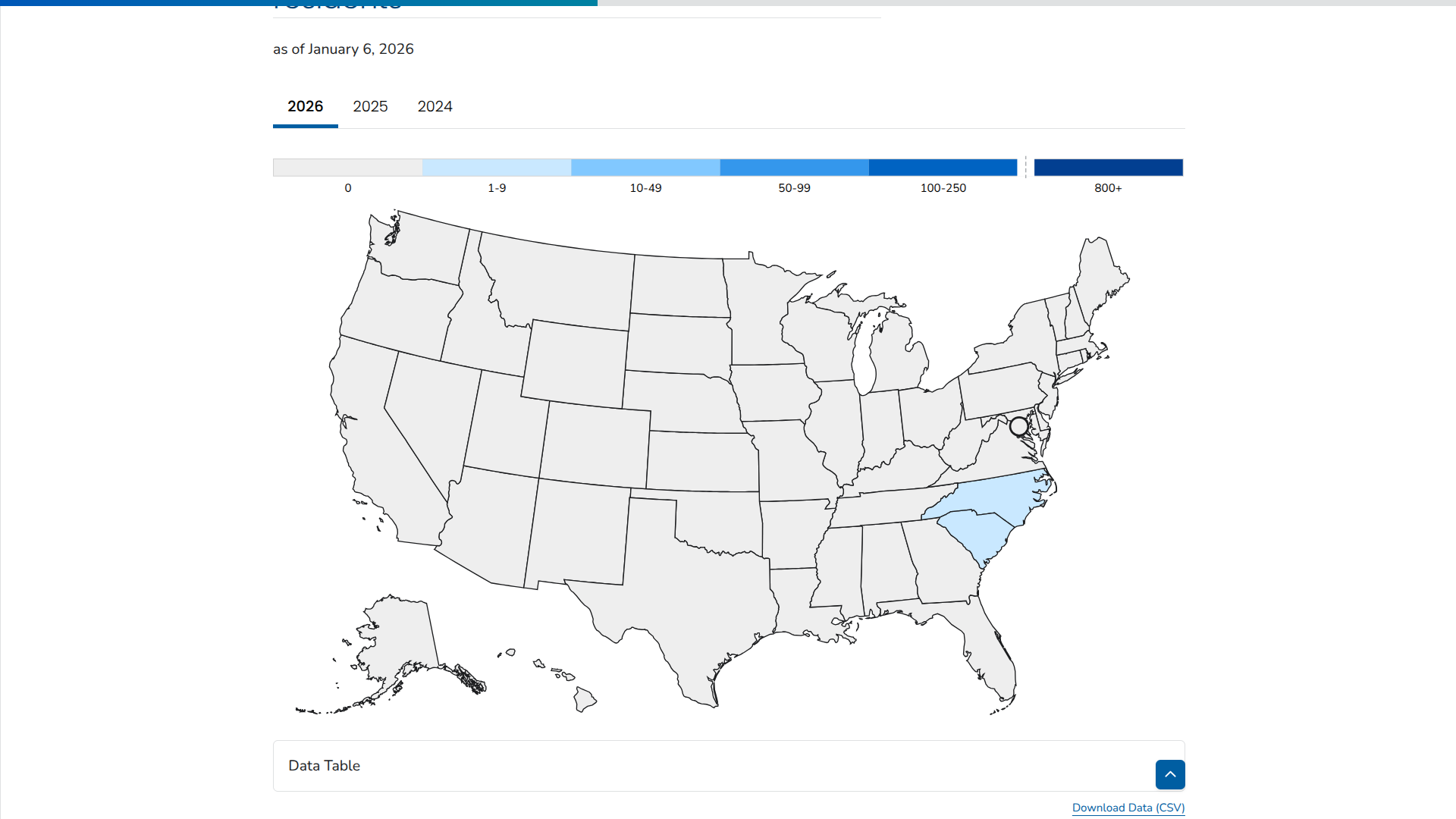
The South Carolina Department of Public Health (DPH) has reported an additional 26 cases of measles, bringing the total number of cases in Upstate South Carolina to 211.
As of January 6, 2026, DPH confirmed that 196 of these cases were among unvaccinated individuals.
Currently, 144 people are in quarantine, and seven individuals are in isolation, with the latest quarantine period ending on January 28, 2026.
Based on the recent cases in South Carolina, DPH has identified public exposure at two schools: Sugar Ridge Elementary and Boiling Springs Elementary.
Exposures have also been reported at several churches, including Tabernacle of Salvation Church, Slavic Pentecostal Church of Spartanburg, Unitarian Universalist Church of Spartanburg, and Ark of Salvation Church.
Although complications from measles are not reportable, DPH has learned that four individuals, including both adults and children, required hospitalization due to complications. Additional cases received medical care for measles but were not hospitalized.
DPH emphasizes that vaccination is the most effective way to prevent measles and stop this outbreak.
The department has confirmed it will prioritize requests for MMR vaccination events if received and will take steps to increase appointment availability for MMR vaccinations at health department locations, should demand rise. Vaccines are available at many primary care providers' offices, pharmacies, and DPH Health Departments.
According to the U.S. CDC, North Carolina has also reported measles cases in 2026.
The North Carolina Department of Health and Human Services and the Buncombe County Health and Human Services Division of Public Health announced additional measles cases among three siblings in Buncombe County. The family had recently visited Spartanburg County, South Carolina.
The CDC also clarified that measles vaccine breakthrough cases are rare, as the two-dose MMR vaccine regimen is highly effective, typically over 97% effective at preventing the disease
The United Kingdom recently launched its routine childhood vaccination program against chickenpox (varicella).
Effective from January 1, 2026, this program introduces a combined measles, mumps, rubella, and varicella (MMRV) vaccine into the national immunization schedule.
According to the UK Health Security Agency article, this program is aimed at young children. It addresses a disease that affects hundreds of thousands each year and can lead to severe complications.
The vaccination program is offering two doses of the MMRV vaccine at 12 months and 18 months for those born on or after January 1, 2025.
The UK program also provides MMRV doses to slightly older cohorts, including a catch-up initiative running from November 2026 to March 2028 for children aged 3 years and 4 months to under 6 years who do not have complete protection.
The UK's delay in adopting universal chickenpox vaccination was based on concerns that reducing natural infections could weaken immune boosting in adults, potentially leading to an increase in shingles (herpes zoster) cases.
However, studies indicate that the live attenuated vaccine does not increase the risk of shingles.
The December 2025 article stated that even if your child has already had chickenpox, there are no safety concerns about getting the MMRV vaccine. You'll usually be contacted by your GP practice when your child is due for a routine vaccination, such as MMRV.

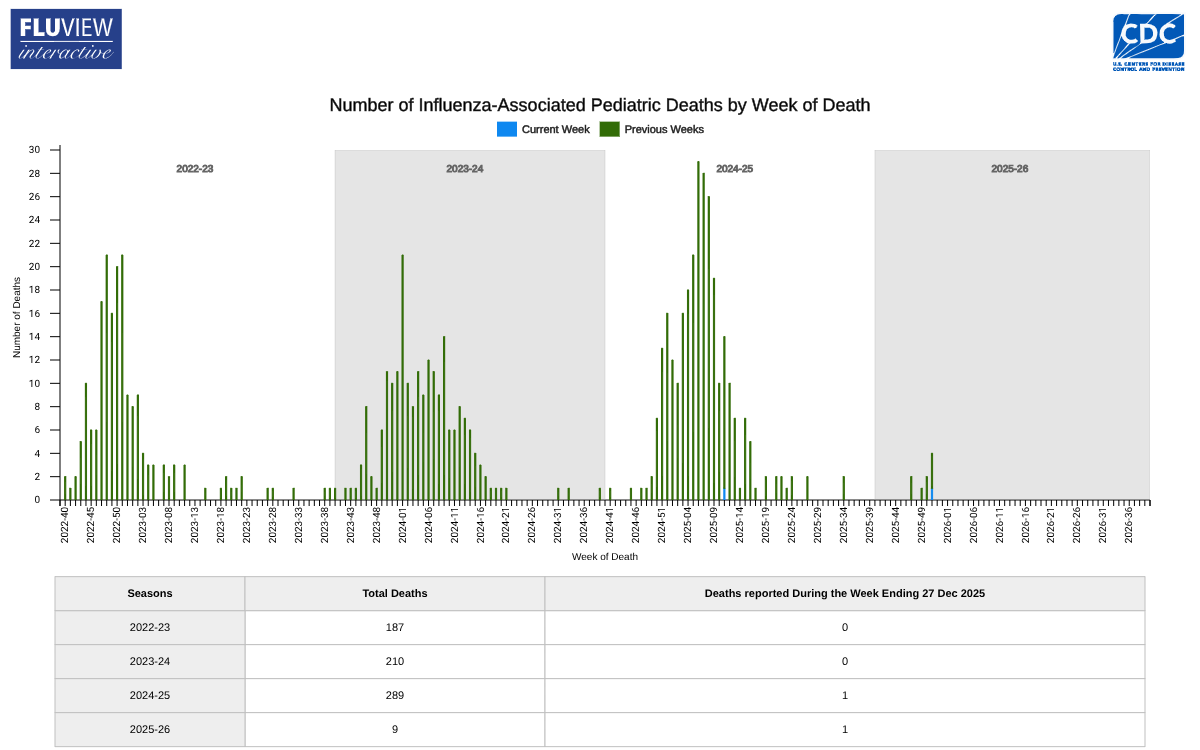
The U.S. Centers for Disease Control and Prevention (CDC) has reported nine influenza-associated pediatric deaths so far in the 2025-2026 flu season, according to the Week 52 FluView surveillance report.
The CDC's most recent data, covering the week ending December 27, 2025, revealed one additional pediatric death for the current season. All reported deaths this season have been linked to influenza A viruses, with several cases involving the predominant H3N2 strain.
The latest CDC update also included a late-reported pediatric death from the 2024-2025 season, raising that season's total to 289. This is the highest number of flu-related child deaths recorded since the CDC began mandatory reporting in the 2004-2005 season.
While severity indicators remain relatively low as of early January 2026, the CDC states that influenza activity is expected to continue for several weeks.
As flu viruses circulate alongside other respiratory viruses, public health officials urge the public to adopt preventive measures, such as practicing hand hygiene and staying home when sick, to protect others. Antiviral treatments are also advised for high-risk individuals, including children, if started early.
The CDC continues to recommend annual flu shots for everyone aged six months and older, emphasizing that it's not too late to get vaccinated, and clinics and pharmacies in the United States have ample supply. Additionally, qualifying people can order at-home flu shots (FluMist®, Fluenz® Tetra) in 2026.
As the Australian Open 2026 kicks off at Melbourne Park on January 18, 2026, tennis fans and travelers can expect a return to everyday experiences, with no vaccination requirements for players, staff, or spectators.
As of January 6, 2026, this marks a significant shift from the 2022 tournament, which saw unvaccinated tennis player Novak Djokovic, one of the best, detained upon arrival and ultimately deported after his visa was canceled twice.
In 2022, Tennis Australia and the Victorian government required complete vaccination for all participants, allowing only limited medical exemptions for tennis players.
Djokovic had received an exemption based on a recent COVID-19 infection, but upon arriving in Melbourne, federal border enforcement deemed his documentation insufficient. After legal battles, he was deported on public health grounds, missing the event he had dominated with 10 titles.
Australia ended its vaccine requirements for international travelers in 2022, allowing Djokovic to return in 2023, where he claimed his 10th title.
As Djokovic seeks to win an 11th Melbourne crown—potentially his 25th Grand Slam overall—the 2026 event highlights how far tennis has come from the disruptions of 2022.
For the 2026 tournament, entry lists and official guidelines confirm that there will be no vaccination or testing mandates.
This is positive news for travelers as the Australian Open 2025 set an attendance record with about 1.2 million tennis fans visiting Melbourne Park.
Travelers are advised to consult official sources, such as the Australian Open website or government travel advisories, for the latest visa and health information.
For health-conscious tennis fans, the priority now is sun protection and hydration amid Melbourne's summer heat, rather than proof of vaccination.
The U.S. CDC currently recommends various routine and travel vaccinations before visiting Australia in 2026. These vaccines include measles and Japanese encephalitis when visiting the Murray River and the Outer Torres Strait Islands area.
As the world tennis season progresses in 2026, vaccination recommendations could be issued for those visiting France (chikungunya) or Miami, Florida (dengue)


In a concerning trend for the cruise ship industry, 2025 saw a record number of norovirus outbreaks, with 22 incidents reported, up from 18 the previous year. This represents a 22% increase in cases.
This increase underscores ongoing challenges in maintaining hygiene standards aboard ships that host thousands of passengers in close quarters.
Data from the U.S. Centers for Disease Control and Prevention (CDC), posted as of January 6, 2026, indicate that norovirus was the leading cause of outbreaks in 2025, with other agents such as Salmonella and E. coli identified in only a few instances.
The CDC highlighted notable cases, including multiple incidents on Holland America Line ships such as the Rotterdam and Zuiderdam in December, as well as outbreaks on Princess Cruises' Ruby Princess and Coral Princess.
Norovirus, a highly contagious virus, causes severe gastrointestinal symptoms such as vomiting, diarrhea, and stomach cramps. It is the leading cause of acute gastroenteritis outbreaks worldwide.
While it is rarely fatal, and similar to traveler's diarrhea, norovirus can ruin vacations and lead to itinerary changes or early returns to port. On cruise ships, where passengers share dining areas, pools, and entertainment venues, the virus can spread rapidly if not contained.
The CDC's Vessel Sanitation Program (VSP) monitors these outbreaks, defining an outbreak as illness affecting at least 3% of passengers or crew on voyages lasting 2 to 21 days that call on U.S. ports.
In response to these outbreaks, cruise lines have implemented enhanced VSP protocols, including more frequent sanitization, passenger health screenings, and onboard medical teams. These companies have emphasized their commitment to CDC guidelines, noting that most voyages proceed without incident. As 2026 begins, industry observers hope that improved vaccines and surveillance will help curb future surges.
From a disease prevention perspective, as of early 2026, no norovirus vaccine has been approved or licensed for use anywhere in the world.
The CDC says norovirus's genetic diversity complicates the development of broad protection by vaccines. However, progress is encouraging, particularly with mucosal candidates, but widespread availability is likely several years away.
For now, the spike in 2025 serves as a reminder that vigilance against invisible threats is essential, even on the high seas.