Search API
The World Health Organization (WHO) Director-General, Dr Tedros Adhanom Ghebreyesus, today announced that the mpox upsurge continues to meet the criteria of a public health emergency of international concern (PHEIC).
As of June 9, 2025, this PHEIC has been declared, based on the continuing rise in the number of cases, including a recent increase in West Africa, and likely ongoing undetected monkeypox virus (MPXV) transmission in some countries beyond the African continent.
The Director-General also concurred with and issued the Committee's revised temporary recommendations to Member States experiencing mpox outbreaks.
Regarding preventive vaccinations, the WHO advises preparing for and implementing targeted use of vaccines for "Phase 1- Stop the outbreak" through the identification of disease hotspots and targeting those groups at high risk of mpox exposure to interrupt sustained community transmission.
As of early June 2025, the U.S. CDC states that JYNNEOS is a two-dose vaccine developed to protect against mpox and smallpox. People need to receive both doses of the vaccine for optimal protection against mpox.
In the United States, JYNNEOS® is commercially offered at health clinics and pharmacies, with insurance options available.
Furthermore, to be most effective, mpox vaccination should be included as part of broader prevention activities and routine sexual health care, such as HIV or gonorrhea.
'Whether or not you've been vaccinated, continue to reduce your risk of getting mpox,' writes the CDC.
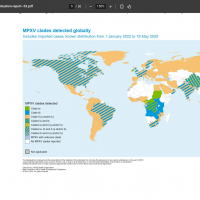

While most Mpox cases have been detected in Africa this year, the UK Health Security Agency (UKHSA) recently reported several instances of both monkeypox virus clades.
On May 8, 2025, the UKHSA confirmed mpox clade Ib and clade IIb cases in England, Northern Ireland, Scotland, and Wales.
Up to the end of April 2025, 12 cases of mpox clade Ib have been reported in England this year. Most of these cases have reported direct or indirect links to travel to countries where mpox clade Ib is circulating, such as the Democratic Republic of Congo and Sierra Leone.
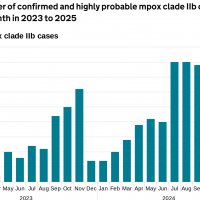
From 2023 to April 2025, 508 cases of mpox clade IIb have been reported in the UK.
Of these, 470 were in England (212 cases were presumed to have acquired mpox in the UK, 155 were acquired outside the UK and 103 are awaiting classification), 19 were in Scotland (4 were supposed to have acquired mpox in the UK, 9 were imported cases acquired outside the UK and six are awaiting classification), 10 were in Wales (4 were presumed to have acquired mpox in the UK, 2 were imported cases acquired outside the UK and four are awaiting classification), and nine were in Northern Ireland (5 were presumed to have acquired mpox in the UK, 3 were imported cases acquired outside the UK and one is awaiting classification).
The UKHSA wrote, 'despite continuing and regular imports of mpox clade IIb, case numbers during 2023 to 2025 likely remain substantially lower than those seen in 2022 due to high levels of vaccine protection suppressing transmission.'
Since June 2022, the UK government has endorsed a vaccination strategy intending to interrupt transmission of the mpox virus in the subset of individuals at increased risk of exposure.
As of May 11, 2025, Bavarian Nordic JYNNEOS® (MVA-BN®, IMVAMUNE®) is available in the United Kingdom and the United States.

The World Health Organization (WHO) today published the 51st situation report for the multi-country outbreak of mpox, including an update on the epidemiological situation for mpox in Africa, with data as of late April 2025.
This year, the WHO has confirmed 137,892 mpox cases, 317 related fatalities, from 132 reporting countries.
The WHO stated on April 29, 2025, 'Wherever mpox outbreaks are not quickly contained and human-to-human transmission is not stopped, they continue to represent a potential risk of sustained transmission in the community.'
Highlights from this report include, but are not limited to, the following:
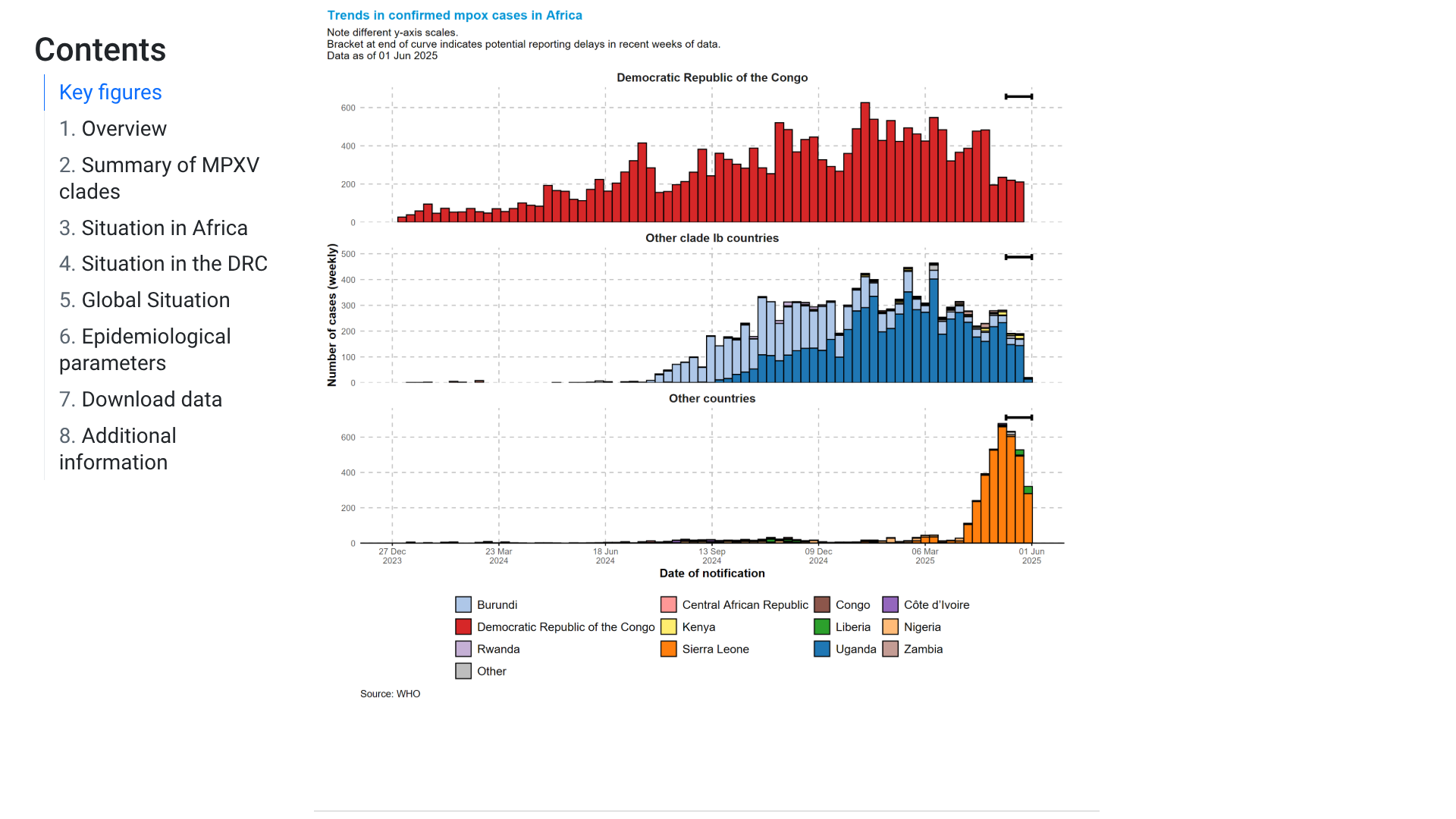
Cases of mpox due to clade Ib monkeypox virus (MPXV) continue to be reported primarily in Africa, where eleven countries have reported community transmission of this strain in the past six weeks, as person-to-person transmission has occurred through various means during this outbreak.'
Currently, Uganda is reporting the highest number of confirmed mpox cases globally, with 200 to 300 new cases reported per week. To date, the country has detected only clade Ib MPXV.
The Democratic Republic of the Congo (DRC) continues to report the highest number of cumulative confirmed mpox cases in Africa in 2025, despite a decrease in the number of confirmed cases reported in recent weeks, likely due to a reduction in testing and confirmation capacity. Clades Ia and Ib MPXV continue to circulate in the DRC.
This report provides an overview of mpox vaccination in countries in the African Region, where to date more than 662,000 doses of Bavarian Nordic's JYNNEOS® (MVA-BN®) vaccines have been administered in seven countries.
From the total number of doses, 88% have been administered in the DRC, where the vaccination strategy is being revised in light of the limited vaccine supply.
In the United States, there is an ample supply of the JYNNEOS vaccine, which is recommended by the U.S. CDC for specific individuals when visiting mpox outbreaks in 2025. This mpox vaccine is commercially available in the U.S. at clinics and pharmacies.

The U.S. Centers for Disease Control and Prevention (CDC) today confirmed an ongoing outbreak of clade I mpox in Central and Eastern Africa. Previous data indicates that about 15 million people visit central Africa each year.
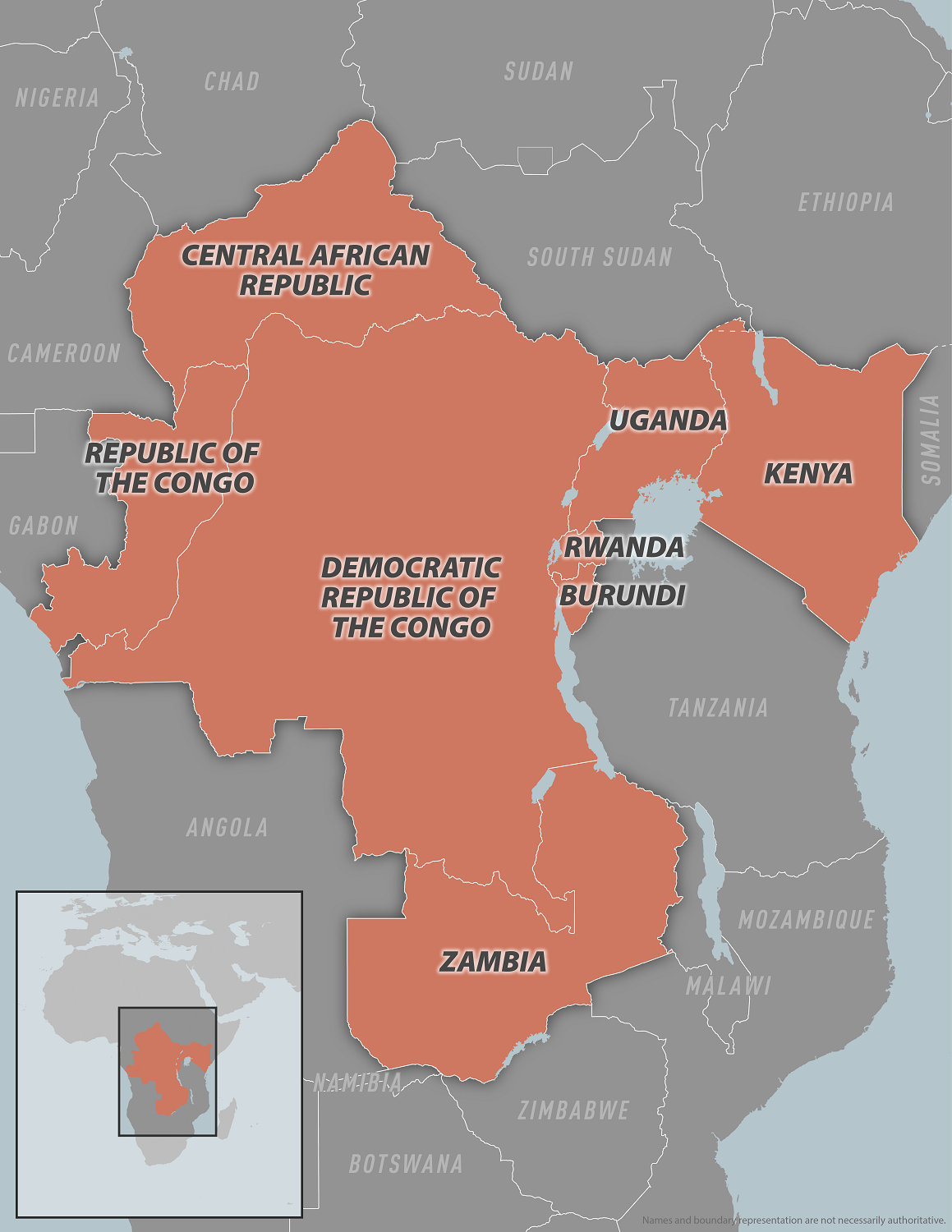
As of April 1, 2025, the CDC updated its Level 2 Travel Health Advisory saying, 'There is ongoing person-to-person transmission of mpox in Burundi, Central African Republic, Democratic Republic of the Congo (DRC), Kenya, the Republic of the Congo, Rwanda, Tanzania, Uganda, and Zambia.'
Person-to-person transmission has occurred through various means during this outbreak.
There are two types of Monkeypox virus. Historically, clade I has been associated with a higher percentage of people with mpox developing severe illness or dying, compared to clade II. The global outbreak of clade II began in May 2022.
The CDC writes, 'Mpox vaccination is recommended for people who anticipate the following sexual activities during travel to countries with ongoing person-to-person transmission of clade I mpox.'
In the United States, the Bavarian Nordic JYNNEOS® (MVA-BN®, IMVAMUNE®, IMVANEX®) two-dose vaccine is commercially offered at various travel clinics and pharmacies in April 2025.
Those eligible for mpox vaccination should get two doses of JYNNEOS at least 28 days apart, before visiting an mpox outbreak area.

Since the clade II mpox outbreak began about three years ago, the U.S. Centers for Disease Control and Prevention (CDC) has issued Travel Health Advisories based on the type of virus.
Historically, clade I have been associated with a higher percentage of people with mpox developing severe illness or dying, compared to clade II.
On February 10, 2025, the CDC reissued a Level 2 Practice Enhanced Precautions advisory regarding the clade I mpox outbreaks in eight Central and Eastern African countries.
The CDC wrote, 'There is an ongoing person-to-person transmission of mpox in Burundi, Central African Republic, Democratic Republic of the Congo, Kenya, the Republic of the Congo, Rwanda, Uganda, and Zambia.'
In the United States, the New Hampshire Department of Health and Human Services reported the third clade 1b case in the past four months. This mpox patient recently traveled to Eastern Africa.
During these mpox outbreaks, person-to-person transmission has occurred through various means, including sexual contact, day-to-day household contact, and within the healthcare setting. Transmission has also occurred from contact with certain live or dead wild animals.
Mpox is a disease caused by infection with the Monkeypox virus. Symptoms often include fever, rash, headache, muscle aches, and swollen lymph nodes, although fever is not always present.
The CDC says If you are sick and could have mpox, follow isolation and infection control measures at home and during travel.
Mpox vaccination is recommended by the CDC for certain people visiting at-risk areas.
In the U.S. and many countries, mpox vaccines (JYNNEOS®, MVA-BN®) are commercially available in 2025.
The World Health Organization published its 46th situation report for the multi-country outbreak of monkeypox virus, including reports of new travel-related mpox cases due to clade Ib MPXV.
As of January 28, 2025, the WHO confirmed new travel-related clade Ib MPXV cases had been detected in countries that had already detected travel-related cases, including China, Germany, Thailand, Great Britain and Northern Ireland, and the United States. Azerbaijan has reported its first case during this outbreak.
The outbreak of clade Ib continues predominantly in the Democratic Republic of the Congo, Burundi, and Uganda.
Outside Africa, 11 countries have detected clade Ib MPXV.
In the U. S., since May 2022, most reported mpox cases are clade II.
Additionally, mpox vaccinations are commercially available at clinics and pharmacies in the U.S.

According to the World Health Organization (WHO), the clade Ib monkeypox virus (MPXV) outbreak began in September 2023 and continues predominantly in the Democratic Republic of the Congo, Burundi, and Uganda, with travel-related cases identified in other countries.
In Africa, from January 2024 to January 5, 2025, 14,700 confirmed mpox cases, including 66 deaths (CFR – 0.4%), have been reported by 20 countries. And continues to meet the WHO criteria for a public health emergency of international concern.
As of January 14, 2025, the ECDC reported eleven individuals with MPXV clade I in the EU/EEA since August 2024.
One case was reported by Sweden in August 2024, seven by Germany (one in October, five in December 2024, and one in January 2025), two cases by Belgium in December 2024, and one case by France in January 2025
The WHO says two virus types cause mpox, clade I and II. Both types spread the same way and can be prevented using the same methods, including vaccination.
Most mpox outbreaks in other areas are due to clade IIb MPXV, a continuation of the multi-country outbreak that began in May 2022.
In the United States, the CDC assessed on January 10, 2025, the overall risk to the population(s) posed by the clade I mpox outbreak as low. And clade II mpox is still circulating at low levels.
Various mpox vaccines continue to be available in impacted countries.
Note: Updated on Jan. 14, 2025, to include ECDC data.
