Search API
After decades of progress against cholera outbreaks, cases are again on the rise, even in countries that had not seen the disease in years. And with a multi-year vaccine shortage, health leaders were confronted with significant challenges.
According to the World Health Organization (WHO), 44 countries reported cholera cases in 2022, a 25% increase from the 35 countries that reported cases in 2021.
On August 15, 2025, Kathryn Alberti, WHO Technical Officer for cholera, provided an update on the global cholera situation in a media release.
This year, more than 390,723 cholera cases and 4,332 related fatalities have been reported across 31 countries. These figures are underestimates, says Alberti.
Fortunately, the cholera vaccine available has recently improved.
Since December 2024, oral cholera vaccine production has hit record levels - 6 million doses monthly, the highest since 2013. But record production has been outpaced by record demand.
Since January 2025, the International Coordinating Group on Vaccine Provision (ICG) has received 38 requests from 12 countries—triple the number compared to the same period last year.
Already this year, over 40 million doses have been allocated by the ICG, compared to 35 million doses allocated in all of 2024.
More than 85% of approved doses this year are for countries facing humanitarian crises, with the largest share going to the Republic of Sudan.
In Sudan's Darfur region alone, MSF teams saw over 2,300 cholera patients and 40 deaths in early August 2025.
In the United States, travel vaccine clinics and pharmacies continue to report ample cholera vaccine supplies. The WHO and the U.S. CDC recommend vaccination before visiting a cholera outbreak zone in 2025.


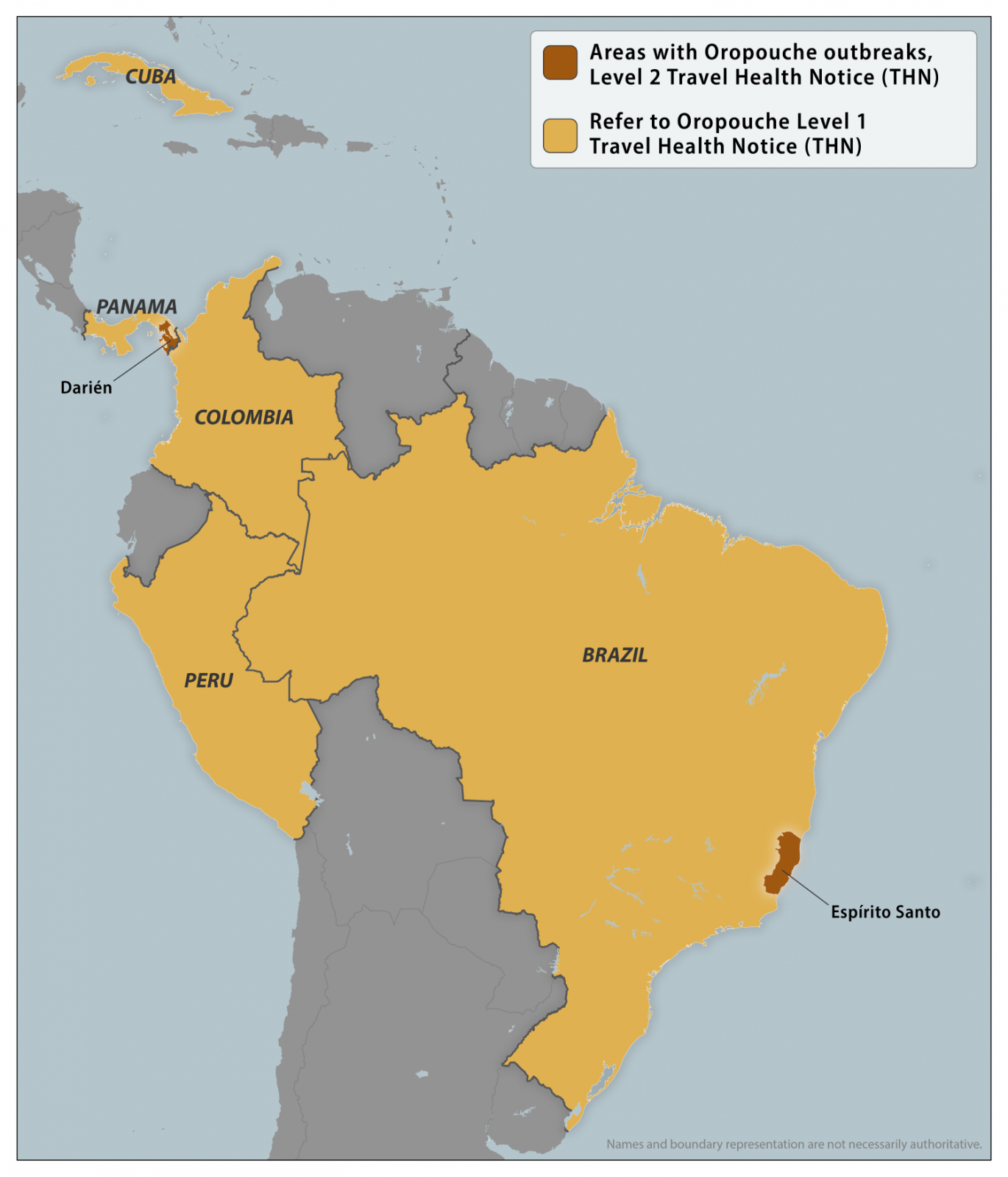
The Pan American Health Organization (PAHO) has released a new epidemiological update regarding the ongoing spread of Oropouche fever across the Americas.
Since late 2023, and as of August 13, 2025, there have been 12,786 confirmed Oropouche cases reported across 11 countries—seven experiencing local transmission and four with imported cases—indicating a growing spread of this virus, primarily transmitted by the Culicoides paraensis midge.
During 2025, the confirmed cases are distributed as follows: Brazil (11,888 cases), Panama (501), Peru (330), Cuba (28), Colombia (26), Venezuela (5), and Guyana (1).
Imported cases have been identified in Uruguay (3), Chile (2), Canada (1), and the United States (1).
In 2024, the region recorded a total of 16,239 cases across 11 countries and one territory, including four deaths.
This year, Brazil has faced the most significant burden, with cases reported in 20 states—particularly in Espírito Santo (6,322) and Rio de Janeiro (2,497). The country has also documented five deaths, along with cases of neurological complications and fetal deaths that are currently under investigation.
According to the PAHO, Oropouche fever typically causes high fever, severe headaches, and muscle and joint pain, with most patients recovering within two to three weeks. However, up to 60% of patients may experience relapses.
The virus's spread to non-endemic areas, such as urban regions in Cuba, is driven by factors that increase the midge population.
The PAHO and the U.S. CDC emphasize the importance of stronger epidemiological surveillance and vector control measures to combat the disease, which currently has no vaccine or specific antiviral treatment available.
Additionally, Oropouche virus has been found in semen, but it is unknown if it can be spread through sex.
In rare instances, the disease can lead to meningitis or encephalitis, and there are concerns about potential fetal risks in pregnant women.
The CDC says, 'Pregnant women should reconsider non-essential travel to Espírito Santo, Brazil, or Darién Province, Panama.'

The Hawaiʻi Department of Health (DOH) continues to respond to a significant increase in pertussis (whooping cough) cases this year.
As of July 31, 2025, DOH has identified 203 cases of pertussis, more than double the 84 cases identified in all of 2024.
According to the DOH's media release on August 11, 2025, cases have been reported in every county, with the highest rates on Kaua‘i, Maui, and Hawai‘i Island.
The DOH says pertussis is a highly contagious respiratory disease spread through the air via coughs or sneezes of an infected person. Initially, the symptoms resemble a cold, but can progress to intense coughing fits.
In children, coughing fits can be followed by a deep breath that makes a "whooping" sound. Health complications can be severe and even life-threatening, especially for infants and young children who are not fully vaccinated.
The most effective way to reduce the risk and severity of pertussis is through vaccination, says the DOH.
The Tdap vaccine has been available for nearly 20 years and is recommended for pregnant women, which helps protect their newborns from this severe disease.
"The high number of cases means there's a greater risk of getting exposed to pertussis in the community. If you have not yet vaccinated your infant, please consider doing so to reduce the risk of hospitalization or even death," commented Dr. Kenneth Fink, DOH director.
"Like with other vaccine-preventable diseases, we continue to strongly encourage all individuals to remain up to date on recommended vaccinations to help protect both the person vaccinated and those in our families and communities who are most vulnerable."
For more information about pertussis and how to protect yourself and your loved ones, visit the Department of Health website.
The U.S. CDC recently stated that in 2024, reported cases of pertussis increased across the United States. Preliminary data show that more than six times as many cases were reported in 2024 compared to 2023.
Furthermore, preliminary case reports remain elevated in 2025.
Across the Pacific Ocean from Hawai'i, Japan has been battling a multi-year pertussis outbreak.
As of August 2025, Japan has surpassed 50,000 cases for the first time since comparable data became available in 2018.

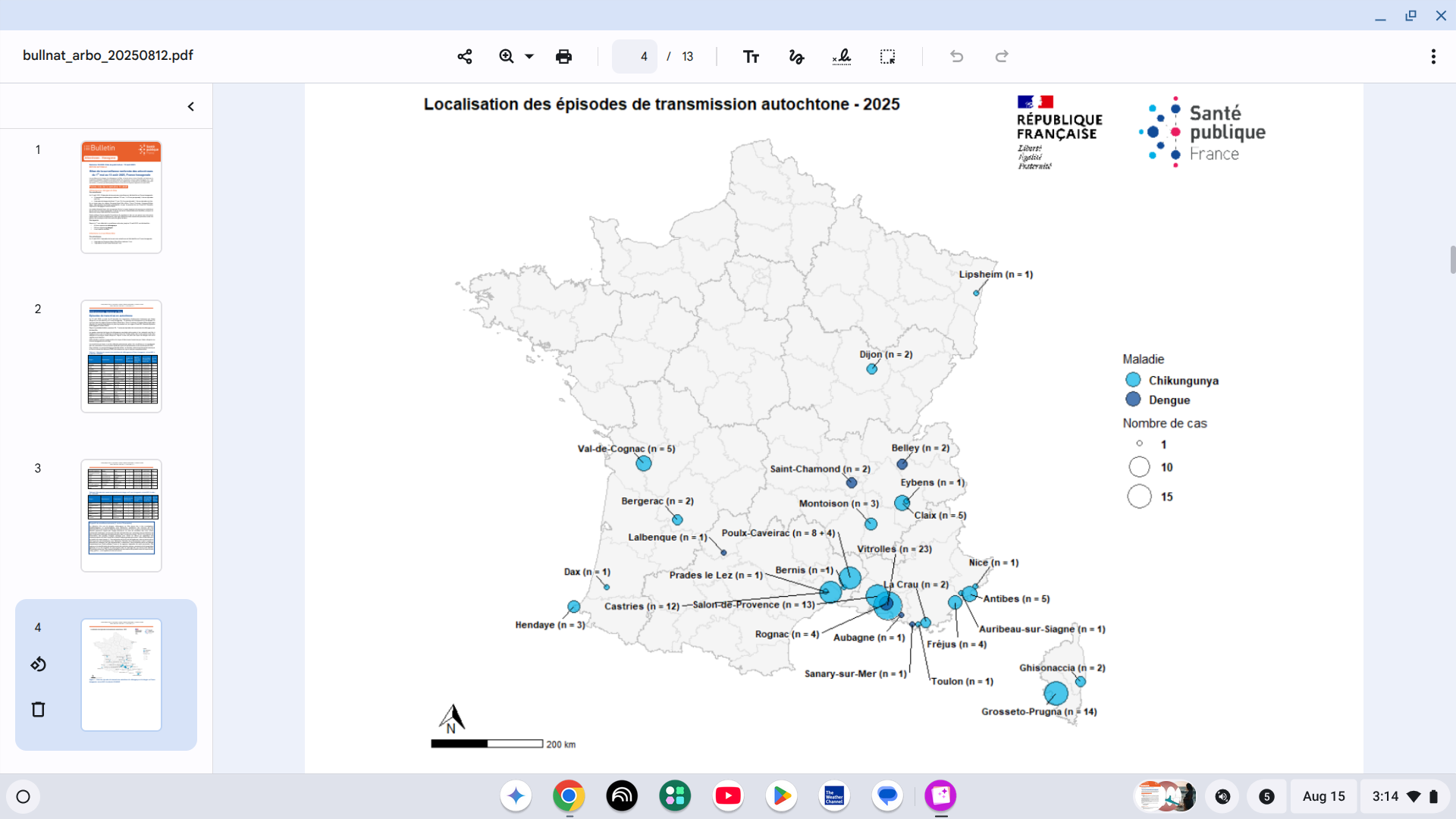
Sante Publique France recently reported a total of 115 locally acquired and 914 imported chikungunya fever cases this year.
As of August 12, 2025, cases have been reported from Provence-Alpes-Côte d'Azur, Corsica, Occitanie, Auvergne-Rhône-Alpes, Grand Est, Bourgogne-Franche-Comté, and Nouvelle-Aquitaine.
The health ministry wrote in a media release that 'the high number of transmission hotspots illustrates the significant risk of autochthonous (local) transmission of these viruses in mainland France.'
Furthermore, 'other cases will likely be identified, including outside the usual transmission zones,' in France.
While the majority of local chikungunya cases have been reported in southern France, other regions have confirmed cases in 2025.
As several European countries have.
Additionally, France's Departments of Reunion and Mayotte have reported significant chikungunya outbreaks this year.
In France, similar to the United States, chikungunya vaccines are approved and commercailly available at certified travel vaccine providers.

The Chicago Department of Public Health (CDPH) recently confirmed the first three human cases of West Nile virus (WNV) this year. The Illinois Department of Public Health previously confirmed the first human case of WNV in the state on June 24, 2025.
The patients, whose symptoms began in late July or early August, reside on the Northwest and South sides.
WNV is the most common cause of mosquito-borne disease in Chicago.
CDPH has a robust mosquito control program, which includes treating over 80,000 catch basins in Chicago with larvicide to kill immature mosquitoes, collecting and testing mosquitoes for WNV, and spraying in specific geographic areas to kill adult mosquitoes if needed.
Licensed mosquito abatement technicians are dispensing an ultra-low-volume spray from trucks.
CDPH has sprayed insecticide in nine different community areas over the last several weeks and will be spraying to kill adult mosquitoes in seven communities in mid-August 2025 (Forest Glen, Norwood Park, Mount Greenwood, Beverly, East Garfield Park, Near West Side, and North Lawndale).
"We are seeing a higher proportion of mosquitoes testing positive for West Nile virus than usual this year," said CDPH Commissioner Olusimbo 'Simbo' Ige, MD, MPH, in a press release on August 12, 2025.
"The best way to protect yourself from West Nile virus is to avoid mosquito bites and take measures to stop them from breeding around your home."
CDPH says WNV is typically spread to humans via the bite of an infected mosquito and is not generally spread from person to person. While most people infected with WNV do not feel sick, about 1 in 5 people develop a fever and flu-like symptoms.
Severe illness can occur in about 1 in 150 people and is most likely in people over age 60. Because there are no specific medications to treat WNV in people, the most effective method to prevent infection is to avoid mosquito bites.
In Europe, six countries have recently reported WNV cases.
As of August 14, 2025, there are no approved WNV vaccines available in the United States.

In Denmark, vaccination has nearly eliminated infections caused by high-risk strains of Human Papillomavirus (HPV) 16 and 18 among women who were vaccinated as adolescents.
The prevalence of HPV16/18 types was low and stayed stable over time, at 1% 95% CI: 0.8–1.2) in the first samples, 0.6% (95% CI: 0.4–0.9) in the second, and 0.6% (95% CI: 0.3–1.0) in the third samples.
Before vaccination, the prevalence of HPV16/18 was between 15% and 17%.
A study published in Eurosurveillance in July 2025 highlights this finding as significant, given that these HPV types are responsible for over 70% of cervical cancer cases.
These researchers wrote, 'To our knowledge, this is the first study to report on HPV status in consecutive rounds of cervical cell sampling in a cohort of young women offered 4-valent HPV vaccination as girls.'
In 2008, Denmark started to offer free vaccination against HPV with the 4-valent vaccine to teenage girls.
As of August 13, 2025, HPV vaccinations are offered to most adolescents, boys, and girls in the United States.

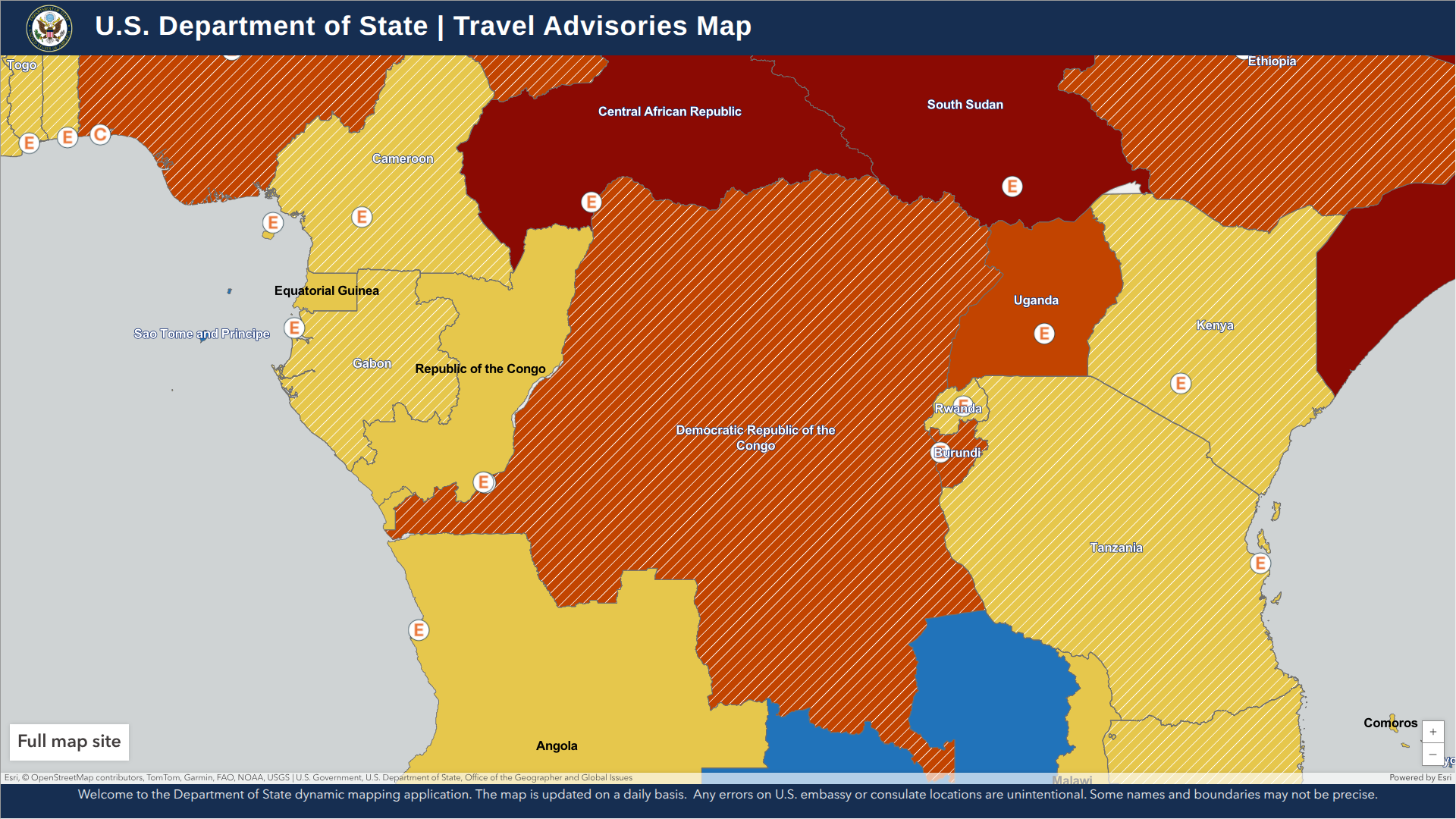
The U.S. Department of State today updated its travel advisory for the Democratic Republic of the Congo (DRC) to Level 3 status.
As of August 12, 2025, this U.S. government Reconsider Travel advisory also includes Level 4 status for various areas in North and South Kivu of this African country.
Additionally, the U.S. government cannot provide emergency consular services to U.S. citizens outside of Kinshasa due to poor infrastructure and security risks. Due to the risks, personnel have limited mobility, and minor dependents cannot accompany U.S. government employees who work in the DRC.
Suppose you decide to travel to the DRC in late 2025. In that case, the State Department recommends enrolling in the Smart Traveler Enrollment Program to receive digital alerts from the U.S Embassy and make it easier to locate you in an emergency.
Separately, the U.S. CDC has included the DRC in two recent Travel Health Advisories targeting polio and measles outbreaks.
The CDC suggests international travelers speak with a vaccine advisor regarding routine and additional immunization options (chikungunya, cholera, and yellow fever) at least one month before departure.
Various retailers in the United States offer travel vaccine services.