



Search API

0 min read

Emergent BioSolutions Inc. reported financial results for the third quarter ended September 30, 2024. The Company's press release disclosed that Third-Quarter 2024 total revenues were $293.8 million, an increase of 9% compared to the prior year.

And that revenues from Smallpox Medical Countermeasures (MCM) products increased 437% compared with Q3 2023. 

Smallpox MCM revenues were $108.0 million from ACAM2000®, VIGIV, and TEMBEXA® product transactions. The revenue increase was primarily due to the timing of U.S. government purchases of ACAM2000® and VIGIV.

The U.S. Department of Health and Human Services awarded Emergent a contract in September 2019 valued at approximately $2 billion over ten years for the continued supply of ACAM2000 into the U.S. Strategic National Stockpile.

"Through disciplined execution and steady, measurable progress, Emergent's financial position is the strongest it has been since 2021, as evidenced by our favorable third-quarter results," stated CEO Joe Papa on November 6, 2024.

ACAM2000 is a second-generation live vaccinia virus, cell-cultured, replication-competent, single-dose vaccine that protects people against mpox and smallpox diseases. 

The World Health Organization (WHO) published 'Vaccines and Immunization for mpox: Interim Guidance, as did the U.S. Centers for Disease Control and Prevention, which expanded access via the Investigational New Drug Protocol, allowing ACAM2000 use to prevent mpox on June 30, 2022. 

In August 2024, the WHO declared the increasing number of mpox cases reported in the African Region a Public Health Emergency of International Concern.

Vaccine Treats: 
Image: 
Image Caption: 
by Gerd Altmann
Live Blog Update Author: 
Location Tags: 
Include in VBT newsletter: 
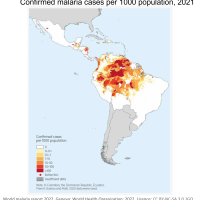
Malaria is a vaccine preventable disease
0 min read

The World Health Organization (WHO) today announced the Access and Allocation Mechanism (AAM) for mpox has allocated an initial 899,000 vaccine doses for nine countries across the African region that are hit hard by the current Clade Ib mpox surge.

By the end of 2024, over 5.85 million vaccine doses are expected to be available to the Mpox Vaccines AAM.

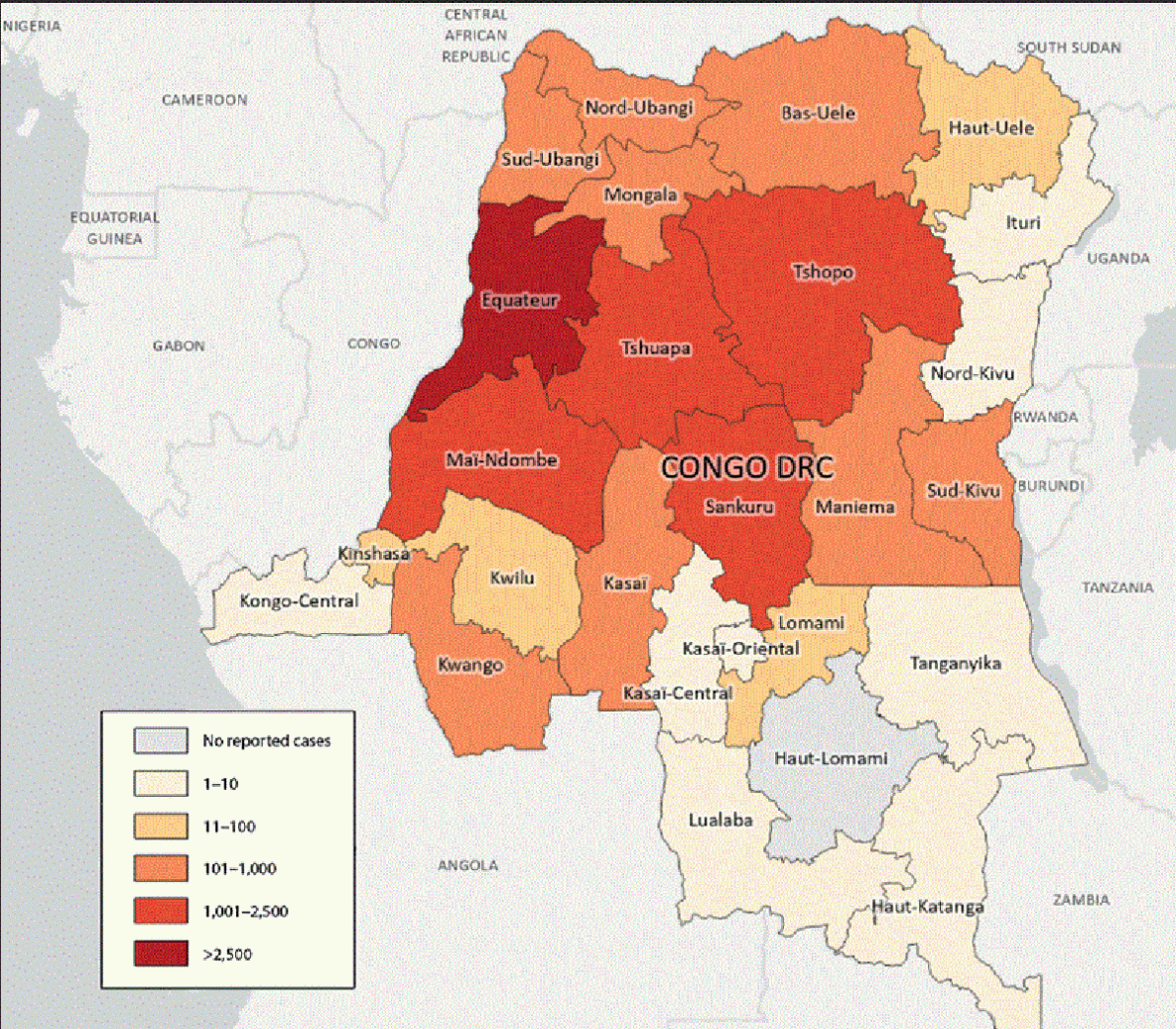
As of November 6, 2024, the most significant number of JYNNEOS vaccine doses, 85% of the allocation, will go to the Democratic Republic of the Congo (DRC) as the most affected country, reporting 80% of laboratory-confirmed mpox cases in Africa in 2024.

Limited vaccination with Bavarian Nordic A/S MVA-BN® (JYNNEOS®) has recently begun in the DRC and Rwanda.


Vaccine Treats: 
Image: 
Image Caption: 
US CDC 2024
Live Blog Update Author: 
Location Tags: 
Include in VBT newsletter: 
0 min read

The Mediterranean coast of France is known to many vacationers for its lovely scenery and world-class resorts. In 2023, southern Europe alone accounted for about 500 million arrivals. 

However, in 2024, mainland France may experience a record number of mosquito-transmitted diseases, mainly along the Mediterranean.

As of October 30, 2024, Public Health France reported over 4,000 imported cases of dengue, 18 of chikungunya, and 5 of Zika virus in 2024.

Furthermore, the European CDC recently confirmed that 82 locally-acquired dengue cases have been reported in Var (38), Alpes-Maritimes (19 cases), Vaucluse (18), and other departments.

While France has not yet declared dengue endemic, cases in 2024 have eclipsed the entire 2023 mosquito season. In 2023, France only reported 45 autochthonous (local) dengue infections.

From a disease prevention perspective, chikungunya and dengue have approved vaccines available, but Zika vaccine candidates have yet to be authorized in 2024.

While the U.S. CDC does not suggest these vaccines when visiting France, they are generally available in 2024. The CDC  recommends that international travelers speak with a vaccine expert at least one month before traveling abroad.

Vaccine Treats: 
Image: 
Image Caption: 
France Ministry of Health November 2024
Live Blog Update Author: 
Location Tags: 
Include in VBT newsletter: 
0 min read

GSK today announced that AREXVY has been approved in Canada to prevent lower respiratory tract disease caused by respiratory syncytial virus (RSV) in adults 50-59 years of age at increased risk for RSV disease.

In Canada, the vaccine was previously approved for use in adults aged 60 and older and is strongly recommended by the National Advisory Committee on Immunization (NACI) for all adults 75 years and older and those aged 60 and above in nursing homes and other chronic care facilities. NACI also recommends that adults aged 60-74 may consider RSV vaccination in consultation with a health care provider.

Michelle Horn, Interim Country Medical Director, GSK, said in a press release on November 5, 2024, “The natural age-related decline in immune function we all experience, which can increase our vulnerability to viruses like RSV, becomes more evident the older we get. Not surprisingly, the incidence of RSV-associated hospitalizations in adults starts to increase at the age of 50. For adults with underlying medical conditions, RSV can worsen these conditions and lead to serious consequences. We are proud to be the first to provide a vaccine to help protect Canadians aged 50-59 at increased risk of lower respiratory tract disease caused by RSV.”

Image: 
Image Caption: 
from Pixabay
Live Blog Update Author: 
Location Tags: 
Include in VBT newsletter: 
0 min read

Starting early next year, the Pan American Health Organization (PAHO) will provide countries of the Americas with access to the Pfizer-produced vaccine against respiratory syncytial virus (RSV).

Only the Pfizer vaccine has been approved by the World Health Organization to prevent RSV-related diseases in infants. 

The PAHO stated on November 1, 2024, that around 13 million children are born in the region each year, and if the RSV vaccine is offered to pregnant women, they could benefit from this measure.

The PAHO reported in October 2024 that the new RSV season had started slowly in the Americas.

In the United States, the U.S. FDA-approved single-dose, extended half-life monoclonal antibody Beyfortus™ offers passive immunization to prevent lower respiratory tract infections caused by the RSV to newborns and infants experiencing their first or second RSV season.

In September 2024, the WHO's advisory group recommended that all countries introduce passive immunization to prevent severe RSV disease in young infants.

Image: 
Image Caption: 
by Herney Gómez
Live Blog Update Author: 
Location Tags: 
Include in VBT newsletter: 
0 min read

New World screwworm (NWS) infestations have continued to be reported in the Region of the Americas this year, and the U.S. government is concerned that NWS maggots may return after five decades.

According to a notice issued by the U.S. Department of Agriculture on November 1, 2024, NWS is endemic in Cuba, Haiti, the Dominican Republic, and countries in South America.

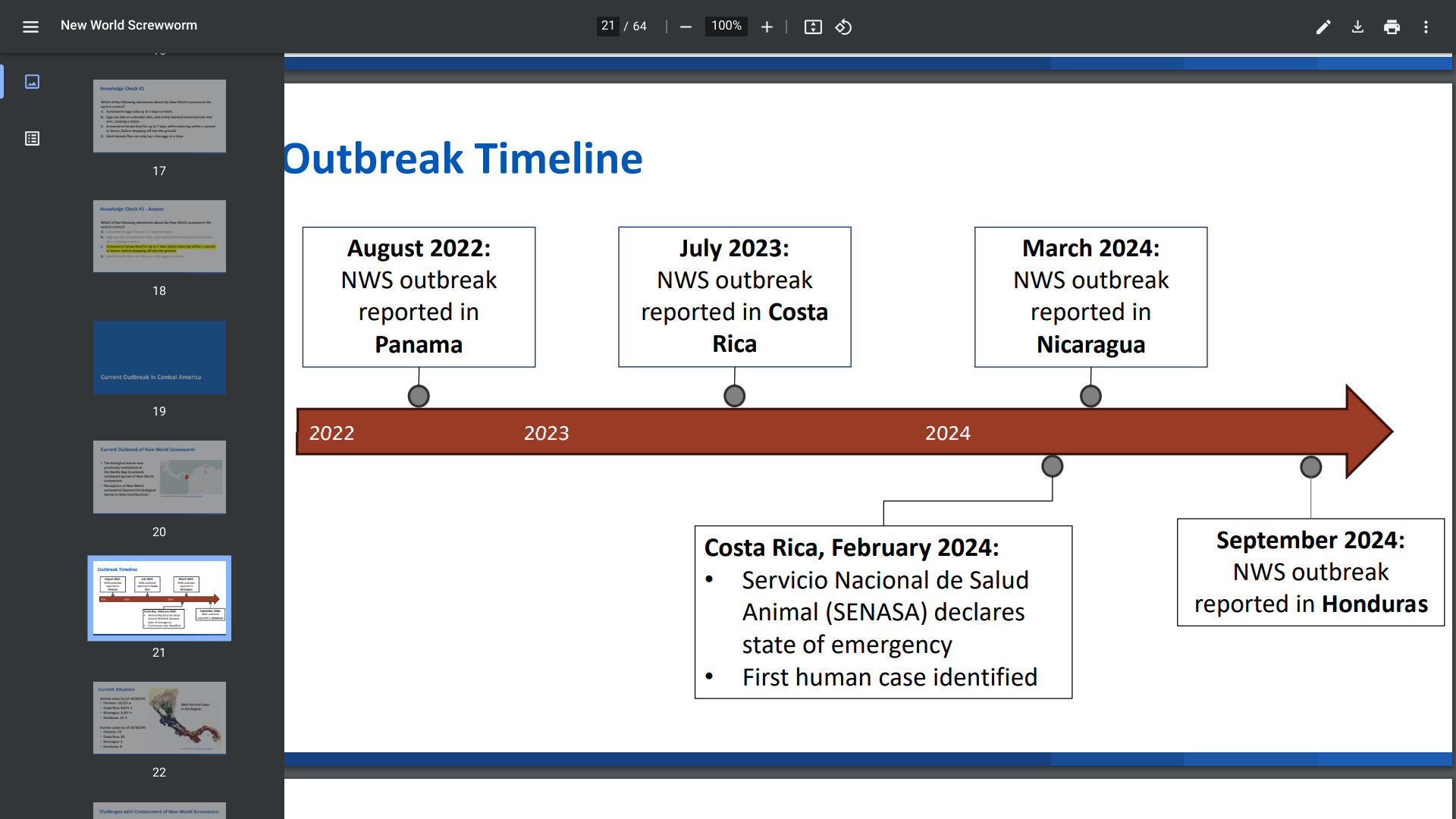
By October 26, 2024, Panama had reported 20,417 positive NWS cases, Costa Rica had 7,718, and Nicaragua had 4,384 cases in 2024.

In 2023, more than 6,500 NWS cases were detected in Panama.

The USDA says it eradicated NWS from the United States in 1966 using the sterile insect technique, in which sterile flies are released in the wild. Further, the USDA says there is a constant risk of NWS reintroduction in the United States.

In mid-October 2024, the U.S. CDC Clinician Outreach and Communication Activity call highlighted concerns about a potential northward spread of NWSs.

The cornerstone of a collaboration between the Panama-United States Commission for the Eradication and Prevention of Screwworms is releasing sterile male screwworm flies in the Darian Province of eastern Panama to create a biological barrier. This effort is scheduled to continue for an extended period.

As of November 4, 2024, there are no NWS vaccines available.

Image: 
Image Caption: 
US CDC
Live Blog Update Author: 
Location Tags: 
Include in VBT newsletter: 
vaccine
Chikungunya vaccine commercially available in 2024
vaccine
Shigellosis cases found in African 29 countries

Shigellosis Outbreaks

Shigellosis Outbreaks May 2025

The World Health Organization (WHO) says Shigellosis, a gastrointestinal infection caused by one of four species of Shigella bacteria, continues to pose a significant public health problem and remains endemic in many developing countries in 2025. Among Shigella species, Shigella dysenteriae type 1 (Sd1) represents a particular threat because of the severity of the disease it causes.

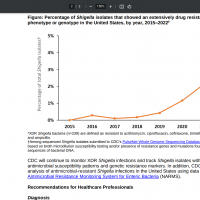
The U.S. Centers for Disease Control and Prevention (CDC) confirmed in May 2025 that the Shigella bacteria can spread quickly. The most common ways people get sick are by eating or drinking contaminated food or water, and by contact with someone with a Shigella infection. People with Shigella infection can shed the bacteria in their stool for weeks after symptoms have dissipated. The CDC Yellow Book 2024 says extensively drug-resistant (XDR) Shigella infections were 5% of Shigella infections (Shigellosis) reported in 2022, compared with 0% in 2015. These articles provide additional information about previous Shigellosis outbreaks.

Shigellosis Outbreaks in the United States

The CDC estimates that Shigellosis cases are the third most common bacterial enteric disease in the U.S. As of March 8, 2025, the CDC reported 2,352 Shigellosis cases in the U.S. in 2025. As of week #52, ending December 28, 2024, the CDC confirmed 5,126 Shigella cases, led by California (4,365) and New York (2,990). The Northern Nevada Public Health identified a Shigellosis outbreak of at least 14 cases and nine hospitalizations at the end of 2024. In 2023, the CDC reported 17,176 cases in the U.S.

Brief Report published by AJIC on December 9, 2024, describes a mutation of Shigella sonnei, a strain of Shigella bacteria resistant to five of the antibiotic classes most commonly prescribed for such infections. In Los Angeles, CA, Dr. Shangxin Yang described a mutation of Shigella sonnei, a strain of  Shigella bacteria resistant to five of the antibiotic classes most commonly prescribed for such infections. These cases had a distinct genetic mutation that made the bacteria resistant to another class of antibiotics, the cephalosporins. The strain appears to be unique to LA County. XDR Shigella cases have increased since they were first detected in California in 2017. By 2022, 3.2% of Shigella isolates were XDR, which increased to 6.8% in 2023. From January through May 2024, 12% (118/978) of California Shigella isolates were reported as XDR. Shigella sonnei isolates accounted for the most significant percentage (78%), followed by Shigella flexneri (22%).

Shigellosis Outbreaks in Africa

A review published in October 2024 highlights the burden of Shigellosis in Africa. S. flexneri remains the most prevalent species associated with shigellosis cases, with S. sonnei being the second most dominant. The overall pooled estimate of Shigella prevalence was 5.9% (95% CI: 4.9 – 7.0%). The antimicrobial resistance patterns observed in the study suggest local antimicrobial patterns when choosing antibiotics to treat Shigellosis.

Shigellosis Outbreaks in the Region of the Americas

The Pan American Health Organization (PAHO) issued an Epidemiological Alert in 2022 regarding the spread of Shigella sonnei with extreme antibiotic resistance and the potential risk to Latin America and the Caribbean.

Shigellosis Outbreaks in Europe

In 2024, the ECDC reported that 30 EU/EEA countries reported 4,149 confirmed cases of Shigellosis in 2022. Three countries accounted for 50.6% of all cases: France, the Netherlands and Spain. Of those cases with information on travel history, 48% were associated with travelers. For 2021, 30 EU/EEA countries reported 2,115 confirmed cases of Shigellosis.

Extensively Drug-Resistant Shigella Outbreaks

In Vancouver, Canada, Shigella sonnei has caused sexually transmitted enteric infections in men who have sex with men. A study recently observed a high rate of multidrug-resistant (MDR) S. sonnei bacteremia among persons experiencing homelessness.

Shigellosis Vaccine

As of May 2025, the U.S. FDA has not approved any shigellosis vaccine candidates. However, in November 2024, a Phase 2b controlled human infection model study of Shigella4V2, the world’s most clinically advanced tetravalent bioconjugate shigellosis vaccine candidate, was launched.

4 min read
Last Reviewed: 
Monday, May 5, 2025 - 16:05
Description: 
Shigellosis continues as a significant public health concern.
Condition: