Search API
Since dengue outbreaks cause about 400 million infections yearly, the Pan American Health Organization (PAHO) and other agencies continue issuing health alerts for this deadly disease.
In the Americas, the total number of dengue cases reported was 2,997,097 through July 2023. Additionally, 1,302 deaths were reported in the Region.
To limit these deaths, two dengue vaccines have been approved and deployed in 2023.
According to a new study published in the journal Vaccines on August 22, 2023, the effectiveness of these vaccines varies.
Dengvaxia® has shown an efficacy of 60.8 % (95 % CI, 52.0–68.0) against symptomatic, virologically confirmed dengue (VCD) caused by any of dengue's four serotypes more than 28 days after the third dose in Asia (2 to 14-year children), and Latin America (9 to 16-year children) [15], respectively.
While QDENGA® has shown around 80.2 % (95 % CI, 73.3–85.3) efficacy.
And during a phase 1 clinical trial, the efficacy against VCD at 28 days after a single dose of a U.S. NIH-developed vaccine candidate was 79.6 %.
This study assessed the safety and immune response regarding nAbs induced by the SII Dengue vaccine in healthy adults in Australia.
The study showed the vaccine was safe and highly immunogenic in adults, primarily seronegative at baseline.
In the vaccine group, 59.0 % of participants showed DENV vaccine viremia post-vaccination.
This vaccine (Dengusiil) was formulated at Serum Institute of India Pvt. Ltd. (SII) to contain DENV 1, DENV 3, and DENV 4 serotypes at not less than 2.5 log10 PFUs and DENV 2 at not less than 3 log10 PFUs per single dose of 0.5 mL.
SII executive director Rajeev Dhere recently informed the TOI, "The Phase-I trial was conducted in Australia as we needed participants who had not been exposed to dengue previously."
"India has a significant proportion of people with dengue antibodies, so it was essential to test the vaccine's safety and effectiveness on individuals who were not already immune to the disease."
As of August 27, 2023, Dengvaxia is approved in the U.S., but availability requires pre-admission testing.
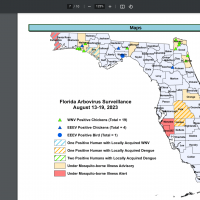
During 2023, the state of Florida and Puerto Rico have reported locally acquired and travel-related dengue cases.


In the United States, the timing of seasonal respiratory syncytial virus (RSV) outbreaks throughout the country is generally reported between October - April most years.
The 2022–23 season it started later than in 2021–2022 but earlier than prepandemic seasons, suggesting a return toward normal seasonality.
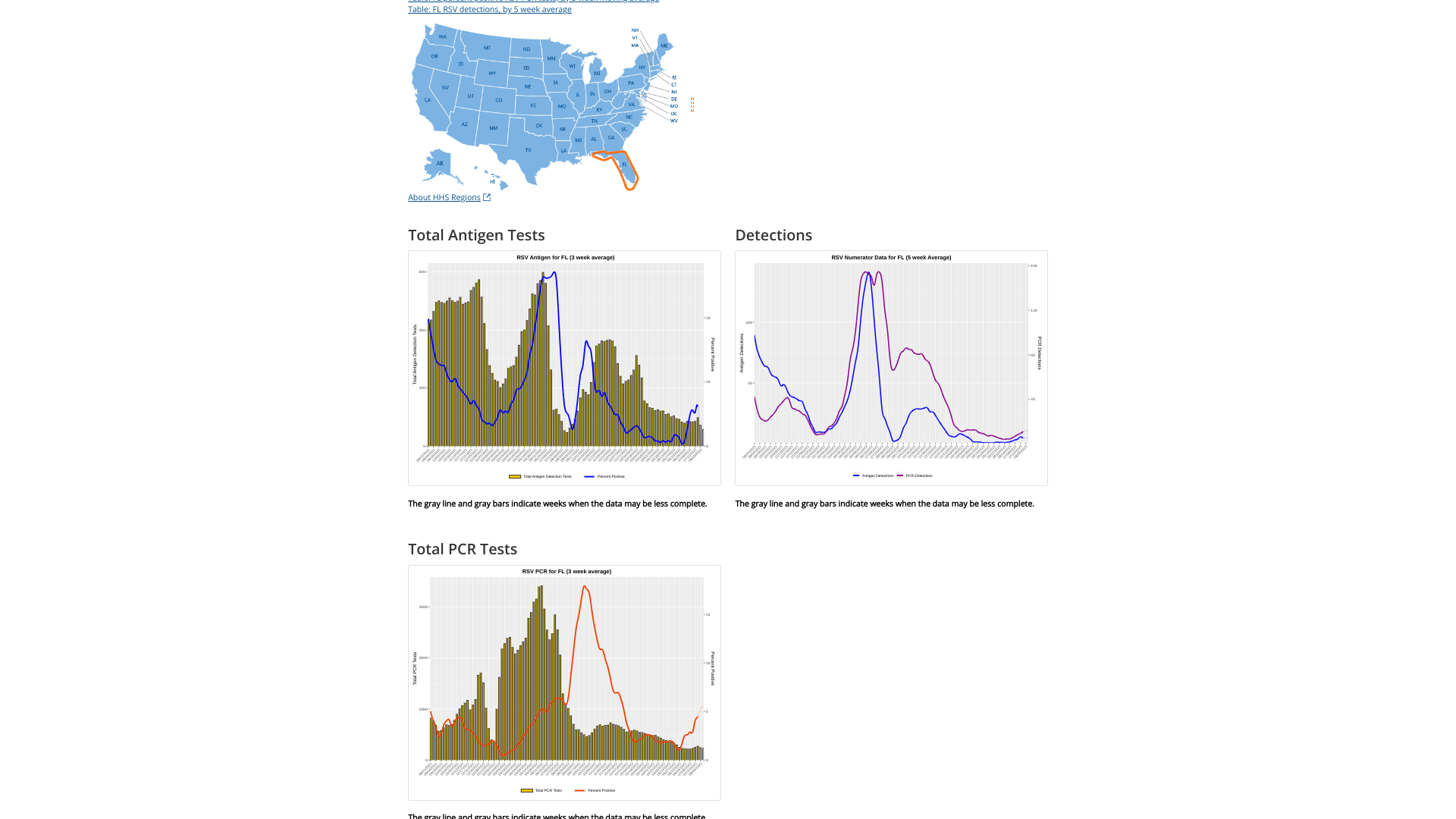
Furthermore, the state of Florida is often a bell-weather state for RSV detections, as it is in 2023.
Florida’s RSV season is longer than the rest of the nation and has distinct regional patterns. For this reason, the state is segmented into five RSV regions, each with its own season.
The Florida Department of Health recently announced RSV activity during week #33 had increasing detection and admission rates.
As of August 19, 2023, two RSV outbreaks were confirmed in Martin County, located north of Jupiter. Last week, one RSV outbreak occurred in Jacksonville, Florida.
In the U.S., RSV infections cause thousands of hospitalizations among young children and adults aged ≥65. The U.S. Centers for Disease Control and Prevention (CDC) RSV detection 5-week moving average graphs for each state are displayed at this link.
This RSV season, the U.S. government has approved RSV vaccines and monoclonal antibody therapeutics available in specific clinics and pharmacies as of August 22, 2023.
The CDC says people should speak with a healthcare provider if these new therapeutics are appropriate for their health.
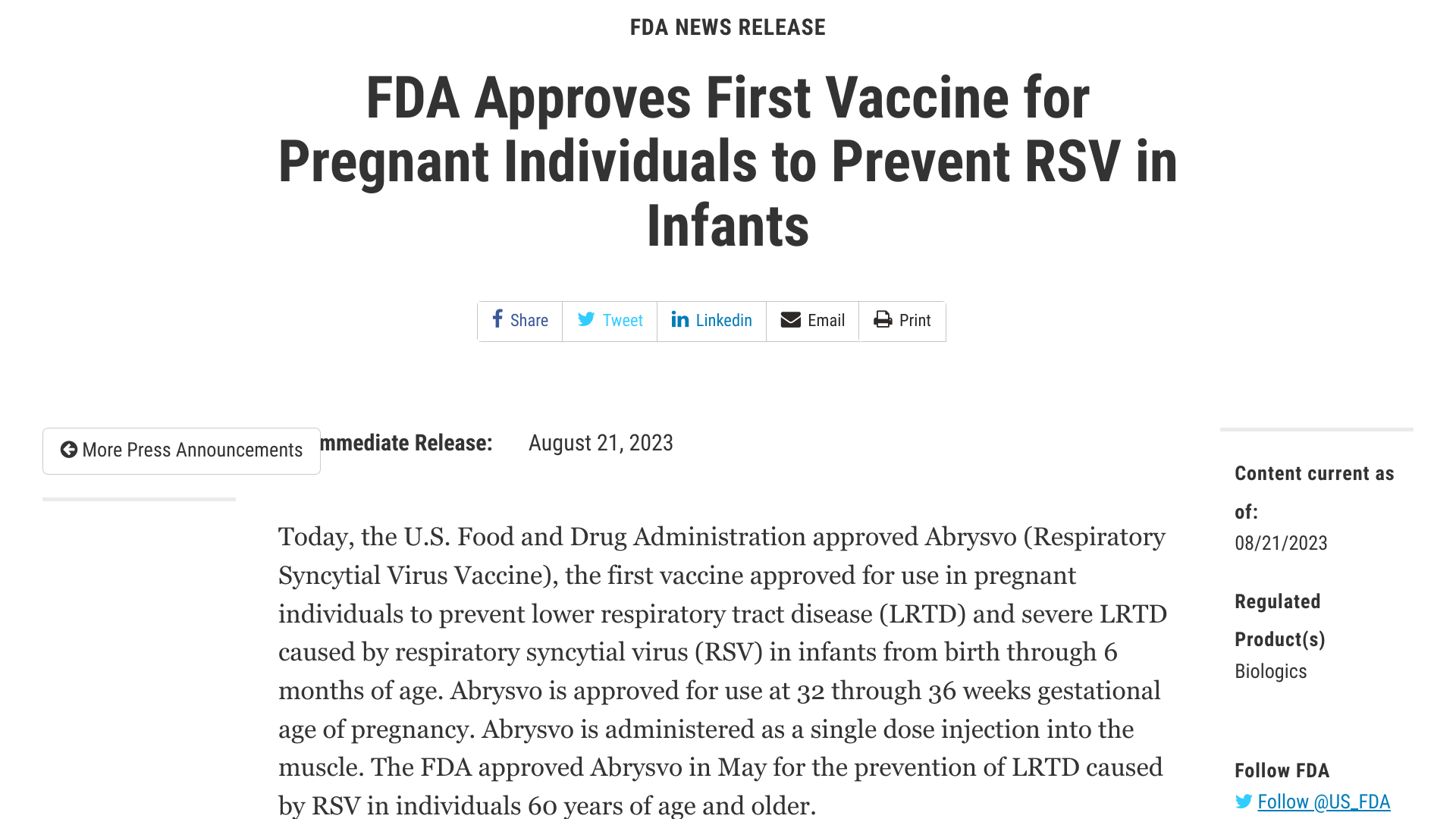
The U.S. Food and Drug Administration (FDA) today approved ABRYSVO™, the first vaccine approved for use in pregnant women to prevent lower respiratory tract disease (LRTD) and severe LRTD caused by respiratory syncytial virus (RSV) in infants from birth through six months of age.
Abrysvo is approved for use at 32 through 36 weeks gestational age of pregnancy, says the FDA.
Previously, the FDA approved Pfizer Inc.'s Abrysvo in May 2023 to prevent LRTD caused by RSV in individuals 60 and older.
"RSV is a common cause of illness in children, and infants are among those at highest risk for severe disease, which can lead to hospitalization," said Peter Marks, M.D., Ph.D., director of the FDA's Center for Biologics Evaluation and Research, in a press release on August 21, 2023.
"This approval provides an option for healthcare providers and pregnant individuals to protect infants from this potentially life-threatening disease."
Recently, the FDA approved Beyfortus™ for infants born during or entering their first RSV season and for children up to 24 months of age who remain vulnerable to severe RSV disease through their second RSV season.
On July 17, 2023, Beyfortus became the first extended half-life monoclonal antibody offering passive immunization to prevent LRTI caused by RSV.
RSV is a highly contagious virus that causes respiratory infections in individuals of all age groups, causing frequent outbreaks. Most individuals can be expected to be infected with RSV by the time they reach two years of age, says the FDA.
In most parts of the U.S., RSV circulation is seasonal, typically starting in Florida and peaking in the winter.
A study published by PLOS Medicine in July 2023 concluded RSV disease burden is high in the nearly 600 million children under five living in 121 low-income and middle-income countries. The peak age of community-based RSV incidence is 4.8 months.




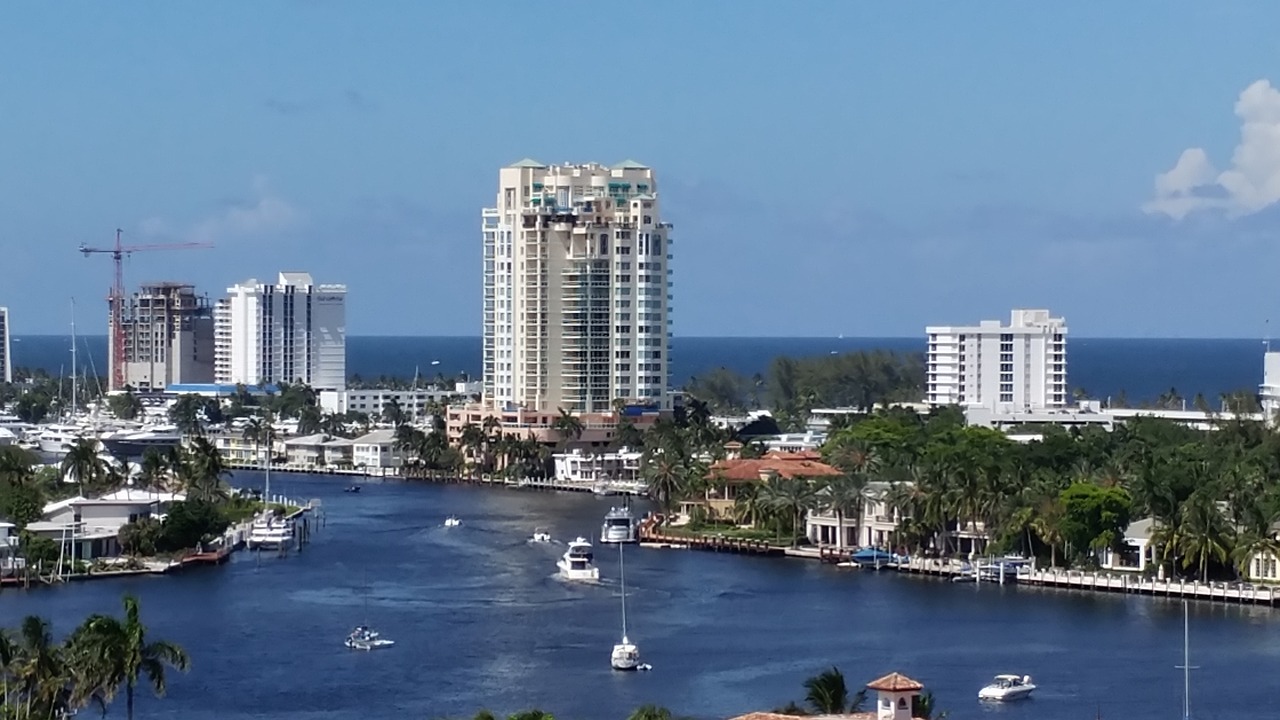
The Broward County Department of Health in Florida recently joined its southern neighbor, Miami-Dade, in issuing a Mosquito-borne Illness Alert.
The bite of an infected mosquito spreads dengue and is not usually present in the greater Ft. Lauderdale area. However, infected travelers have brought the virus back to Florida, primarily in the Miami-Dade Country area.
In 2023, there have been two locally acquired dengue cases in Broward County. Last year, there were two other locally acquired dengue cases.
In total, Florida's Department of Health has reported 215 dengue cases in 2023.
Globally, Dengue outbreaks have been confirmed by numerous countries this year, such as Costa Rica.
Dengue is a vaccine-preventable disease, with two vaccines approved in various countries.