Search API

About Us

Vax-Before-Travel

Vax-Before-Travel (VBT) is a publisher of international vaccine information that empowers people to make informed immunization decisions before traveling abroad. Throughout 2025, VBT published fact-checked information on local disease risks and related travel vaccines.

"We believe international travelers want to learn about disease risks and vaccine options before their next vacation or business trip," writes Don Hackett, VBT publisher. 'This philosophy reduces disease risks by minimizing the under-use, over-use, and misuse of vaccines.'

When traveling internationally to countries like Costa Rica or within the United States, such as Florida, Vax-Before-Travel's continuously updated information empowers you to 'Know Before You Go.'

Vax-Before-Travel Mission

Vax-Before-Travel publishes vaccine information that empowers travelers to live life to the fullest.

Vax-Before-Travel Content

Vax-Before-Travel's news team stands by the information we publish; if it's incorrect, we will change it as quickly as possible. 

Recent studies have highlighted the value that VBT's news brings to people. Key findings from a study published in October 2025 found 45% of AI-produced answers had at least one significant issue from from ChatGPT, Copilot, Gemini, and Perplexity against key criteria, including accuracy, sourcing, distinguishing opinion from fact, and providing context.

A June 2025 analysis published in the American Journal of Infection Control, based on Google News reports, found that less than 25% of all news stories cited clinical research.

Travel Vaccine Newsletters

Anyone can enroll in the free Vax-Before-Travel newsletter for the latest vaccination news. Recent studies have highlighted that when people are exposed to messages about vaccine options, about 49% report that the information is new, and 65% indicate that they are likely to discuss vaccines with their healthcare provider.

Contributing Expert Program

The VBT News Contributing Expert Program empowers vaccine providers to communicate with people digitally through news articles. This Trusted Travel Vaccination Network offers guidance and services to international travelers seeking unbiased information on preventing diseases while traveling.

Travel Vaccine Appointments

VBT enables travelers to request an appointment with a vaccine expert using this link.

Travel Vaccination Overview

The U.S. Travel Association research reveals that about 1.4 billion passengers are expected to fly in 2025. Recent research suggests that tens of millions of people are not adequately vaccinated before traveling to countries with endemic diseases. This includes last-minute travelers who deferred approximately 18% of their protective vaccines due to insufficient time before departure. 

According to Coherent Market Insights, The Global Vaccines Market is estimated to be valued at $81.91 billion in 2025 and is expected to reach $124 billion by 2032. The Medical Value Travel population, which travels to different regions or countries seeking healthcare services, was valued at $115 billion in 2022 and is expected to reach approximately $286 billion by 2030, representing a compound annual growth rate of 10.8%.

Travel Vaccination Timing

With over 15 million people traveling monthly, the U.S. CDC recommends that most travel vaccines be administered at least one month, if not earlier. The time between the vaccine's administration and the start of travel is significant for seniors. In Europe, over 4% of returning international travelers who recently displayed symptoms may be infected with a mosquito-transmitted disease, such as chikungunya, dengue, or Zika.

During pre-travel consultations, providers should consider potential interactions between vaccines and medications. A study by S. Steinlauf et al. identified potential drug interactions with travel-related medicines in 45% of travelers with chronic conditions; 3.5% of these interactions were potentially serious.

Policies

Various VBT policies are listed on this webpage.

Comments and Concerns

This link discusses VBT ownership and revenues. VBT is committed to providing greater transparency about how travel vaccine information is produced and distributed. We will respond to your request as soon as possible. Please email [email protected]. If you have any clinical questions, please get in touch with VBT's medical director, Dr. Robert Carlson, at [email protected].

Thank you,

Don Hackett, Founder & Publisher, VBT LLC
[email protected] 

4 min read
Last Reviewed: 
Wednesday, December 17, 2025 - 13:55
Description: 
Vax-Before-Travel
dengue
Qdenga TAK-003 dengue vaccine efficacy exceeds 82 percent
Florida
Chikungunya vaccine is available in Florida, but not dengue or malaria
0 min read

The U.S. CDC's Early Release Morbidity and Mortality Weekly Report on August 27, 2024, revealed that 21 Oropouche virus disease cases among U.S. travelers returning from Cuba have been reported this year.

At least three patients had recurrent symptoms after the initial illness, a common characteristic of Oropouche virus disease.

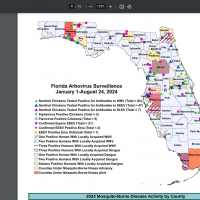
Most of these cases (20) were people in Florida.

The CDC recently published a Level 1 Travel Health Notice to alert travelers regarding Oropouche outbreaks in the Americas Region and Europe (19).

From December 2023 to June 2024, large Oropouche virus disease outbreaks were recognized in areas with known endemic diseases, and the virus emerged in new places in South America and Cuba where it had not been historically reported.

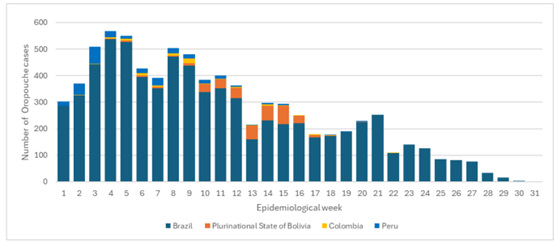
This year, cases have been reported in Bolivia, Brazil, Colombia, Cuba, and Peru.

From 2015 to 2022, only 261 cases of Oropouche fever were recorded in Brazil. However, as of August 6, 2024, Brazil confirmed 7,497 cases. However, the infectious rate has recently diminished.

The CDC says clinicians and public health jurisdictions should be aware of Oropouche virus disease in U.S. travelers and request testing for suspected cases.

In Florida, the Department of Health identified suspected Oropouche cases primarily by reviewing patients who received negative dengue test results and had visited countries such as Cuba.

Reported symptoms commenced during May–July and most commonly included fever (95%), myalgia, headache, fatigue or malaise, and arthralgia.

Travelers should prevent insect bites when traveling, and pregnant persons should consider deferring travel to areas experiencing outbreaks of Oropouche virus disease, says the CDC.

As of August 28, 2024, there are no approved vaccines to prevent Oropouche virus disease.

Vaccine Treats: 
Image: 
Image Caption: 
PAHO Oropouche virus case report 2024
Live Blog Update Author: 
Location Tags: 
Include in VBT newsletter: 
0 min read

Moderna, Inc. announced that the European Commission (EC) has granted marketing authorization for mRESVIA®, an mRNA respiratory syncytial virus (RSV) vaccine.

RSV is a highly contagious seasonal respiratory virus that causes an exceptionally high burden of disease in infants and older adults.

As of August 23, 2024, this EC authorization is indicated to protect adults aged 60 years and older from lower respiratory tract disease caused by RSV infection.

The marketing authorization is valid in all 27 EU member states, as well as Iceland, Liechtenstein, and Norway.

"The EC's approval of mRESVIA is an important milestone for public health and highlights Moderna's mRNA leadership," said Stéphane Bancel, Chief Executive Officer of Moderna, in a press release.

In the European Union, RSV is estimated to cause approximately 160,000 hospital admissions in adults each year, with 92% of these admissions occurring in adults aged 65 and over.

In the United States, the RSV season has already begun in Florida and is expected to spread throughout the U.S.

For the 2024-2025 RSV season in the U.S., three vaccines and one monoclonal antibody were approved by the U.S. FDA.

Image: 
Image Caption: 
from Pixabay
Live Blog Update Author: 
Location Tags: 
Include in VBT newsletter: 
0 min read

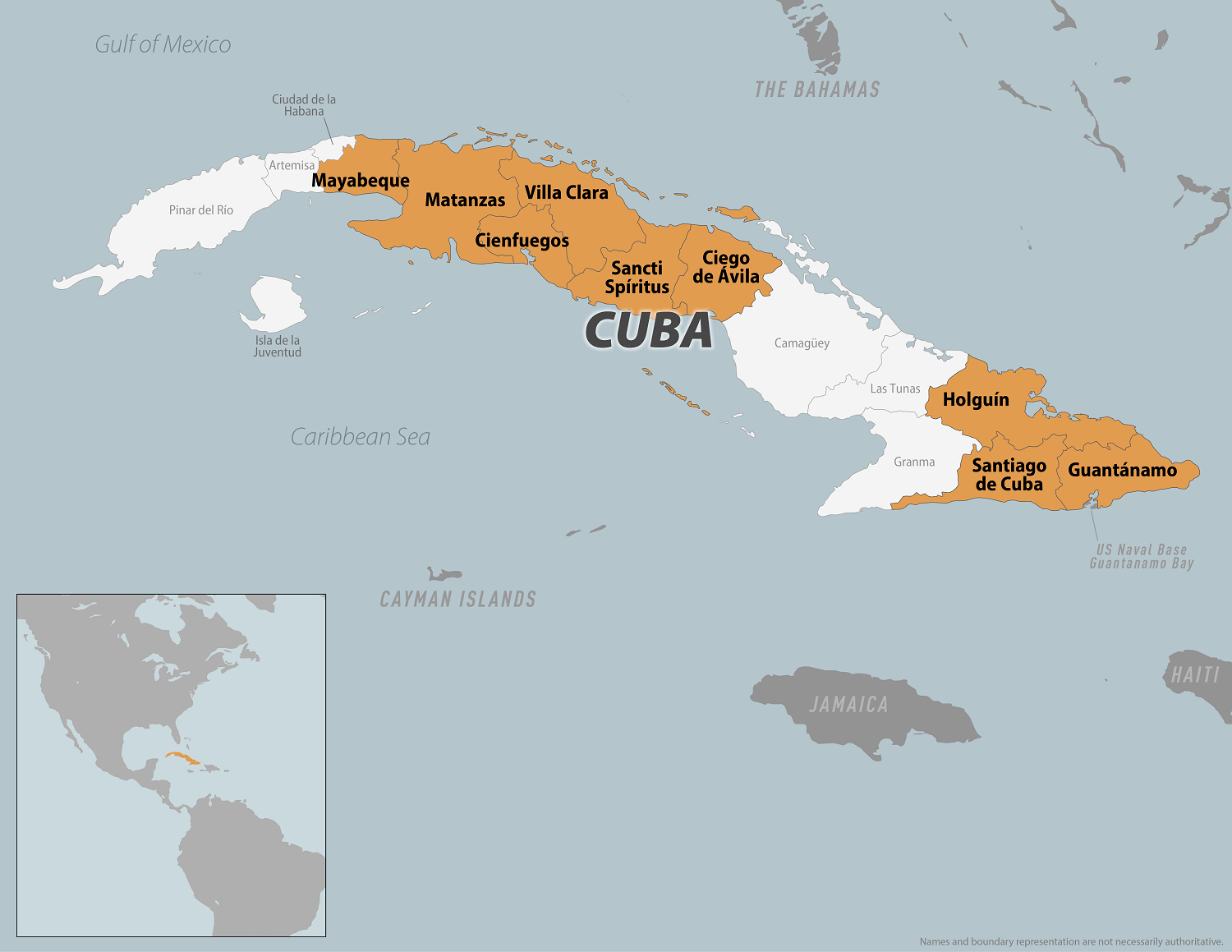
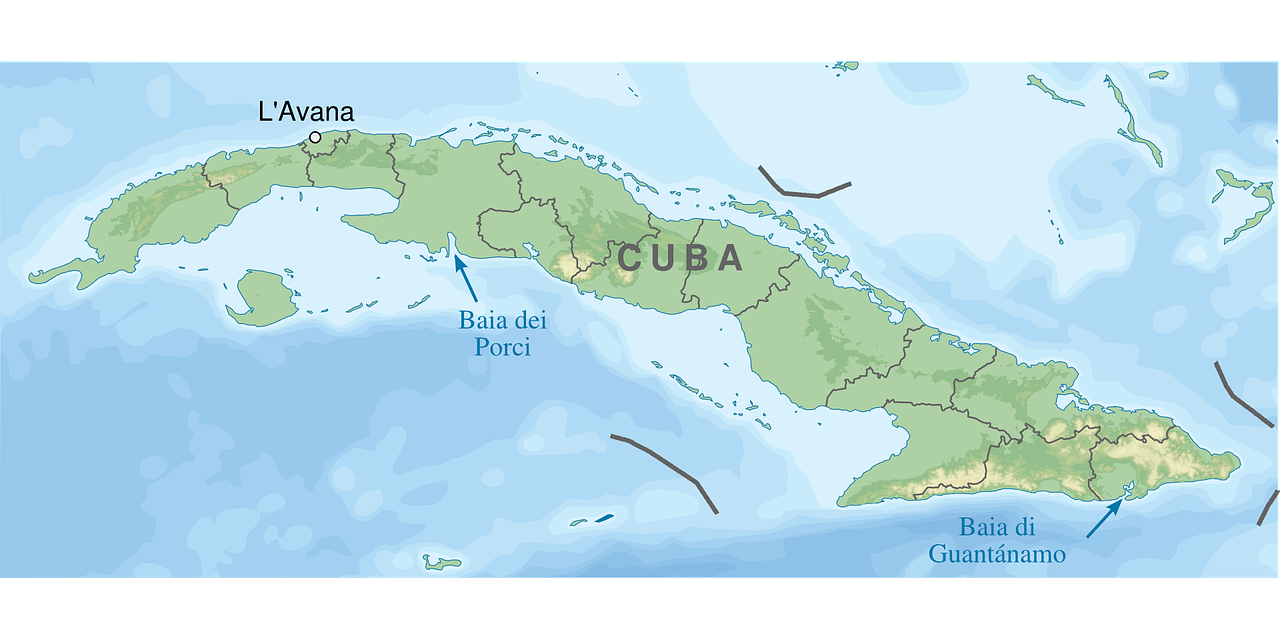
Cuba's Minister of Public Health, José Ángel Portal Miranda, recently announced over 400 Oropouche virus disease cases have been confirmed on the island since late May 2024.

According to Cuba Headlines reporting, Cuba ranks second in the Region of the Americas for the number of infections behind Brazil (7,284).

Infected biting midges and some mosquitoes are spreading the virus.

Currently, there are no efficient vector control measures for the Culicoides paranesis.

As of August 23, 2024, the U.S. Centers for Disease Control and Prevention (CDC) says there is no evidence of local transmission of Oropouche virus disease in the United States. However, various states, such as Florida (12), report travel-related cases.

The virus was first detected in 1955 in Trinidad and Tobago near the Oropouche River. Since then, outbreaks of the Oropouche virus have been reported in Bolivia, Brazil, Colombia, Ecuador, French Guiana, Panama, and Peru.

The incubation period for Oropouche virus disease is 3–10 days, says the U.S. CDC. Typically, the disease starts with the abrupt onset of fever (38-40°C), followed by a headache, chills, myalgia, and arthralgia.

People typically recover without long-term sequelae. However, there have been a few deaths reported and vertical transmission of Oropouche virus causing fetal deaths and congenital abnormalities.

The best way to protect themselves from Oropouche is to prevent bites from biting midges and mosquitoes.

According to the CDC's Level 2 Travel Health Advisory, updated on August 15, 2024, travelers to Cuba should prevent bug bites during visits to protect themselves from infection, as there are no vaccines to prevent Oropouche virus disease.

Note - Headlines was edited on Aug, 24, 2024,

Vaccine Treats: 
Image: 
Image Caption: 
US CDC Travel Alert August 2024
Live Blog Update Author: 
Location Tags: 
Include in VBT newsletter: 
Malaria
Sanaria Inc PfSPZ Vaccine candidate shown it to be safe for pregnant women
vaccine
Genetically Modified Wolbachia mosquitoes help reduce virus transmission
0 min read

Throughout 2024, Cuba has been grappling with an outbreak of Oropouche Fever. And now, its western neighbor, the United States, has started to report cases related to travelers from Cuba.

The Florida Department of Health (FDH) has recently reported 11 Oropouche Fever cases.

As of August 10, 2024, these Florida cases had their onset in 2024 and were found in individuals who had traveled to Cuba two weeks before showing symptoms.

The Oropouche reported cases were found in the following Florida counties: Hillsborough (4), Lee (2), Miami-Dade (1), Orange (2), and Polk (2).

Throughout 2024, more than 8,000 Oropouche cases, including two deaths and five cases of vertical transmission, were reported by the U.S. CDC.

According to the CDC, approximately 60% of people infected with the Oropouche virus become symptomatic. The incubation period is typically 3–10 days. Although people exposed to biting midges or mosquitoes infected with the virus are most at risk for developing the disease, the risk factors for more severe Oropouche virus are not well-defined.

The initial clinical presentation is similar to diseases caused by dengue, Zika, and chikungunya viruses.

In the U.S., healthcare providers should contact local health departments to facilitate diagnostic testing.

As of August 19, 2024, no approved Oropouche vaccines are available.

In addition to Oropouche cases, FDH reported 18 locally acquired dengue fever virus cases and numerous travel-related dengue cases as of week #32.

Vaccine Treats: 
Image: 
Image Caption: 
from Pixabay
Live Blog Update Author: 
Location Tags: 
Include in VBT newsletter: 
RSV vaccine
Pharmacies offer RSV vaccines in 2024