

Search API

Sharing flu viruses at home
171 million flu shots distributed by 2023
0 min read

The U.S. Centers for Disease Control and Prevention (CDC) recently confirmed COVID-19 vaccination remains the most effective way to prevent SARS-CoV-2–associated serious illness, hospitalization, and death.

And everyone, including those who are immunocompromised and their household members and close contacts, should stay up to date with COVID-19 vaccination.

Although moderately to severely immunocompromised persons might not mount a strong vaccine-mediated immune response, staying up to date with COVID-19 vaccinations does provide some protection.

A recent CDC study of preliminary data showed that a bivalent booster dose provided additional protection against symptomatic SARS-CoV-2 infection among immunocompetent persons who had previously received 2, 3, or 4 monovalent vaccine doses.

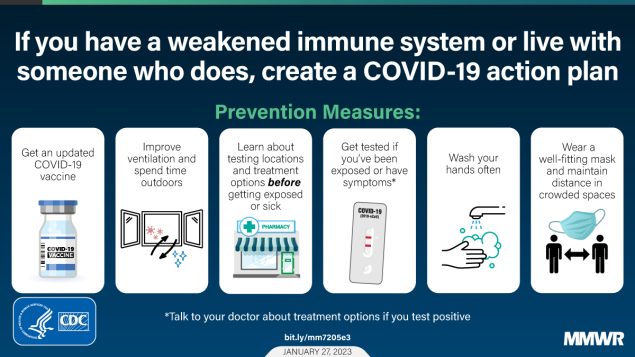
Among persons with immunocompromise and their household members and close contacts, prevention measures, including wearing a high-quality and well-fitting mask, maintaining physical distance from others, improving indoor ventilation, practicing frequent handwashing, and developing a care plan, should be considered in addition to receipt of a bivalent booster dose.

Furthermore, early outpatient treatment of mild to moderate COVID-19 with a recommended first-line therapy, Paxlovid or Veklury, has been shown to reduce the risk for severe COVID-19.

These medications are expected to retain activity against the currently circulating Omicron sublineages.

Available COVID-19 treatment does not supplant the need for persons to stay current on their COVID-19 vaccinations, which are highly effective at preventing COVID-19–related morbidity and mortality, stated the CDC's Morbidity and Mortality Weekly Report on January 27, 2023.

Vaccine Treats: 
Image: 
Image Caption: 
CDC Prevention and Treatment of SARS-CoV-2 Infection Jan. 2023
Live Blog Update Author: 
Location Tags: 
0 min read

Scientists are harnessing a new way to turn cancer cells into potent, anti-cancer agents. Researchers recently published data in Science Translational Medicine. that showed they had developed a new cell therapy approach to eliminate established tumors and induce long-term immunity, training the immune system to prevent glioblastoma, with promising results.

Cancer vaccines are an active area of research for many labs, but this innovative approach is distinct.

Instead of using inactivated tumor cells, the team repurposes living tumor cells, which possess an unusual feature.

Like homing pigeons returning to roost, living tumor cells will travel long distances across the brain to return to the site of their fellow tumor cells.

Taking advantage of this unique property, the team engineered living tumor cells using the gene-editing tool CRISPR-Cas9 and repurposed them to release tumor cell-killing agents.

In addition, the engineered tumor cells were designed to express factors that would make them easy for the immune system to spot, tag, and remember, priming the immune system for a long-term anti-tumor response.

“Our team has pursued a simple idea: to take cancer cells and transform them into cancer killers and vaccines,” said corresponding author Khalid Shah, MS, Ph.D., director of the Center for Stem Cell and Translational Immunotherapy and the vice chair of research in the Department of Neurosurgery at the Brigham and faculty at Harvard Medical School and Harvard Stem Cell Institute, in a related press release.

“Using gene engineering, we are repurposing cancer cells to develop a therapeutic that kills tumor cells and stimulates the immune system to destroy primary tumors and prevent cancer.”

“Our goal is to take an innovative but translatable approach so that we can develop a therapeutic, cancer-killing vaccine that ultimately will have a lasting impact in medicine.”

Shah and colleagues noted that this therapeutic strategy applies to a broader range of solid tumors and that further investigations of its applications are warranted.

Vaccine Treats: 
Image: 
Image Caption: 
by Gerd Altmann
Live Blog Update Author: 
Location Tags: 
0 min read

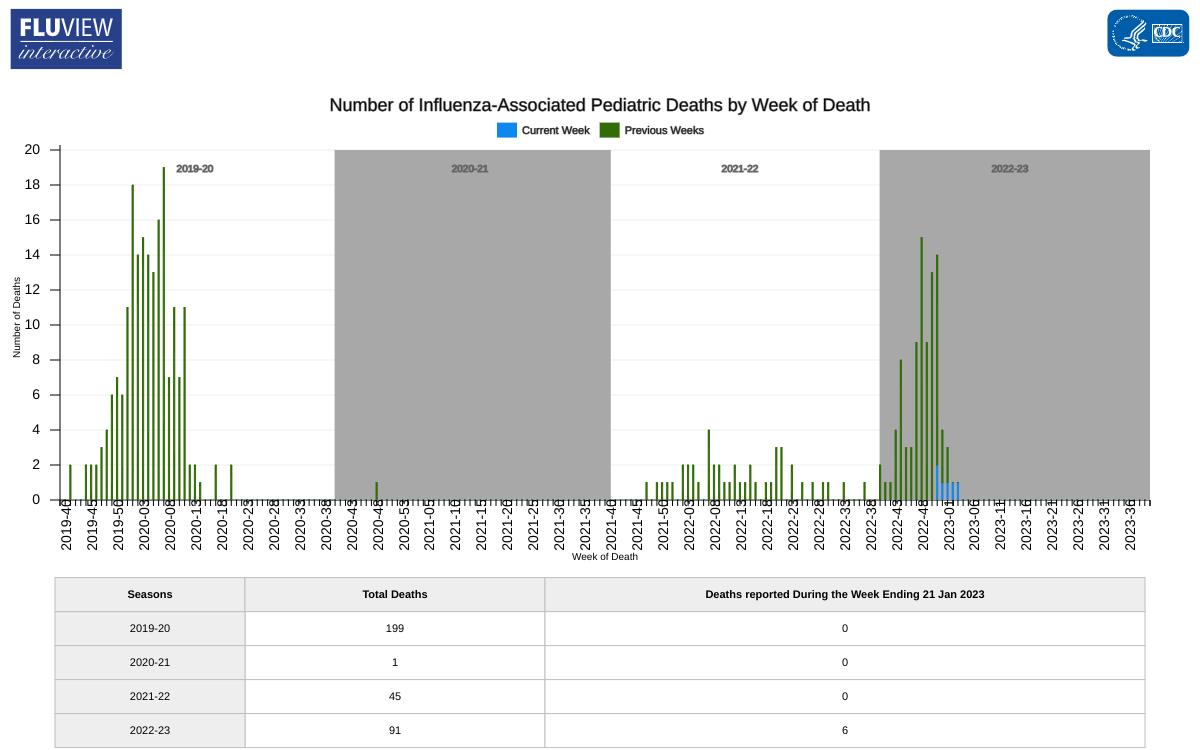
According to the U.S. Centers for Disease Control and Prevention (CDC) Weekly Influenza Surveillance Report, a total of 91 influenza-associated pediatric deaths have occurred during the 2022-2023 flu season.

During week #3, six influenza-associated pediatric deaths were reported to CDC.

All six pediatric deaths were associated with influenza A viruses.

Four of the influenza A viruses had subtyping performed; one was an A(H1N1) virus, and three were A(H3) viruses.

As of January 27, 2023, the CDC stated the cumulative hospitalization rate was 1.4 times higher than the highest cumulative in-season hospitalization rate observed for week #3 during previous seasons going back to 2010-2011.

However, this in-season rate is still lower than end-of-season hospitalization rates for all but four pre-COVID-19-pandemic seasons going back to 2010-2011.

Most influenza viruses tested are in the same genetic subclade as and antigenically similar to the influenza viruses included in this season’s influenza vaccine.

As of January 14, 2023, about 171 million influenza vaccines had been distributed in the U.S.

All flu shots this flu season are quadrivalent and remain available at clinics and pharmacies. According to the CDC, these vaccines are authorized for most people over six months.

Vaccine Treats: 
Alert Message: 
CDC Influenza Surveillance Report Jan. 27, 2023
Image: 
Live Blog Update Author: 
Location Tags: 

cAD3-Marburg Vaccine

cAD3-Marburg Vaccine

The cAD3-Marburg vaccine candidate is being developed by the National Institute of Allergy and Infectious Diseases (NIAID), part of the U.S. National Institutes of Health (NIH). This vaccine uses a modified chimpanzee adenovirus, cAD3. cAD3 is not replicable and cannot infect cells. Instead, it displays a glycoprotein on the surface of the Marburg Virus (MARV) to induce immune responses against the virus.

The peer-reviewed journal The Lancet published a study on January 28, 2023, that concluded that the first-in-human clinical trial of the cAd3-Marburg vaccine showed the agent is safe and immunogenic, with a safety profile similar to that of previously tested cAd3-vectored filovirus vaccines. In addition, 95% of participants produced a glycoprotein-specific antibody response four weeks after a single vaccination, and 70% remained at 48 weeks. RV 507 was a Phase I, open-label study that conducted dose escalation of VRC-MARADC087-00-VP, a cAd3 vector vaccine encoding the wild-type glycoprotein from Marburgvirus. It has demonstrated rapid immunity within one week in non-human primates and safety and immunogenicity in humans in Phase 1 trials.

The NIAID plans to conduct further trials of the cAd3-Marburg vaccine in Ghana, Kenya, Uganda, and the United States. An Albert B. Sabin Vaccine Institute-sponsored Phase 2, Randomized, Double-blind, Placebo-Controlled Trial to Evaluate Safety, Tolerability, and Immune Responses of an Investigational Monovalent Chimpanzee Adenoviral-Vectored Marburg Virus Vaccine in Healthy Adults. The candidate is currently in Phase 2 trials in Uganda and Kenya, and no safety concerns have been reported. In September 2024, Sabin launched a clinical trial in the Republic of Rwanda. As of October 31, 2024, Sabin's Marburg vaccine has not demonstrated clinical benefit for vaccine recipients.

In early December 2025, Sabin sent more than 640 doses of cAd3-Marburg to Ethiopia to support the country's response to its first-ever outbreak of Marburg virus disease.

The Maryland-based NIAID conducts and supports research at the NIH, throughout the United States, and worldwide to study the causes of infectious and immune-mediated diseases and develop better means of preventing, diagnosing, and treating them. Other NIAID-related materials are available on the NIAID website.

cAD3-Marburg Indication

Marburg virus is in the same family as Ebola, causing a rapidly progressive febrile illness that leads to shock and death in many infected individuals. Human outbreaks begin when the virus jumps from the animal host to the human. In sub-Saharan Africa, bats are most likely the primary source of human infection. MARV symptoms are similar to those of Ebola, including fever, headache, chills, rash, abdominal pain, vomiting, and diarrhea. As the disease progresses, patients suffer from multiple organ dysfunction, delirium, and significant bleeding from the gastrointestinal tract or other sites that may result in death.

Marburg Vaccine Candidates

Marburg disease protective vaccine candidates are in clinical development, but none have been FDA-approved in the U.S.

cAD3-Marburg News

December 4, 2025 - Sabin Vaccine Institute's Investigational Marburg Vaccine Delivered to Ethiopia for Outbreak Response.

October 31, 2024 - Over 1,700 vaccines have already been delivered to Rwanda, with the first shipment of doses arriving just nine days after the outbreak was declared on September 27. The initial part of the trial focused mainly on health workers, a group that suffered the most casualties in this outbreak.

March 22, 2023 - Since the first WHO Disease Outbreak News published on February 25, 2023,  eight additional laboratory-confirmed cases of MVD have been reported in Equatorial Guinea.

February 15, 2023 - A news article was published by the journal Nature: Marburg virus outbreak: researchers race to test vaccines.

January 28, 2023 - Marburg vaccine shows promising results in a first-in-human NIH-funded clinical study. The RV 507 trial of this cAd3-Marburg vaccine showed the agent is safe and immunogenic, with a safety profile similar to previously tested cAd3-vectored filovirus vaccines. In addition, 95% of participants produced a glycoprotein-specific antibody response four weeks after a single vaccination, and 70% remained at 48 weeks. 

October 13, 2022 - An introduction to the Marburg virus vaccine consortium, MARVAC.

cAD3-Marburg Clinical Trial 2023

Phase 1 clinical trial enrolled 40 healthy adult volunteers. They received a single dose of either a low dose of the vaccine (1x10^10 particle units) or a higher dose (1x10^11 particle units). For safety, the volunteers were enrolled in a dose-escalation plan. Three participants received the lower dose. After no severe adverse reactions were observed after seven days, the trial enrolled the remaining 17 volunteers. The same procedure was also used for the higher-dose group. Volunteers were monitored for adverse reactions to the investigational vaccine and evaluated at regular intervals for 48 weeks to track their immune responses.

This is a multicenter, double-blinded, placebo-controlled, Phase II study to evaluate the safety, tolerability, and immunogenicity of a single dose of the cAd3-Marburg vaccine in healthy adults up to 70 years of age in Uganda and Kenya. The study will enroll 125 eligible participants, randomized 4:1 to receive the cAd3-Marburg vaccine at a dose of 1.0 × 10^11 PU intramuscularly in the deltoid muscle on Day 1, or placebo (0.9% sodium chloride (NaCl) solution). Participants will be screened for eligibility up to 28 days before enrollment. Enrollment will be staggered, starting with healthy adults 18 to 50 (inclusive). Upon enrollment of a minimum of 25 younger adult participants (sentinel), the safety data will be reviewed by the independent DSMB up to 7 days post-vaccination of these 25 sentinel participants. Progression to enrollment of the older adults (>50 to 70 years of age) will be dependent on the unblinded review of the Data Safety Monitoring Board (DSMB). Safety and immunogenicity will be assessed on Days 1, 8, 15, 29, 85, and 169 and conclude at the end of the study visit on Day 366.

0 min read
Availability: 
Ethiopia
Generic: 
cAD3-Marburg
Clinical Trial: 
https://www.niaid.nih.gov/clinical-trials
Drug Class: 
Adenovirus Vector Vaccine
Condition: 
Last Reviewed: 
Friday, December 5, 2025 - 10:20
Status: 
Manufacturer Country ID: 
FDA First In Class: 
Yes
Location tags: 
Pneumonia death rates in 2023
Pneumonia, influenza, COVID-19 mortality above the epidemic threshold
Marburg outbreak
cAd3-Marburg vaccine candidate at Walter Reed Army Institute of Research Clinical Trials Center
0 min read

The Nigeria Centre for Disease Control (NCDC) recently reported its ongoing diphtheria outbreak had recorded 38 deaths in the country.

On January 20, 2023, NCDC confirmed it has responded to diphtheria cases in Lagos and Kano States and is monitoring the situation in Osun and Yobe States.

Diphtheria is a bacterial infection caused by the corynebacterium species that affect an individual's nose, throat, and sometimes, skin. It spreads quickly between people through:

  • Direct contact with infected people,
  • Droplets from coughing or sneezing,
  • Contact with contaminated clothing and objects.

Over the past five decades, diphtheria has reduced dramatically worldwide.

And since diphtheria is a vaccine-preventable disease, the NCDC childhood immunization schedule recommends three doses of pentavalent vaccine (diphtheria toxoid-containing vaccine) are recommended for children early in life.

Furthermore, the NCDC announced on January 23, 2023, all healthcare workers with a high level of exposure to diphtheria should be vaccinated.

The U.S. CDC stated in December 2022 to ensure you are up-to-date on all routine vaccines before visiting Nigeria, including for Diphtheria-Tetanus-Pertussis.

Additionally, the CDC has issued Travel Advisories regarding Nigeria's Mpox, yellow fever, polio, and measles outbreaks.

Vaccines available at travel clinics and pharmacies in the U.S. prevent these diseases.

Vaccine Treats: 
Image Caption: 
U.S. CDC Disease Outbreaks Nigeria 2023
Live Blog Update Author: 
Location Tags: 
0 min read

Moderna, Inc. today announced that its investigational mRNA vaccine candidate for the respiratory syncytial virus (RSV) mRNA-1345, has been granted Breakthrough Therapy Designation by the U.S. Food and Drug Administration (FDA) for the prevention of RSV-associated lower respiratory tract disease (RSV-LRTD) in adults aged 60 years or older.

Moderna also confirmed it intends to submit a license application to the FDA for regulatory approval in the first half of 2023.

"The FDA's Breakthrough Designation for mRNA-1345 further emphasizes the significant health impact of RSV in older adults and the high unmet need," said Stéphane Bancel, Chief Executive Officer of Moderna, in a press release on January 30, 2023. 

Moderna's mRNA platform has demonstrated two positive Phase 3 infectious disease trial results."

This designation is granted to expedite the development and review of drugs intended to treat a serious condition and when preliminary clinical evidence indicates the drug or vaccine may demonstrate substantial improvement over available therapy on a clinically significant endpoint.

mRNA-1345 was previously granted Fast Track designation by the FDA in August 2021.

RSV can cause severe disease, with an estimated 5.2 million cases and nearly half a million hospitalizations in adults 60 years or older reported across high-income countries in 2019, says the U.S. Centers for Disease Control and Prevention.

Each year in the U.S., approximately 60,000-120,000 older adults are hospitalized, and 6,000-10,000 die due to RSV infection.

As of January 30, 2023, the FDA has not approved any RSV vaccine candidates but authorized RSV antibody treatments.

Image: 
Image Caption: 
from Pixabay
Live Blog Update Author: 
Location Tags: 
0 min read

The Pan American Health Organization (PAHO) recently confirmed the Aedes aegypti mosquito is the primary source of dengue transmission in Limón, Costa Rica, including the coastlines along the Caribbean Sea.

As of January 30, 2023, the PAHO's data dashboard indicates 18 dengue cases have been confirmed this year, with about 7,400 in 2022.

Geographically, this dengue outbreak has impacted Talamanca and Guacimo areas.

In the Region of the Americas, 46 countries and territories reported dengue cases in 2022.

While the U.S. Centers for Disease Control and Prevention (CDC) Level-1 Travel Advisory in 2022 does not identify Costa Rica as a dengue risk, it says this mosquito-spreading disease is an ongoing risk in many parts of Central America, Mexico, and the Caribbean.

However, the UK's National Travel Health Network and Centre website confirm dengue fever risks will continue in Costa Rica this year. And the number of reported cases of dengue is increasing.

The worst affected areas are Limon and Puntarenas.

If you're in Costa Rica, you should take steps to avoid being bitten by mosquitoes, says the UK.

Furthermore, dengue is a vaccine-preventable disease, with two authorized vaccines available in certain countries in 2023. 

Local media (Costa Rica Star) recently reported Sanofi Pasteur's Dengvaxia® vaccine is sold in pharmacies in Costa Rica for approximately $130. Three doses are required to fully protect people against the serotypes found in the country in 2023.

Vaccine Treats: 
Image: 
Image Caption: 
PAHO Jan. 30, 2023 Costa Rica Dengue Cases
Live Blog Update Author: 
Location Tags: